In the Studio: Cemre Karataş and the Quiet Language of Clay
people • ARTIST
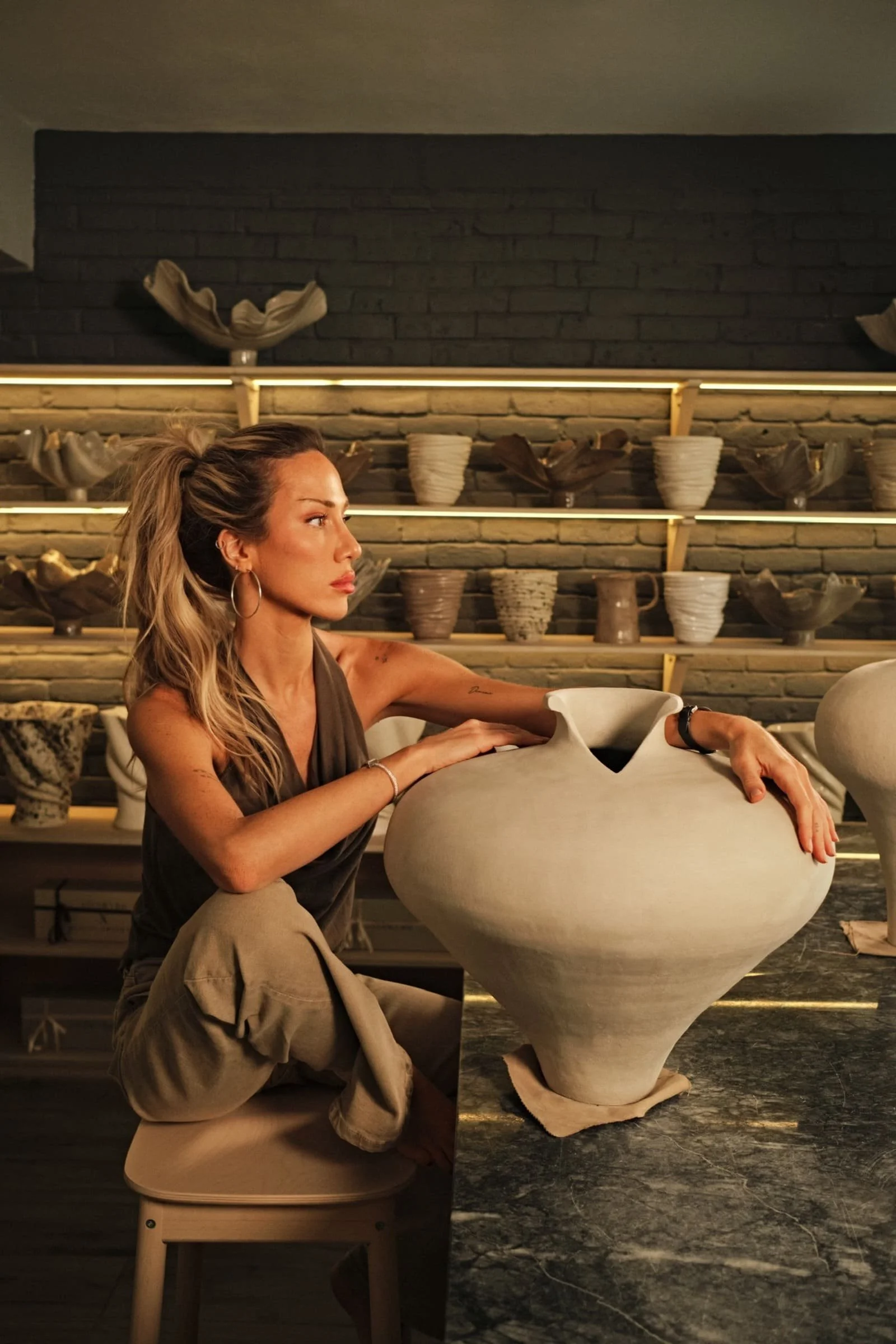
London-born ceramic artist Cemre Karataş works from her studio in Bebek, on the European shore of the Bosphorus, hand-building vessels in porcelain and stoneware that sit somewhere between contemporary sculpture and collectible design. Karataş strips each form back to texture, balance and proportion, with no ornament where the clay body can speak instead.
That restraint has found a natural audience among collectors and interior specifiers: Karataş is currently exhibiting with Pinto in Paris. Her forms carry an architectural weight, that reads as easily in a gallery as in a considered private interior.
Words: designeers
JULY 2026
WEBSITE: studio11-6.com
INSTAGRAM: @11.6studio
DESIGNEERS
How would you describe your practice today? Are you creating objects, sculptures, or something in between?
Cemre Karataş
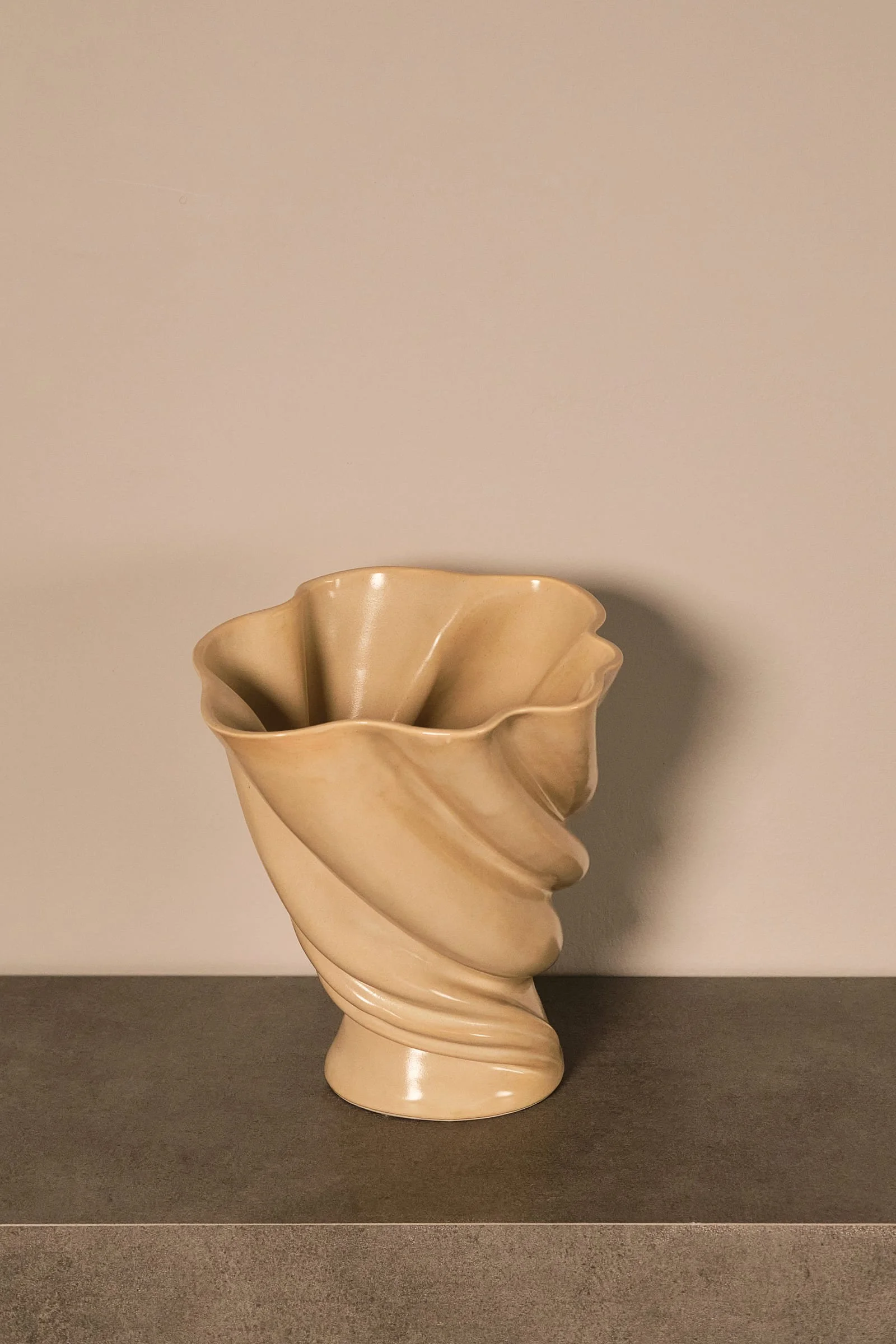
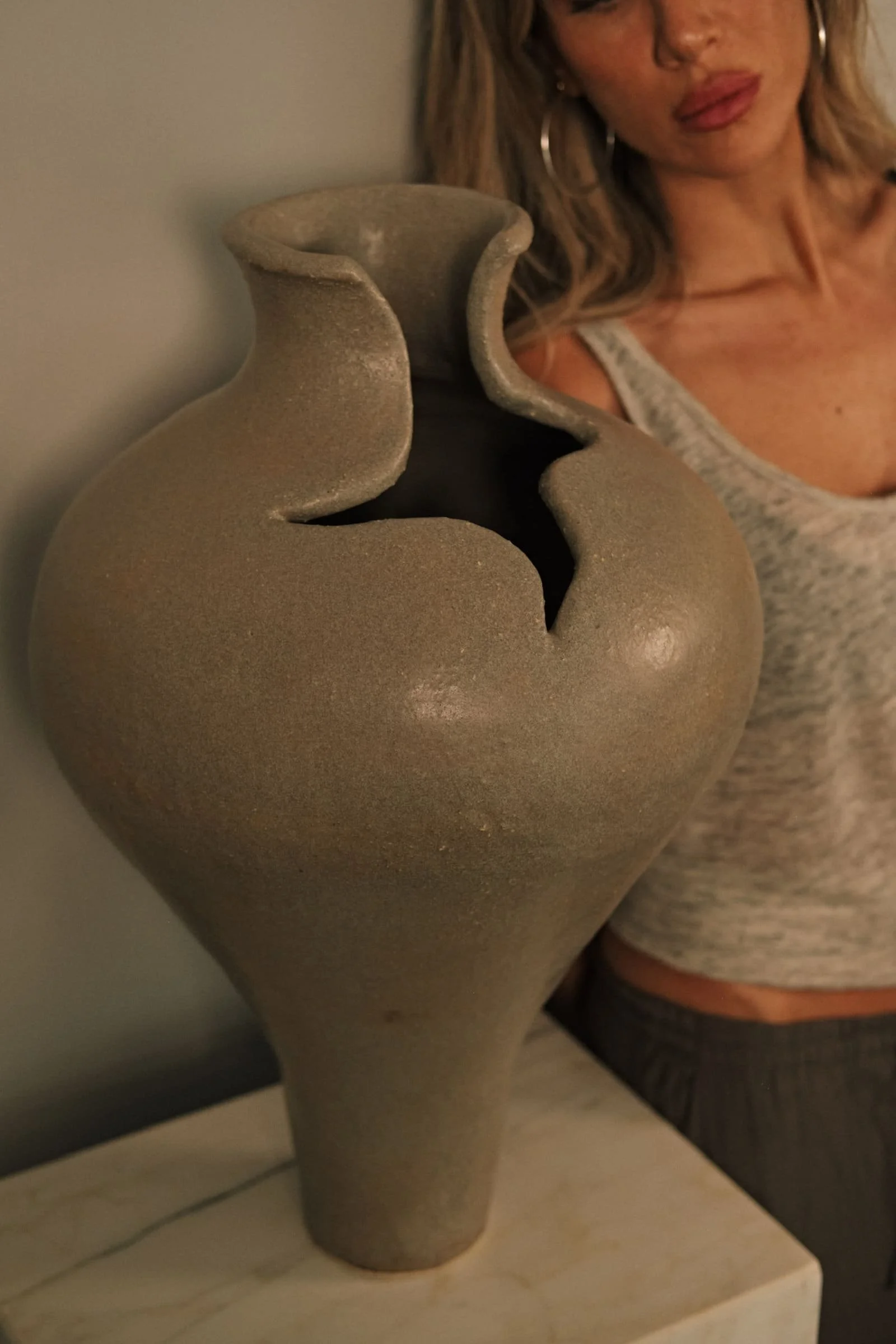
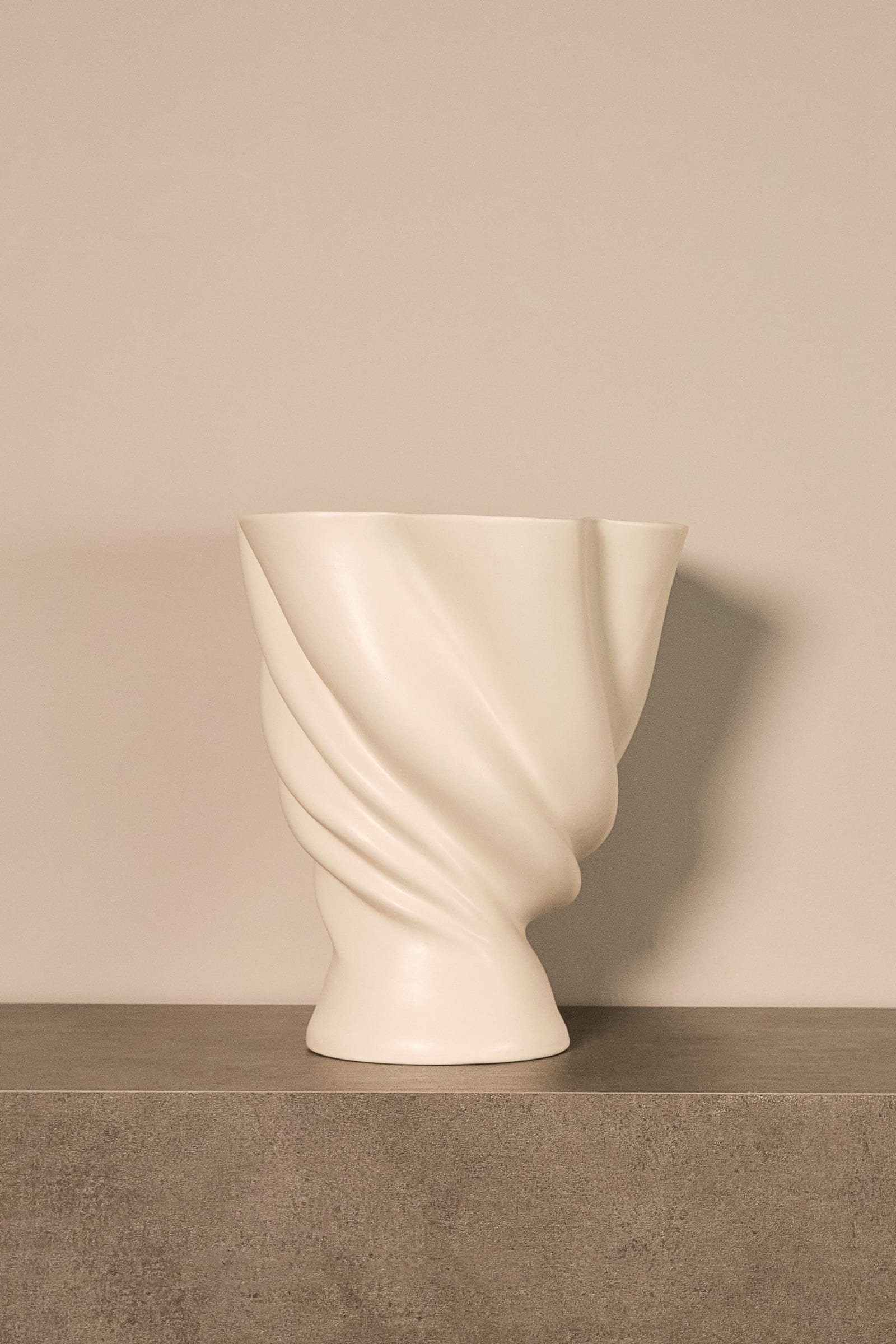
I see my practice as a sculptural one. While my pieces can be lived with, they don't begin with function; they begin with form. Each work is an exploration of proportion, material and balance, guided by a process of reduction rather than addition.
I've never been able to begin with utility. I need to understand a form first, how it stands, how it carries itself, and what feels essential. Only then do I consider how it might exist in someone's daily life. I usually remove far more than I add, refining until the piece reaches a point where nothing feels unnecessary.
What interests me most is creating forms that alter the experience of a space. I think of them less as decorative pieces and more as works that invite contemplation. If they become part of someone's everyday life, I hope it's because they continue to reveal something over time, rather than simply serving a function.
DESIGNEERS
Your work feels rooted in tension and restraint. What draws you to this minimal, distilled language?
Cemre Karataş
I've often felt slightly out of step with the world around me. We live in a time where everything is immediate, abundant and constantly competing for our attention. I've always found myself longing for something slower and more connected.
I think that's why my work has gradually become more distilled. Not because I'm pursuing minimalism as an aesthetic, but because I'm searching for clarity. As I remove more, I find myself getting closer to what feels essential, both within the form itself and in the experience of living with it.
In many ways, my work reflects how I try to live. It's an invitation to slow down, to notice, and to be fully present. If my pieces offer a sense of stillness, I think it's because that's something I'm constantly searching for myself.
DESIGNEERS
Growing up between London and Istanbul, how have these two cultural contexts shaped your aesthetic and way of working?
Cemre Karataş
Growing up between London and Istanbul, the feeling that has stayed with me most isn't one city or the other; it's a quiet sense of yearning. Living between two cultures meant I was always moving between different ways of seeing, living and belonging. I don't think I ever felt entirely rooted in either place, and over time I've realised that this in-between space has shaped me more than either city itself.
I think that sense of duality naturally found its way into my work. I'm constantly searching for balance, between strength and softness, simplicity and depth, permanence and change. Rather than trying to resolve those opposites, I'm interested in allowing them to coexist.
Looking back, I realise my work isn't trying to answer that feeling of yearning. It's simply giving it a form. Perhaps that's why I'm so drawn to creating pieces that evoke a sense of stillness. I think, in some way, I've always been searching for the feeling of home, not necessarily as a place, but as something quieter, something I still can't fully name.
DESIGNEERS
Do you approach your work with architecture in mind? How do you imagine your pieces living within a space?
Cemre Karataş
Architecture isn't where my work begins. It always begins with the sculpture itself. When I'm creating, I'm not imagining an interior or a particular home. My attention is entirely on the form. I trust that if the form feels true, it will eventually find the space it belongs in.
When I enter a space, the first thing I notice is always the light, followed by its energy. I'm fascinated by how a single sculpture can quietly influence both. I don't want my work to become another addition to a room. I want it to create a moment of pause, a place where the eye can rest, where someone can breathe, and place but be present.
More than anything, I hope the work offers a quiet sense of reconnection. Whether that's with nature, with stillness, or with a deeper part of ourselves, I think we've become increasingly disconnected from those things. If a piece can gently remind someone of them, even for a moment, then I feel it has fulfilled its purpose.
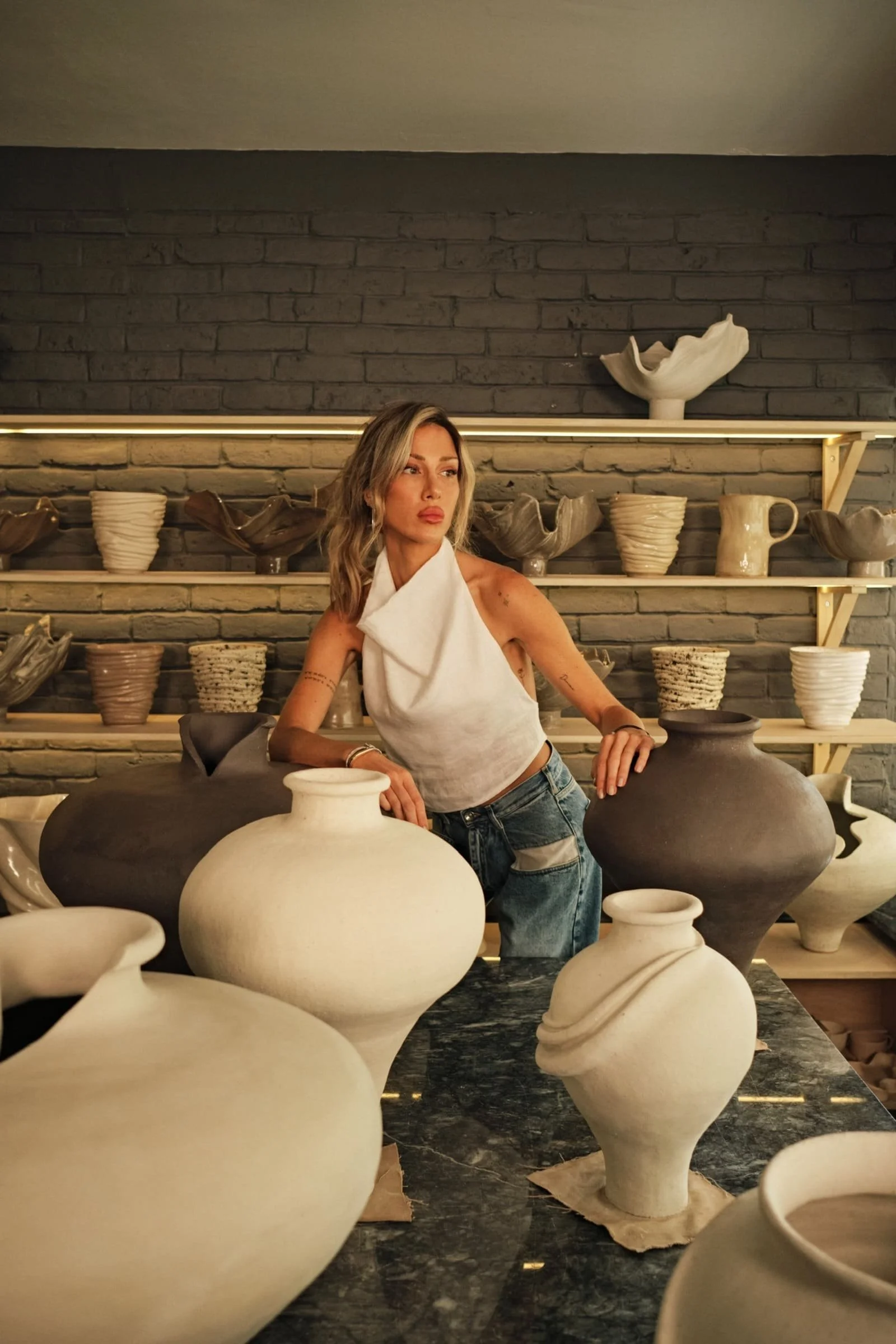
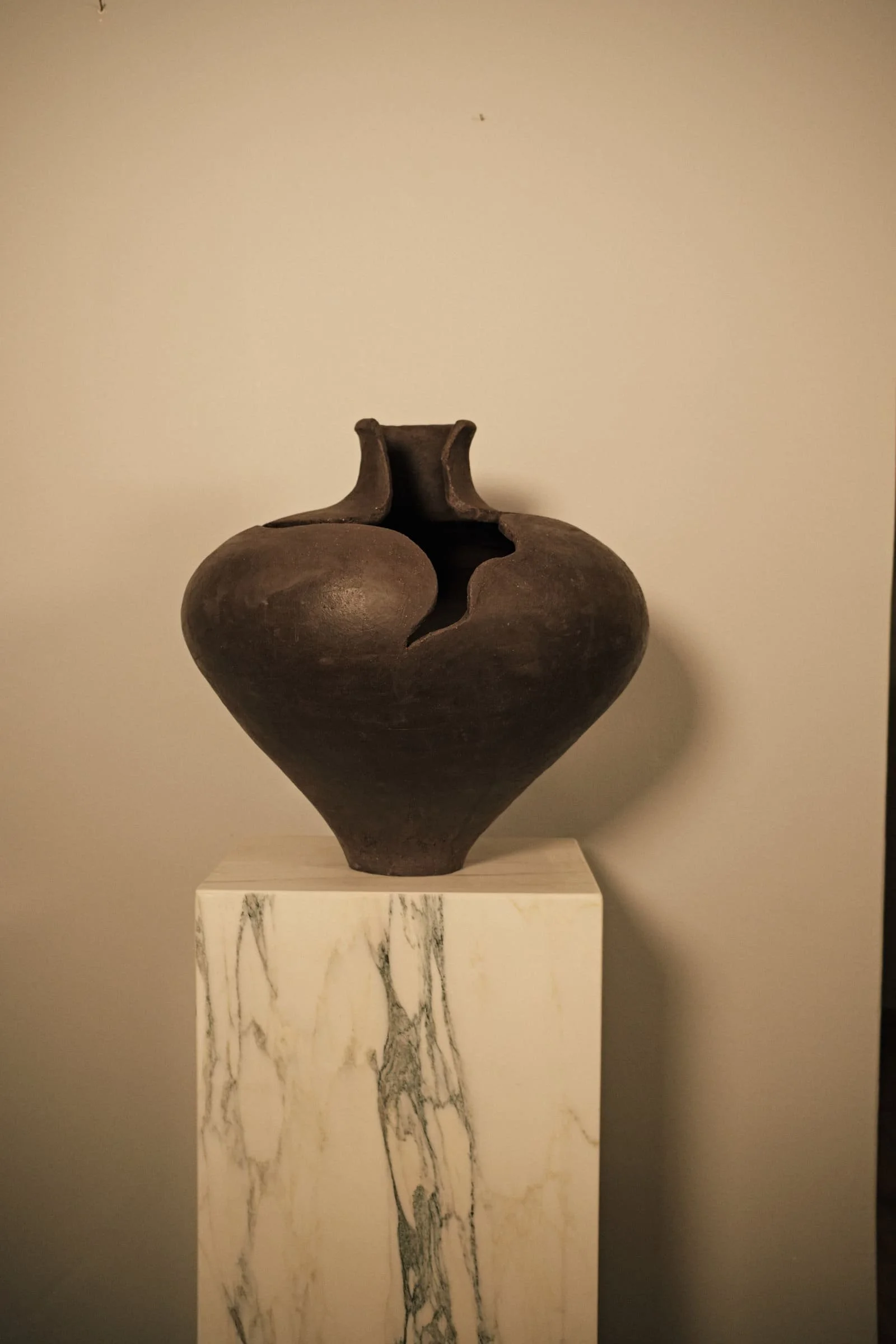
“Living between two cultures meant I was always moving between different ways of seeing, living and belonging. Over time I've realised that this in-between space has shaped me more than either city itself.”
Cemre Karataş
DESIGNEERS
You work primarily with porcelain and stoneware: what draws you to these materials, and how do they challenge or guide your process?
Cemre Karataş
Although I've worked with porcelain on a few projects, stoneware is the material I always return to. Before it becomes anything, it's simply earth. I think that's what has always drawn me to clay. In a world that moves faster than ever, working with it feels like a return.
I'm drawn to stoneware because of its quiet strength. It has to withstand incredibly high temperatures before it becomes what it is, and I deeply respect that. There's something profoundly honest about a material whose strength is revealed only through what it endures.
Working with stoneware is a constant dialogue. It has its own character and its own limits, and part of my practice is understanding both. I don't see those limits as something to overcome but as something to work alongside. They ask for attention, respect and precision, and I think the work is stronger because of that.
DESIGNEERS
What does your creative process look like: is it intuitive, structured, or somewhere in between?
Cemre Karataş
It always begins with intuition. I rarely start with a fully formed idea or a detailed plan. More often, it's a feeling or a form that appears almost instinctively. I trust that first response because it usually carries something I don't yet have the words for.
From that point on, the process becomes incredibly disciplined. I question everything. I'll revisit the same curve or proportion for days if I feel it hasn't quite arrived where it needs to be. Sometimes a tiny adjustment suddenly becomes exactly what I had been searching for all along. Other times, after days of working, I realise the piece simply isn't going to become what I know it can be, and I'm prepared to let it go and begin again.
People often think intuition and discipline are opposites, but for me they're inseparable. Intuition tells me where to begin; discipline is what allows me to arrive there. There's always a moment when the work stops asking anything more of me. That's when I know it's finished.
DESIGNEeRS
You've exhibited during Paris Design Week and Milan Design Week. How did that moment contribute to your work as a ceramicist?
Cemre Karataş
Exhibiting during Paris Design Week and later Milan Design Week was significant, not because it felt like validation, but because it felt like alignment. Seeing my work in those environments, surrounded by people whose lives revolve around art and design, I had a quiet moment of thinking, perhaps I belong here.
What stayed with me most wasn't the exhibitions themselves, but that feeling. It didn't change the way I make work. If anything, it encouraged me to trust my own voice more deeply and to continue following it without trying to fit into expectations or trends.
Looking back, I think those experiences gave me a greater sense of conviction. They reminded me that the work doesn't need to become something else in order to belong. It simply needs to become more fully itself.
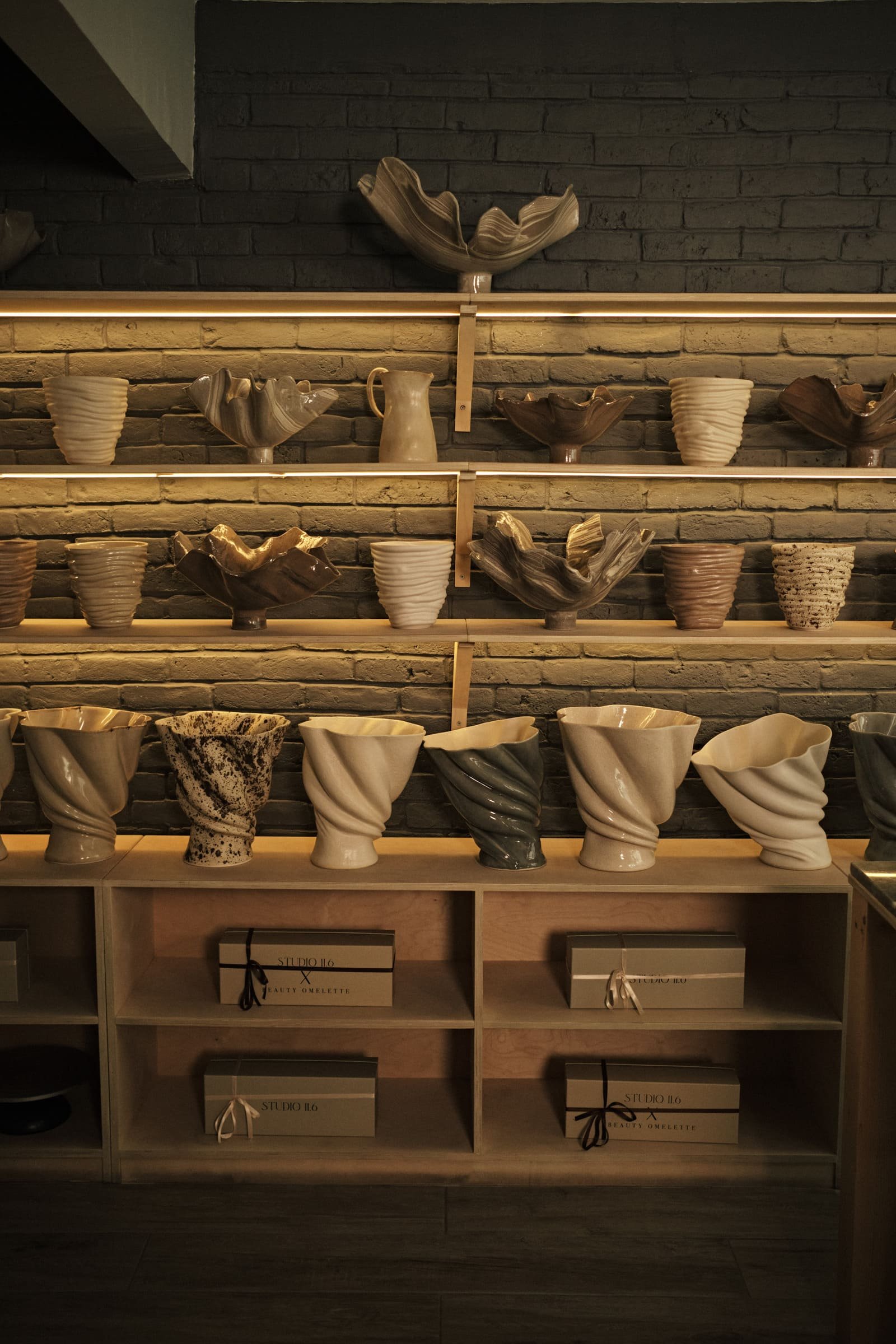
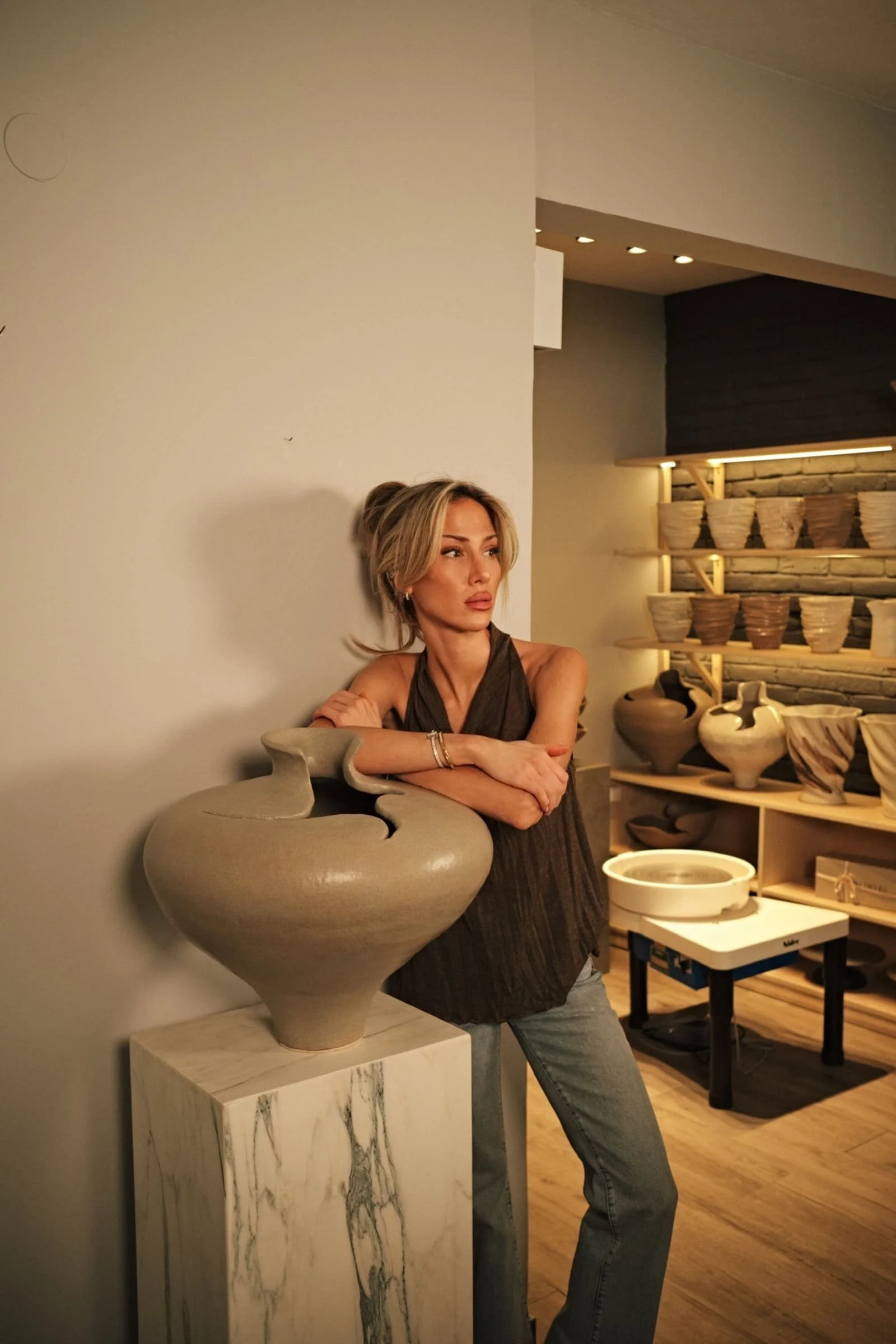
DESIGNEERS
Your dream dinner guest?
Cemre Karataş
Tennessee Williams, without question. I've always been deeply moved by the way he wrote about longing, vulnerability and the quiet complexities of being human. There's an honesty in his work that has stayed with me for years, so much so that one of his lines stayed with me for years, to the point that I eventually chose to carry it with me as a tattoo.
I don't think we'd spend the evening talking about writing. I'd want to understand how he saw people so deeply, and whether he believed that yearning ever truly leaves us, or simply becomes part of who we are.
I have a feeling we'd spend far more time talking about being human than about art.
DESIGNEeRS
Your favourite hotel in the world?
Cemre Karataş
I honestly don't think I have a single favourite. Different places stay with me for different reasons. Claridge's reminds me of home, while Hotel Il Pellicano reminds me of a slower rhythm of life and a quieter way of experiencing beauty.
What they share is something I find myself returning to again and again: neither tries too hard. There's a quiet confidence in both places, a sense of knowing exactly what they are and never needing to prove it. I think I'm always drawn to that kind of authenticity, whether it's in a hotel, a work of art, or a person.
DESIGNEeRS
Your design hero?
Cemre Karataş
I've admired many artists and designers over the years, but I've never been drawn to following one particular person or aesthetic.
If I had to mention someone, it would probably be Brâncuși. I've always admired his pursuit of essence, his belief that simplicity isn't about taking things away for the sake of minimalism but about revealing what truly matters.
More than any individual, though, I admire people who remain deeply true to their own way of seeing the world. The work that stays with me is always the work that couldn't have been made by anyone else. I think that's what I've been searching for in my own practice all along, not something that looks different, but something that feels undeniably true.
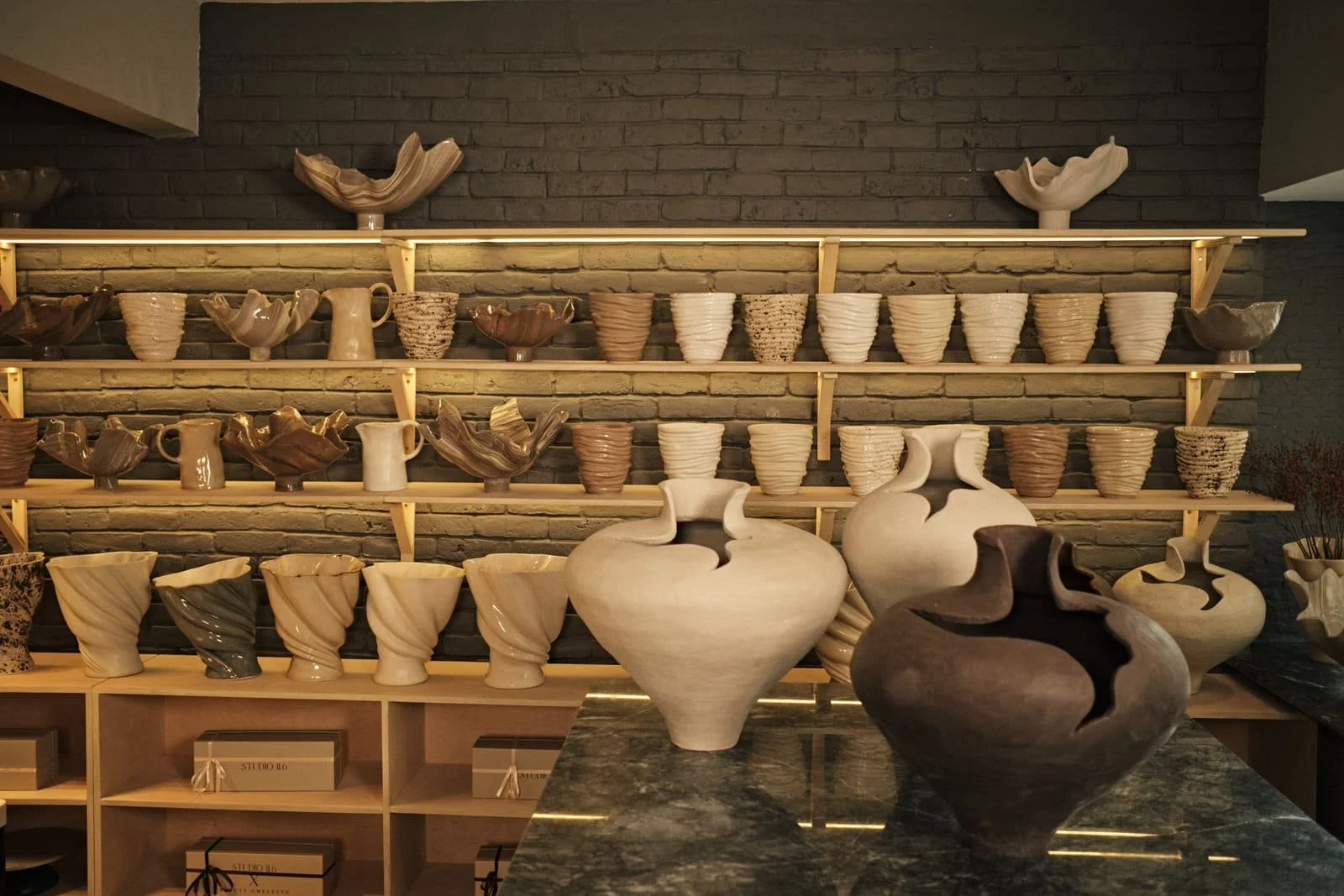
Cemre Karataş represents a new generation of ceramic artists redefining the relationship between craft, collectible design and architecture.
It is a fitting measure for an artist whose entire practice is an argument against excess. In a design world that rewards the loud and the immediate, Karataş is betting on the opposite: that a form stripped to its essentials, made slowly on the shores of the Bosphorus, will outlast the noise. On the evidence of Paris and Milan, the bet is paying off.