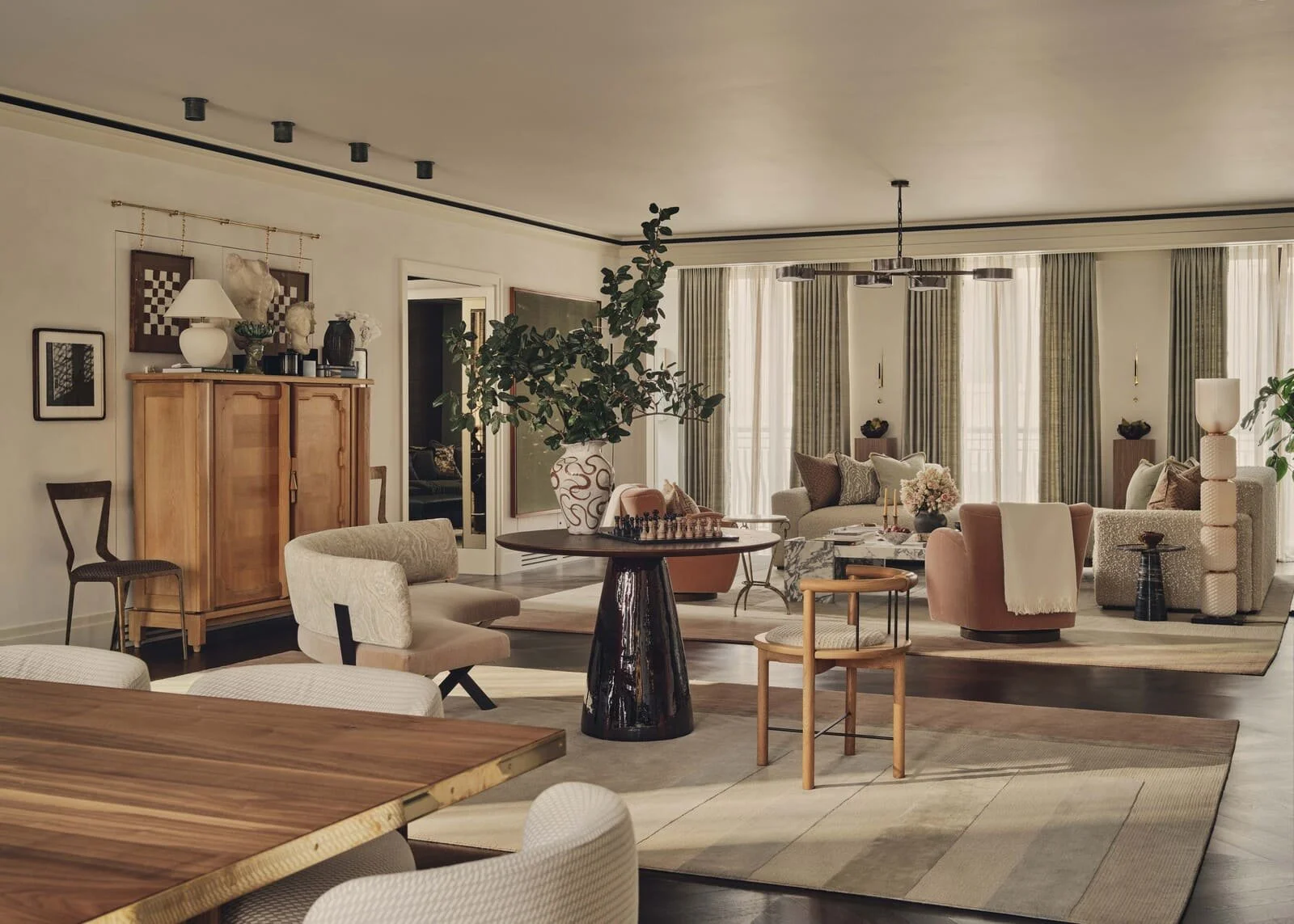
Artefacts from Possible Futures: Inside the Work of Edoardo Cozzani
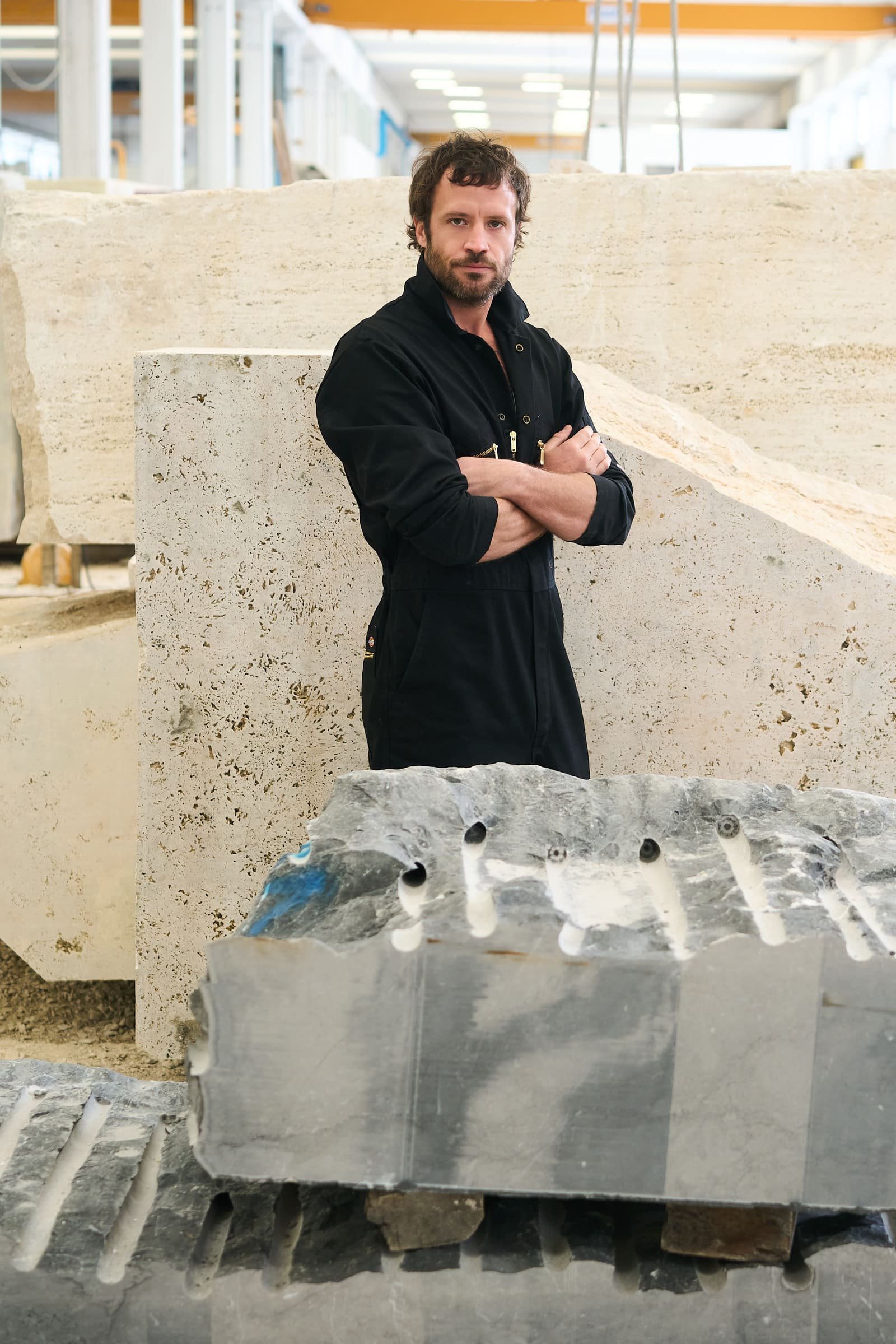
people • ARTIST
Edoardo Cozzani is an Italian multimedia artist whose work spans sculpture, photography and site-specific installation, exploring the space between nature, technology and material transformation. Working with stone, Murano glass, fibreglass and aluminium, he creates forms that feel both ancient and futuristic, drawing on geological processes, industrial production and imagined futures.
Rooted in experimentation and material enquiry, Cozzani's works often resemble artefacts from an unknown civilisation, suspended between archaeology and invention, permanence and change. In conversation with Designeers, he reflects on material tension, curiosity, landscape and the evolving relationship between the natural and the synthetic.
Words: designeers
JUNE 2026
WEBSITE: edoardocozzani.studio
INSTAGRAM: @edoardo_cozzani
DESIGNEERS
Your work often blurs the line between the natural and the synthetic. What draws you to that tension?
Edoardo Cozzani
What draws me to that tension is that it mirrors our relationship with the world around us. Synthetic materials, alongside natural elements, become traces of the encounter between humanity and landscape. I’m interested in the point where those boundaries begin to dissolve, where the artificial starts to feel organic and the natural appears altered or constructed.
There is also something about human-made materials that makes me think about time. Plastic, glass, metal and concrete all carry the imprint of a specific moment in human history. Working with them feels, in a way, like freezing time itself, preserving evidence of our presence while imagining how it might one day be rediscovered, transformed or fossilised by the future. I’m fascinated by the instability that emerges from these encounters and the fragile balance created when opposing forces coexist.
DESIGNEERS
Your Murano glass and marble works feel especially powerful, almost like geological forms interrupted by something futuristic. What was the original inspiration behind these pieces?
Edoardo Cozzani
The project began with an interest in geology and stratigraphy. I imagined the glass elements as vessels capable of trapping traces of aluminium, compressed between stone and molten glass, like artefacts suspended from another time.
As the work evolved, I realised the real focus was the tension created between glass and stone. The contrast between the two materials seemed to animate the sculptures, as though solid geological formations were becoming living entities. They began to feel as if they belonged simultaneously to the past and the future, appearing fragile yet heavy, stable yet constantly on the verge of transformation.
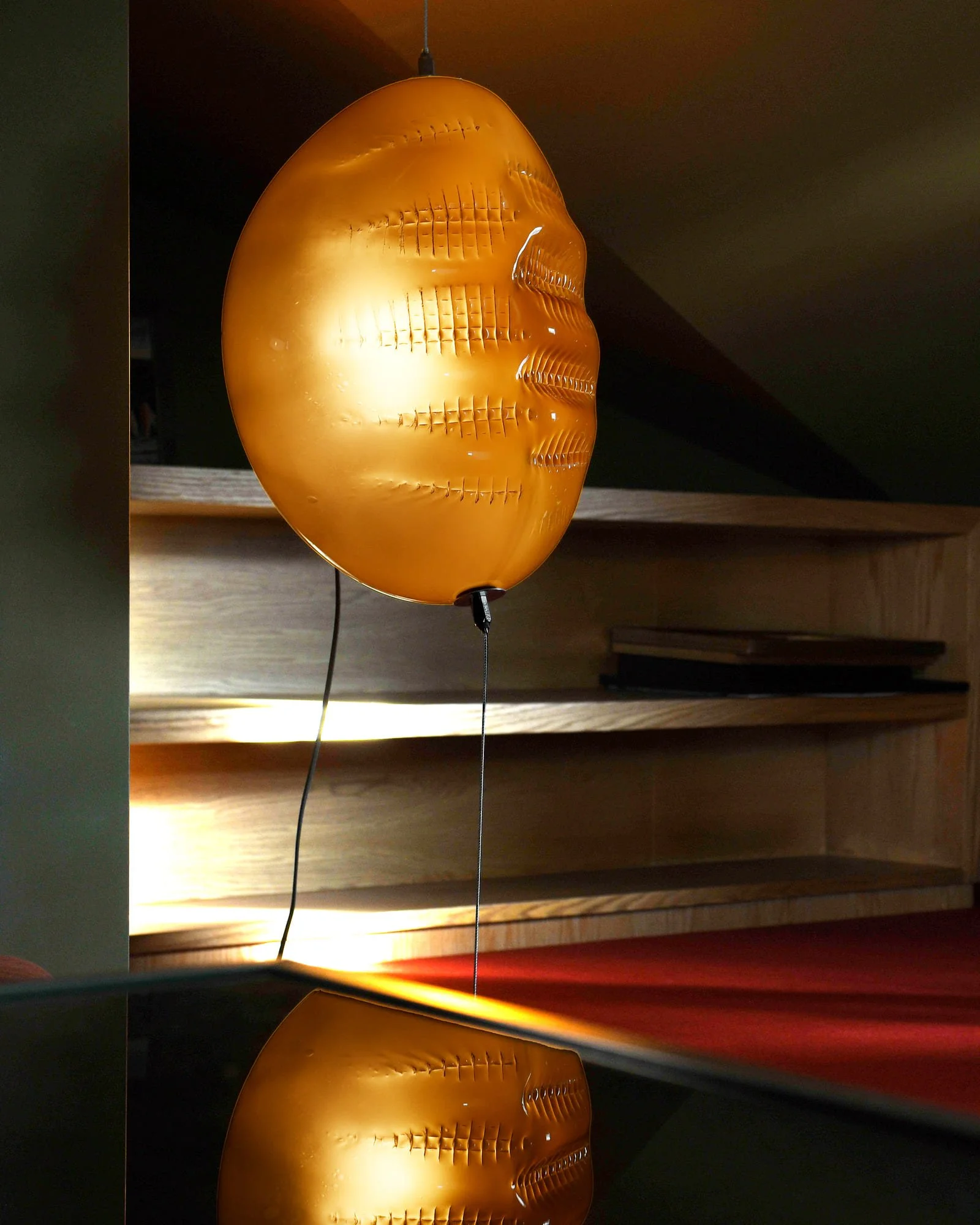
Edoardo Cozzani - Calymene Light
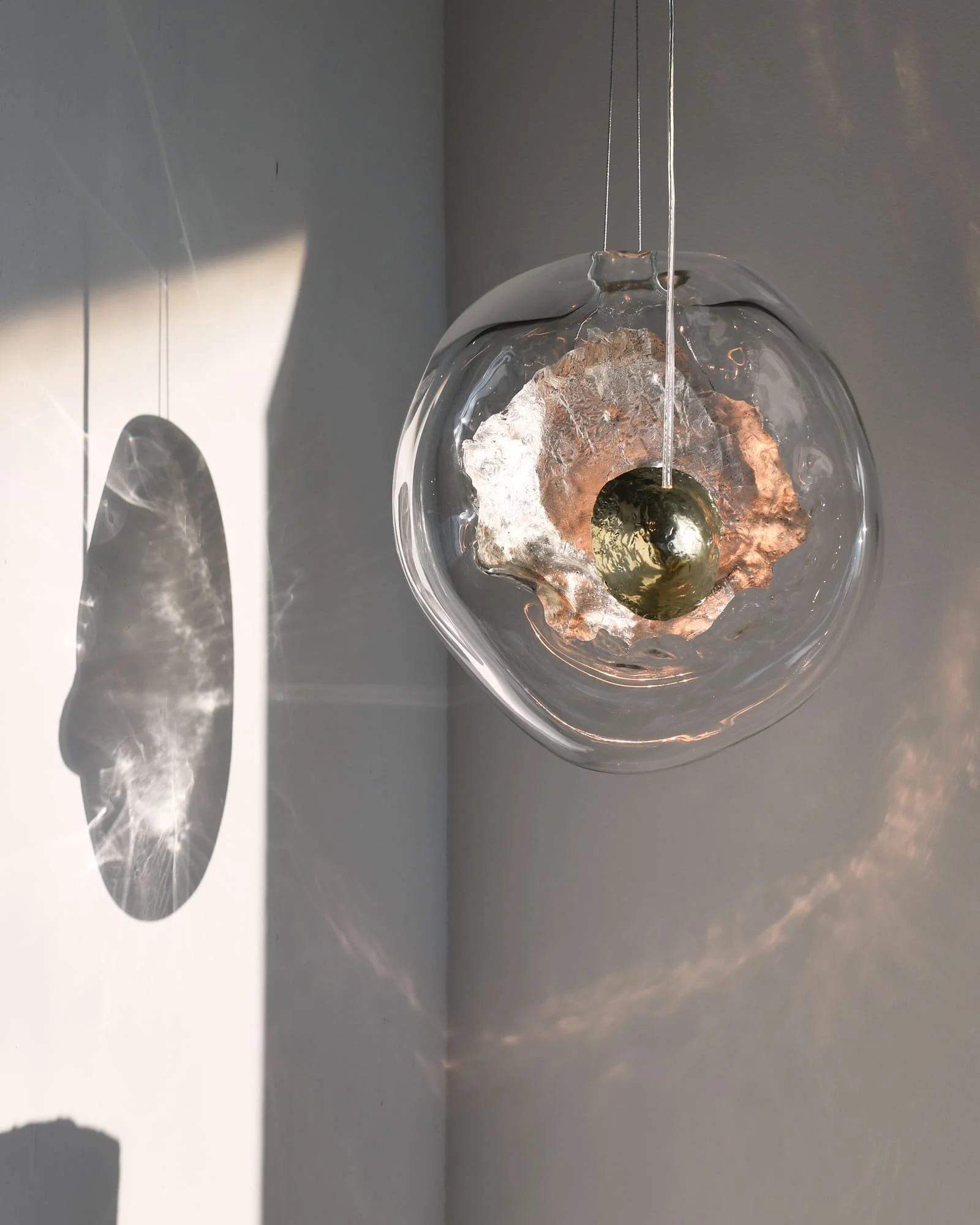
Edoardo Cozzani - Spolia Light
DESIGNEERS
Stone, glass, fibreglass and aluminium each carry very different energies and histories. What interests you about bringing these materials into dialogue with one another?
Edoardo Cozzani
Stone interests me because it is one of the purest outcomes of natural processes, formed over millions and billions of years. It reminds me that everything is alive in some way, constantly changing and evolving through time.
Glass, aluminium and fibreglass belong to a different story. They emerge from human production and industrial culture, yet they are remarkably adaptable and capable of taking on new forms. I’m interested in how familiar materials can acquire entirely new meanings when placed in unexpected contexts, creating a dialogue between natural evolution and human intervention.
DESIGNEERS
Your work feels deeply physical, yet also philosophical. How do intuition and intellectual research coexist within your process?
Edoardo Cozzani
I tend to approach conceptual research and artistic practice as separate activities. Over the years, I’ve developed a deep interest in philosophy, sociology, history and science.
Whether through religion, philosophy or science, people have always tried to make sense of forces that remain difficult to fully understand. Looking across different periods of history, I realised that many thinkers, from Plato and Descartes to Camus, Newton and Joseph Campbell, were ultimately exploring the same questions: why are we here and how do we feel in relation to being?
That sense of curiosity drives my artistic practice. A fascination with the unknown, the inexplicable. Art, to me, exists in that space: a kind of descent into the abyss interrupted by brief moments of clarity. “Art is nothing more than a reflection of life itself - unpredictable sparks of light within the vastness of the unknown.”
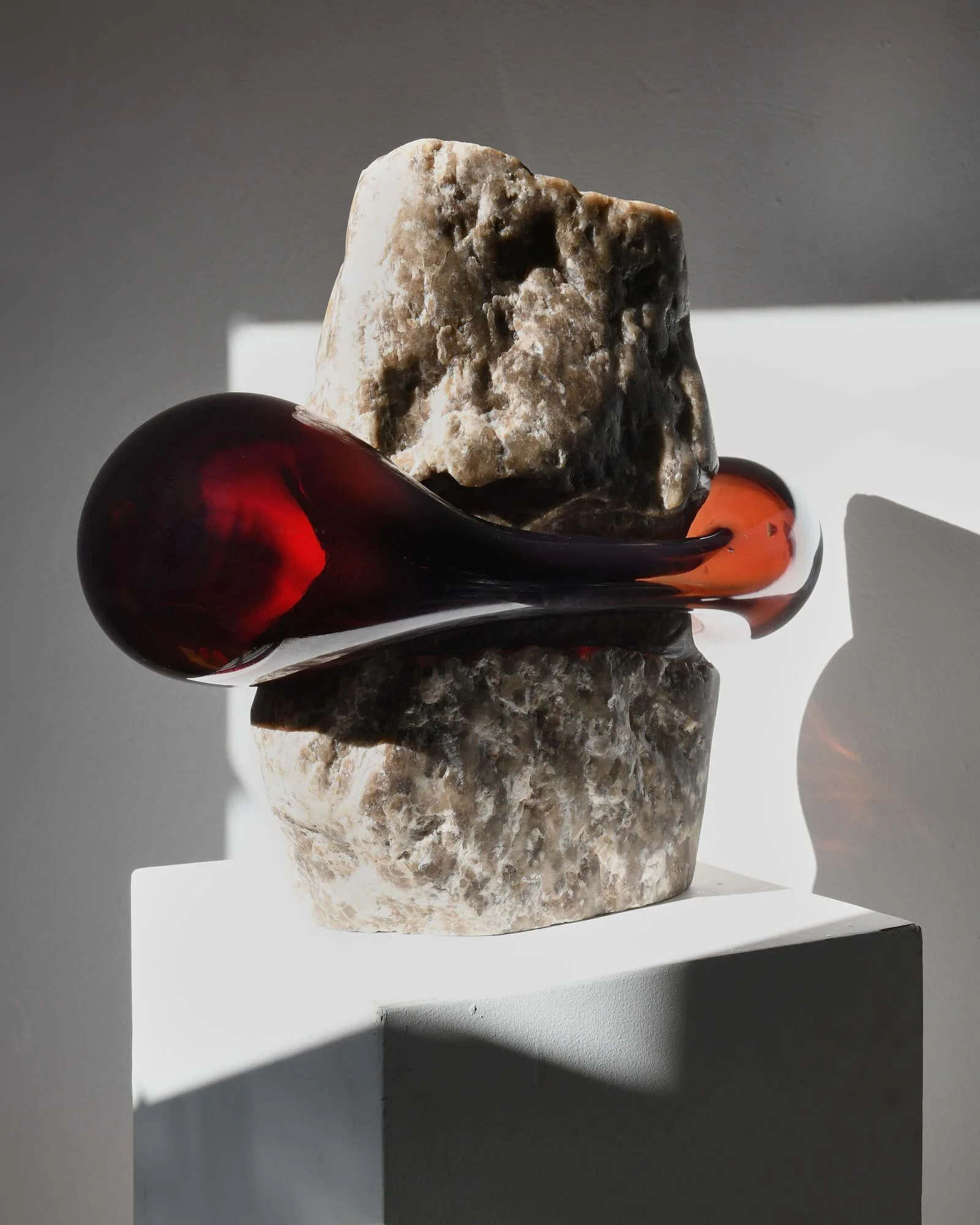
Spolia Collection
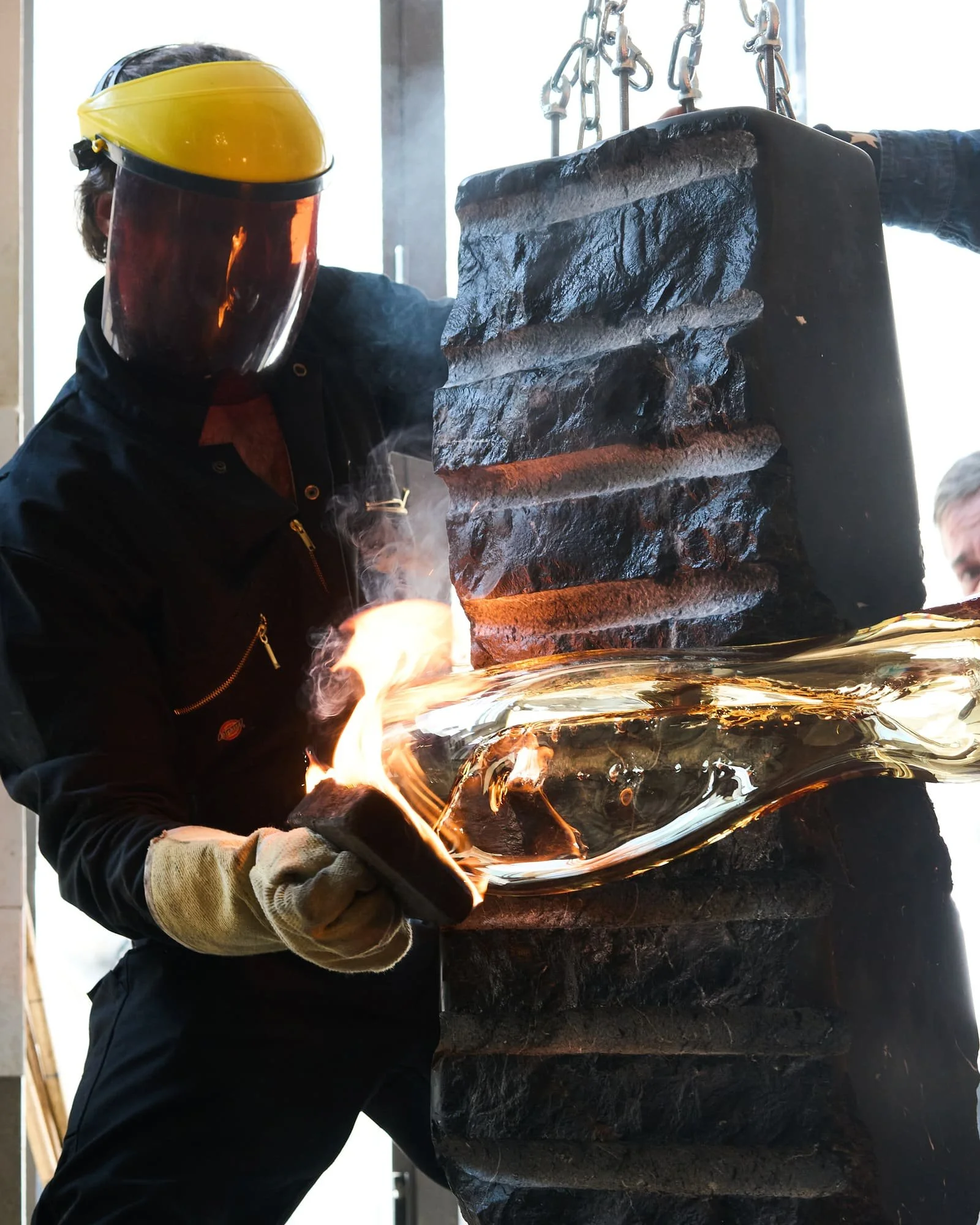
Edoardo Cozzani in his workshop
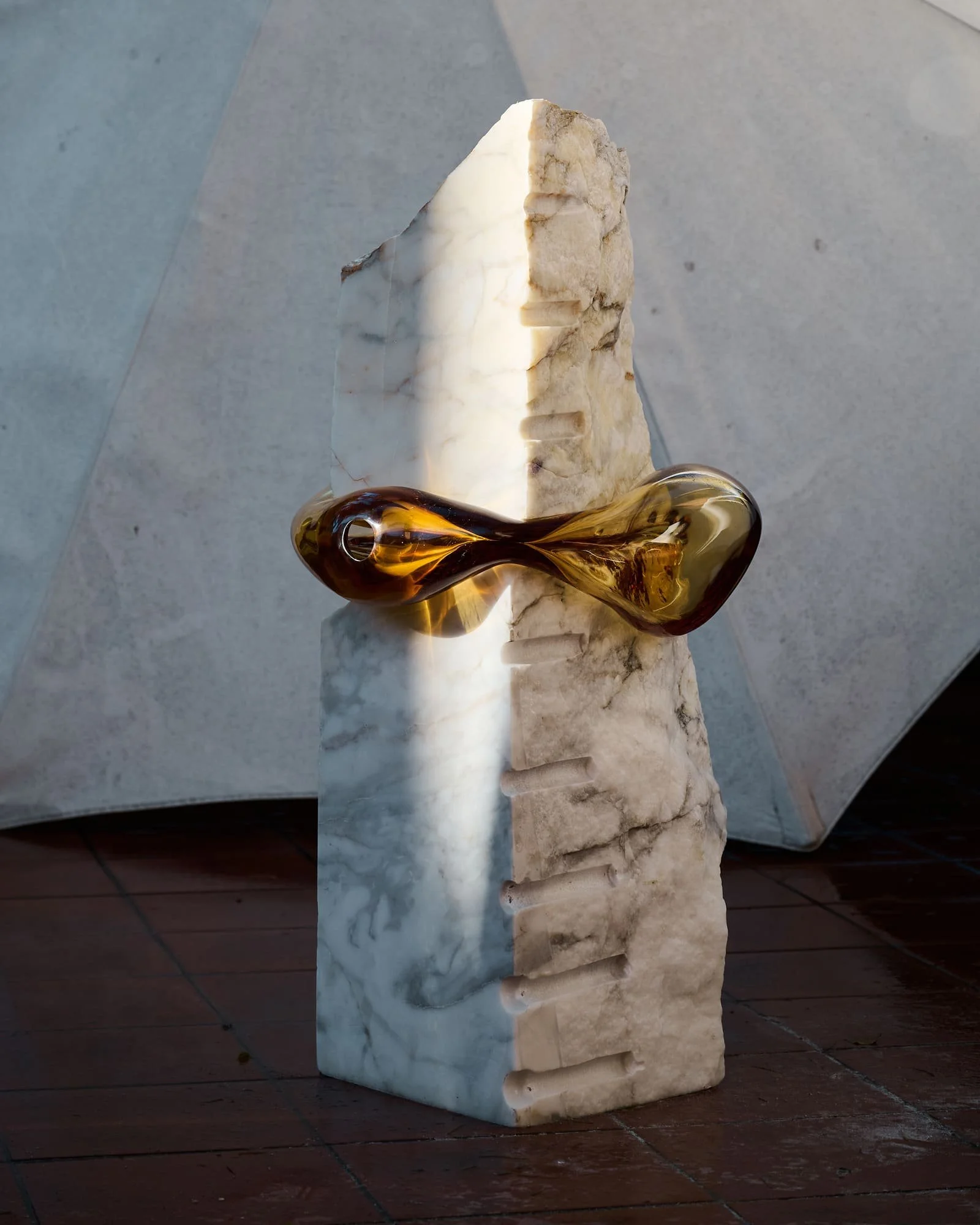
Spolia Collection
“I think art should function a little like a riddle. You may not fully understand it, but something about it lingers.”
Edoardo Cozzani
DESIGNEERS
Many of your works feel like fragments from another civilisation or another future. Are you consciously thinking about time when you create?
Edoardo Cozzani
No, I’m not. But I am interested in the fantasy of possible realities, future ones, or even alternate versions of the present. I’m drawn to speculation and the question of ‘what if’. I often think about how a single event unfolding differently could create an entirely different reality or how present circumstances might eventually shape futures we cannot yet imagine. That sense of possibility is something I return to often.
DESIGNEERS
Is there a recurring question or obsession that continues to return throughout your practice?
Edoardo Cozzani
Probably the unfamiliar. Much of my work revolves around shifting context, introducing objects into environments where they don’t belong, transforming materials into something unexpected, or creating connections between elements that would not normally coexist.
The same instinct shapes my process. Whenever I begin to feel comfortable with a medium or technique, I become interested in moving towards something new. I’m drawn to the discomfort of not fully knowing what I’m doing because that uncertainty is often where the most interesting ideas emerge.
DESIGNEeRS
Italy has a uniquely layered relationship with ruins, craftsmanship and material history. In what ways has your Italian background shaped your visual language?
Edoardo Cozzani
For a long time, I didn’t think about it very much, but I now realise how much my background has shaped my visual language.
What influenced me most was the contrast between where I grew up and where I spent much of my adult life. I moved to New York at 23 and, after more than a decade there, I became increasingly aware of the tension between old and new, both in landscapes and in ways of living. That contrast sharpened my sensitivity to duality, and themes such as permanence and impermanence, stillness and entropy naturally became central to my work.
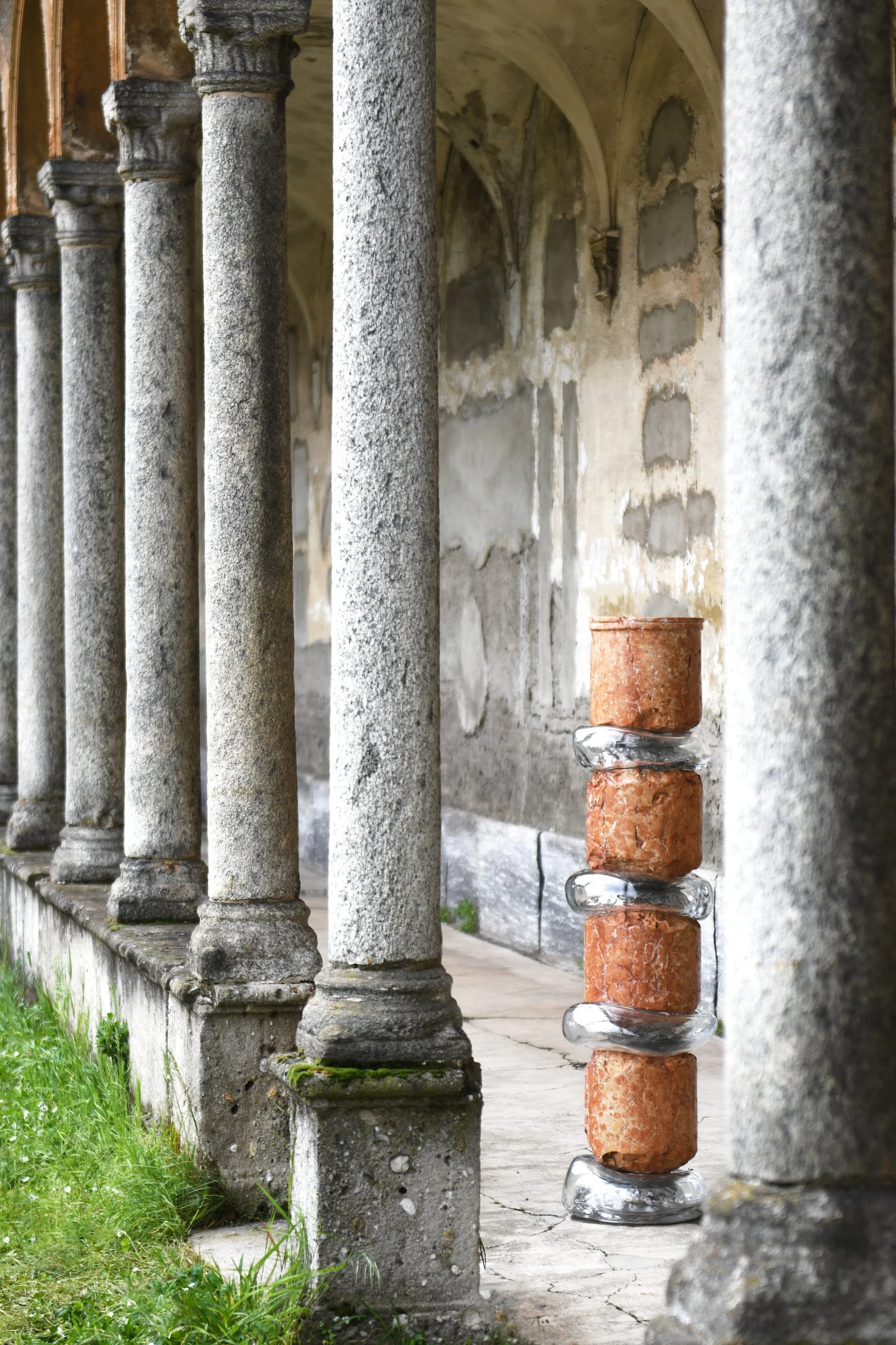
Edoardo Cozzani - Vessels Milano
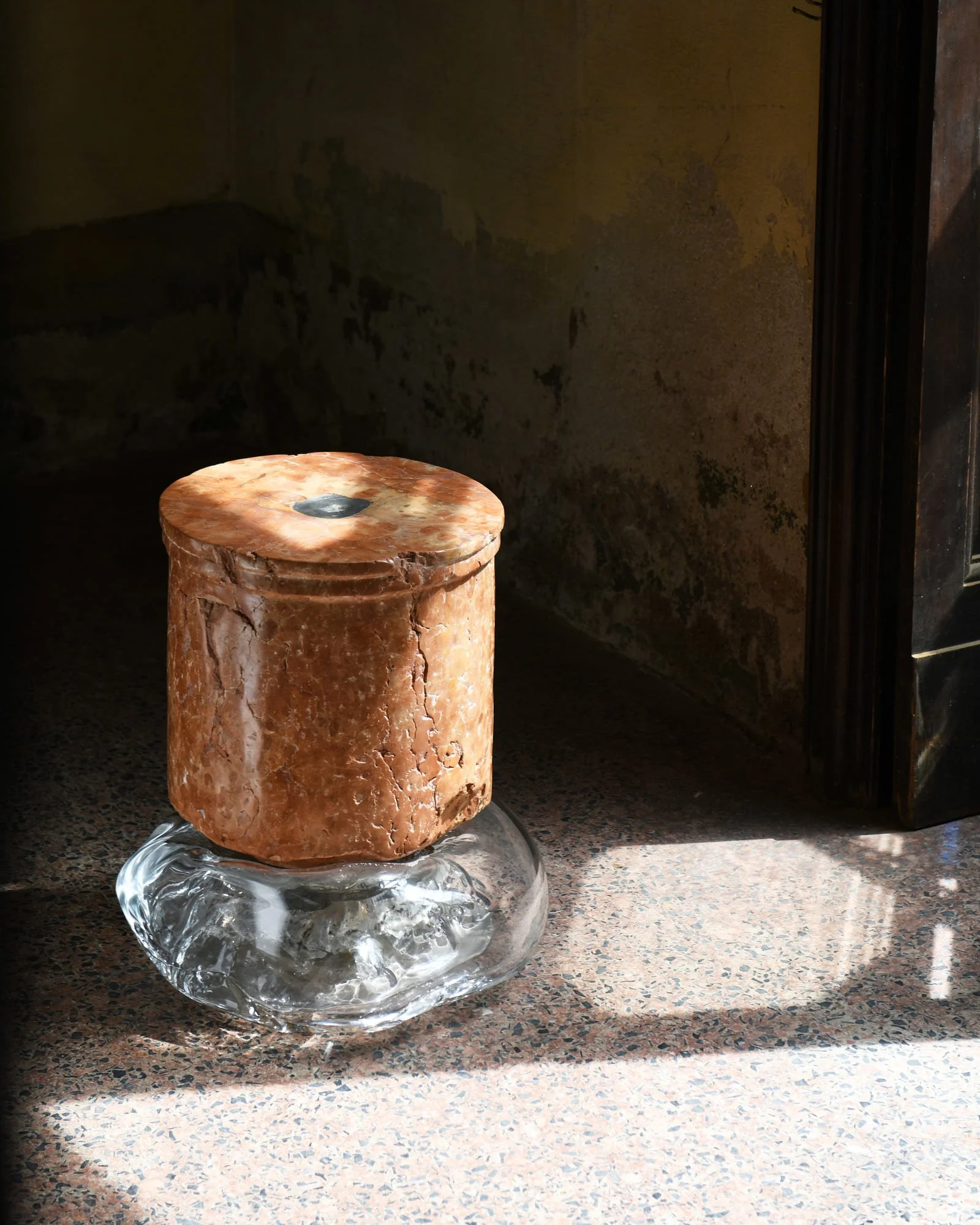
Edoardo Cozzani - Vessels Milano
DESIGNEERS
What interests you more: creating objects or creating states of perception?
Edoardo Cozzani
Neither, really. What interests me is the act of play. When I begin a project, I’m not trying to control either the final object or the response it generates. Instead, I’m interested in creating conditions where something unexpected can happen and allowing the process to unfold from there.
DESIGNEeRS
What do you hope people feel when standing in front of your work: curiosity, discomfort, stillness, or uncertainty?
Edoardo Cozzani
I don’t usually set out to make people feel a particular way. But it always makes me smile when people become curious or confused.
I think art should function a little like a riddle. You may not fully understand it, but something about it lingers, creating a desire to return and look again.
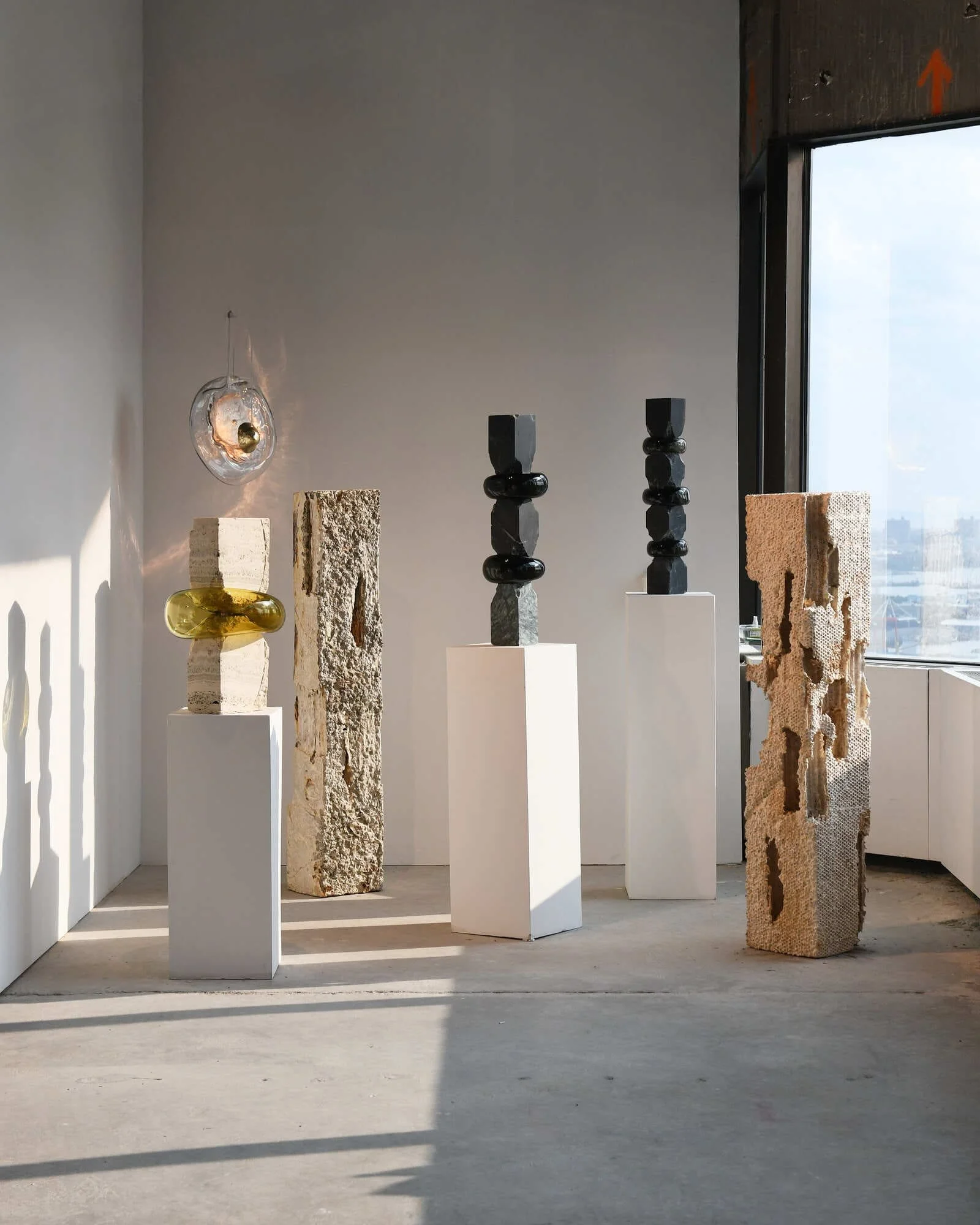
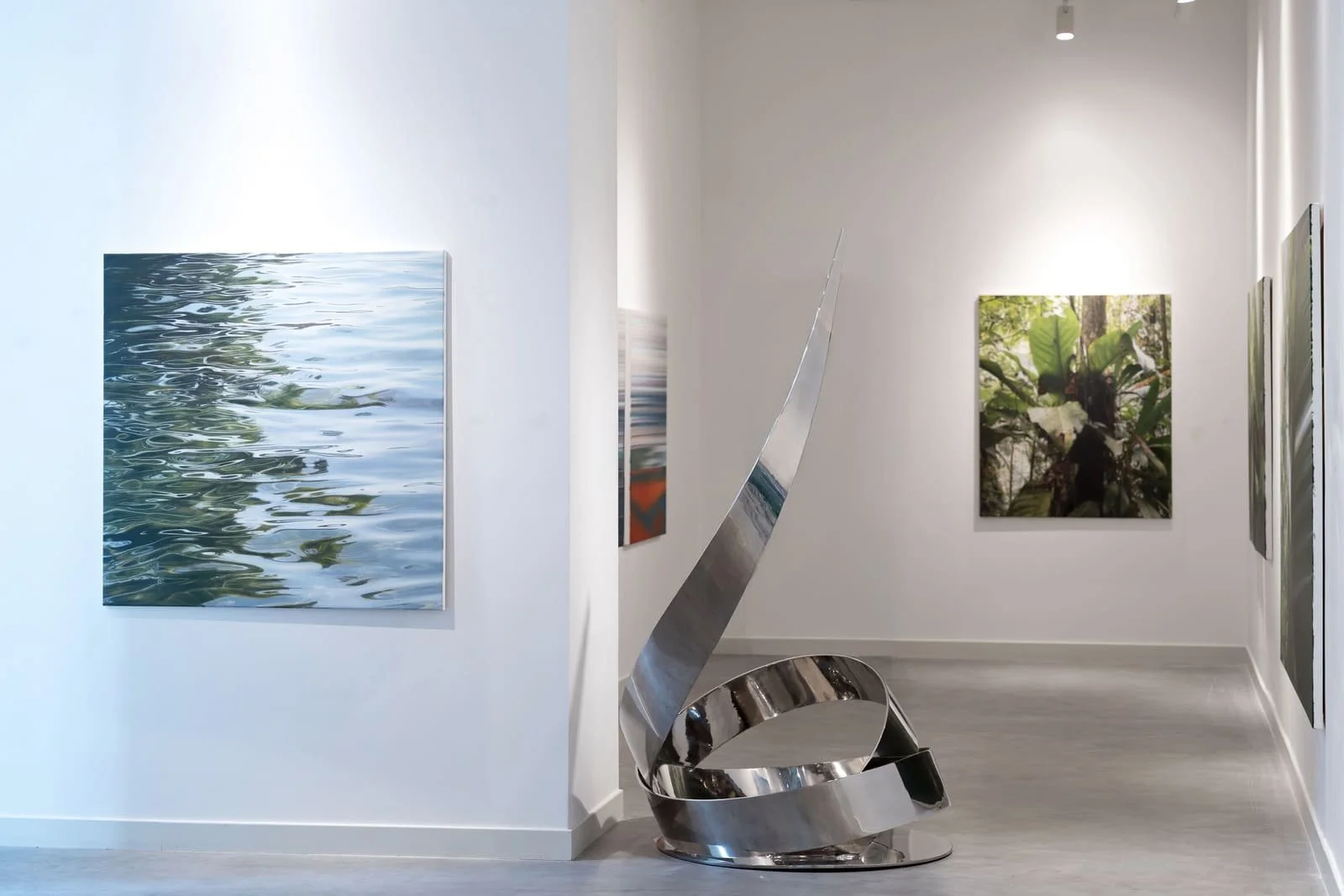
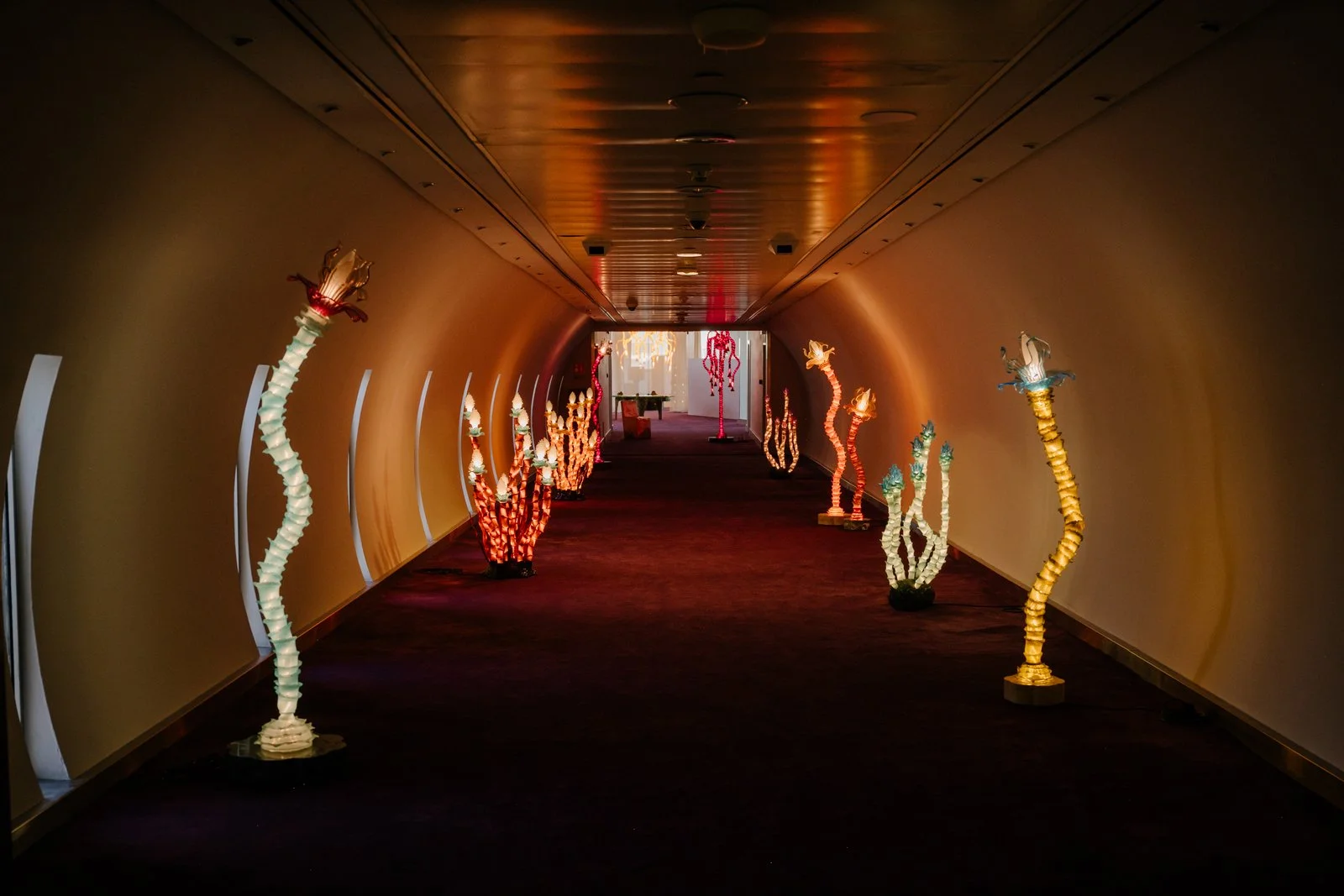
Edoardo Cozzani display at Collectible New York 2025 in collaboration with mycelium works by Kamilla Csegzi
For Edoardo Cozzani, art is not about arriving at answers but about remaining open to possibility. Working across stone, Murano glass, fibreglass and aluminium, he approaches materials not as fixed substances but as participants in an ongoing process of transformation, experimentation and discovery.
Throughout his practice, curiosity takes precedence over certainty. Geological time, industrial processes, philosophy and imagined realities converge to create works that resist straightforward interpretation, inviting viewers to linger a little longer and embrace the unfamiliar. Like a riddle without a definitive solution, Cozzani's sculptures offer space for speculation, reflection and wonder.
In a world increasingly driven by clarity and immediacy, his work serves as a reminder that some of the most meaningful experiences emerge not from understanding everything, but from remaining curious about what remains unknown.