Francesco Maria Messina: The Poetry of Natural Design
people • ARTISTS
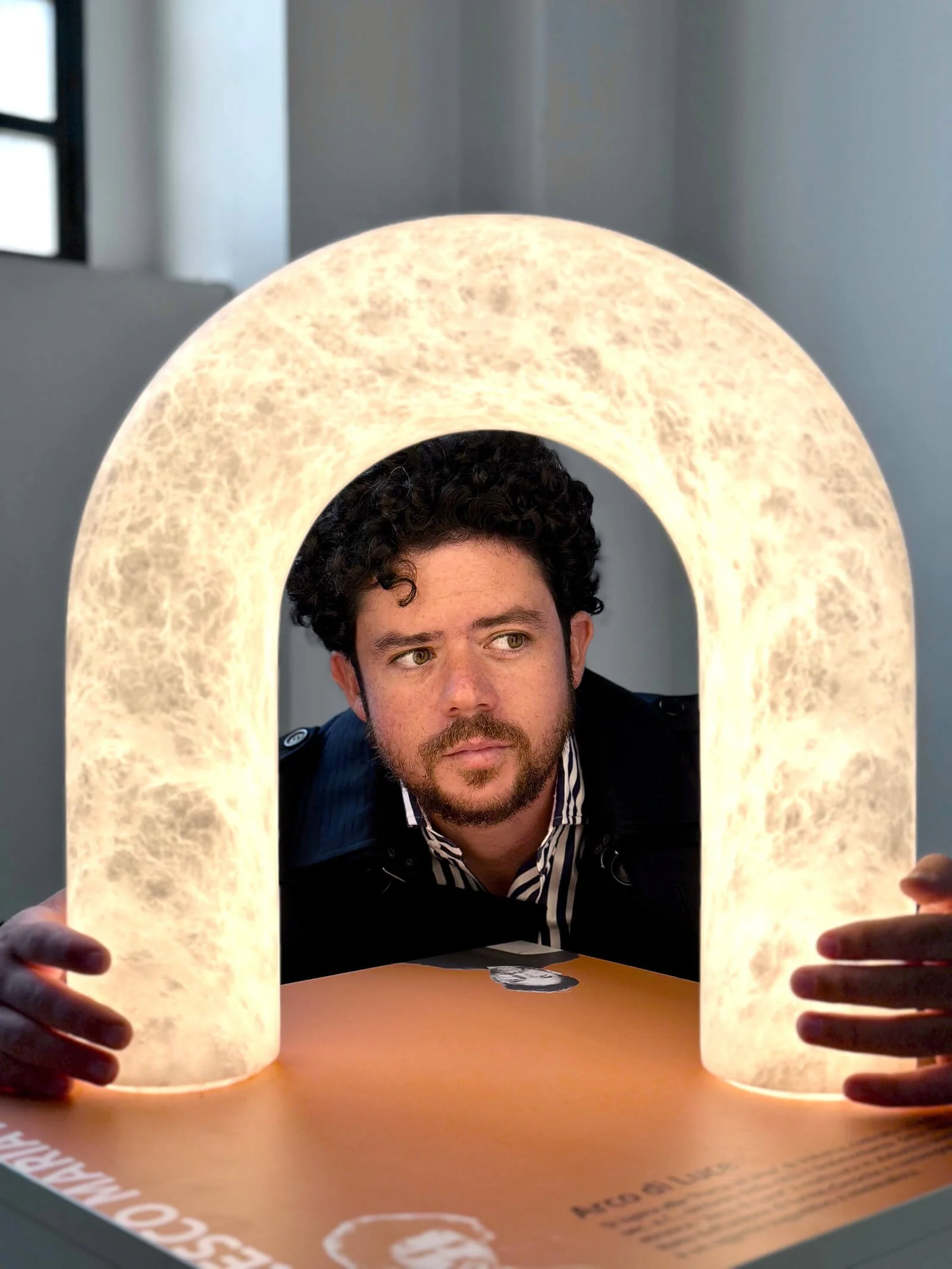
Italian designer Francesco Maria Messina brings a sculptural, elemental quality to contemporary design. Based in Tuscany, his studio explores the dialogue between architecture, nature, and craftsmanship, creating collectible furniture and objects that feel both ancient and modern. Trained in Paris and Lyon under visionary architect Odile Decq, Messina’s work is deeply rooted in material storytelling, where marble, alabaster, and glass become vessels of emotion and time. In this exclusive Designeers interview, he reflects on his journey from architecture to design, the influence of his Tuscan landscape, and how imperfection and process shape his creative language.
Words: designeers
OCTOBER 2025
WEBSITE: fmm.design
INSTAGRAM: @francesco_maria_messina
DESIGNEERS
What is your educational background?
Francesco Maria Messina
I studied at a Liceo Classico in Pisa before moving to Paris, where I trained in architecture at the École Spéciale d’Architecture under the guidance of Odile Decq. I later continued my studies at Tulane University in New Orleans and completed a master’s degree with Odile Decq at Confluence Institute in Lyon.
This architectural foundation continues to shape how I think about proportion, structure, and spatial dialogue. Entering the world of collectible design without formal design training allowed me to remain instinctive and unfiltered. That freedom gave me the courage to trust intuition and explore form beyond convention, something that defines my practice today.
DESIGNEERS
How has your international journey shaped your design vision?
Francesco Maria Messina
My creative language has evolved through years spent living and working in France, Africa, Mauritius, and Italy. Paris exposed me to architecture as cultural expression; Mauritius reconnected me to nature, its ocean, forests, and raw materials; while Tuscany, where I’m now based, grounds me in centuries of Italian craftsmanship and material culture.
These experiences built a design vocabulary rooted in place yet universal in emotion. Each location has left a mark on my work, from the architectural discipline of France to the organic sensuality of the tropics and finally the artisanal precision of Tuscany.
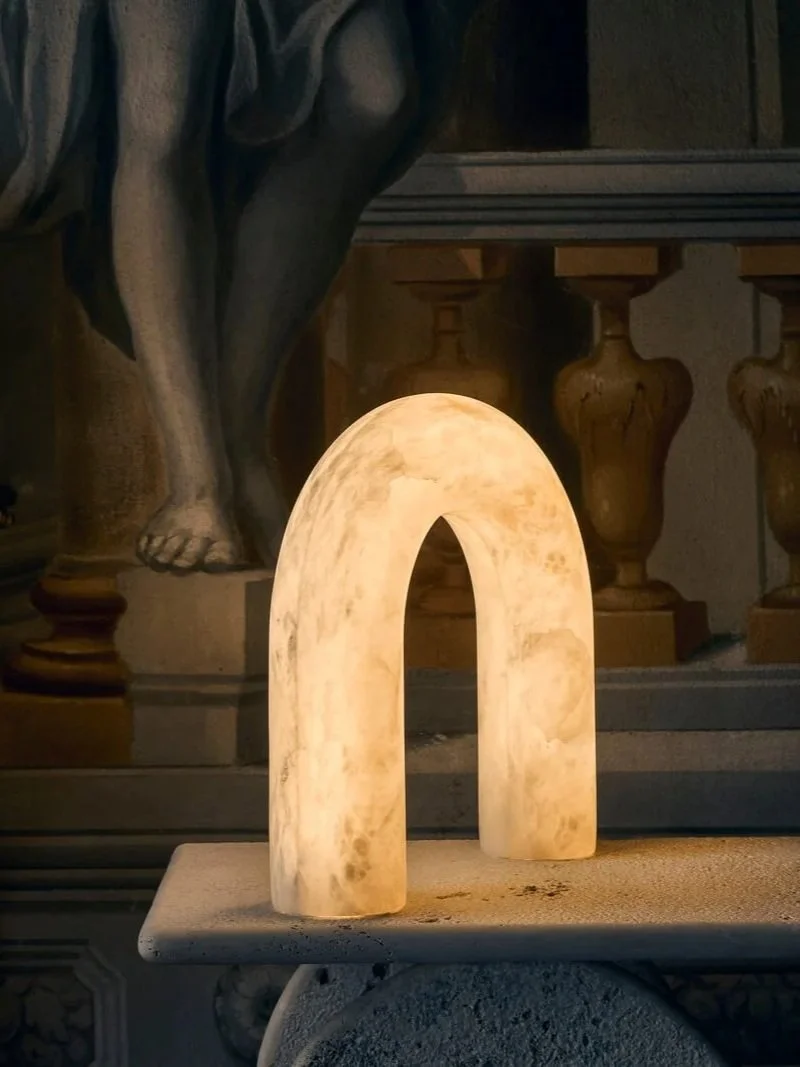
Arco di Luce Lamp
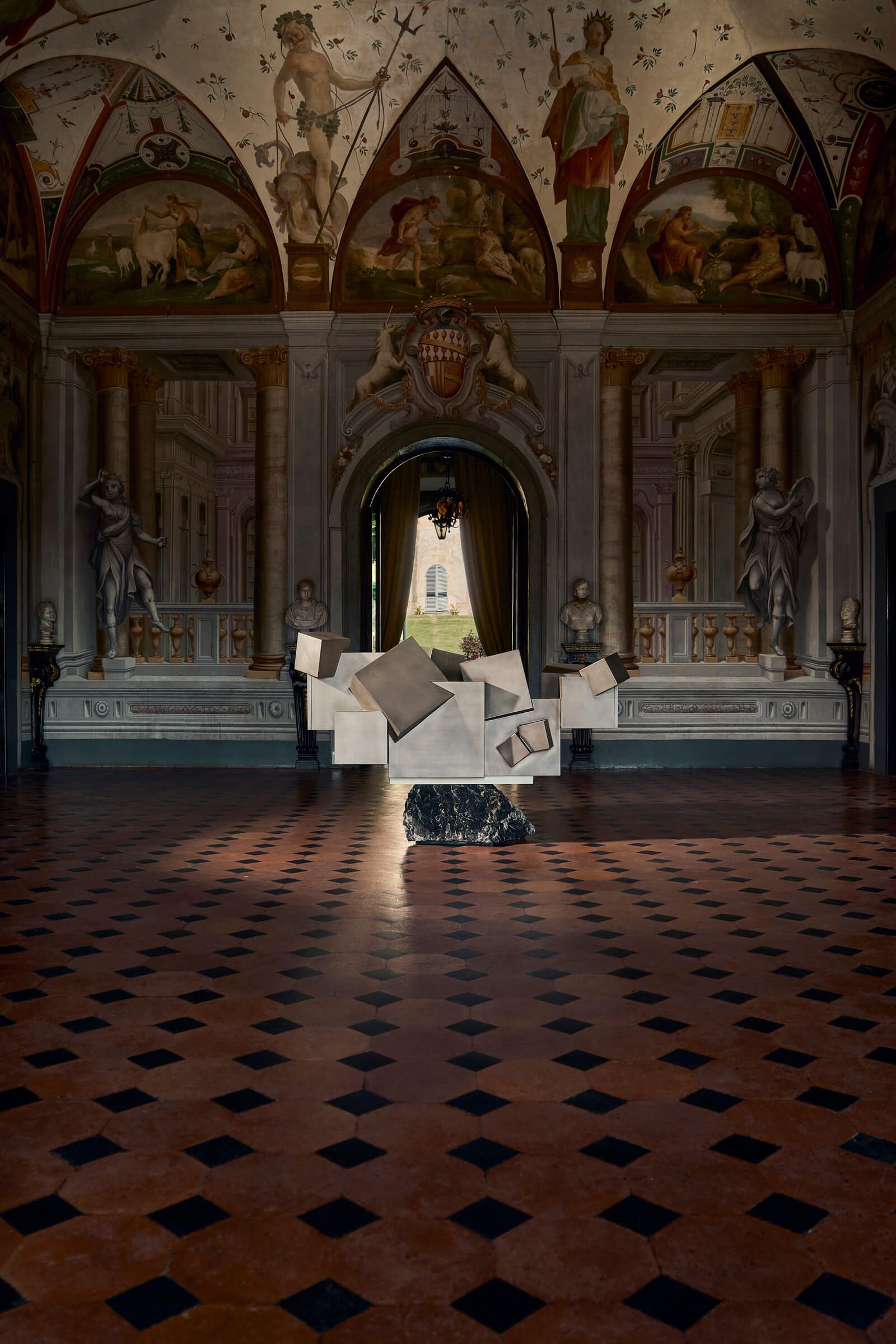
Pyrite Cabinet
DESIGNEERS
How did your first design line and the Cypraea brand come to life?
Francesco Maria Messina
Cypraea marked the beginning of my career as a designer. I created five collections inspired by Mauritius and its natural beauty, pieces that captured the energy of the island through form and material. Coming from an architectural background, I designed instinctively, without predefined boundaries.
That experience helped me establish my voice: sculptural, narrative-driven, and deeply connected to the environment. It also strengthened my belief that collectible furniture can express both art and function, merging emotion with craftsmanship.
DESIGNEERS
What were some of your earliest exhibitions or showcases?
Francesco Maria Messina
My first international platform came through Rossana Orlandi Gallery in Milan, where I exhibited several collections that introduced my work to the world of collectible design. That was followed by shows in London at Mint Gallery and Collect and later at Venice Design Biennial, Edit Napoli, Arte in Nuvola in Rome, and Milan Design Week.
Each exhibition deepened my understanding of how design can communicate across cultures, not just through aesthetics, but through story, material, and emotion.
DESIGNEERS
What concept or philosophy guides your work?
Francesco Maria Messina
Every project begins with a strong concept, often drawn from nature or cultural memory. The melting of polar ice caps inspired a series of mirrors and tables; crystalline mineral formations shaped my Pyrite Cabinet; and the eruption of Vesuvius gave birth to the Plinio Collection, crafted in lava stone, pumice, and ash.
For me, design is material storytelling, transforming nature’s power into sculptural, functional works that endure. My process is less about decoration and more about revealing the essence of matter, giving materials a second life through human hands.
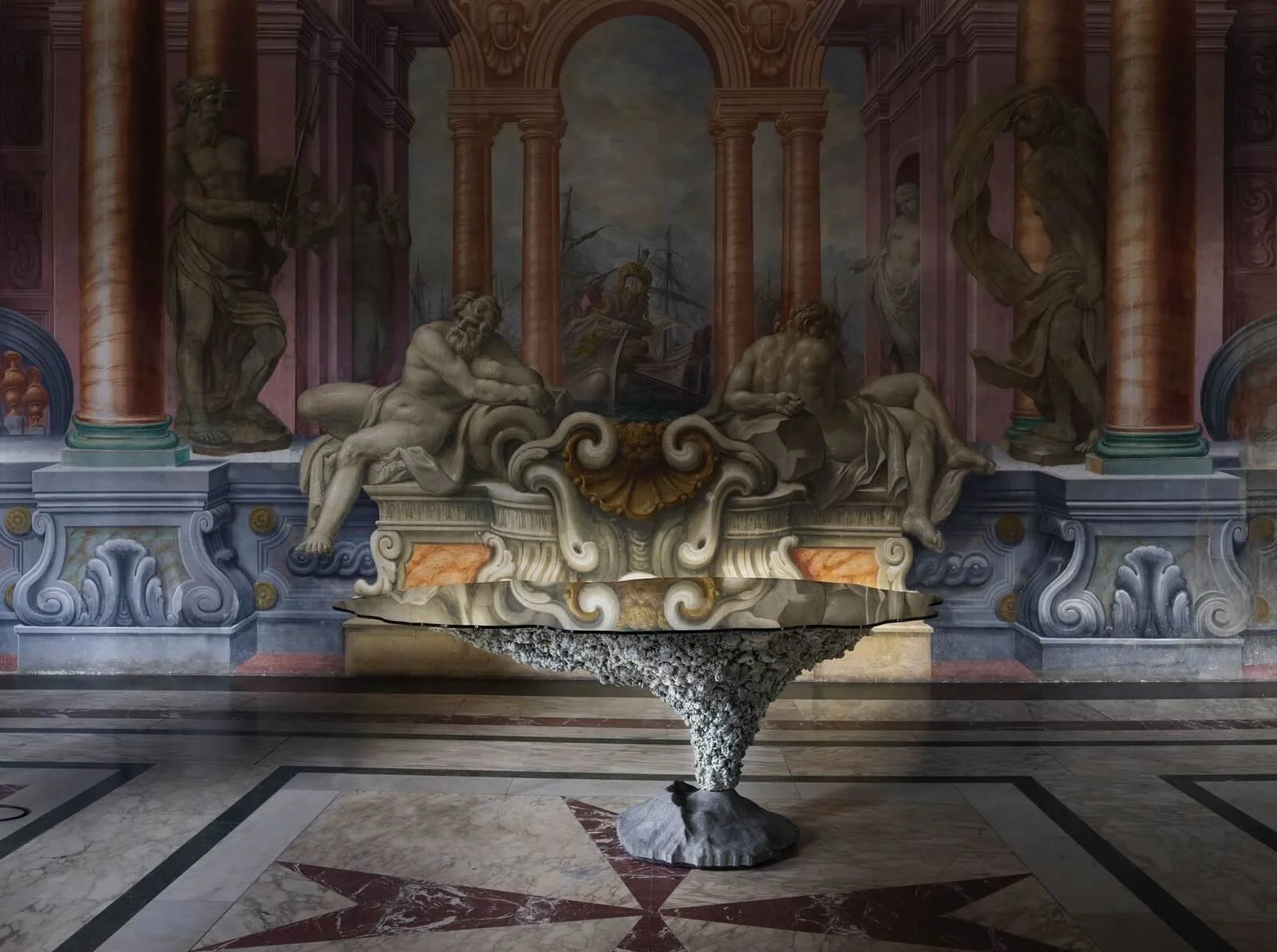
Plinio Table
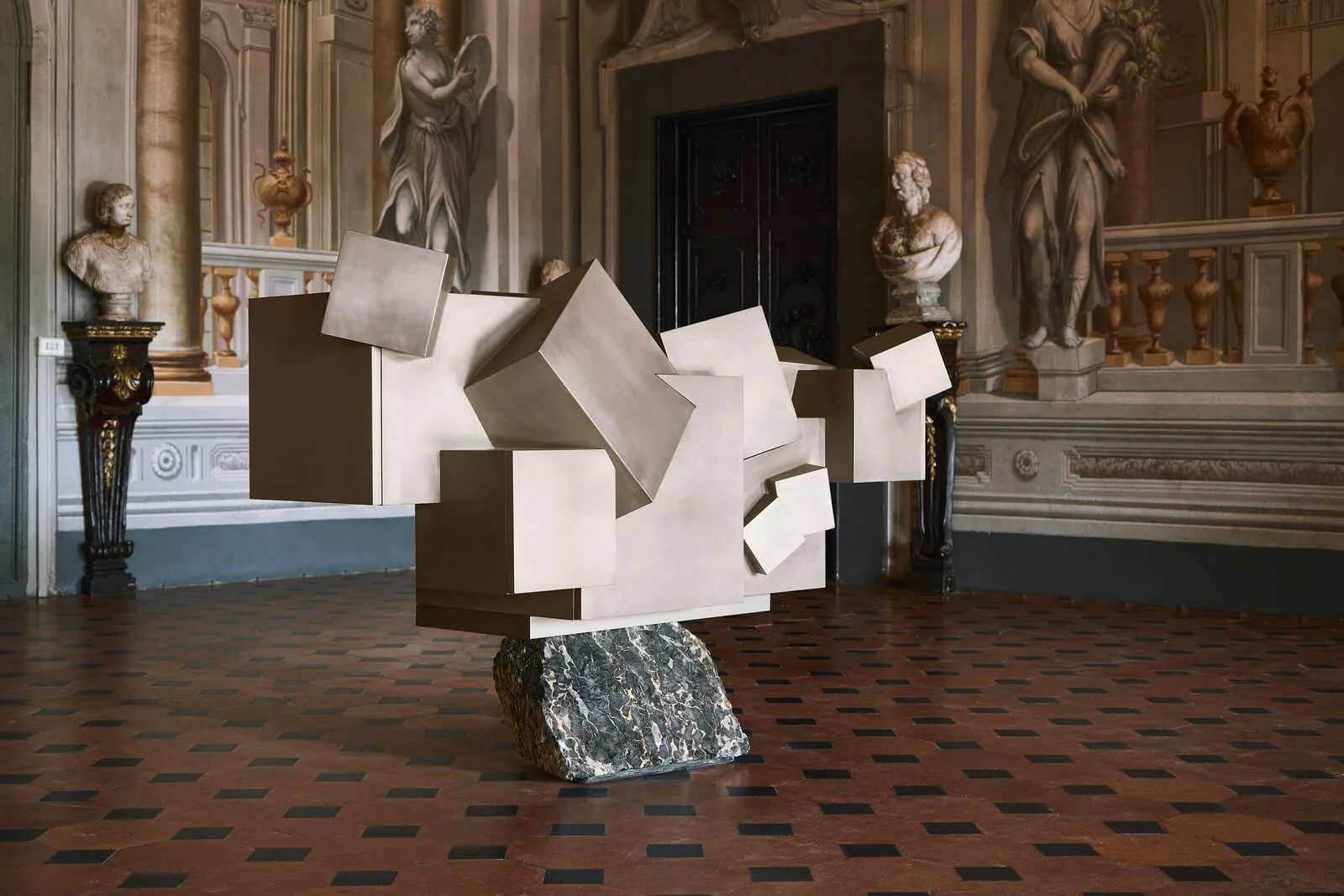
Pyrite Cabinet

Plinio Lamp
“I believe a design should emerge naturally, almost as if the material decides when it’s ready.”
Francesco Maria Messina
DESIGNEERS
Where are your pieces crafted?
Francesco Maria Messina
All of my pieces are made in Tuscany, a region synonymous with craftsmanship and heritage. I collaborate with artisans from Carrara and Pietrasanta for marble, Volterra for alabaster, and Empoli for glass. Each collaboration is a dialogue between tradition and experimentation.
These makers bring generations of knowledge to the process, working with precision and passion. Together, we preserve Italian artisanal culture while pushing its boundaries through contemporary design.
DESIGNEERS
What have been some of your most meaningful collaborations?
Francesco Maria Messina
Rossana Orlandi was instrumental in giving my work its first visibility. Today, I often collaborate with interior designers and architects on bespoke pieces for private residences, yachts, and cultural spaces.
Highlights include a custom cabinet for a yacht in Sardinia, designed to withstand the movement of the sea, and a sculptural piece for a historic apartment on the Champs-Élysées in Paris that had to harmonise with classical mouldings. These projects blur the line between art, collectible design, and architecture, something I’m constantly drawn to.
DESIGNEERS
How do you approach the development of a new collection?
Francesco Maria Messina
It begins with observation. Sometimes the material itself leads the way, alabaster, for instance, reminded me of ice and became the starting point for the Glacies Collection. My process is deeply tactile: sketching, model-making, testing fragments of marble, glass, and metal in the studio.
There’s always an element of discovery. Some ideas resurface years later, reshaped by time and experience. I believe a design should emerge naturally, almost as if the material decides when it’s ready.
DESIGNEERS
From a designer’s eye: what is the most unforgettable hotel or retreat you’ve stayed in?
Francesco Maria Messina
The Silo Hotel in Cologne, a converted industrial structure, impressed me with its ability to transform space while preserving authenticity. Equally memorable are the palazzos of San Gimignano and Certaldo in Tuscany, where Renaissance architecture meets rural tranquillity.
And the Therasia Resort in the Aeolian Islands, surrounded by volcanic cliffs and endless sea views, remains etched in my memory. It’s a reminder of how nature’s drama can shape a sense of serenity, just as it does in design.
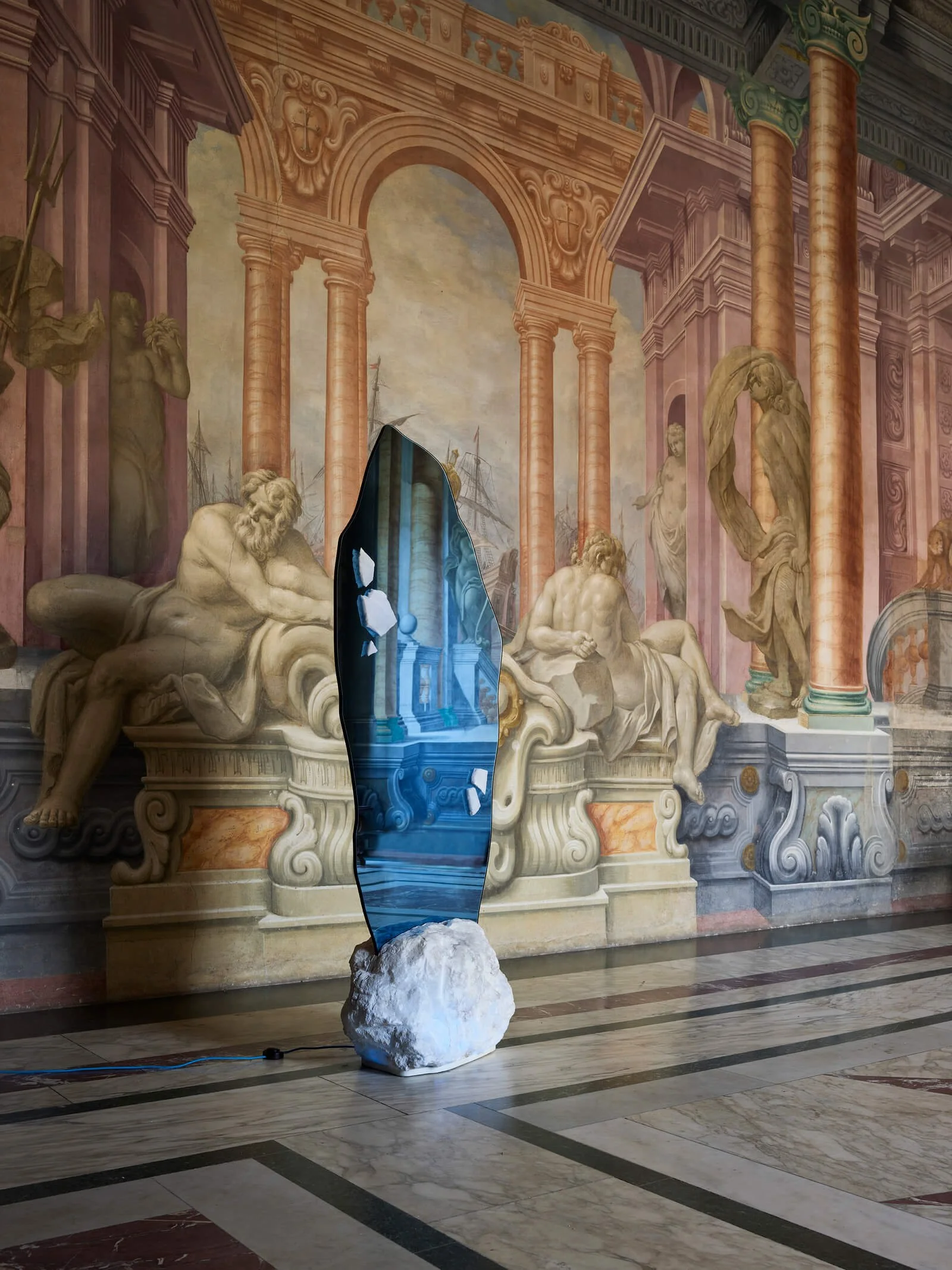
Glacies Mirror
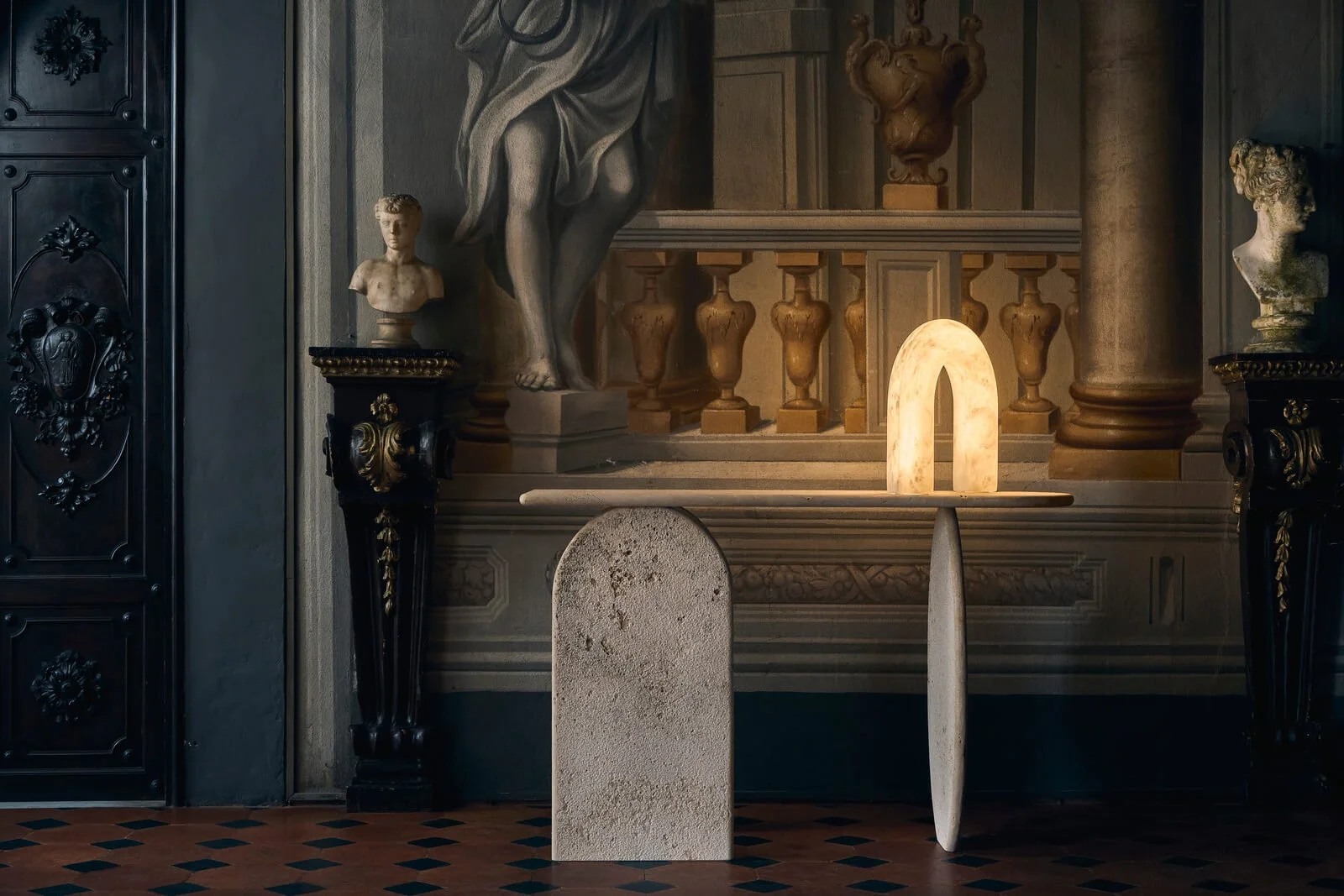
Roma Console Travertino & Arco di Luce Lamp
DESIGNEERS
Who are three makers you return to again and again?
Francesco Maria Messina
The alabaster carvers of Volterra, the marble artisans of Carrara and Pietrasanta, and the glassmakers of Empoli. These craftspeople are the lifeblood of my studio, guardians of tradition who aren’t afraid to innovate.
Each collaboration is built on trust and respect. Together, we transform ancient materials into contemporary narratives, keeping Italy’s artisanal legacy alive.
DESIGNEERS
Best book on architecture or creativity?
Francesco Maria Messina
The Agony and the Ecstasy by Irving Stone, a portrait of Michelangelo’s genius, and The Pillars of the Earth by Ken Follett. Both combine history, architecture, and human endeavour, reminding me that while our tools evolve, the act of creation, the desire to build beauty, remains timeless.
DESIGNEERS
Most inspiring place to recharge?
Francesco Maria Messina
Nature, always. The rolling Tuscan hills around Volterra, the alpine peaks of Valle d’Aosta, and the crystalline waters of La Maddalena in Sardinia are places I return to. I also find inspiration in Italy’s borghi, its small towns and hidden corners, far from the obvious paths, where authenticity and craft still thrive.
These landscapes of silence and light give me perspective. They slow time and reconnect me to the origins of design, observation, patience, and material truth.
DESIGNEERS
Your design hero?
Francesco Maria Messina
Achille Castiglioni, for his effortless balance of function and poetry, and the radical Italian designers of the 1960s and 70s, who expanded the very definition of design. Their courage and playfulness continue to remind me that innovation begins where convention ends.
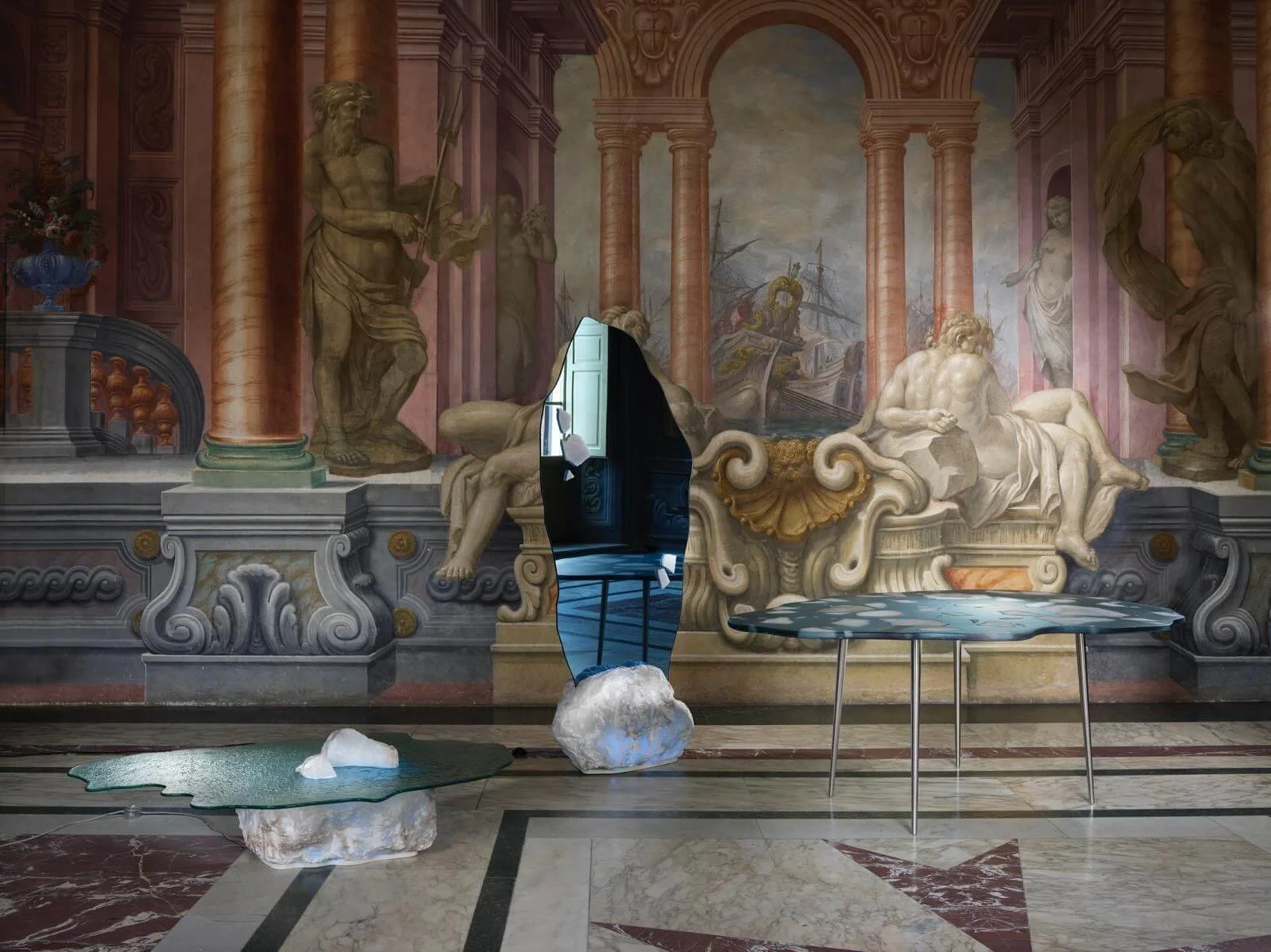
Glacies Collection