people • DESIGNERS
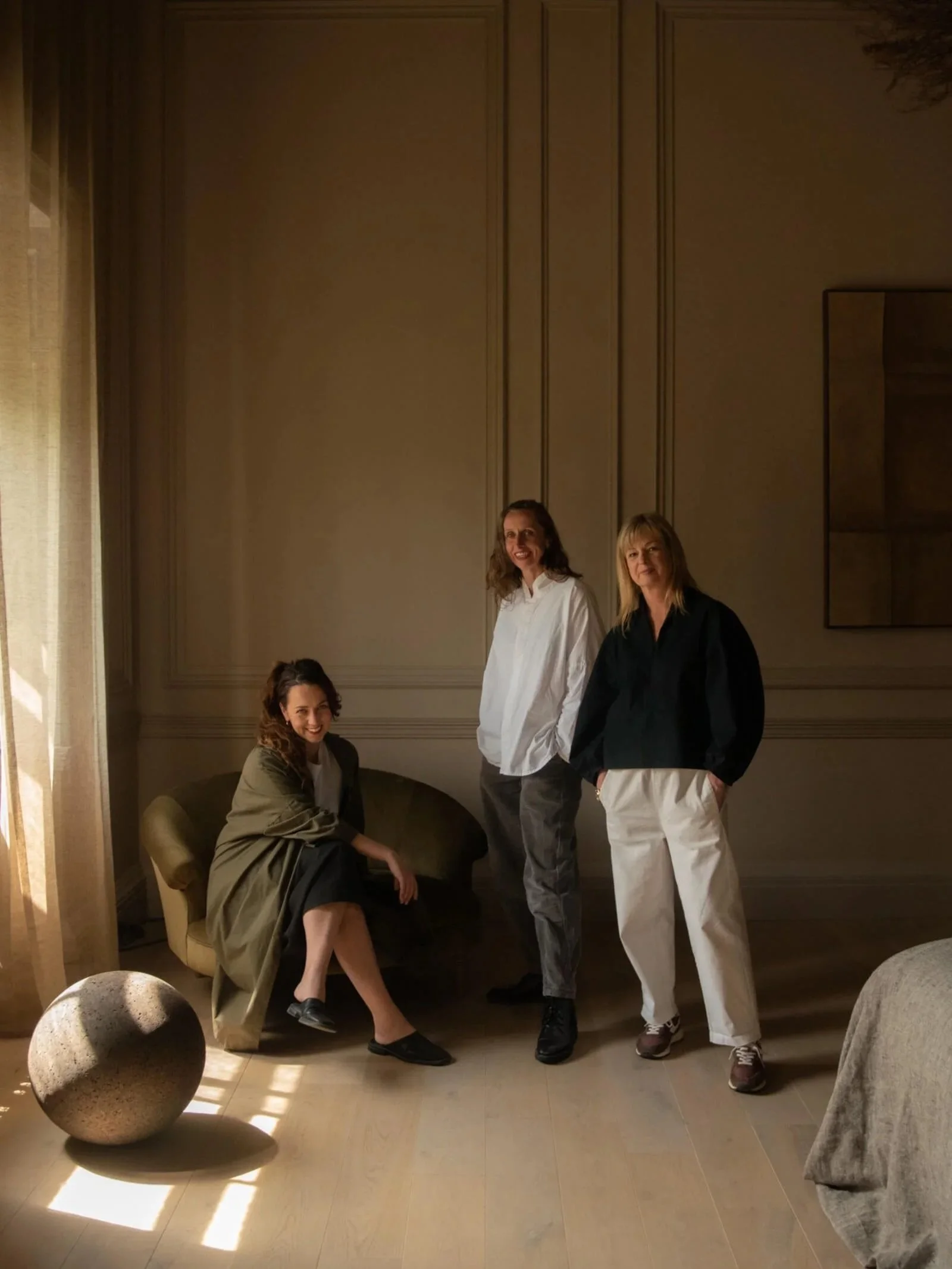
BOX 9 is a London-based, multidisciplinary design studio known for regenerative architecture and sustainable interior design. Founded in 2007 by Lou Davies and Caroline Hunter, after a decade designing Notting Hill homes and contributing to Soho House projects in London, Berlin and Los Angeles - the practice now runs as a tight three-person team with Lucy Franks. Their work spans architecture, interiors, bespoke furniture, styling and photography, delivered with a craft-driven, circular mindset. BOX 9 partners closely with a select group of clients and global makers, ensuring each commission is highly personal, materially intelligent and built to last. The result: sculptural, purposeful spaces where natural materials, precise detailing and considered light create an enduring, low-impact luxury.
In this conversation, the founders unpack the ethos behind Box 9: the material stories, the circular sourcing, and the belief that the best design doesn’t decorate, it heals.
Words: designeers
SEPTEMBER 2025
WEBSITE: box-9.co.uk
INSTAGRAM: @box9design
DESIGNEERS
Tell us about the studio, your founding vision, and how your approach has evolved over the years.
Box 9
At BOX 9, a London-based studio specialising in regenerative architecture and sustainable interior design, our founding vision has been constant: create story-led spaces with character, depth and purpose. From day one we’ve worked with clients who value craft, material intelligence and doing things differently—pairing architecture and interiors with bespoke furniture, styling and photography so the narrative is seamless end to end.
DESIGNEERS
Your work often feels like storytelling through space. How do you define the studio’s purpose?
Box 9
At BOX 9, our purpose is regenerative design: moving beyond sustainability to create restorative architecture and sustainable interiors that leave a positive imprint on people and place. We practice material storytelling: storm-felled timber recast as furniture, reclaimed stone as a centrepiece, ceramics shaped with intent, bio-based paints (like crushed olive-stone pigments)m so beauty and responsibility read as one narrative.
DESIGNEERS
Let’s talk about Denton. What drew you to the project, and what were your first impressions of The Hall?
Box 9
At Denton, the client’s mission was clear: restore the health of the land, regenerate biodiversity, and reimagine what a historic country estate could be. Initially, the brief focused on placing our BERTS sustainable cabins within the walled garden. Yet once we understood the scale of their ambition—to create a carbon-sequestering estate rooted in ecological renewal—it became clear that our practice and their vision were fully aligned. While their goal centered on environmental restoration, ours was to revive heritage buildings with natural materials, regenerative techniques, and sustainable design principles, redefining modern rural luxury and addressing the historic environmental damage these estates have often caused.
Our first impression of The Hall at Denton Reserve was awe. Designed by 18th-century architect John Carr, the Grade I listed estate features stately proportions and a breathtaking landscape that carry both beauty and responsibility. For us, this project is about more than architecture—it is about heritage restoration, sustainable craftsmanship, and the future of regenerative country living. Acting as custodians of this next chapter, we are guided by the principle of creating work that not only endures but also sparks lasting positive change for both land and spirit.
DESIGNEERS
You’ve spoken of “quietening” the building. What does that mean in practice, and how did you navigate heritage constraints to achieve it?
Box 9
Our first impression of The Hall at Denton was one of inherited grandeur and decorative excess—a kind of architectural “noise” that felt out of step with today’s values. In the context of the climate crisis and wider cultural conversations around sustainability, the traditional language of opulence and over-decoration seemed increasingly uncomfortable. As a practice, we’ve always shied away from ornament for ornament’s sake. Instead, we ask: does this material, object, or detail truly belong here, and does it meaningfully shape the atmosphere of the space? If the answer is no, we leave it out.
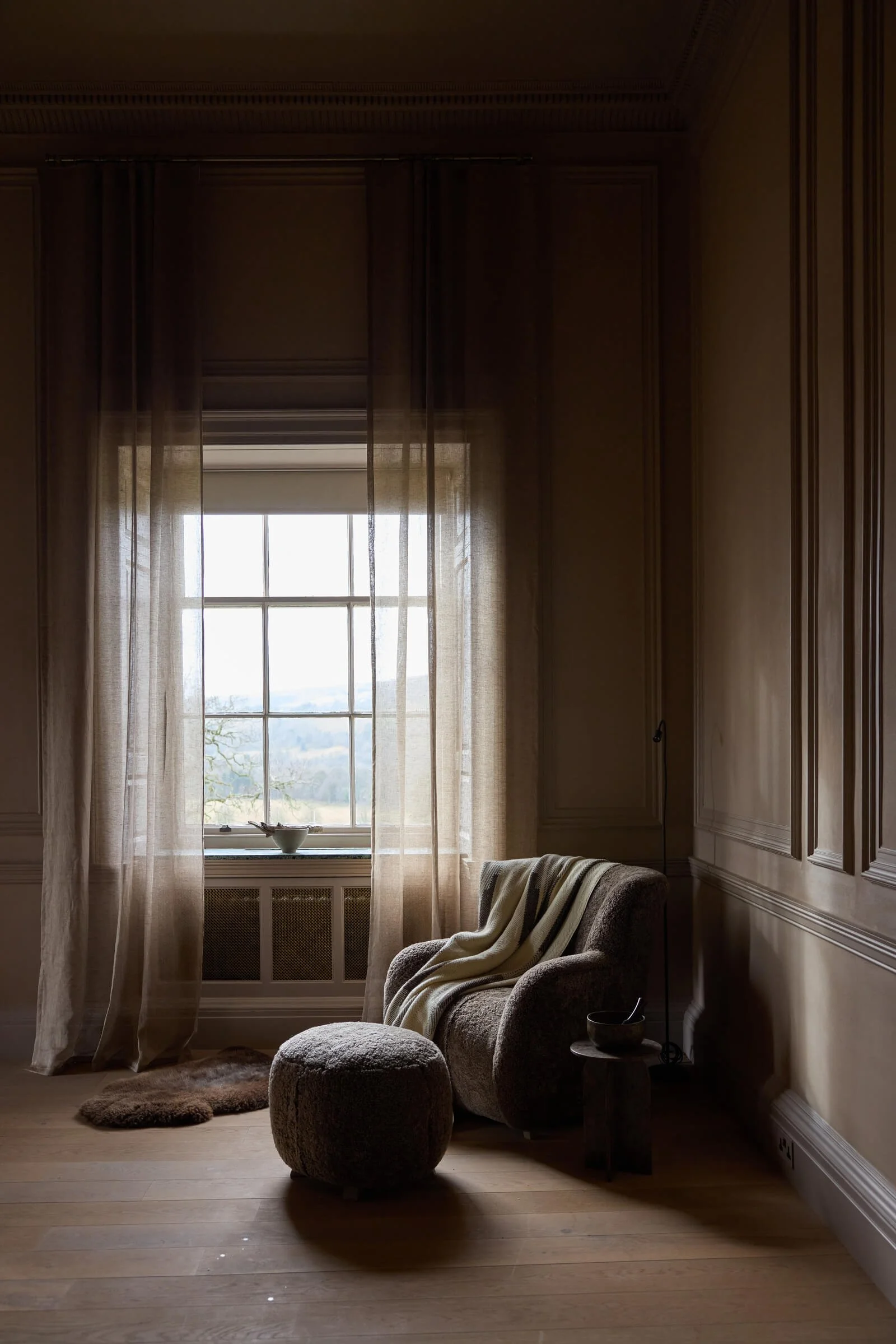
At Denton, our vision was to “quieten the building”—to strip it back to its majestic architectural bones and reimagine a more intentional, regenerative chapter for the estate. This meant carefully peeling away unnecessary layers and allowing the original proportions, crafted by 18th-century architect John Carr, to breathe once more. Every element we reintroduced was deliberate: materials were chosen for their sustainability, natural integrity, and long-term durability; objects were included only if they had a clear purpose.
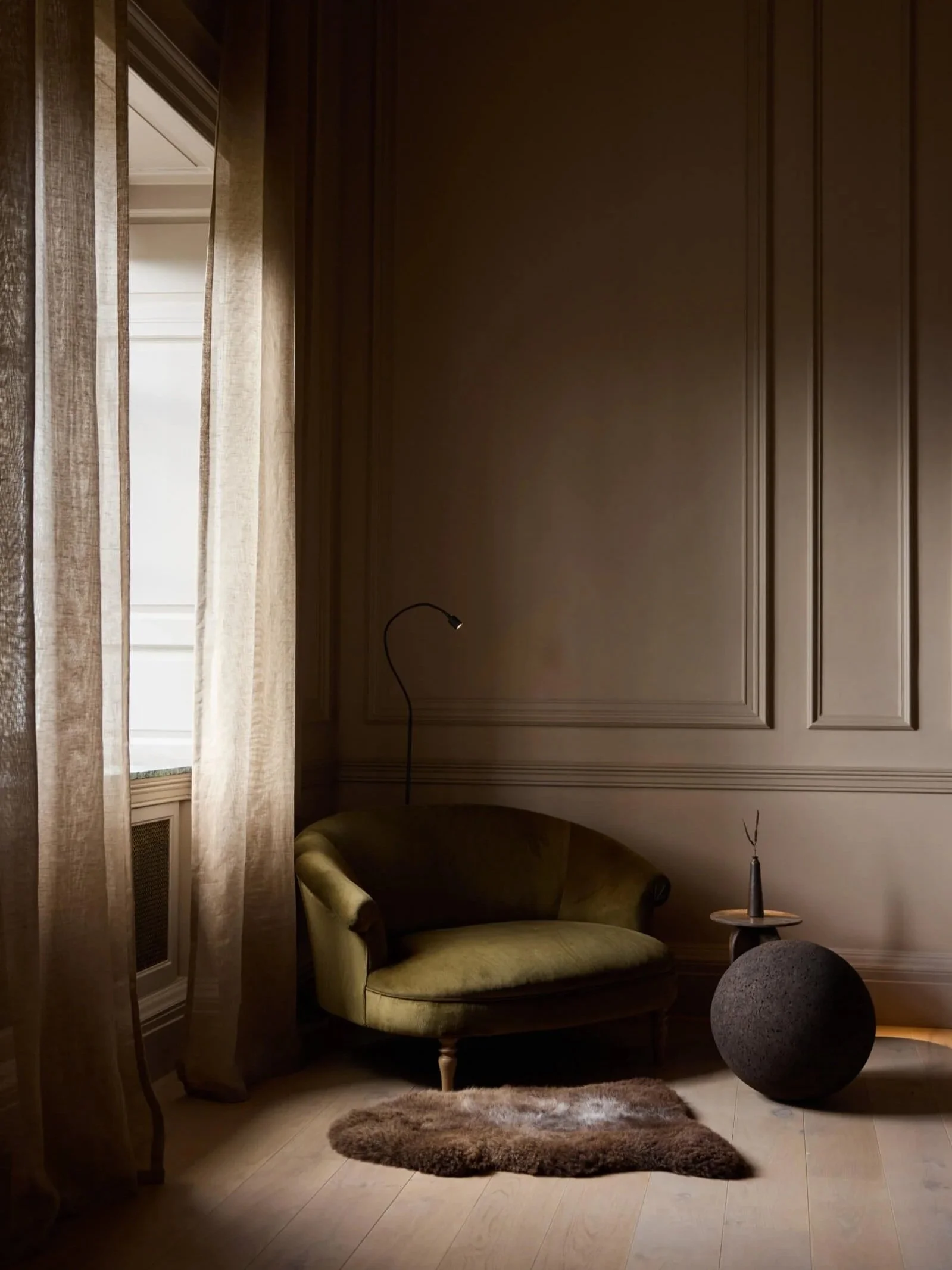

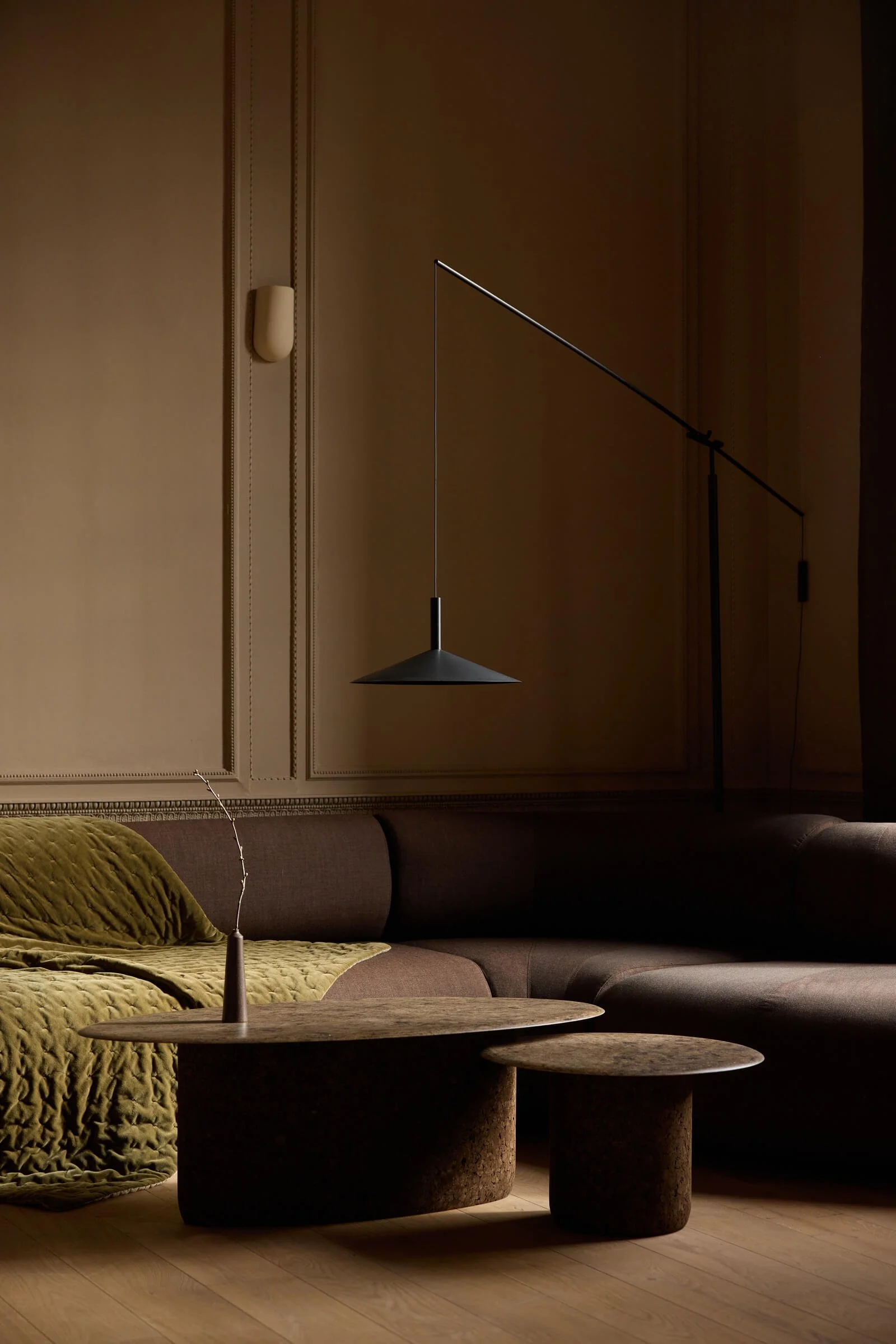
“By respecting tradition while challenging convention and by constantly reflecting on our process, we’ve developed a distinctive approach to design that feels timeless, purposeful and deeply connected to both people and place.”
Box 9
DESIGNEERS
The project feels deeply elemental. How did the Yorkshire landscape shape your choices: tonally, materially, spiritually?
Box 9
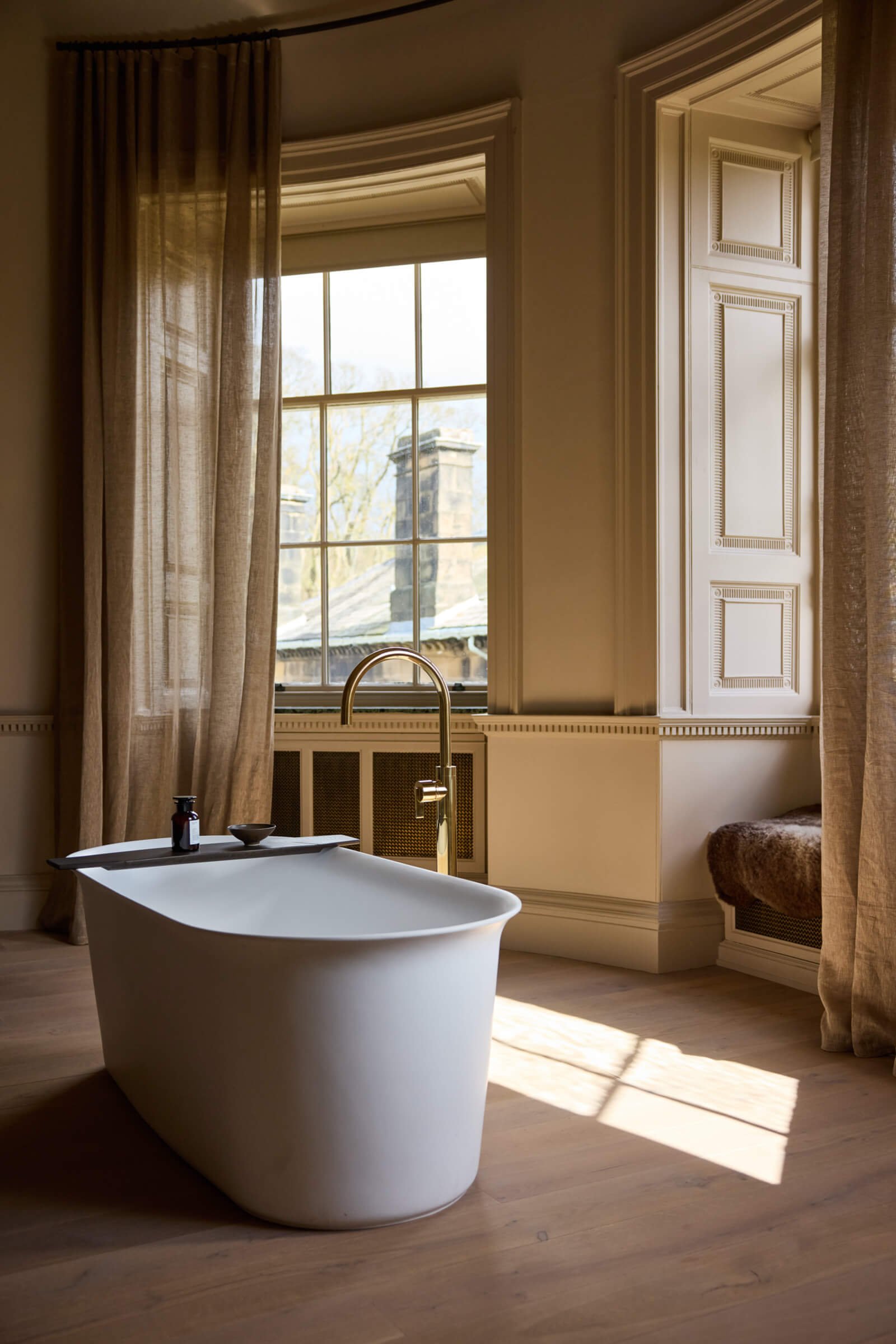
For us, the Yorkshire landscape became the design palette. Every material, tone, and texture we introduced at Denton was drawn directly from its surroundings. To shape that vision, we immersed ourselves fully in place—running the lanes, walking the moors, swimming in the estate’s lake, sitting quietly in the woods, and observing the native flora and fauna. Out of those lived experiences, a palette of natural stone, earth pigments, timber, and soft muted tones revealed itself.
This elemental approach was not only aesthetic but also spiritual. By rooting the interiors in the geology, ecology, and atmosphere of the region, we created spaces that feel in dialogue with their environment rather than imposed upon it. It is about regenerative design and biophilic connection, allowing the Hall to echo the rhythms of its landscape and to honour Yorkshire’s character in a way that feels timeless, grounded, and deeply authentic.
DESIGNEERS
You collaborated with so many brilliant makers. Can you share a standout moment where craft redefined the design outcome?
Box 9
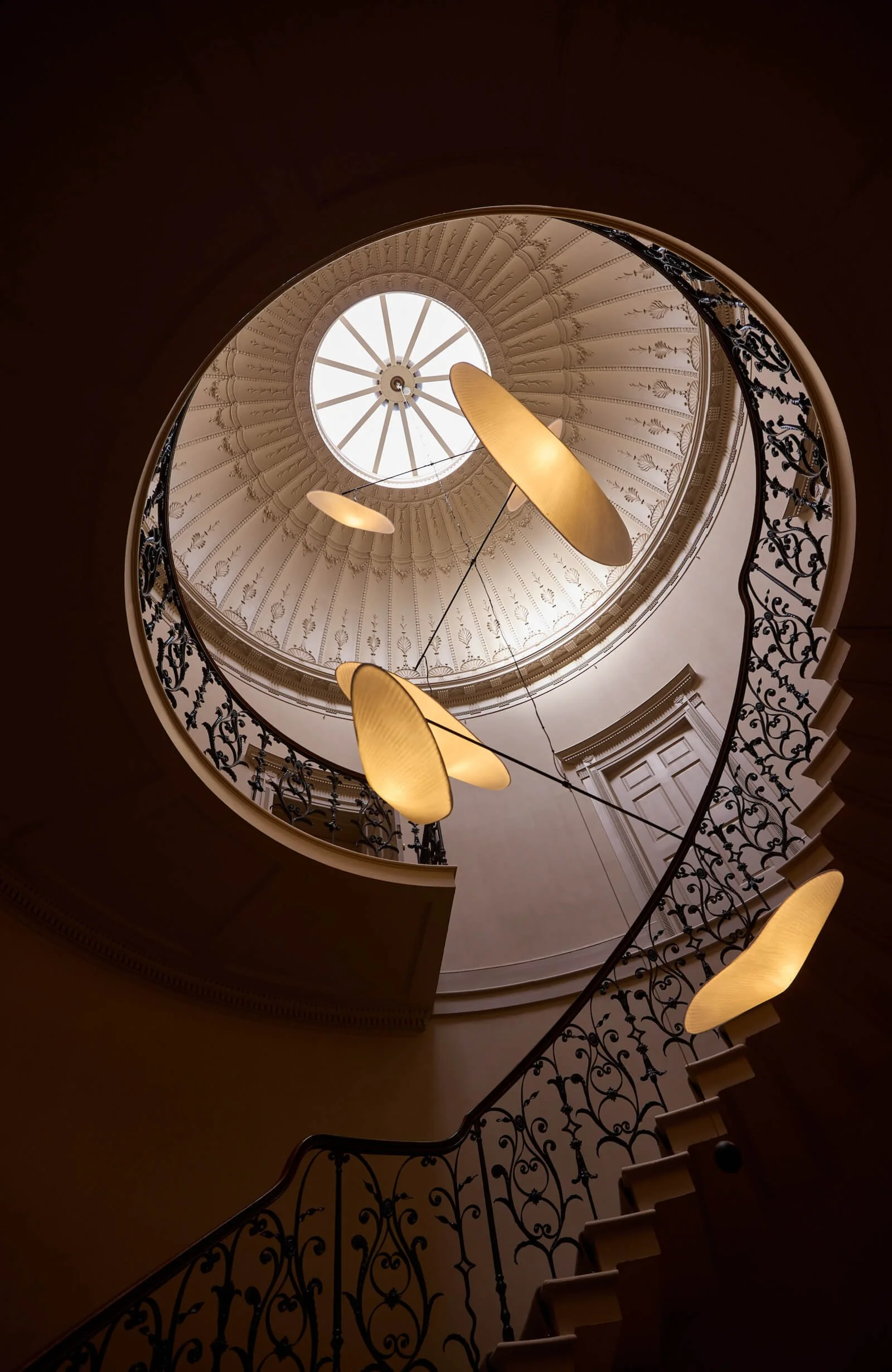
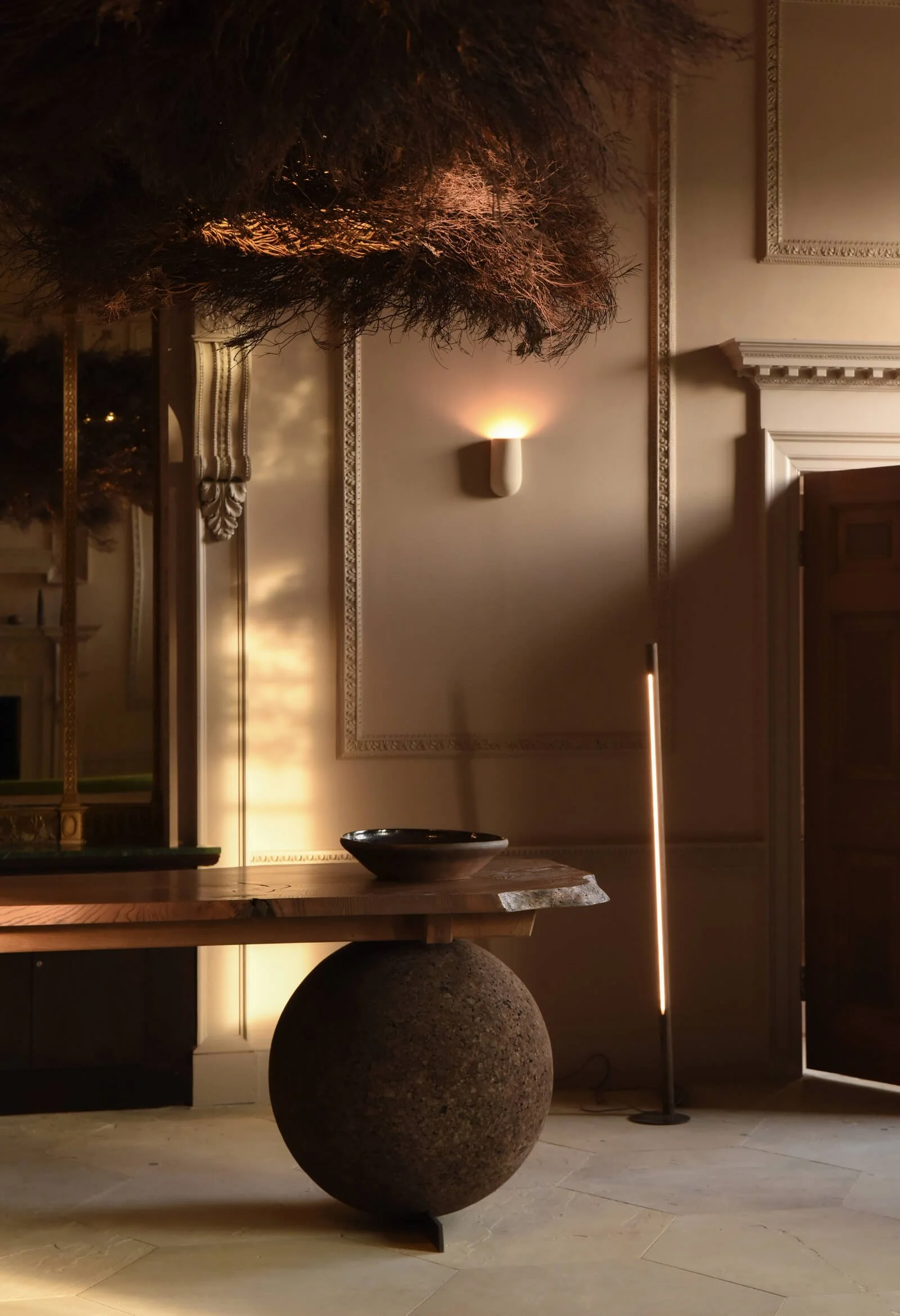
One moment that truly encapsulates the project was the creation of the giant heather light in the reception hall—a piece that captures the entire spirit of Denton. From the outset, we wanted to reintroduce nature, texture, and craft into the building in ways that felt raw yet elevated. Working with Studio Amos, we invited them to experience the estate first-hand: they swam in the lake, foraged heather from the frosty Yorkshire moors alongside the estate manager Bernie, and then dried and wove it into a sculptural light.
The result was extraordinary. Watching a slightly baffled team of builders hoist this organic installation—essentially a bundle of woven heather—into place where a traditional crystal chandelier once hung was a defining moment. It challenged expectations of what heritage interiors and rural luxury can be. Suddenly, excess was replaced with humility; opulence with authenticity. The light shifted the atmosphere of the Hall, sparking reflection on the power of humble materials, ancient craft traditions, and regenerative design to redefine how we experience a historic country estate.
DESIGNEERS
Cork, storm-felled oak, recycled marble…How do you balance aesthetic with sustainability?
Box 9
We challenge ourselves to work with materials and makers who can transform the humble into the extraordinary, whether that’s cork, storm-felled oak or recycled marble. For us, sustainability doesn’t come at the expense of beauty; it enhances it. Proving that regenerative design can be as refined as polished, processed alternatives takes discipline, which is why every junction, proportion and detail is rigorously planned to ensure the outcome feels both intentional and enduring.
DESIGNEERS
The design moves away from the traditional country house vernacular. What does “rural luxury” mean to you today?
Box 9
For us, rural luxury today is not about excess but about presence. True luxury is the privilege of time—time to slow down, to reconnect with nature, to share meaningful experiences with people you love, and to live in a way that feels intentional. Within the context of a historic country estate, this means moving away from the traditional vernacular of heavy decoration and opulence, and instead embracing simplicity, craft, and connection.
DESIGNEERS
Looking ahead, what’s next for BOX 9, and how did Denton shape your future outlook?
Box 9
Denton was a defining step for us, proving that nature-driven design, one that respects people, craft and planet, can be both responsible and breathtaking. It takes trust to embrace our unconventional approach, and our most meaningful projects come from clients who share that belief. We never take the easy route, but the one that creates the most positive impact. The success of Denton, we hope, will give future hospitality clients the confidence to see that restoration and beauty are not opposites but deeply intertwined.
DESIGNEERS
And to close, a few from our signature Designeers set; your dream dinner guest?
Box 9
Ernest Shackleton. The greatest explorer of all time. I’d love to ask what it felt like to truly discover something new. That sense of scale and wonder, to tread new ground and feel the power and vastness of nature, what a life. Combined with my love of the sea, a naval father, and a thirst for adventure… he’s my number one.
DESIGNEERS
Your favourite hotel in the world?
Box 9
Currently, Noah Surf House. I have little ones and love surfing. At Noah, they combine sea, land, and nature and gently encourage guests to step out of their comfort zones.
DESIGNEERS
Your favourite material to work with?
Box 9
Still, anything from a tree, be it oak, cork, or timber. The character, the uniqueness, and the ability to store carbon and be reused again and again are yet to be surpassed. Nature still wins.