people • DESIGNERS
NOMAD has long redefined what a design fair can be by favouring intimacy, architectural dialogue, and a highly curated rhythm of discovery. For its landmark edition in Abu Dhabi, the travelling showcase enters one of the Gulf’s most remarkable modernist structures, the original Terminal 1 of Zayed International Airport.
Here, co-founder and director Nicolas Bellavance-Lecompte speaks with architectural precision and deep cultural sensitivity about reading a space, honouring its history, and allowing light, proportion, and context to choreograph each encounter. Moving between architecture, design, art, and global geographies, he reflects on the craft of creating experiences rather than spectacles, and on NOMAD’s ongoing mission to weave connections across regions, cultures, and creative communities.
Words: designeers
NOVEMBER 2025
WEBSITE: nomad-circle.com
INSTAGRAM: @nomadcircle
DESIGNEERS
You often describe space as a language. How did your architectural training shape this sensitivity, the way you read form, proportion, and emotion within an exhibition?
Nicolas Bellavance-Lecompte
My architectural training gave me a foundation where materiality, structure and concept are inseparable. It taught me to start from the skeleton of a space, its logic and construction, and build from there. When designing an exhibition, I always return to that instinct: to work from the core outward, in a way that is precise and efficient, amplifying the space rather than overlaying it.
What matters most is the dialogue between context and content. The space should not be a backdrop, and the work should never become decor. When that balance is achieved, the result feels inevitable.
DESIGNEERS
Your path moves fluidly between architecture, art, and design, but also between places and cultures. What has guided you through these transitions, and what continues to inspire your curiosity today?
Nicolas Bellavance-Lecompte
I don’t see myself as belonging to one discipline. I am more of a cultural explorer, naturally drawn to the Global South as a source of knowledge and inspiration. Much of what we consider the foundations of science, craft and technology comes from civilisations beyond the Western narrative. I’m interested in reconnecting those threads. My curiosity comes from weaving together craft, community, ritual and contemporary creativity, especially with artists and designers who emerge outside conventional frameworks. Those encounters constantly reshape my perspective and keep me moving forward.

NOMAD in ABU DHABI 2025
Terminal 1, Zayed International Airport
Photo Credit N. Berezhnoy and Courtesy of NOMAD

NOMAD in ABU DHABI 2025
Terminal 1, Zayed International Airport
Photo Credit N. Berezhnoy and Courtesy of NOMAD
DESIGNEERS
Abu Dhabi introduces a new architectural dialogue for NOMAD within the sculptural curves of old Terminal 1 of Zayed International Airport. What drew you to this landmark of Arabian modernism, and how did its atmosphere influence the way you conceived this edition?
Nicolas Bellavance-Lecompte
The starting point was a conversation with the Department of Culture and Tourism in Abu Dhabi, our main partner. I told them clearly that NOMAD needed a strong architectural container, a building with character that could challenge and inspire curators and galleries.
Abu Dhabi has an extraordinary modern heritage, particularly from the 1970s to the 1990s, and I wanted to revive a structure from that era, one that carried an identity but was no longer in use. We saw several places, but when I stepped inside Terminal 1, it was obvious. Architecturally powerful, civic, emotional and unforgettable. It wasn’t just a venue; it was a landmark with a voice, and it became a fundamental character in this edition.
DESIGNEERS
Every edition of NOMAD feels like a site-specific installation. You treat context, light, space, and history almost as co-curators. How do you read a location and translate its essence into an experience?
Nicolas Bellavance-Lecompte
A site has its own personality. The first task is observation, listening, and understanding how it breathes and moves before deciding anything. We work as directly and minimally as possible, letting light, proportion, history and flow drive the decisions.
We never decorate a space. We reveal it, activate it and give it value. When the dialogue works, the rest organises itself naturally.

Badguir Collection by Thomas Vlach, 2022
Photo by Reza Daryakenari
Courtesy of Parsa Gallery
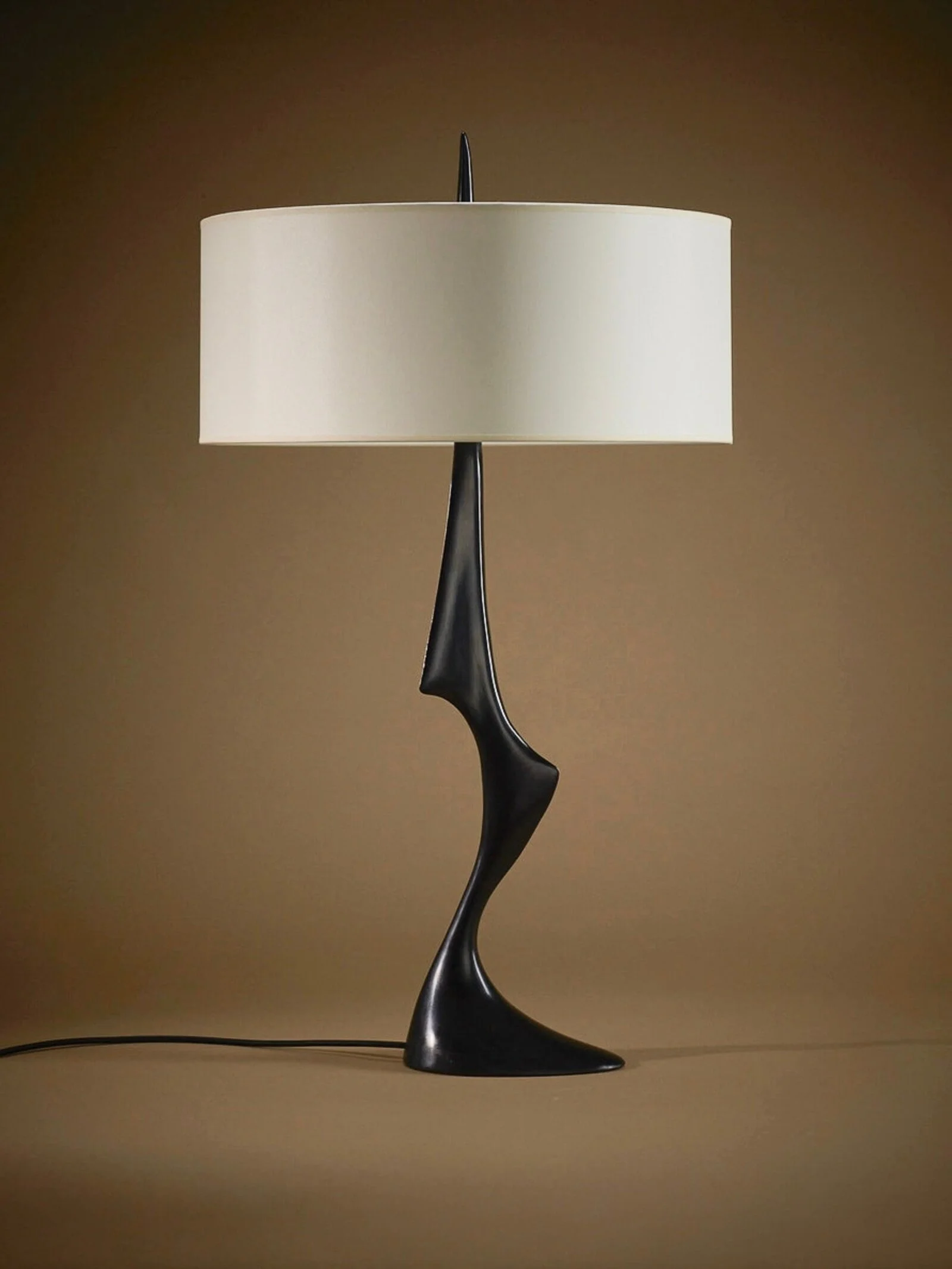
Elan Lamp_by Pierre Salagnac
Courtesy of Galerie Melissa Paul
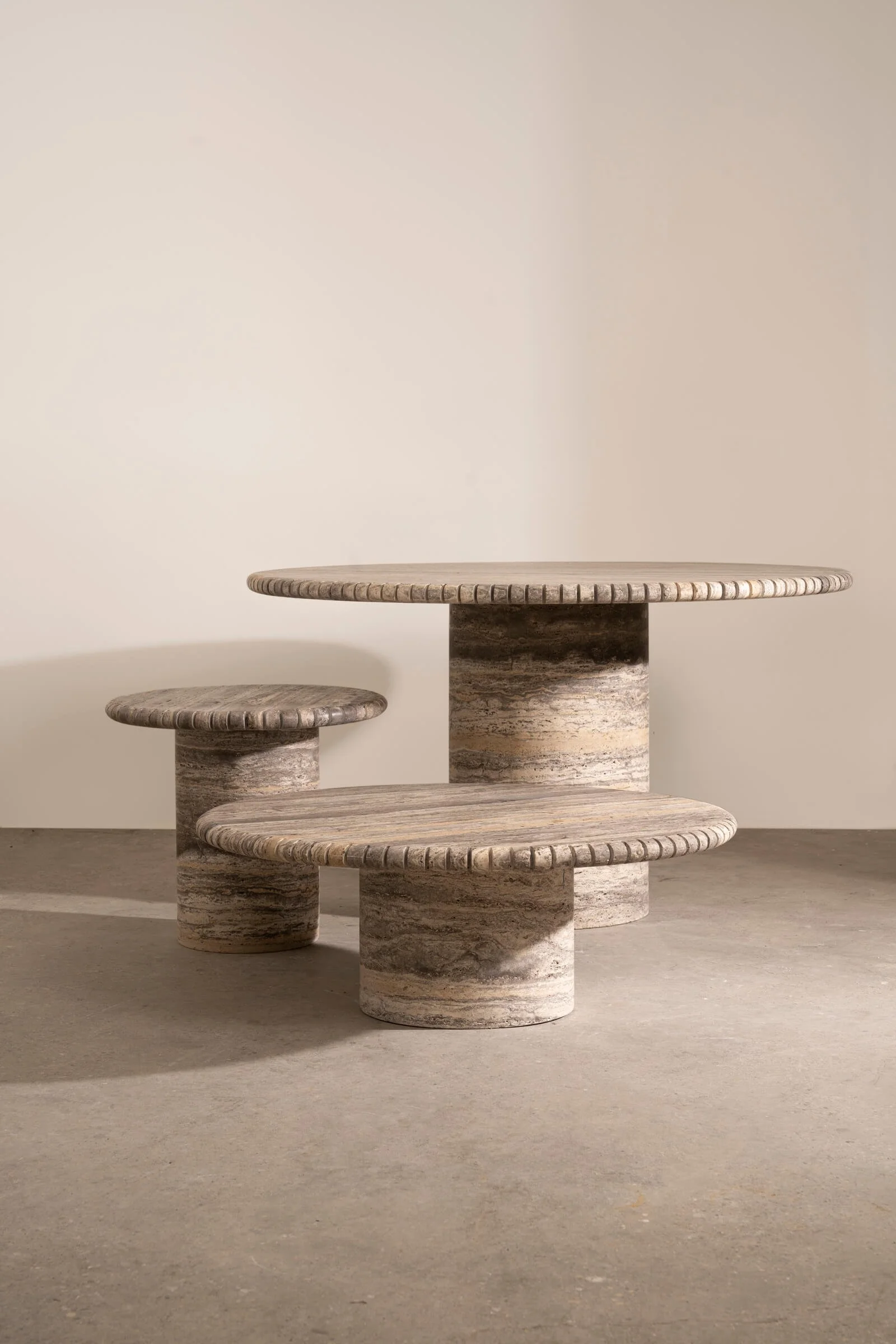
Bam by Thomas Vlach, 2020
Courtesy of Parsa Gallery
“I don’t see myself as belonging to one discipline. I am more of a cultural explorer, naturally drawn to the Global South as a source of knowledge and inspiration.”
Nicolas Bellavance-Lecompte
DESIGNEERS
You often speak about curation as a form of choreography. NOMAD is not simply an exhibition; it’s a rhythm between design, art, and people. How do you balance movement and discovery with conceptual rigor?
Nicolas Bellavance-Lecompte
For me, it’s about rhythm. Structuring a path so that discovery feels organic, positioning galleries and installations in dialogue so that contrasts, pauses, grand moments and quieter breaks unfold naturally. It is not theatrical. It is practical. It is about tempo, diversity, breathing space and balance. When the sequence is right, the experience feels effortless.
DESIGNEERS
NOMAD explores design and art as living dialogues rather than fixed displays. How do you see the role of curation today, not as selection, but as a way of creating meaning in a transient world?
Nicolas Bellavance-Lecompte
Today's curation is about creating connections between people, places, and objects, not simply choosing them. In a world saturated with information, the role of the curator is to build coherence instead of noise and relationships instead of lists.
It becomes an act of linking stories, territories, and communities, creating temporary but meaningful moments of clarity and resonance.
DESIGNEERS
Abu Dhabi marks a shift, not only geographic but also conceptual, in the way NOMAD engages with global culture. From Europe to the Gulf, from Milan to Cairo and Dubai, NOMAD seems to trace invisible connections between regions and sensibilities. What kind of cultural dialogue are you hoping to ignite here?
Nicolas Bellavance-Lecompte
Nearly half of our exhibitors in Abu Dhabi come from the region, which is crucial. It shifts the narrative. It brings perspectives rooted in place, not imported from elsewhere. At the same time, the UAE has become a global cultural crossroads. The moment feels right for a deeper conversation around collectible design, one based on local confidence, global exchange, and cultural curiosity. The dialogue we hope to spark is one of recognition, agency, and exchange, where the region is a producer of discourse, not just an audience.

Portrait of Formafantasma, Cohabitare by Perrier-Jouët x Formafantasma
Courtesy of Perrier-Jouët x Formafantasma

Cohabitare by Perrier-Jouët x Formafantasma
Courtesy of Perrier-Jouët x Formafantasma
DESIGNEERS
Scale has become the currency of our time, and yet NOMAD resists it. Instead of grand spectacles, you craft moments of stillness and proximity. What does this intimacy mean to you, and what kind of experience do you want it to trigger in a visitor?
Nicolas Bellavance-Lecompte
Intimacy is about participation instead of observation. When proximity replaces distance, hierarchy dissolves. You stop touring the fair and start being inside it, moving freely, connecting, exchanging, and feeling rather than consuming. This closeness turns experience into memory.
DESIGNEERS
Over the years, NOMAD has grown into a community. Collectors, gallerists, and designers return edition after edition. How do you nurture that ecosystem while preserving its authenticity and sense of belonging?
Nicolas Bellavance-Lecompte
By protecting its scale. We explored expansion in the past, and we learned that growth can dilute what makes the experience distinct.
We will always choose discovery over volume, atmosphere over accumulation. Authenticity is preserved not by scaling bigger, but by being more precise.
DESIGNEERS
As NOMAD continues to evolve, what questions are you most interested in exploring about culture, space, and the way we experience beauty today?
Nicolas Bellavance-Lecompte
The question is always: what comes next?
How do we balance art, design, craft, jewellery, and architecture without losing coherence?
How do we champion new voices while nurturing established ones? And how can NOMAD continue being a catalyst, not only a fair, one that supports cultural ecosystems, shifts perceptions, and activates destinations?
In every city we have worked in, NOMAD has contributed to a wider cultural conversation, encouraging collecting, supporting creative communities, and opening design dialogues in new territories. That impact interests me deeply.
We are excited for what comes next, including the Hamptons, our first U.S. chapter, and all future conversations waiting to unfold.
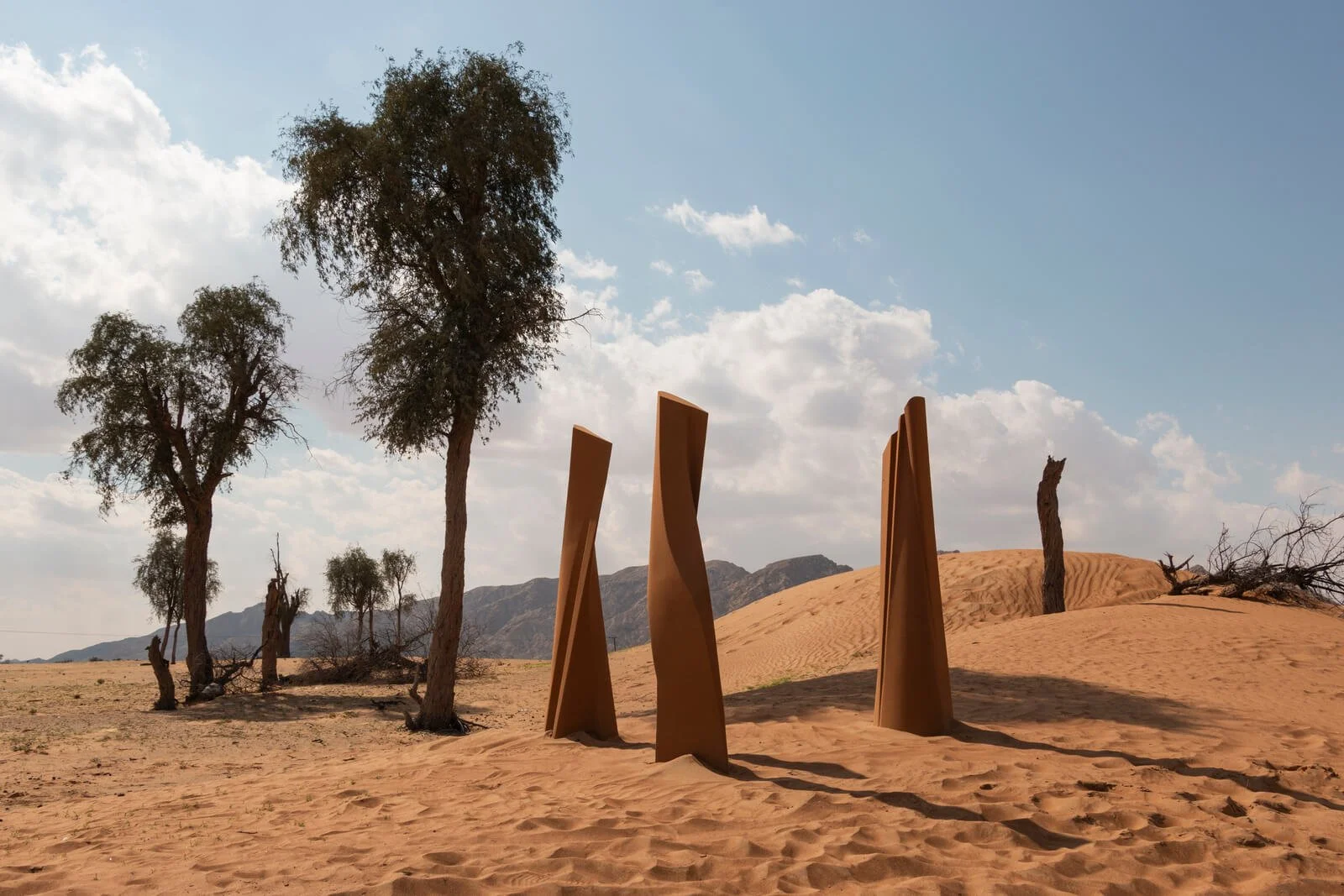
Inloco Gallery presents Sandscapes by Neda Salmanpour at NOMAD’s off-site program Shifting Terrains, on view at Jumeirah Saadiyat Island.
Sandscapes, Neda Salmanpour. Created during the Useless Palace art intervention, Inloco Gallery, 2022. Courtesy of the Artist and Inloco Gallery.
PHOTO CREDITS:
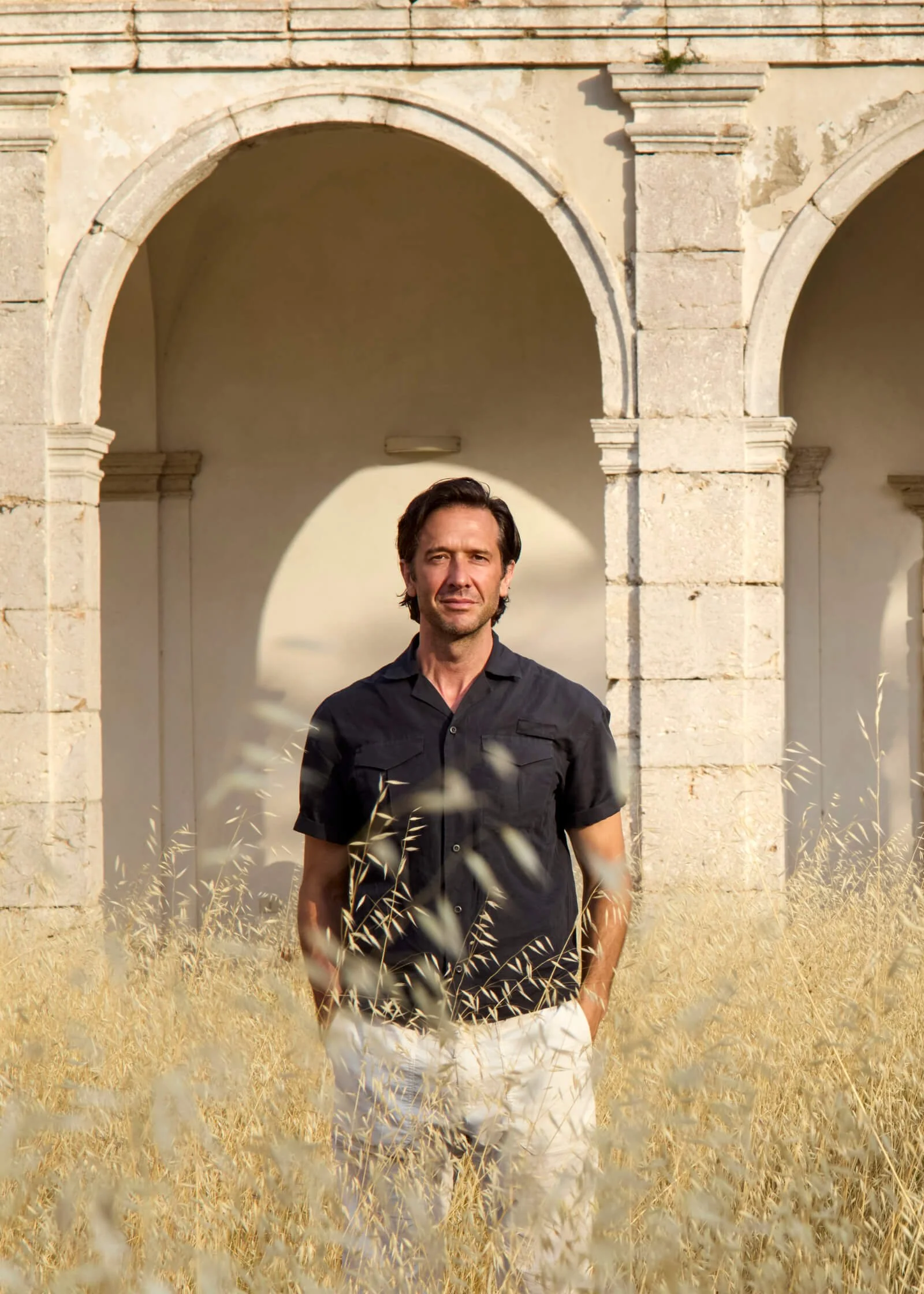
PROFILE IMAGE: Nicolas Bellavance-Lecompte
Photo Credit: DePasquale+Maffini
Courtesy of NOMAD Circle