Lamiss Akar: Sculptural Bodies and Living Objects
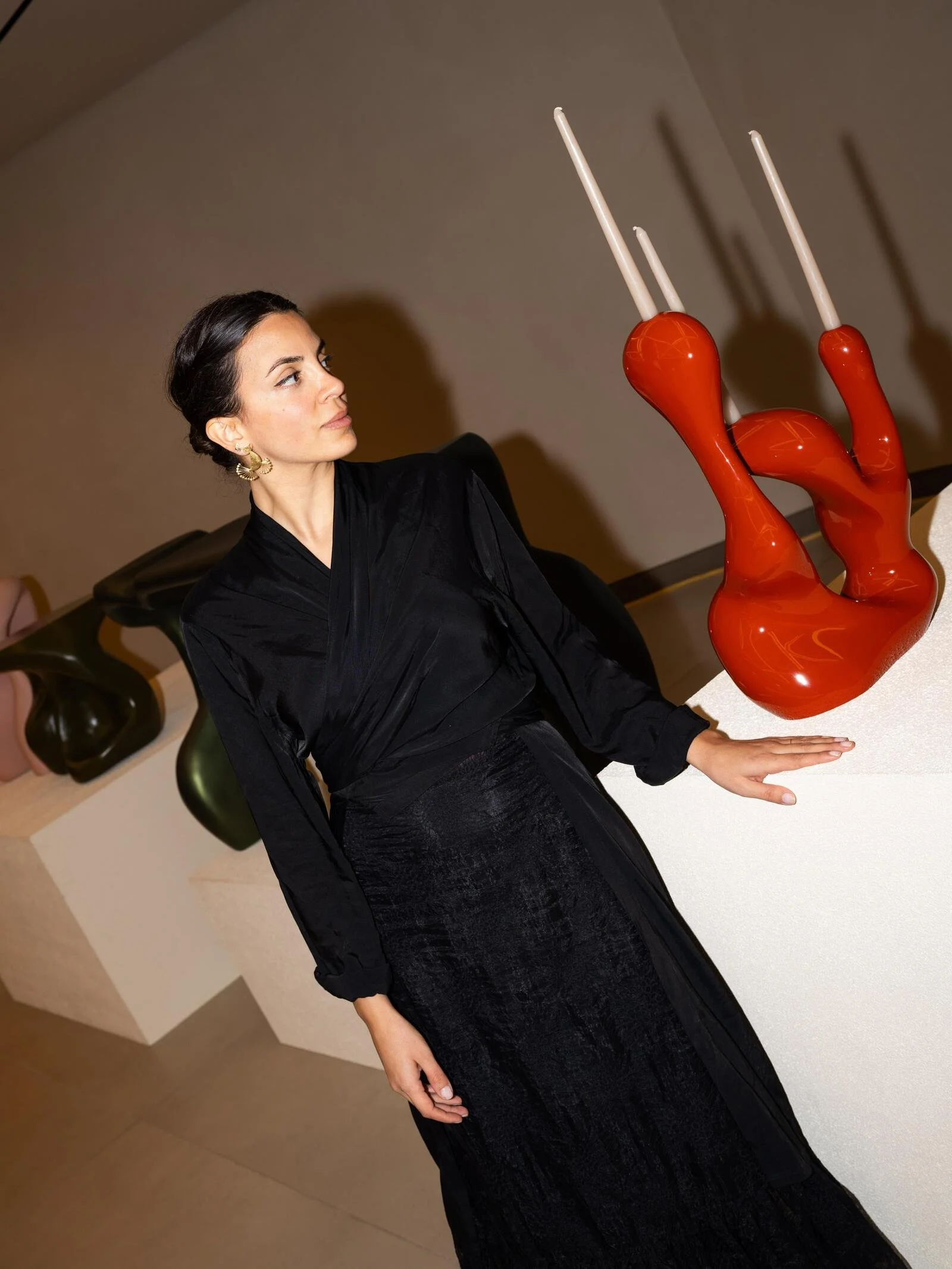
people • DESIGNERS
Lamiss Akar is a Lebanese designer whose work exists in a fluid space between sculpture and function, where objects take on a distinctly corporeal presence. Her chairs, lamps, and collectible pieces feel less like static designs and more like entities, shaped by gesture, movement, and memory. Drawing from Lebanon’s layered cultural landscape, Akar’s practice merges intuitive making with a deeply sensory understanding of material.
Working across ceramic, textile, and wood, she constructs pieces that evoke touch before form, often incorporating fringe and fluid silhouettes that suggest motion within stillness. Colour plays an equally emotive role, with palettes that shift between earthy depths and vivid accents, reflecting a nuanced emotional temperature. Her work resists categorisation, instead proposing a language where design becomes expressive, instinctive, and quietly alive.
Words: designeers
MARCH 2026
INSTAGRAM: @lamiss.akar
DESIGNEERS
Your work occupies this fascinating space between sculpture and functional design, a chair that's also a body, a lamp that's also a creature. When did you stop thinking of yourself as a 'designer' in the conventional sense, and what do you call yourself now?
Lamiss Akar
I think I moved away from the traditional idea of ‘design’ when I stopped separating function from emotion. My work is not only about solving a need but also about creating shapes that feel alive, almost like they carry a presence.
I would say I’m closer to a sculptor working with function. The pieces are usable, but they’re also meant to be felt, almost like living forms within a space.
DESIGNEERS
Lebanon carries such a layered artistic legacy, from ancient craft traditions to a fiercely contemporary scene. How consciously does your Lebanese identity inform the vocabulary of your work?
Lamiss Akar
Lebanon carries a deeply layered cultural memory, and I’m conscious of being part of that continuum, from the Phoenicians to today’s evolving scene. My work sits between these worlds, drawing from inherited memory while translating it into a personal, contemporary language.
Living here also brings a certain emotional openness. Despite the challenges, there’s a raw freedom in how we think and express ourselves, and that allows me to create without limits.
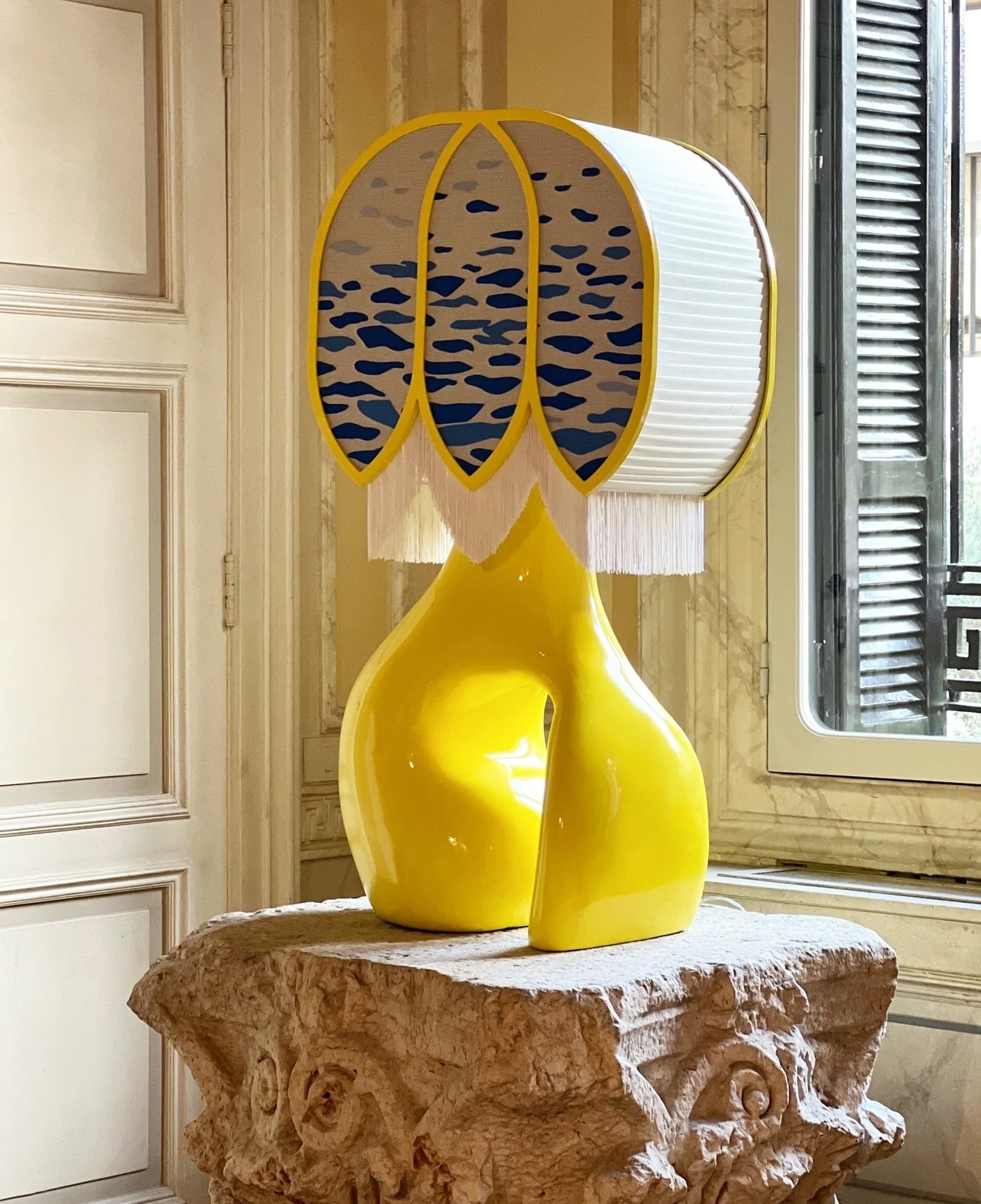
Light Keeper
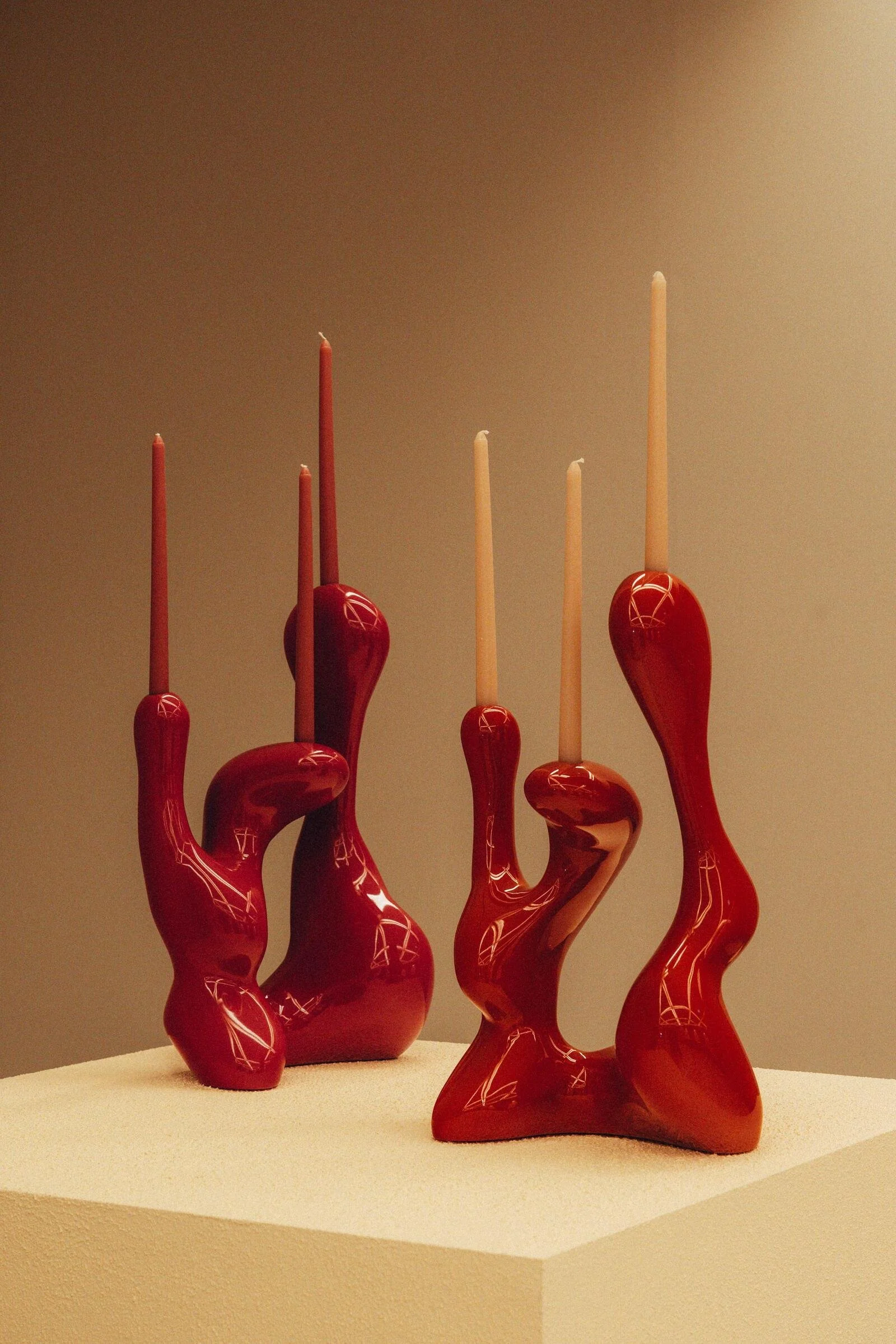
SHIMMER Candle Holder
DESIGNEERS
Walk us through a piece from first impulse to finished object. Where do your forms begin—in the body, in memory, in material?
Lamiss Akar
It often begins with a daydream—an intuitive image or feeling that stays with me. I translate that into a loose sketch, not to define the piece, but to capture its essence.
The real process starts in the sculpting. That’s where the form develops through intuition, through touch, and through the signature of the hand. It’s a very physical dialogue, where the piece gradually reveals itself rather than being imposed.
At the same time, I remain attentive to ergonomics and function, allowing the final object to balance emotion with purpose.
DESIGNEERS
Glazed ceramic, fringed textiles, wood—your material combinations feel almost bodily. Is there a tactile or sensory logic guiding those choices, or is it more intuitive?
Lamiss Akar
I’m drawn to materials that create tension and balance simultaneously, and when they come together, they create a dialogue between what feels rigid and what feels alive. It’s intuitive, but grounded in a sensory logic.
DESIGNEERS
The fringe details in several of your pieces feel almost alive - like hair or feathers or something in motion. What does that quality of movement mean to you in an otherwise static object?
Lamiss Akar
The fringes carry meaning beyond their softness and elegance as a material; they hold memory. For me, it evokes childhood, ancestral design languages, and a sense of emotional continuity between past and present.
It often recalls the atmosphere of a grandparent’s home, that quiet warmth and familiarity many people recognise instinctively, even if they can’t immediately name it, but they sense it. When I use fringes, it’s not only to introduce movement but also to carry that lineage into the piece.
So it animates the object both physically and emotionally, creating something that is not only seen but also felt.
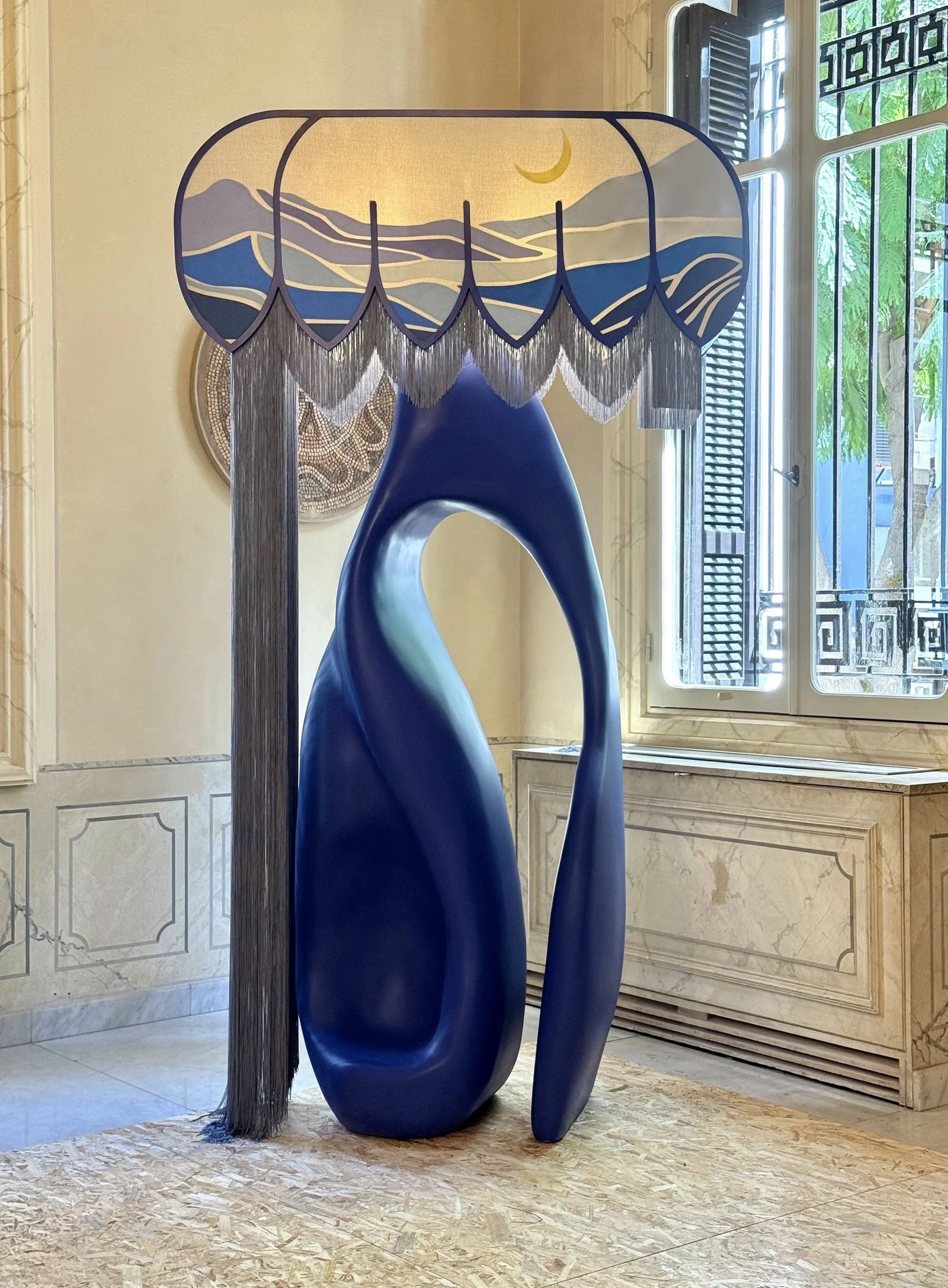
Light Keeper
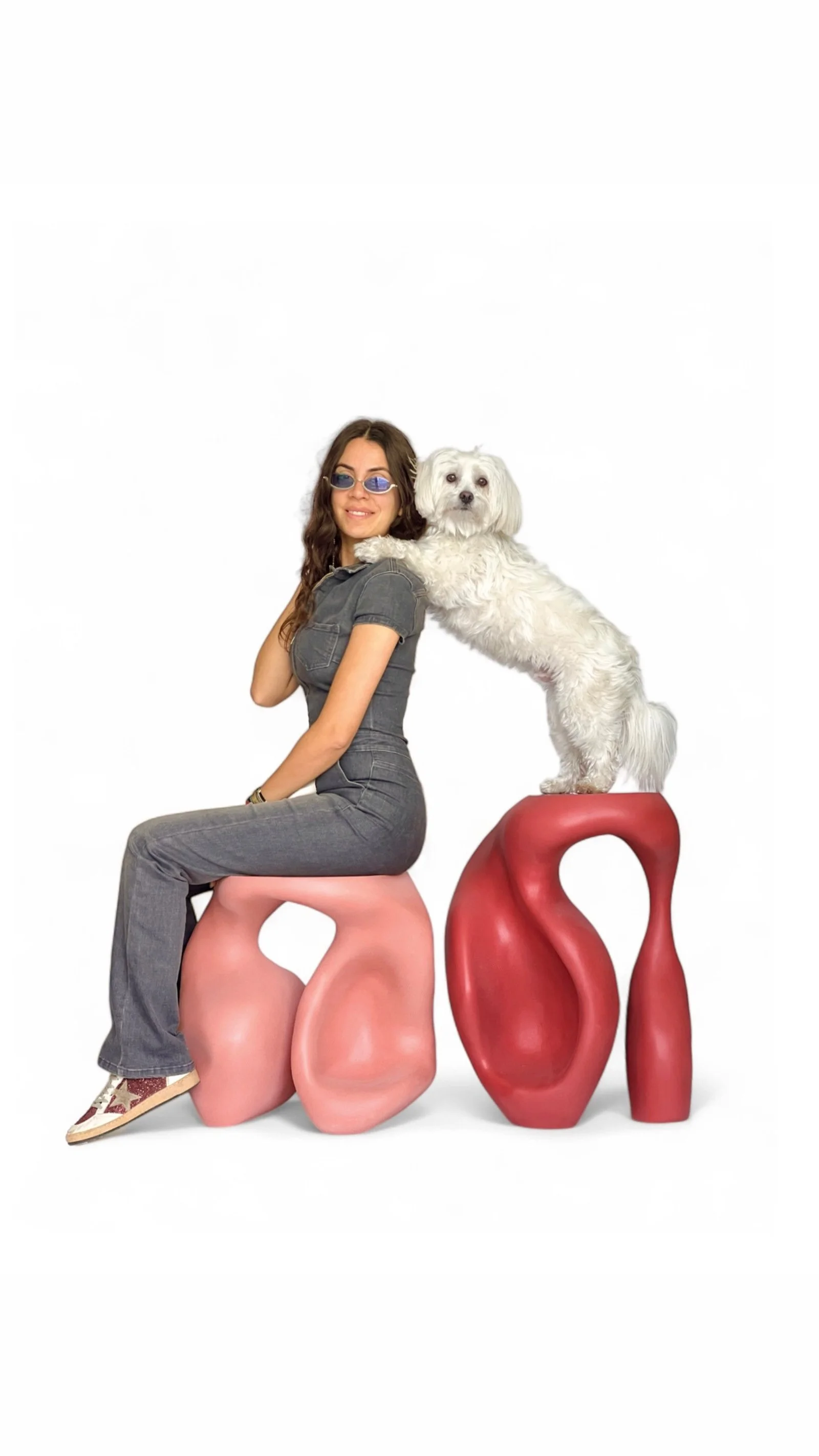
NOOK Side Tables
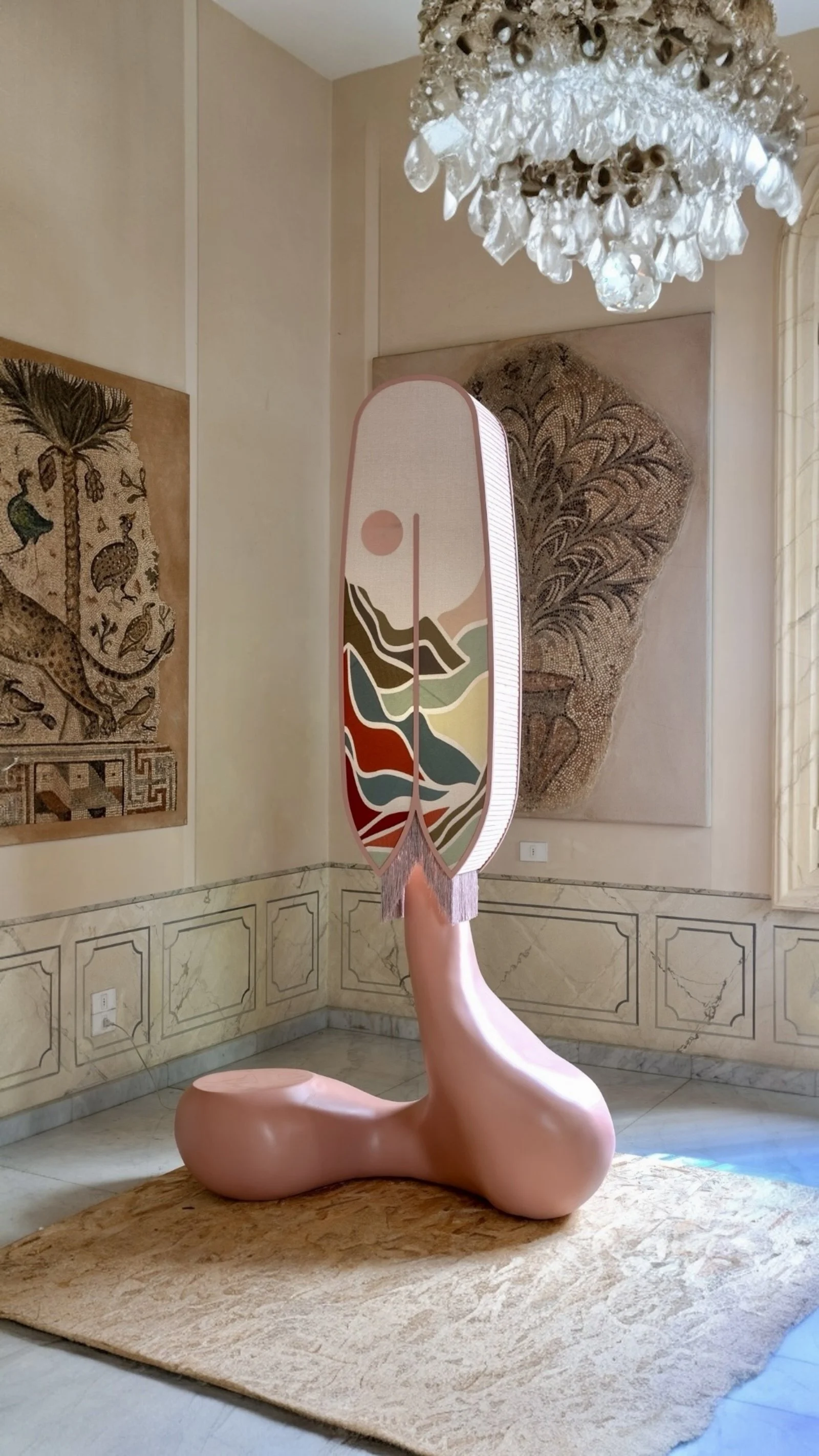
Light Keeper
“Light can reveal or soften forms, architecture can frame or contrast them, and geography brings its own cultural and emotional weight.”
Lamiss Akar
DESIGNEERS
Your colour palette moves between deep burgundies, terracottas, pink and vivid yellows. Are you drawn to specific emotional temperatures when you begin a new work?
Lamiss Akar
I see colour as an extension of character. Just like everything around us, from people, animals, and trees to even letters and numbers, they carry a distinct presence. Each piece I create has its own identity.
The palette doesn’t come from a predefined emotional temperature but from the character of the form itself. Colour follows the sculpture; it reveals and reinforces what the piece already holds within it.
In that sense, the colour becomes a language of identity, giving each work its own voice and emotional impact.
DESIGNEeRS
The Arabic press has called your work a significant evolution in the regional art movement. How do you navigate visibility and recognition in a region where the design scene is still defining its own canon?
Lamiss Akar
We’re often taught to be less emotional to succeed, to approach work with distance and control. But in a region where the design scene is still defining itself, I find that limiting.
For me, emotional intelligence is what leads to evolution. It’s what drives creation and what allows a more personal and honest language to emerge. I don’t try to navigate visibility by fitting into a system, but I let the work come from something deeply felt.
That’s where freedom is. And in a context that is still shaping its own identity, I believe that’s what truly contributes to it.
DESIGNEERS
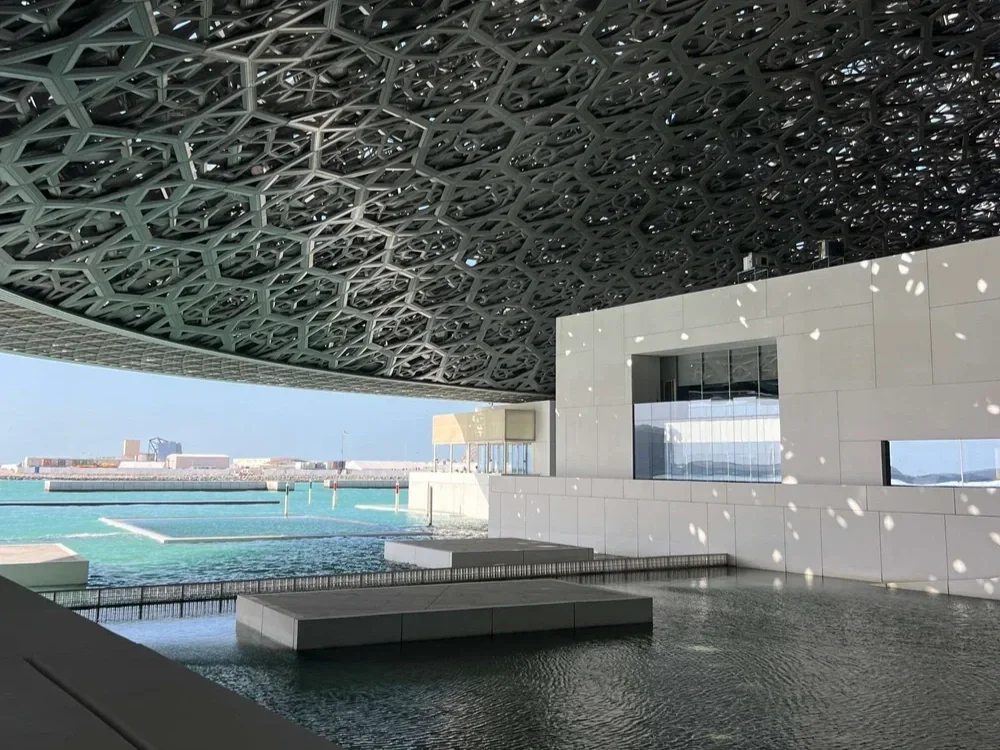
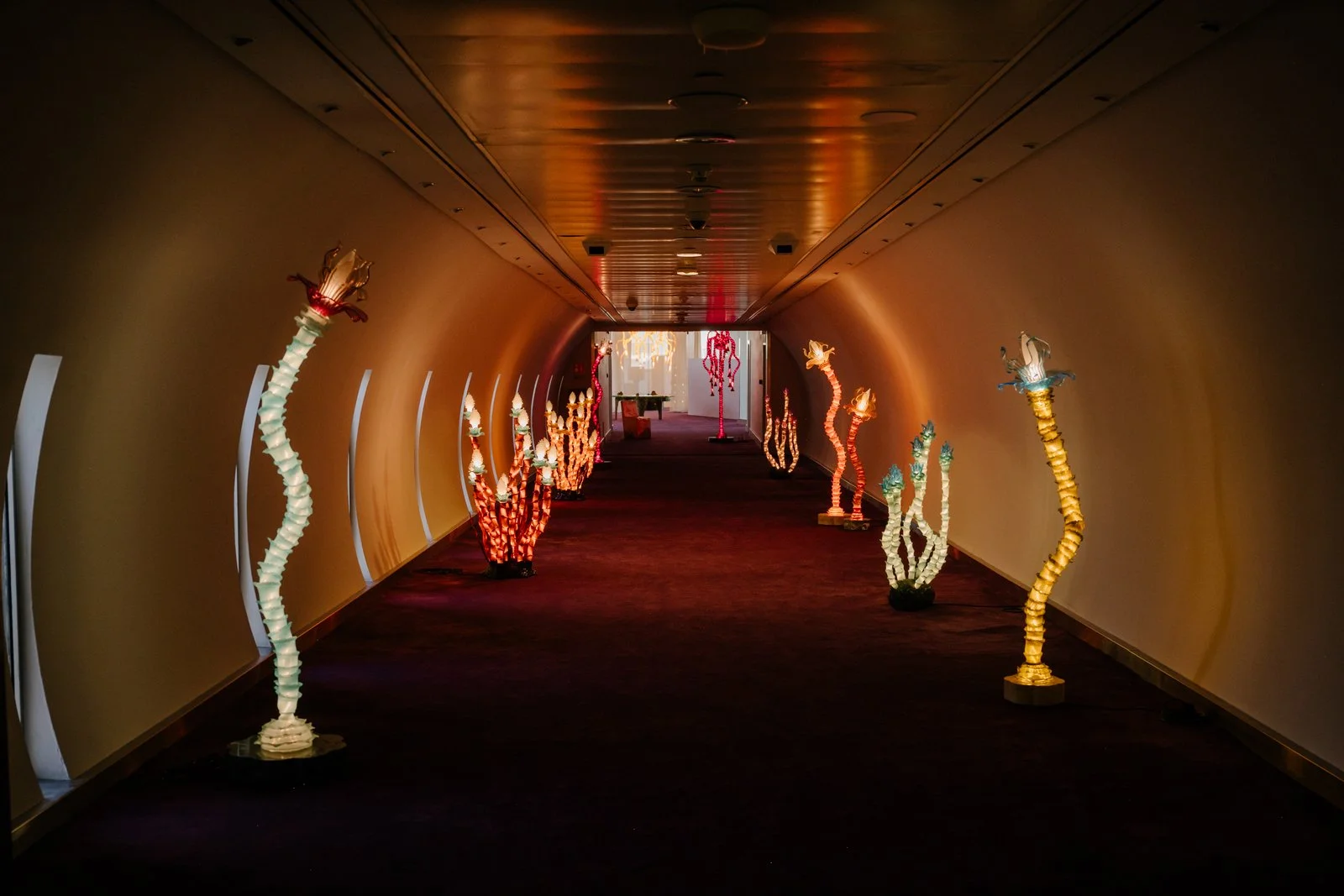
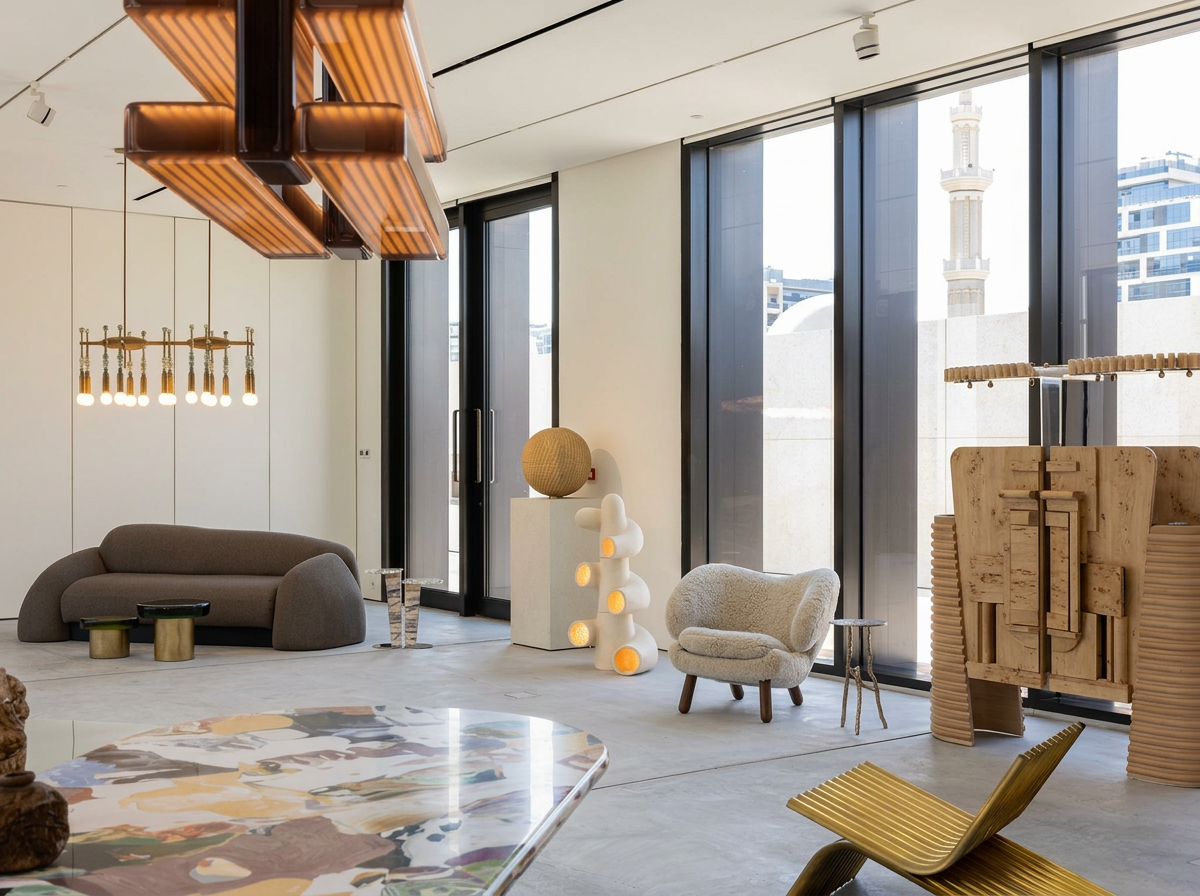
You've shown at NOMAD Abu Dhabi, which brings collectible design into extraordinary architectural settings. How does context (the room, the light, the geography) change the meaning of a piece for you?
Lamiss Akar
I see my pieces as having a presence of their own, but they are also in dialogue with their environment. Light can reveal or soften forms, architecture can frame or contrast them, and geography brings its own cultural and emotional weight.
So the meaning of the piece doesn’t change, but its expression does. It adapts, responds, and becomes more layered depending on where it exists and by whom it’s surrounded. It’s so fascinating to watch that interaction.
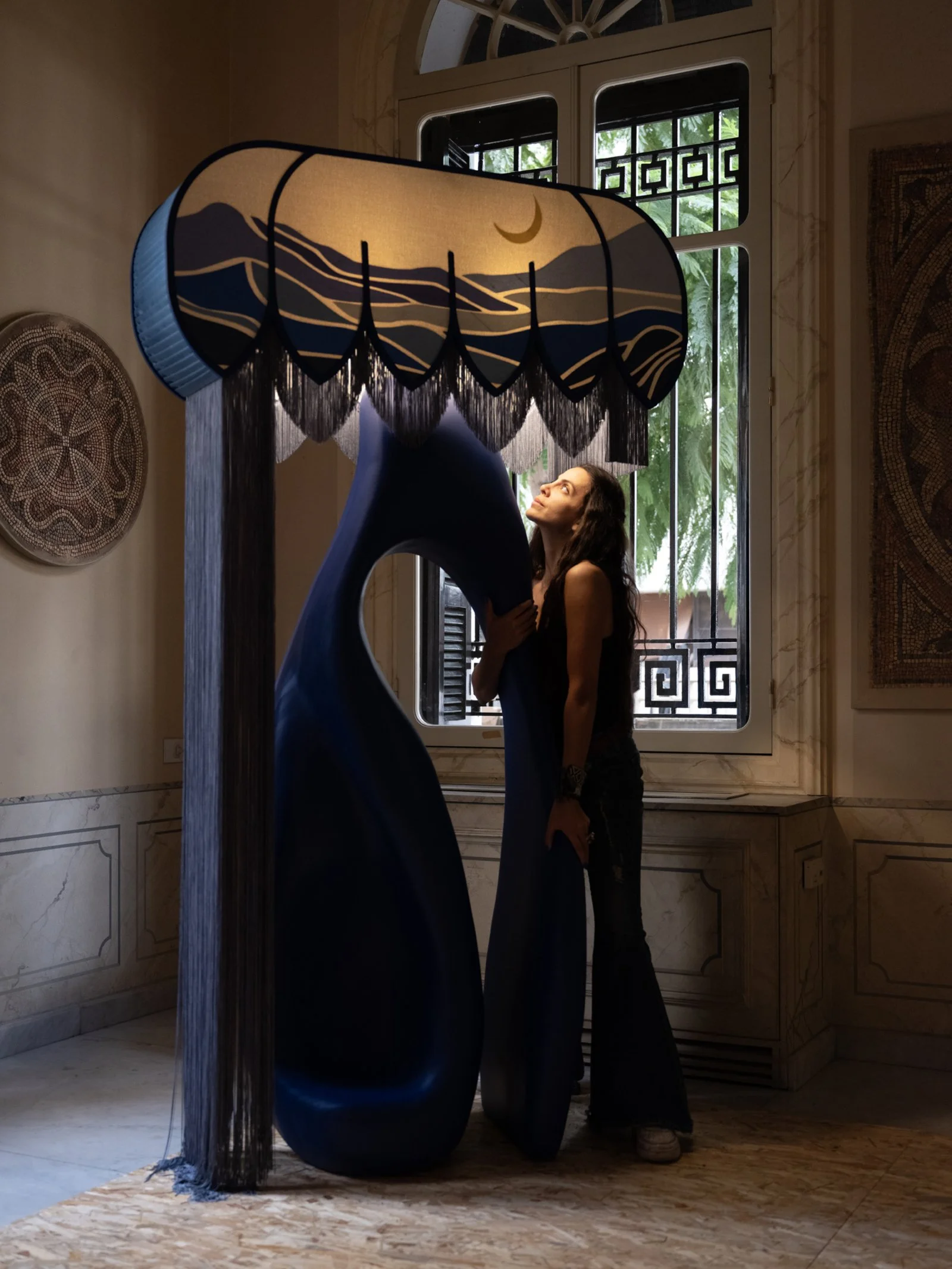
Light Keeper
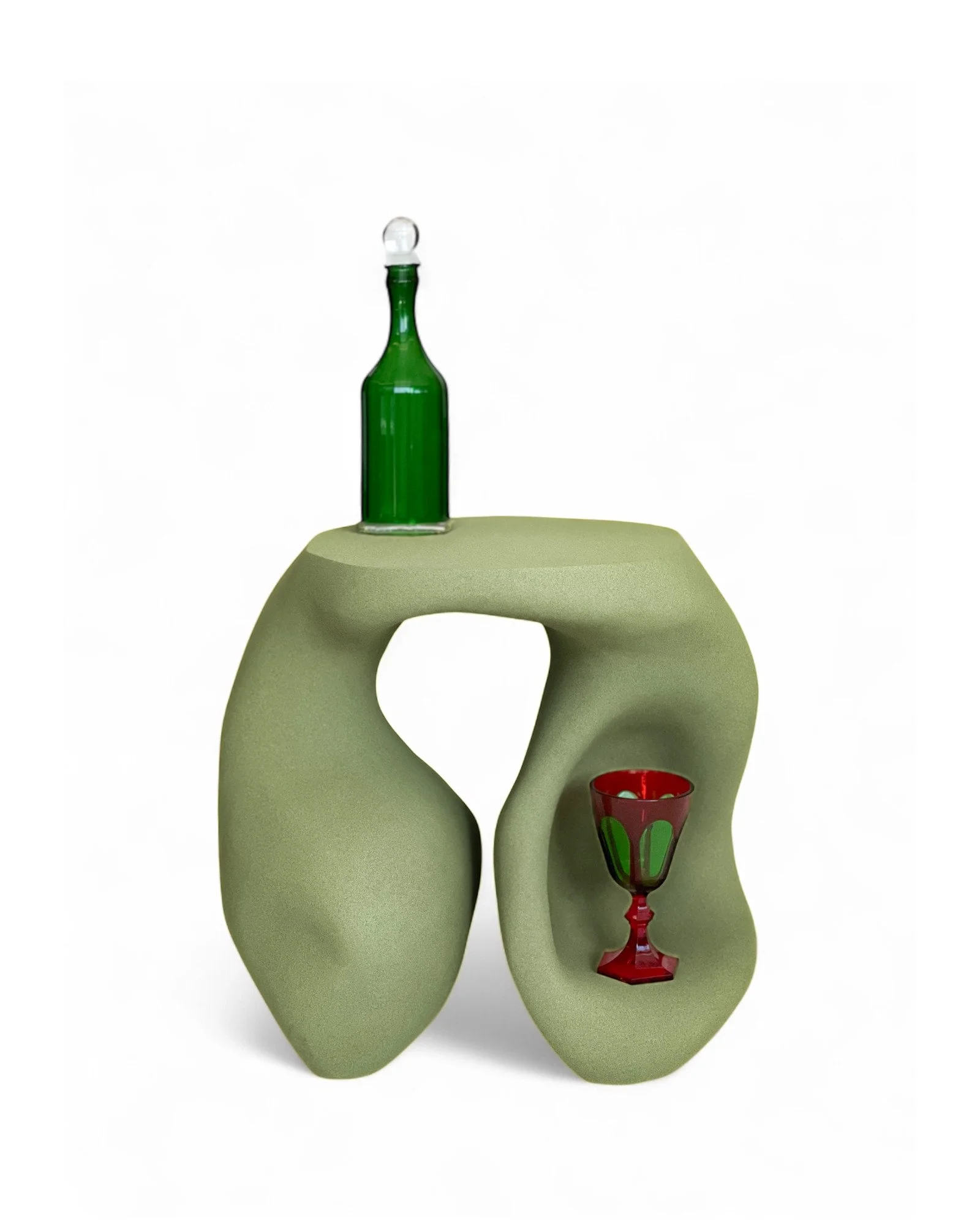
NOOK Side Table
DESIGNEeRS
If you could place one piece anywhere in the world (any building, any city), where would it be and why?
Lamiss Akar
I would place my piece in Fallingwater, as it reflects Frank Lloyd Wright’s vision of architecture growing out of nature rather than sitting on top of it. And my work follows a similar approach, where I translate the feeling and logic of natural forms into objects. Because of this shared intention, the piece would not feel imposed on the space but in harmony with it, as if it belonged to the same language of nature and design.
DESIGNEERS
A person (living or not) you'd invite to dinner, and what would you'd serve them?
Lamiss Akar
For as close as he was to the essence of creation, I would invite Maharishi Mahesh Yogi, and a grounding dinner would serve perfectly.
DESIGNEERS
The last thing that genuinely moved you—in art, design, nature, anywhere?
Lamiss Akar
The macro-photography of Daniel Aucoin, highlighting the beauty of the unseen forest.
DESIGNEERS
The design rule you were taught that you've since broken?
Lamiss Akar
I’ve been taught that ‘form follows function’, but I came to learn through my creations that form and function follow emotions.
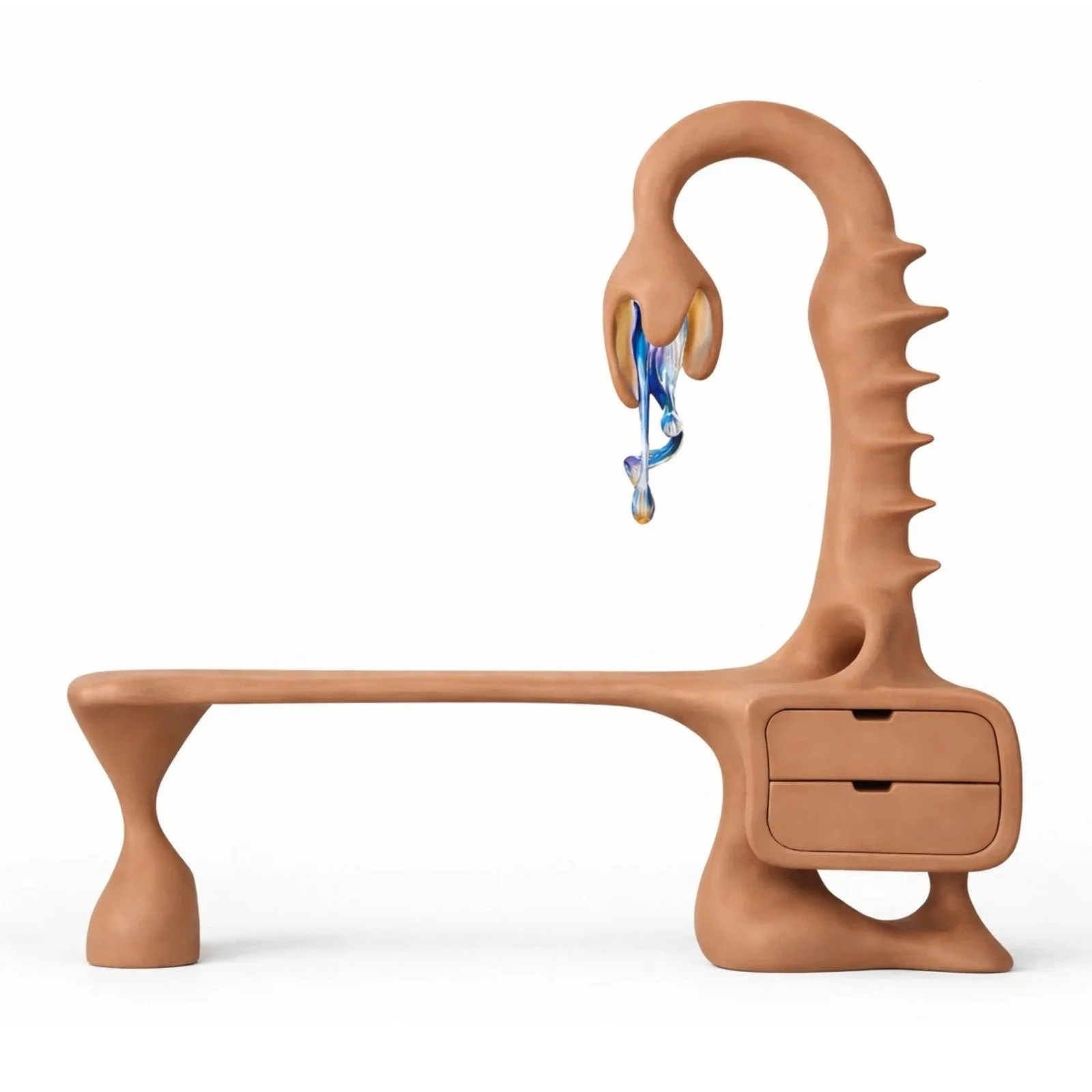
The SPINA console