people • artists
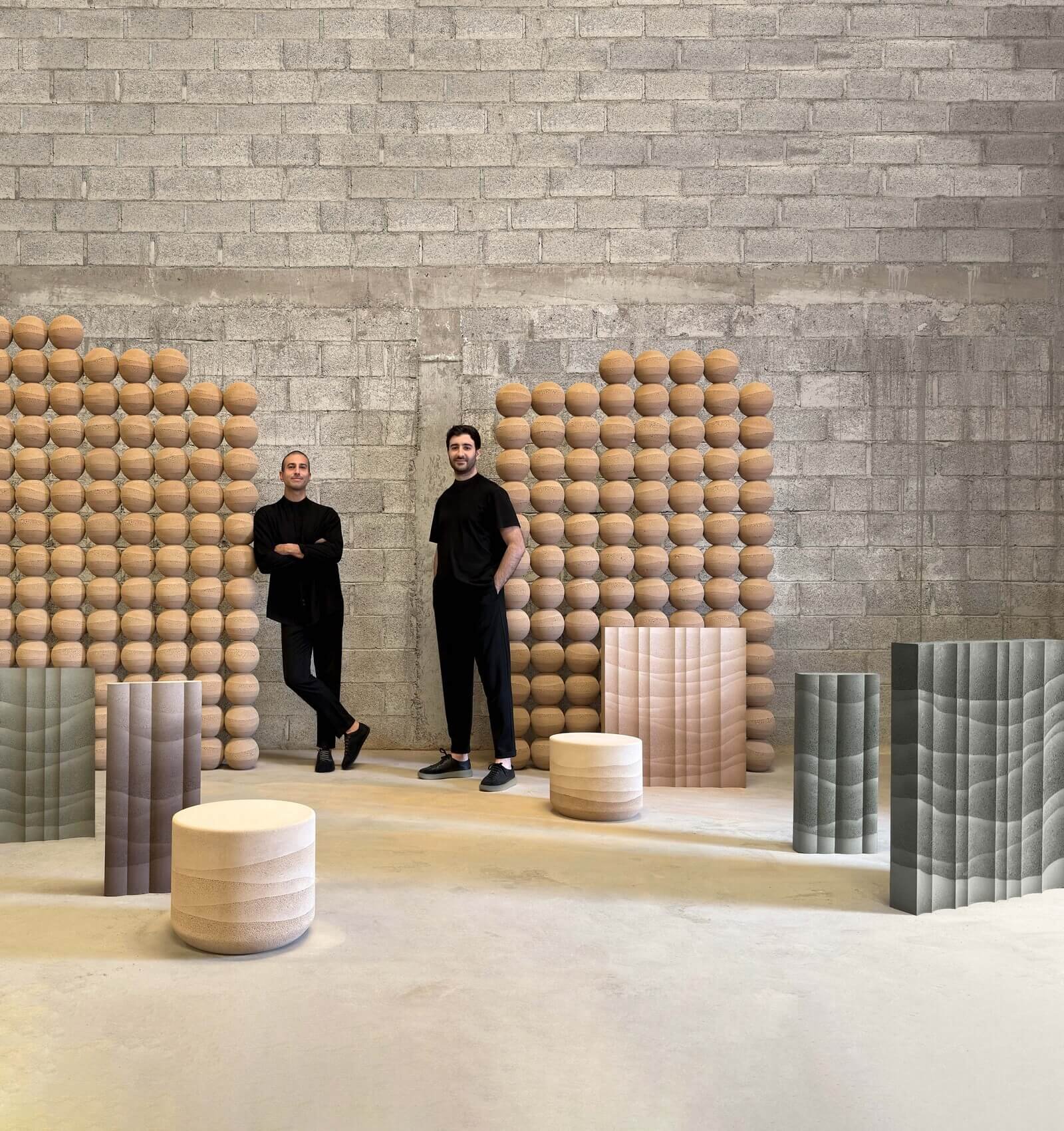
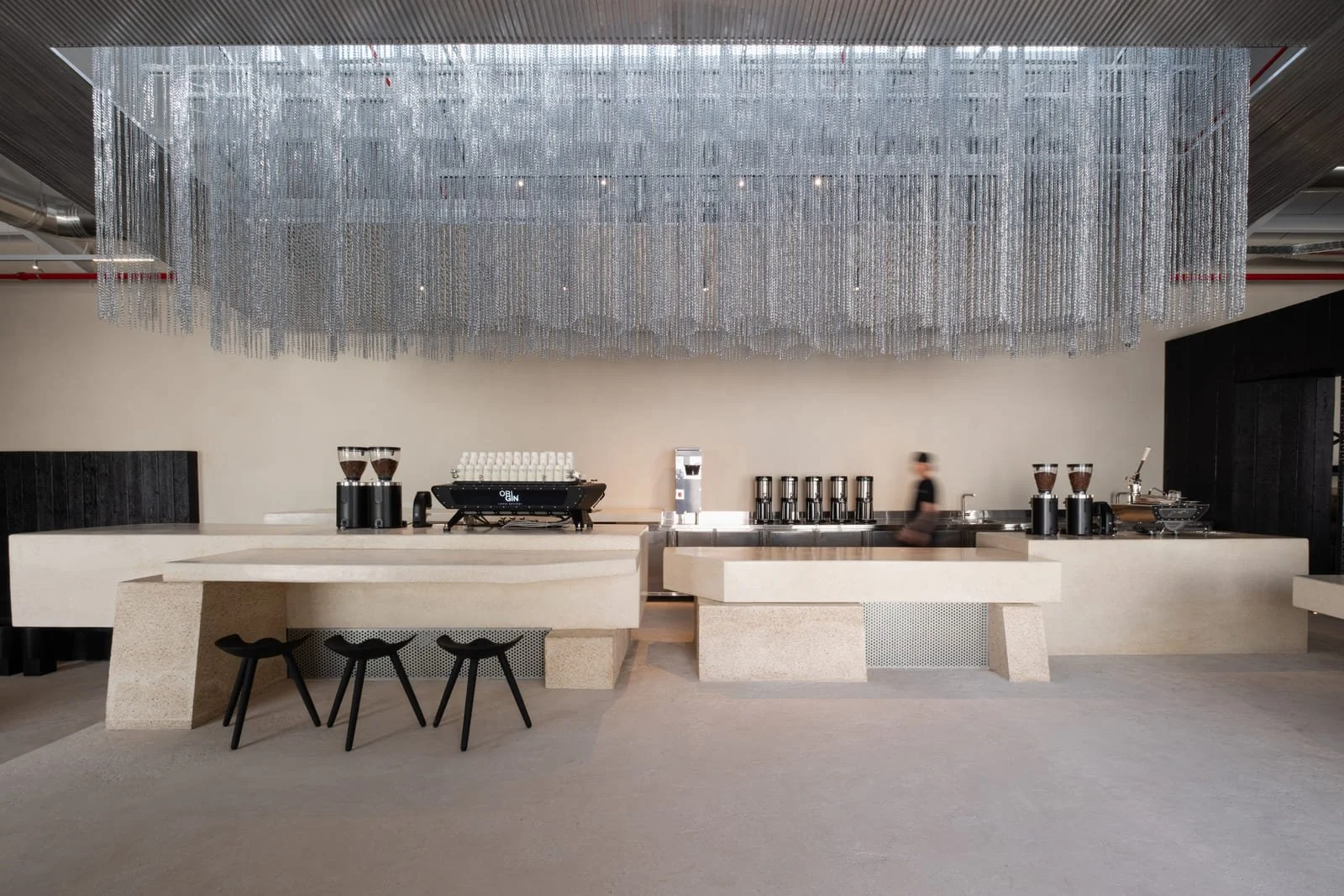
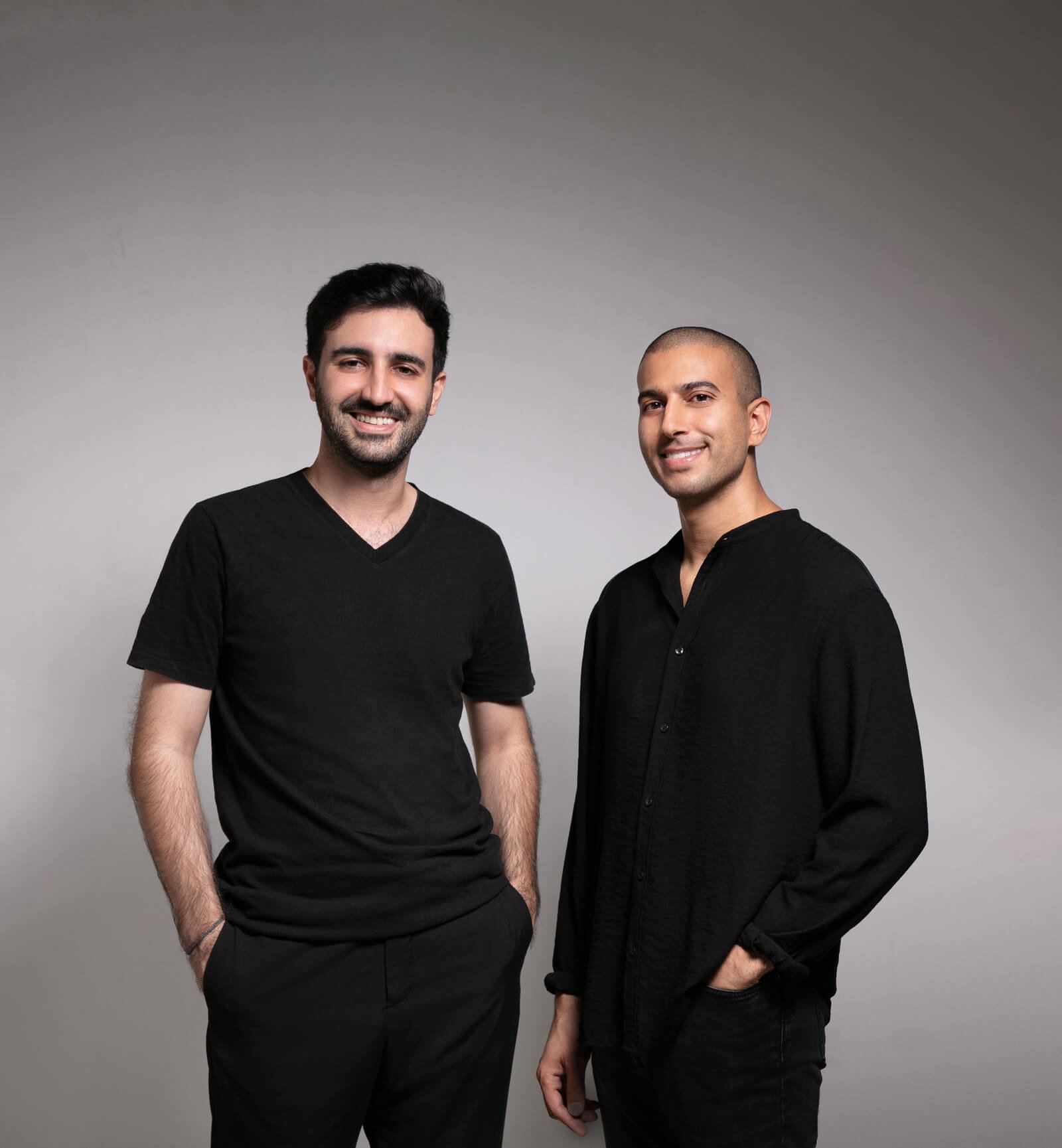
Karim Tamerji and Elias El Hage are the founders of Karim + Elias, a UAE-based multidisciplinary design studio working at the intersection of fine arts, interior design, earthen architecture, product design, and site-specific installations. With years of combined experience, the duo explores sand, one of the earth’s most abundant natural materials, through a conceptual and material lens, transforming it into art, objects, immersive spaces, and even compressed earth block house prototypes. Rooted in the UAE’s desert landscape and cultural identity, their work draws deep inspiration from the timeless symbolism of sand, exploring its narrative potential across architecture, design, and spatial storytelling. After the success of their large-scale installation at Downtown Design Dubai 2022, Karim + Elias began a creative journey to reinterpret sand as both a physical medium and a cultural artefact, whether in a rammed earth floor finish or a bold earth building intervention.
From sculptural design objects to immersive interiors, their work connects local heritage to global design dialogue, using sand to honour the material culture of the Middle East. Each piece balances ancient technique and modern innovation: from rammed concrete spheres that appear weightless to sculptural lighting fixtures cast in multi-hued layers of hand-pressed sand, as they explain:
“We’ve come to recognise sand as a material with meaning—one that tells a story steeped in heritage, speaking to people on a primal and universal level.”
Words: designeers
juLY 2025
WEBSITE: karimelias.com
INSTAGRAM: @karimandelias
DESIGNEERS
How did you two meet, and what led you to merge such different backgrounds—art, interior and product design, and architecture?
Karim+Elias
We actually come from the same academic background; we both studied architecture and graduated together in 2016. What always stood out was how differently we approached the discipline: one through material storytelling and product design, the other through spatial and environmental architecture. Over time, we each expanded into adjacent fields like interior design and art-led installations. In 2022, we debuted our first collaborative work—IOTA—at Downtown Design Dubai, and our studio was born. Today, our practice reflects an interdisciplinary design ethos rooted in architectural thinking, cultural context, and material exploration.
DESIGNEERS
What was the initial spark that made you choose sand as the central material of your project?
Karim+Elias
We were drawn to sand and rammed-earth techniques because of their deep historical and cultural resonance in the region. As architects interested in sustainable materials and vernacular building traditions, it felt instinctive to work with what’s most abundant and elemental to the landscape. Sand became both the material and the message, allowing us to explore questions like, how can architecture reflect regional identity? What does it mean to use material as narrative? We saw earthen architecture as a way to celebrate craftsmanship, sustainability, and the poetry of place.
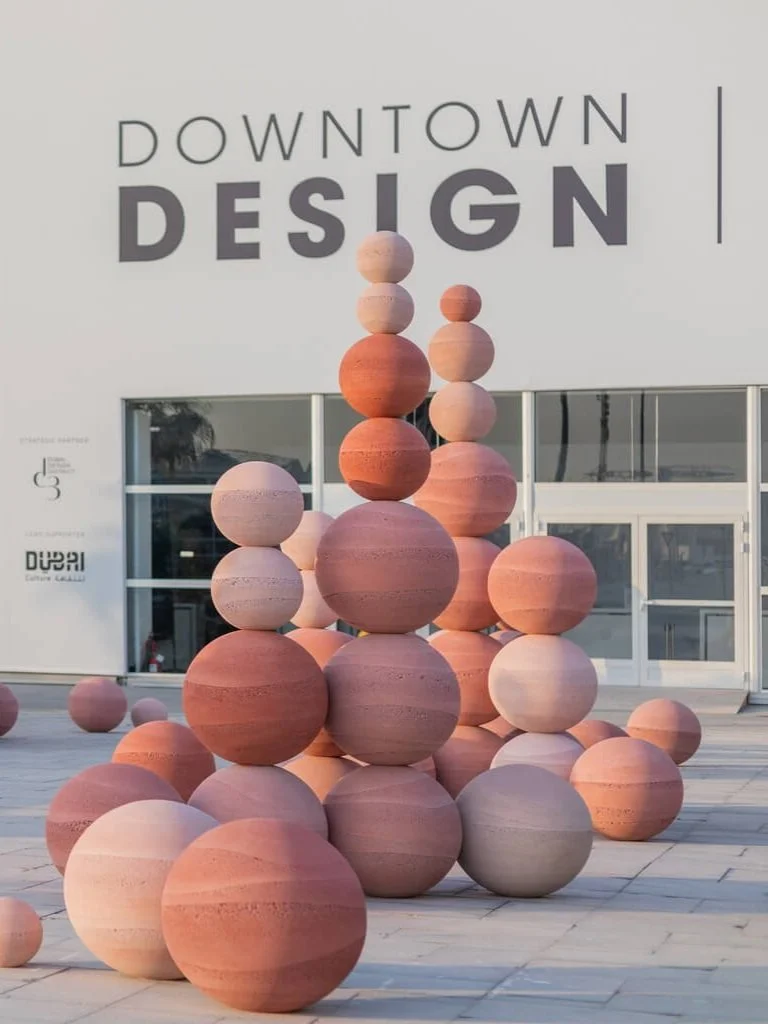
IOTA 2022
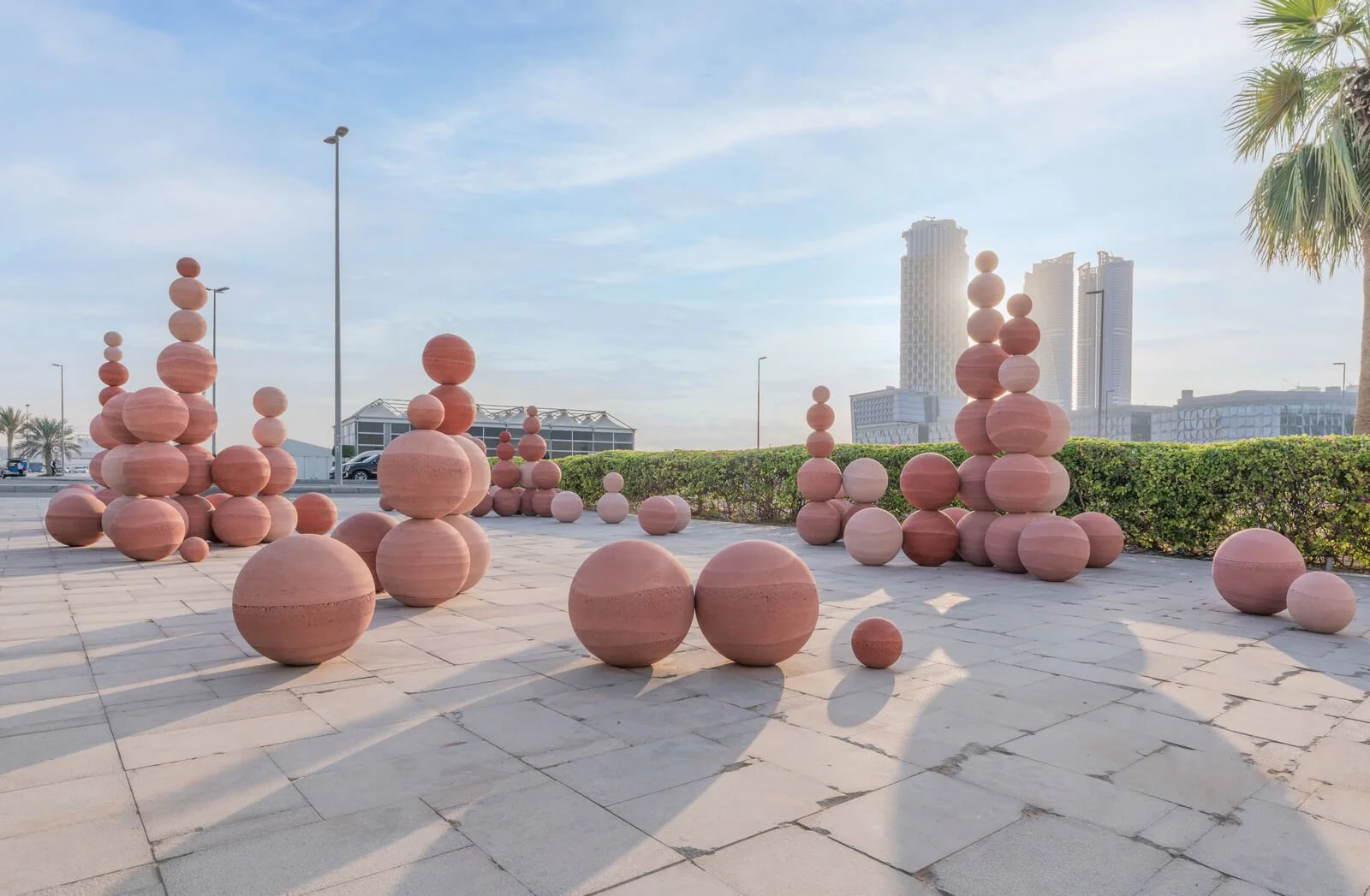
IOTA 2022
DESIGNEERS
You describe sand as “a material with meaning.” What does that mean to you within the cultural and environmental context of the region?
Karim+Elias
Our studio’s vision bridges two narratives: embracing desert sand as a culturally rooted material and reviving the ancient technique of rammed-earth construction. In the Arab region, sand is more than a material; it's a symbol of identity, geography, and memory. Its timeless presence across the desert landscape gives it deep resonance in both cultural and environmental terms.
We’ve developed a personalised, contemporary approach to rammed-earth building, which we often refer to as “sculpting with sand.” Just as artists preserve the traditions of marble carving or woodworking, we see ourselves as part of a lineage of material revivalists, giving new life to traditional techniques in a modern design context.
Our practice began in Dubai, using locally sourced sand to create earthen installations and spatial experiences rooted in place. Today, our work is expanding across the Middle East, from Qatar and Saudi Arabia to Jordan, continuing our mission to reimagine regional architecture through natural materials and storytelling.
DESIGNEERS
Are there specific challenges that come with working with sand at the scale of installations like “IOTA II” at the Intercontinental Residences?
Karim+Elias
Beyond scale, geometry can introduce challenges of its own, too. Stacking and interconnecting spheres at their tangents is one of the most intricate design approaches we’ve taken so far. It’s also important to note that the sculpture is free-standing; it isn’t braced to the floor whatsoever. All the internal structural connections never appear; they’re fully concealed once the piece is assembled.
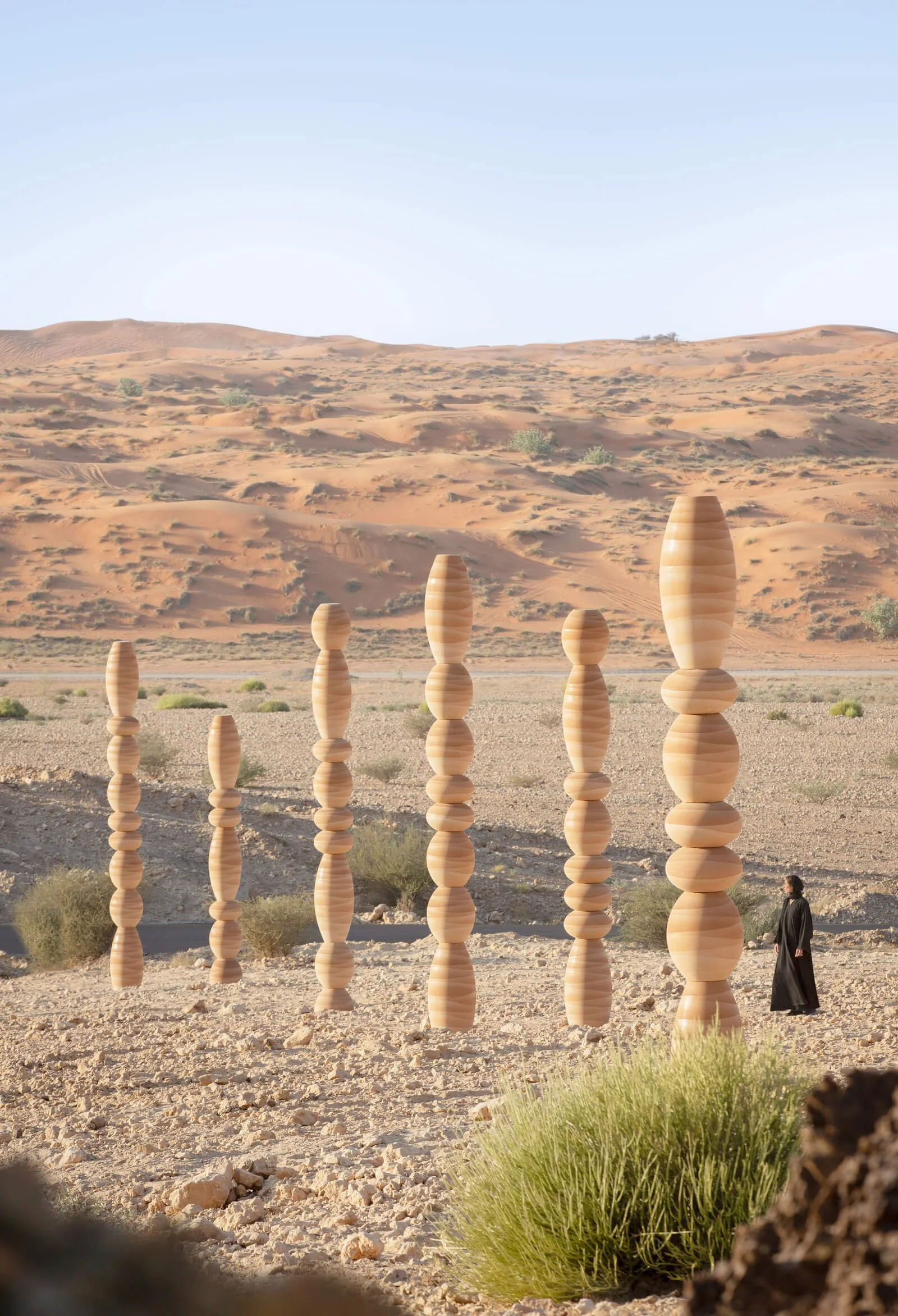
The Desert Relics
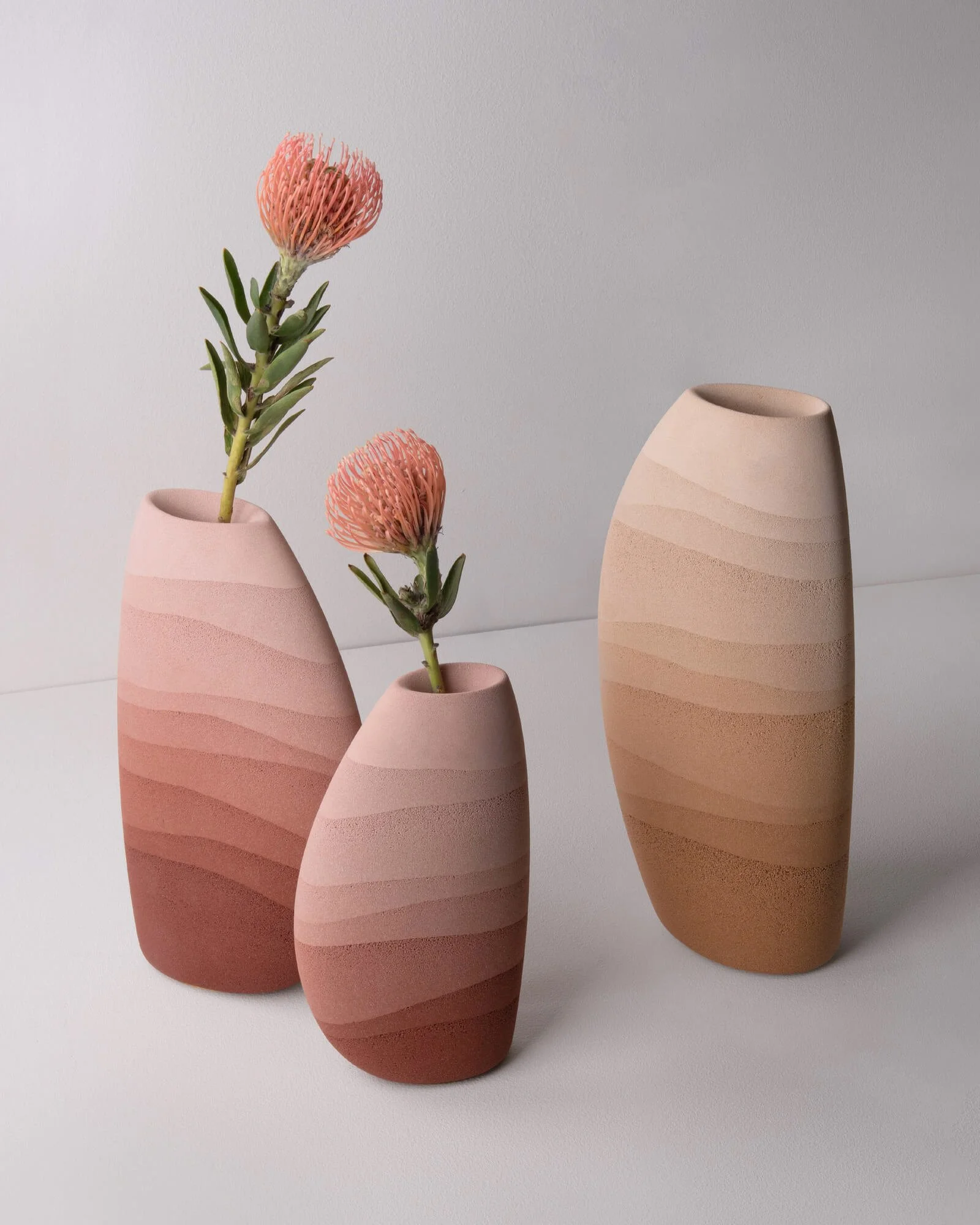
The Desert Drop Vases
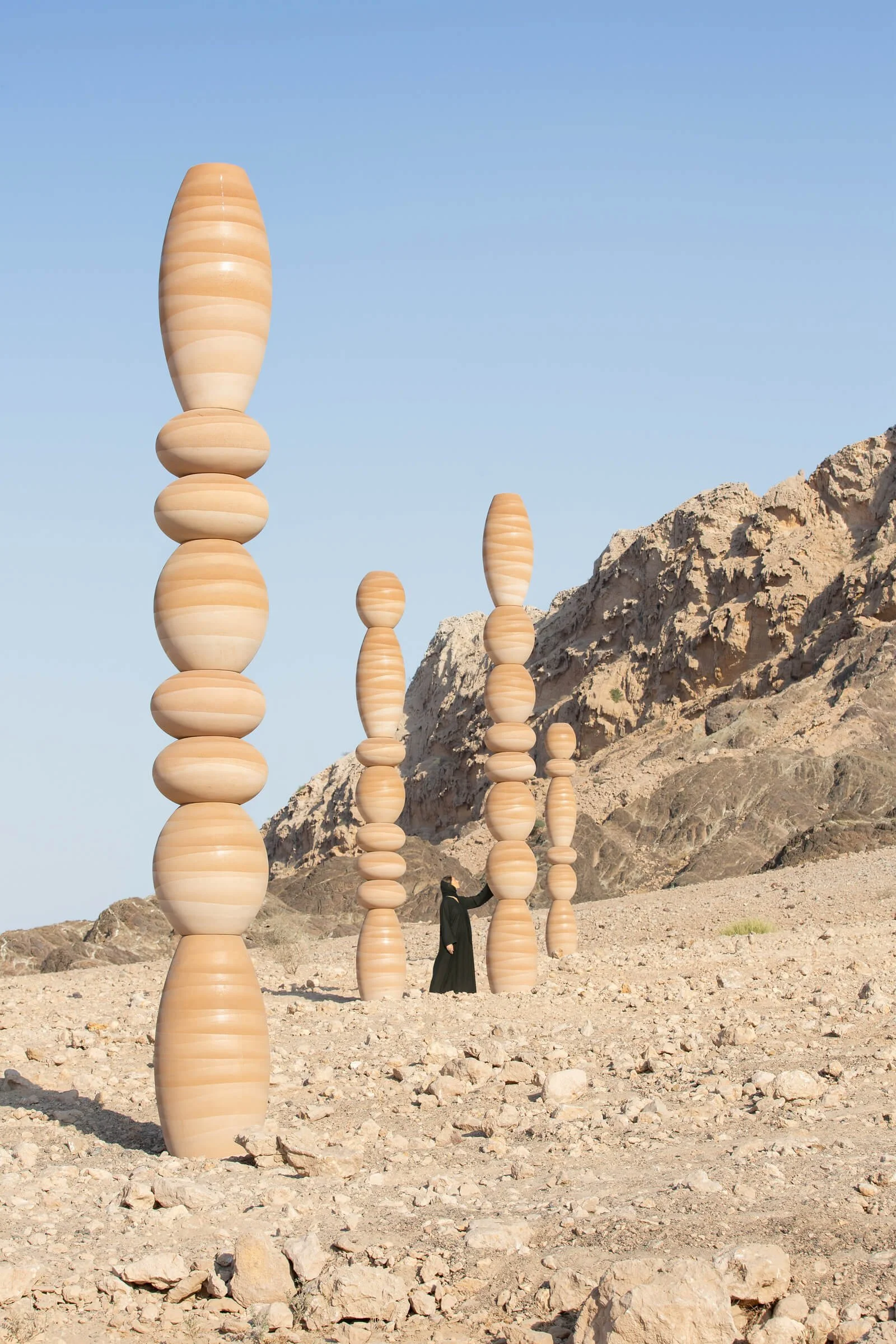
The Desert Relics
“Our studio’s work bridges two narratives together: one of adopting a local material with meaning, ‘desert sand,’ and one of preserving an ancient artisanal technique, rammed earth.”
Karim+Elias
DESIGNEERS
IOTA II and The Desert Drop are powerful examples of your research. How did these works evolve from concept to reality?
Karim+Elias
Our first two installations, IOTA II (2022) and From This Earth (2024), explored a purist geometric approach, using the sphere as a timeless form. Spheres are both elemental and symbolic, playful, archaic, and spiritually resonant. With IOTA, we leaned into an art-led interpretation, while From This Earth was rooted more in architectural expression using rammed earth techniques and sustainable materials.
As our practice evolves, we’ve begun embracing more organic and landscape-inspired forms. The Desert Drop series, for instance, was inspired by the flowing gestures of sand and water, a response to the natural movements of the desert itself. These fluid, sculptural pieces reflect our ongoing research into material behaviour, form-making, and site-specific installation design.
Each piece is crafted through a meticulous hand-pressing process, layering pigmented sand in gradual tonal shifts. For instance, a ‘Sand Skin’ architectural surface might evoke desert dunes with layered golden hues and soft textures, while an object inspired by the trunk of a date palm might feature vertical striations in earthy greens and browns. Every work is uniquely composed, part sculpture, part story.
DESIGNEERS
In your view, how can design using “primitive” or raw materials resonate within contemporary urban contexts like Dubai?
Karim+Elias
Dubai is known for importing the best in global architecture and craftsmanship, yet we see an opportunity to reconnect with the city’s material roots. Our practice is focused on elevating raw, locally sourced materials like desert sand into premium, expressive forms. It’s less about the material itself and more about the design intent, technique, and cultural narrative behind it. By applying ancient methods like rammed earth construction through a contemporary design lens, we aim to create works that feel both modern and timeless, resonating within even the most urbanised environments.
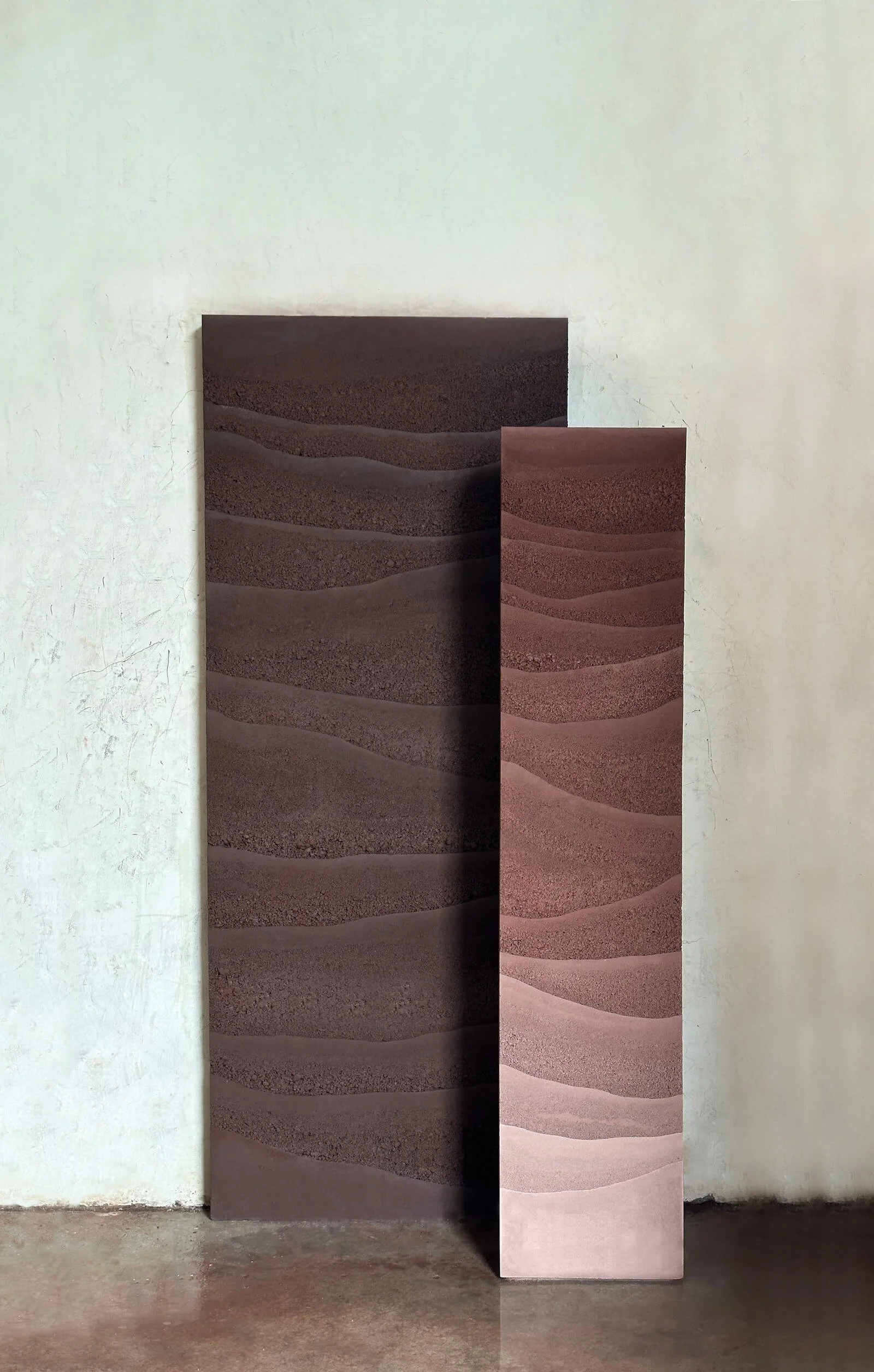
Sand Skins
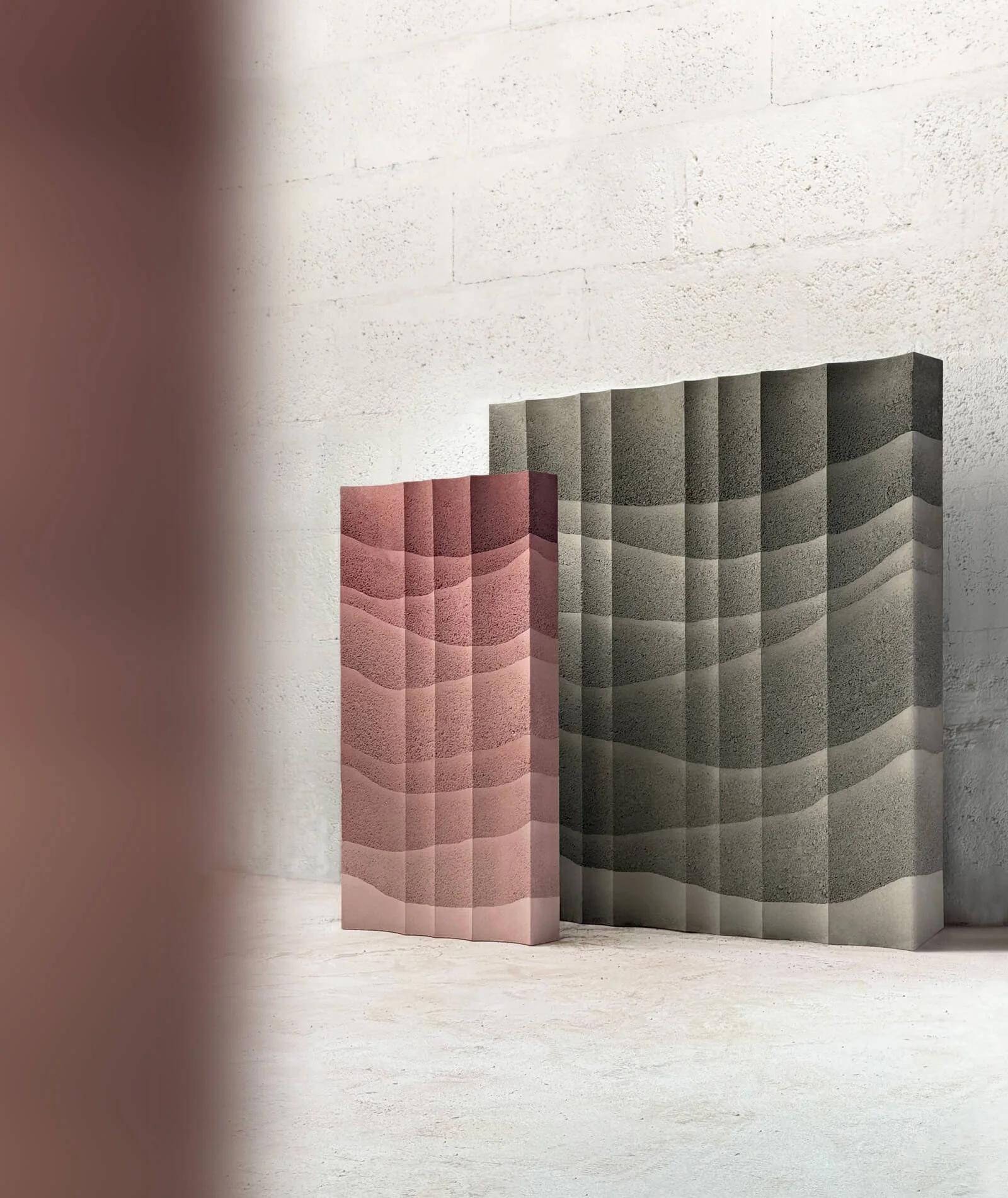
Sand Skins
DESIGNEERS
Where do you see your creative journey heading in the next few years? Are there new materials or techniques that fascinate you?
Karim+Elias
We see our creative journey expanding both in scale and medium. From natural pigments and mineral-based finishes to site-responsive installations, we’re excited to push the boundaries of what material-led design can mean in the 21st century.
We're particularly interested in cross-disciplinary collaborations, including working with the tech industry to explore innovation in fabrication, lighting, and interactivity. Whether through larger-scale public works or more immersive spatial experiences, our goal is to continue using natural materials in ways that are relevant, regenerative, and emotionally compelling.
DESIGNEERS
How important is it for you to pass on this traditional know‑how to future generations? Are there educational or collaborative projects in the works?
Karim+Elias
Absolutely, we believe in leading by example. Our studio is deeply committed to reviving an ancient craft that we hope will one day be recognised as our own contribution to the built environment. We’ve hosted several hands-on workshops in the past and would love to see our rammed-earth techniques adopted more widely in the construction and design industries.
We also see our studio as a collaborative platform, a place to co-create and bring both our own and others’ creative visions to life. Over the coming year, we’ll be unveiling a series of material-led installations across both private and commercial spaces.
DESIGNEERS
If you could invite three people, living or not, for a dinner under the stars in the desert, who would they be?
Karim+Elias
James Turrell, Olafur Eliasson, and Richard Serra. We trust they’d love the setting as much, if not more, than we would.
DESIGNEERS
A book, a place, or a memory that always brings you back to your creative centre?
Karim+Elias
Simply put, a pristine desertscape.