Sanne Terweij: The Alchemy of Oxidation and Timeless Metal

people • ARTISTS
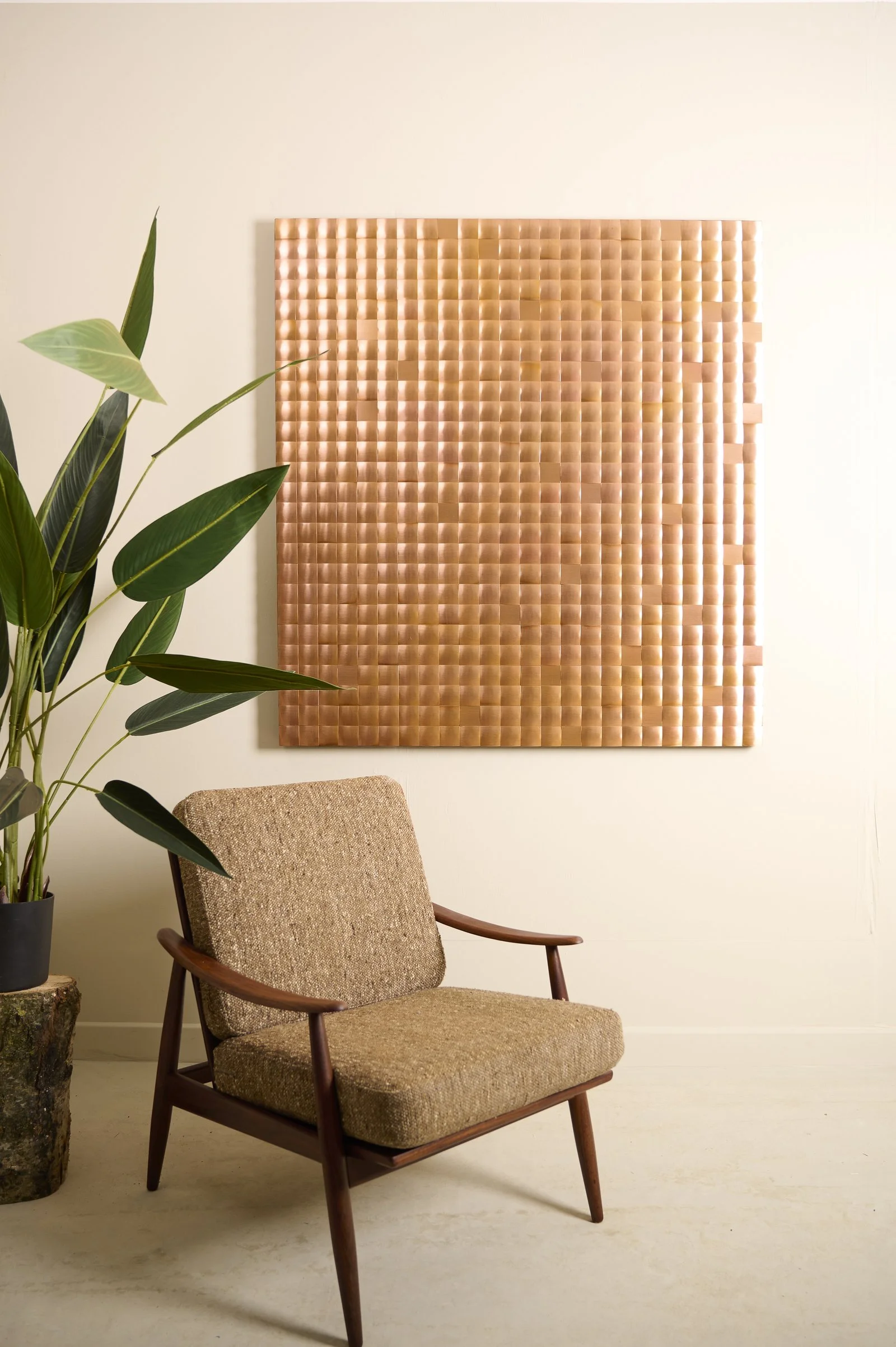
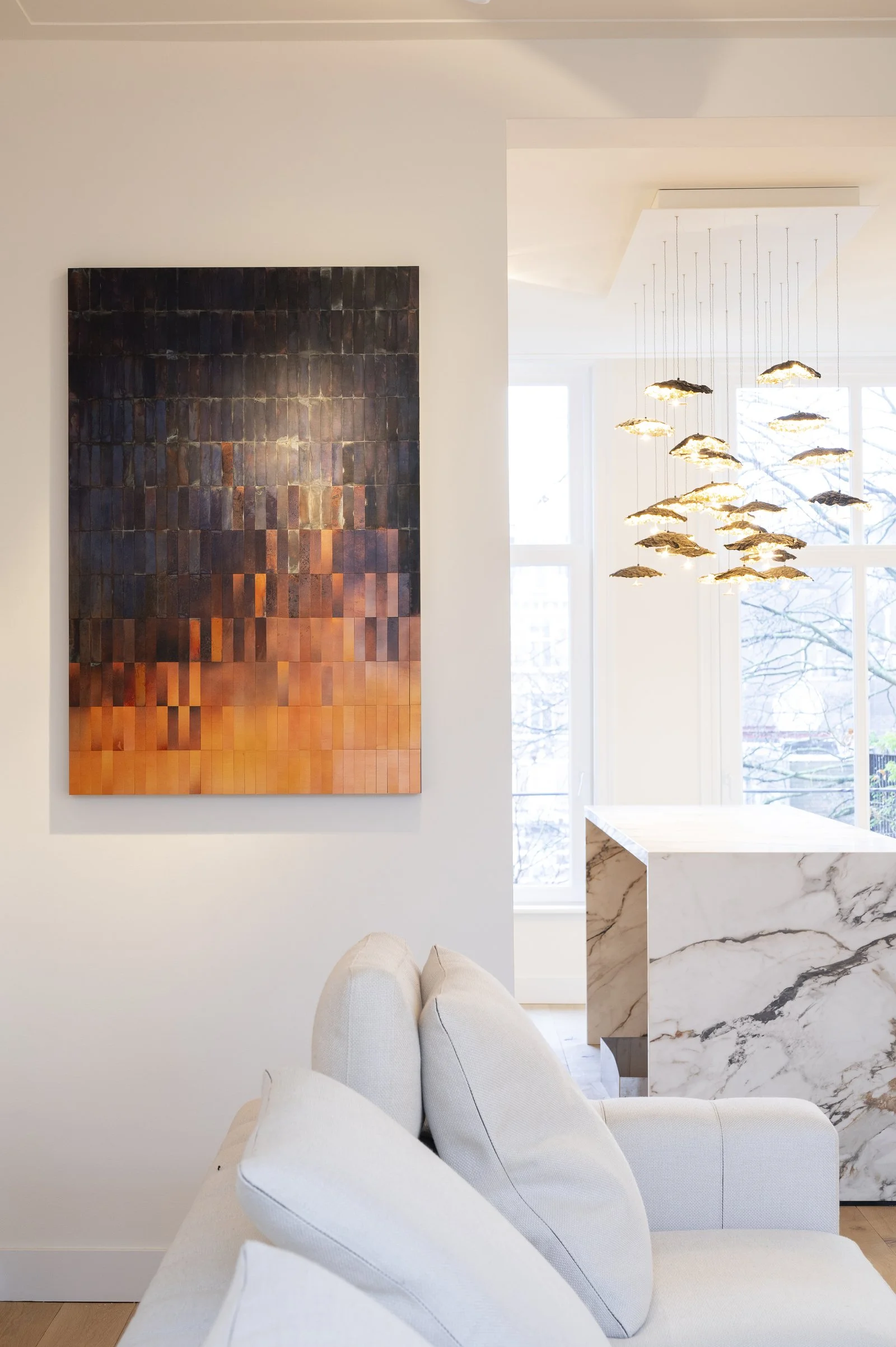
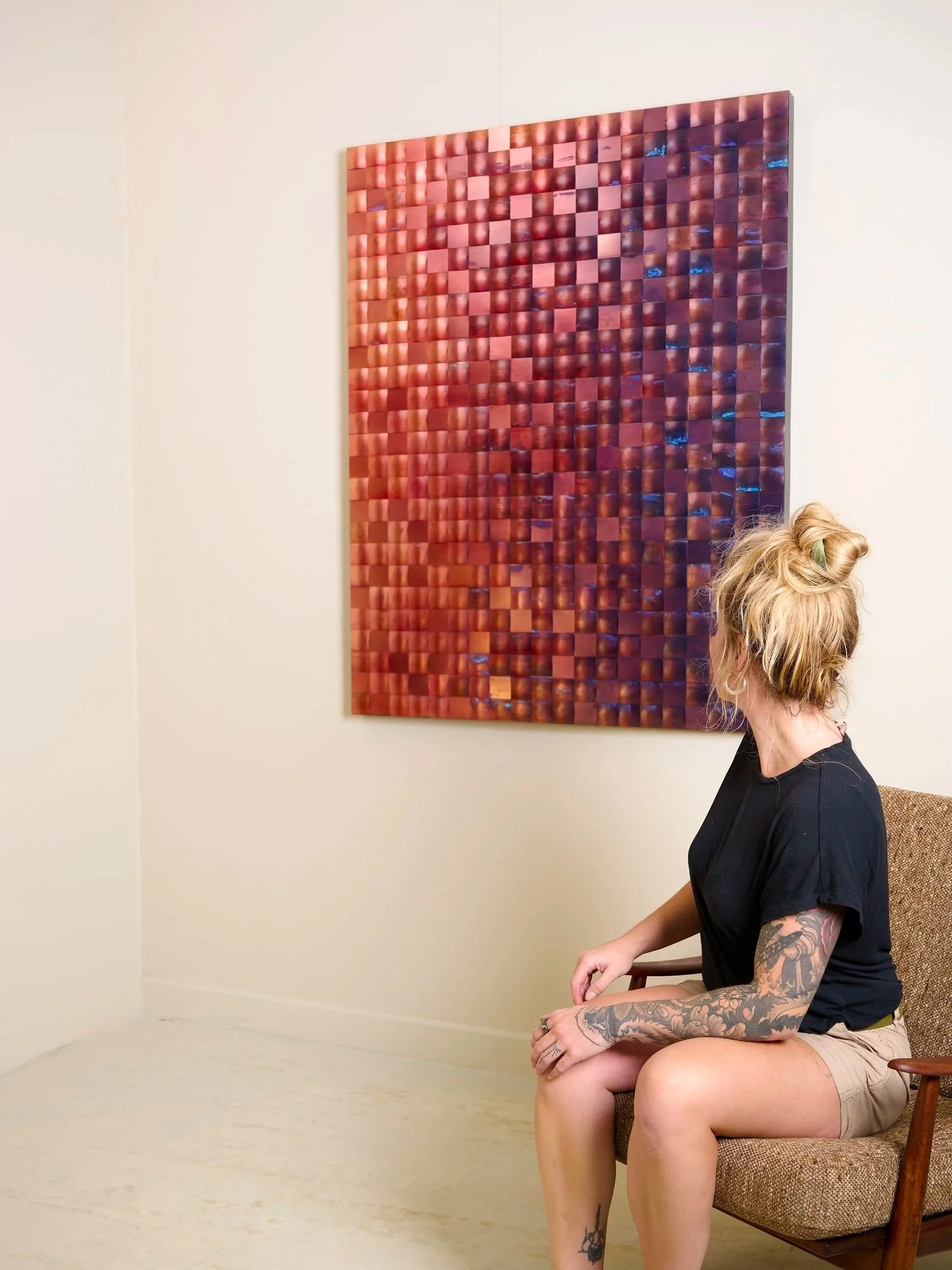
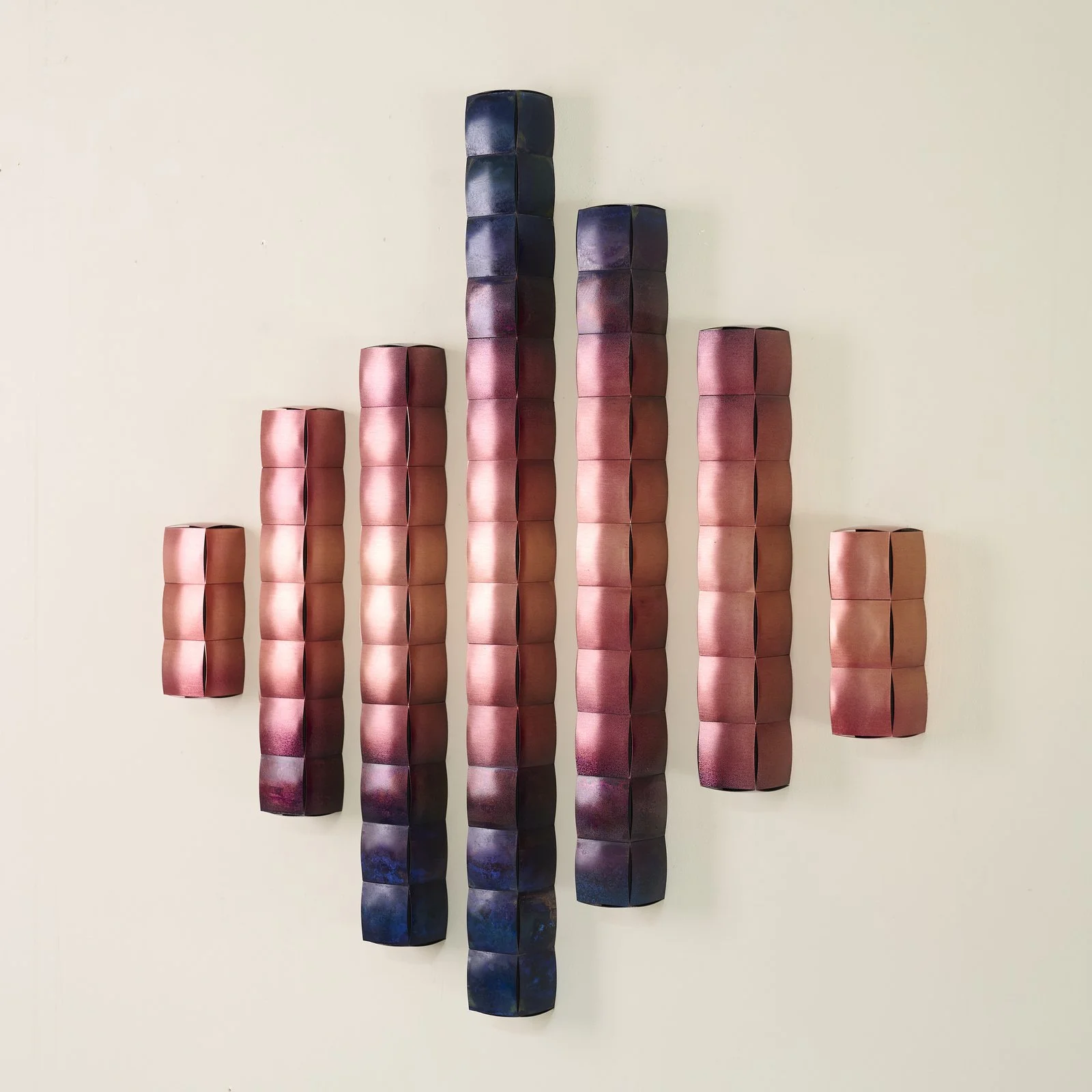
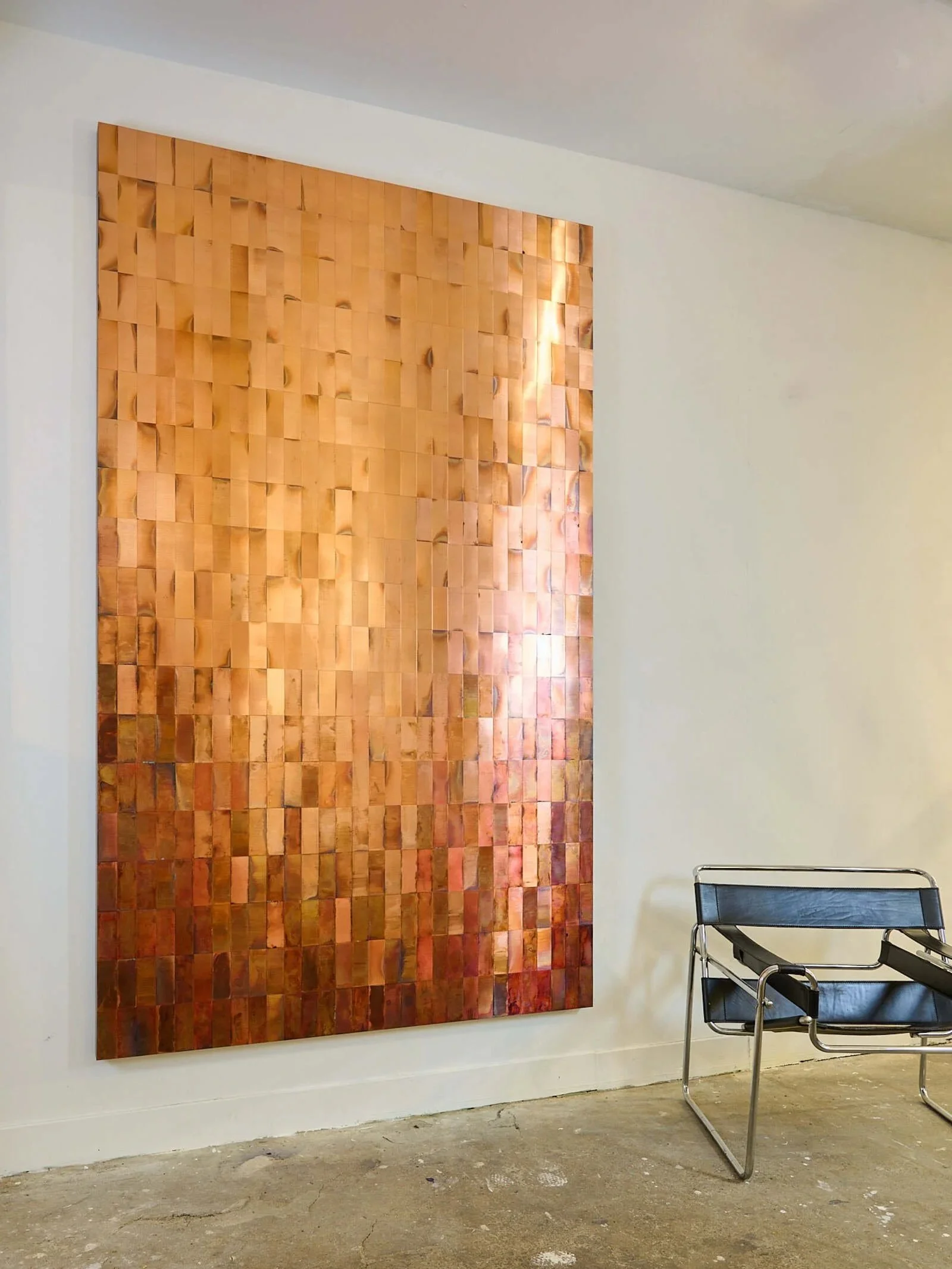
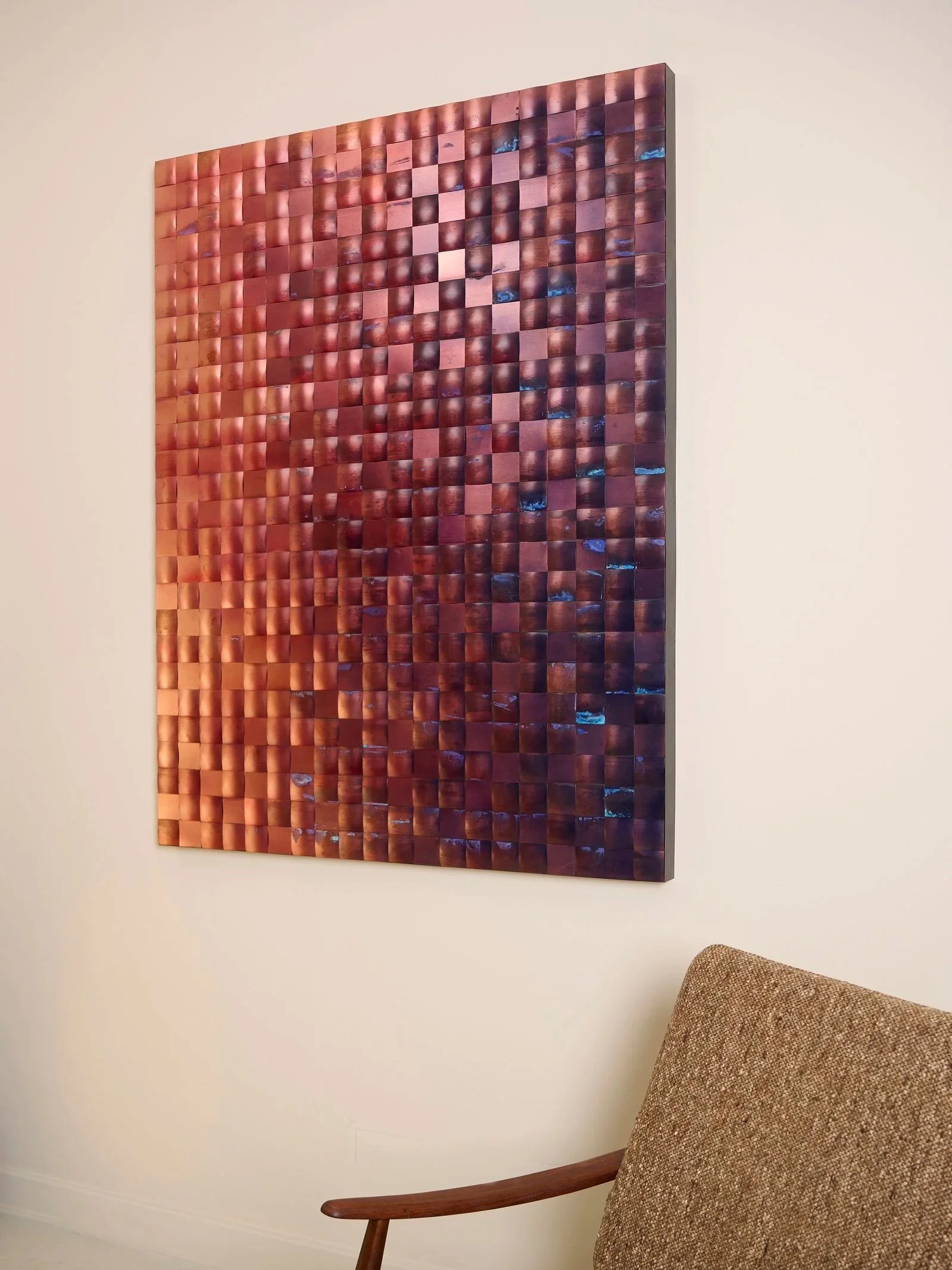
Sanne Terweij is an Amsterdam-based artist whose work transforms oxidation from a process of decay into a language of beauty. Terweij fuses classical craftsmanship with a distinctly contemporary sensibility, creating mesmerising wall objects composed of hundreds of hand-cut copper and brass elements. Through controlled chemical interventions and intuitive decision-making, she allows metal to age, shift, and bloom into layered landscapes of colour and texture.
In her studio, oxidation becomes both medium and metaphor. The process is unpredictable and only partially controllable, demanding a constant negotiation between surrender and intention. Each work reveals subtle traces of time, scratches, dents, and tonal shifts that deepen rather than diminish its value. Recognised internationally and named Rising Talent by Maison & Objet in September 2022, Terweij continues to explore how patina, imperfection, and reflection can reshape our understanding of beauty and worth.
Words: designeers
MARCH 2026
WEBSITE: sanneterweij.com
INSTAGRAM: @sanneterweij
DESIGNEERS
Your work sits beautifully between art and design. How do you define what you do, and does the distinction matter to you?
Studio Sanne Terweij
My work really touches both of these ‘labels’, since my practice is highly material- and experiment-based and involves many technical stages of craft, while still emerging from an internal dialogue and emotional process.
In the end, though, the distinction does not matter much to me. I believe it is more important to create from a genuine inner drive than to fit within a specific category.
DESIGNEERS
Oxidation is famously unpredictable. How much control do you maintain in your process, and when do you let the material lead?
Studio Sanne Terweij
I love the oxidation process for its unpredictable twists and turns! Over the years, I have learned to maintain quite some control over the process, but it continues to unfold a bit like a dance. We keep moving forward, but never in a straight line. Following the rhythm and staying in motion until I feel the work has reached the vision I had for it. It is a constant quest for balance between accepting what emerges in the process and changing what cannot be accepted.
This way of creating continues to spark amazement and curiosity in me, even after creating so many pieces, because no path to completion or outcome is ever the same.

DESIGNEERS
What was the moment you realised copper and brass were your materials? Was there a specific piece or discovery that made it click?
Studio Sanne Terweij
I think it is more a cumulative story of my past careers rather than one single moment. For the past 18 years, I have been working as a scenic artist for film and hospitality, where I have specialised in ageing and patina techniques. This sparked a special interest in the beauty found in the ageing and weathering of different materials. It builds an extra layer of history and character onto objects and spaces that makes them unique. It breathes a life story of past experiences into being.
I liked the different layers and textures so much that I wanted to place them on a pedestal. At the same time, I was drawn to these specific materials because of their reflective qualities; they are literally bringers of light and reflections.
As a student, I was originally trained as a goldsmith. During the first year, we worked mainly with brass instead of gold, and that early familiarity with the material stayed with me.
After 2 years, I left the program because the scale felt too small and delicate for me, and I couldn’t express myself in the way I had hoped. But the interest in the material always remained.
Years later, I returned to that initial fascination and revived my metalworking knowledge to start working with the copper and brass pieces, cutting and shaping them myself. As soon as I locked in to creating the first piece in this style, I intuitively knew this was it. The medium I was looking for all along, merging the patina techniques, colour and gradient studies with the exact techniques of cutting and metalworking.
DESIGNEERS
You've reframed oxidation (often seen as decay) as something desirable and valuable. How did that shift happen for you?
Studio Sanne Terweij
Take a close look at the textures, and you can’t help but be drawn to the shapes and colour hues they create! Or at least I can’t…
I believe the ageing process is, besides the difficulty to accept change, also a beautiful thing. In materials as well as in human beings. It adds both physical and metaphorical layers, built on a unique story of past happenings and experiences. It would be so boring if everything started and stayed the same!
At first glance, my brushed copper pieces appear shiny and unblemished, but upon closer inspection, you can also observe the traces that time has left on them—scratches and dents that don't take away from their beauty but rather give them all a unique character.
“I believe it is more important to create from a genuine inner drive than to fit within a specific category.”
Studio Sanne Terweij
DESIGNEERS
What's a material you haven't worked with yet but are curious about?
Studio Sanne Terweij
There are two, actually: glass and ceramics. Ceramics, because of the way the glazes also work with oxidation, but in a totally different way than I do now. It would be super cool to explore this for like an outdoor project. Glass, because of its translucency, the way it works with light, and the level of craftsmanship involved. Also very curious to explore these possibilities.
DESIGNEeRS
What does your ideal working day look like, from morning to evening?
Studio Sanne Terweij
I love to start the early morning by going to the gym to clear my head and arriving in the studio early. Through the years, I have become a morning person, and I really like the tranquillity of the early mornings in my studio.
My studio is situated in a creative hub in Amsterdam with over 150 studios, like a creative village, and early mornings are clearest and most focused here.
Starting with a cup of coffee, looking out my studio window, going over the plan for the day, and checking emails. After that, I like to spend a few hours in concentrated work mode, preferably on activities that bring me into a state of flow, such as patinating the pieces of a new work and laying out the compositions. These are the more intuitive and creative parts of the process.
The afternoons are often reserved for the more technical and artisanal stages: assembling the works, fixing each individual piece by hand, cutting metal, or framing.
DESIGNEERS
If you could spend a day in any artist or designer's studio (past or present), whose would it be and what would you ask them?
Studio Sanne Terweij
I think it would be Heinz Mack, since even though our styles are different, we share the same passion for working with light/reflective materials and surface textures. Also, he has a very full and productive art career/practice with different branches, which is rooted in the Zero movement, a movement that has had an influence on my own works.
I would definitely ask him how, looking back on his career, he learned to recognise which opportunities truly belonged to his own artistic path and which ones to refuse to remain faithful to his work. And how to balance this with living your practice full-time.