people • DESIGNERS
The A/P Room made a notable entrance at NOMAD Abu Dhabi, presenting a curatorial vision that positions Dubai as an emerging centre for international collectible design.
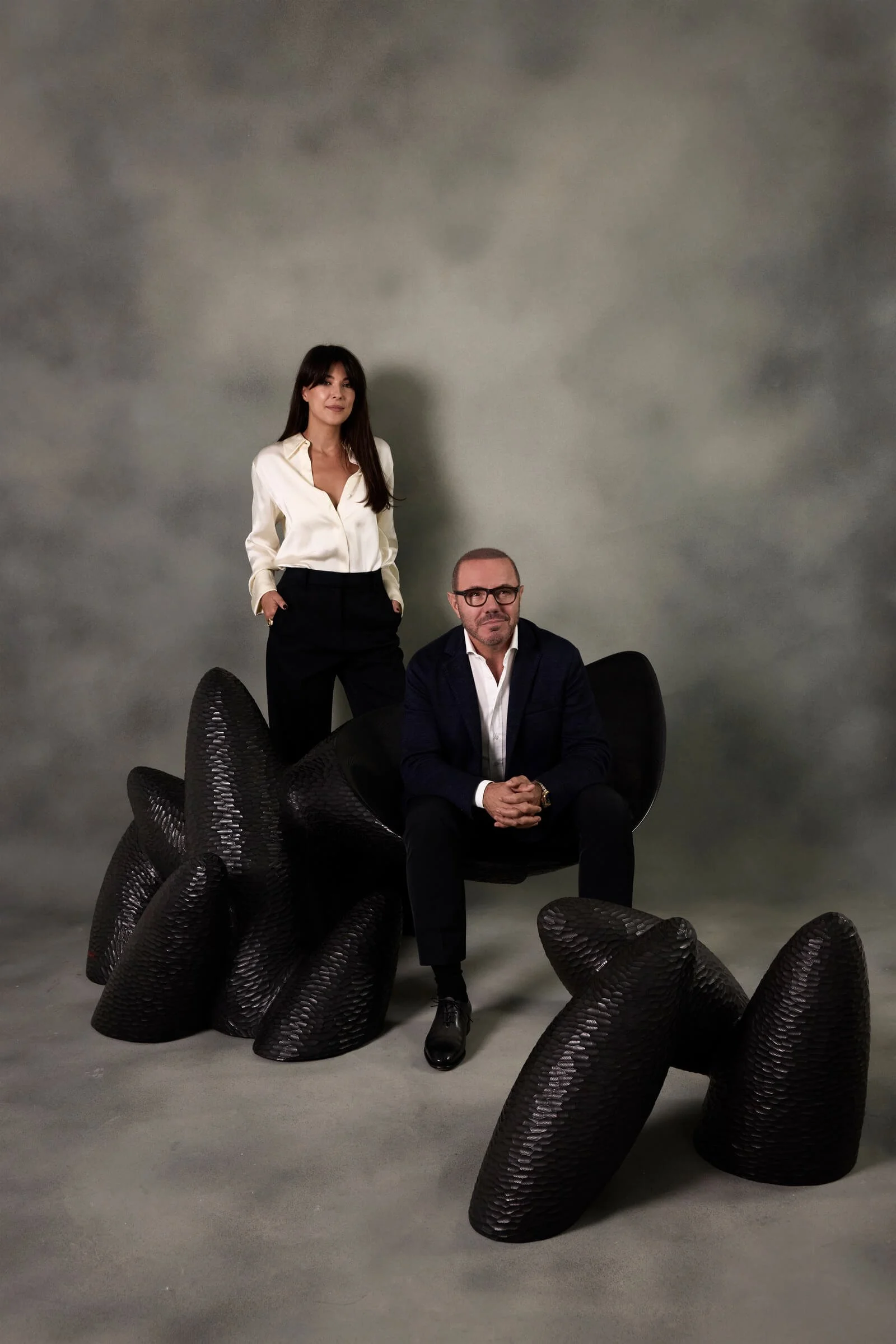
Founded by industry veteran Christelle Bassila together with entrepreneur and art patron Elie Khouri, the gallery takes its name from the Artist Proof, a reference to the earliest expression of an idea and a symbol of the intimate exchange between maker and material.
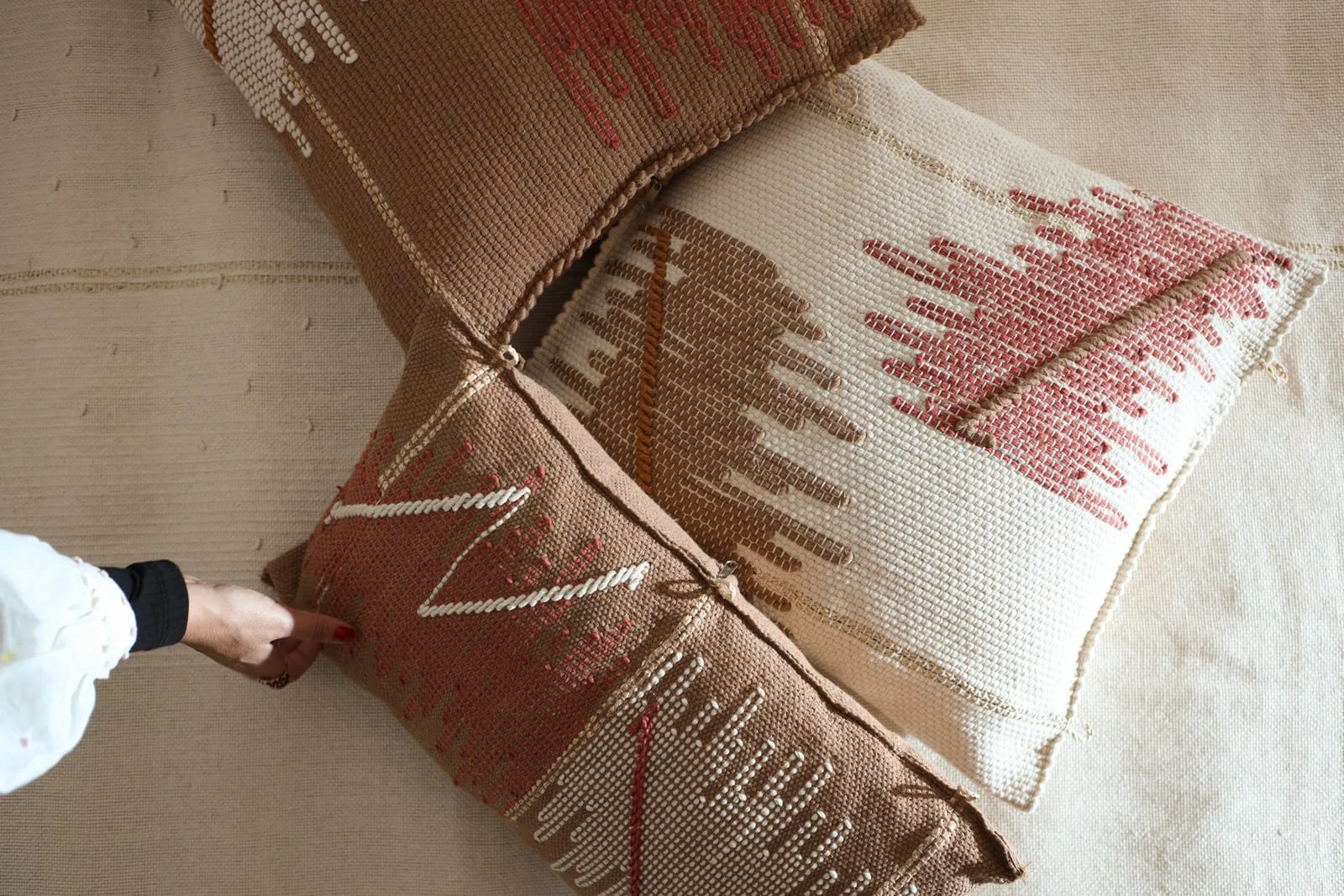
Conceived as a cultural bridge, the A/P Room seeks to bring global designers into conversation with creative voices from the Middle East while elevating regional talent to an international audience. Its debut at NOMAD Abu Dhabi introduced a considered dialogue between material and meaning through works by Aline Hazarian and Roham Shamekh, each exploring themes of memory, identity, and emotional resonance within contemporary design.
In this interview, Christelle and Elie Khouri reflect on the founding of The A/P Room, the significance of launching at NOMAD, and their ambition to cultivate a more connected, reflective, and culturally attuned design landscape in the region.
Words: designeers
NOVEMBER 2025
WEBSITE: theaproom.com
INSTAGRAM: @theaproom
DESIGNEERS
What was the exact moment you realised the Middle East needed The A/P Room?
ELIE KHOURI
Over the past decade, attending design fairs in the region, I noticed that while interest in design was steadily growing, the world of collectible design was still emerging. In conversations with collectors, it became clear that our region, young, dynamic, and deeply connected to craftsmanship, was naturally positioned to embrace design alongside art.
What we lacked was a gallery rooted here that could give Middle Eastern designers the platform they deserve. That’s when The A/P Room was born.
DESIGNEERS
What’s the very first piece you knew had to be part of the launch exhibition at NOMAD Abu Dhabi?
Christelle Bassila
The first “piece” wasn’t a particular object; it was a moment. More than ten years ago, I found myself standing in front of a George Nakashima cabinet, completely still. The quiet power of his craftsmanship, the purity of the wood, and the way memory lives inside materials, that moment stayed with me.
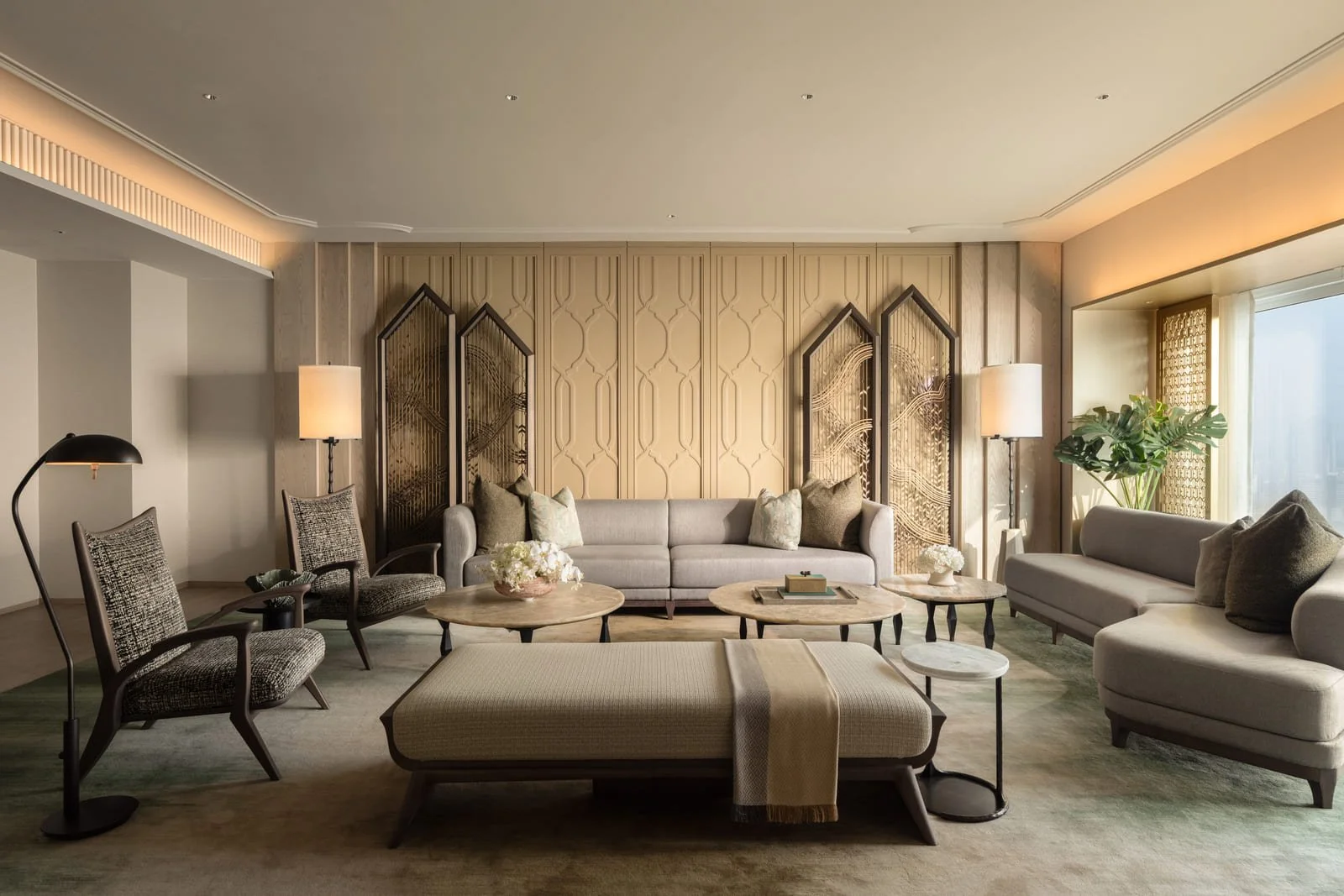
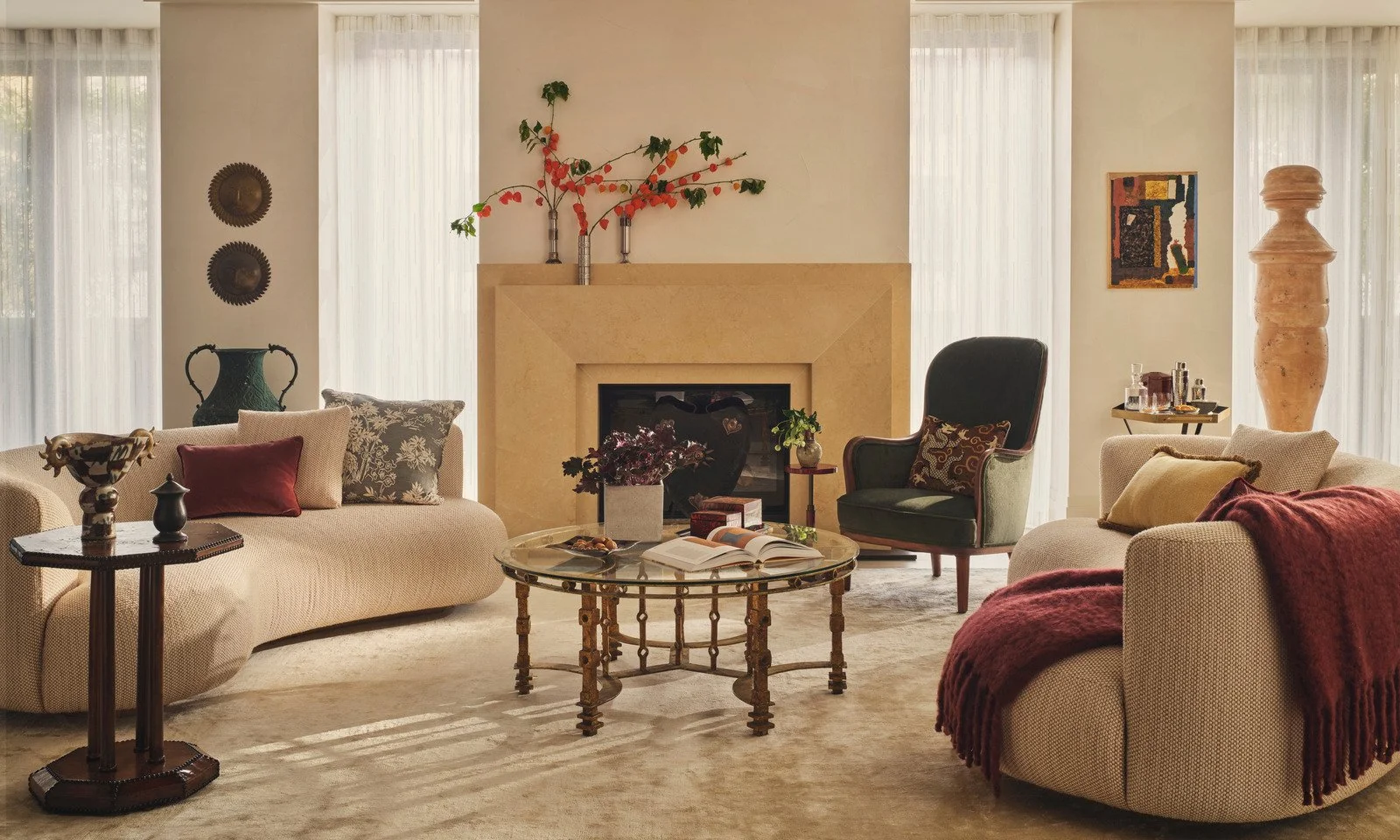
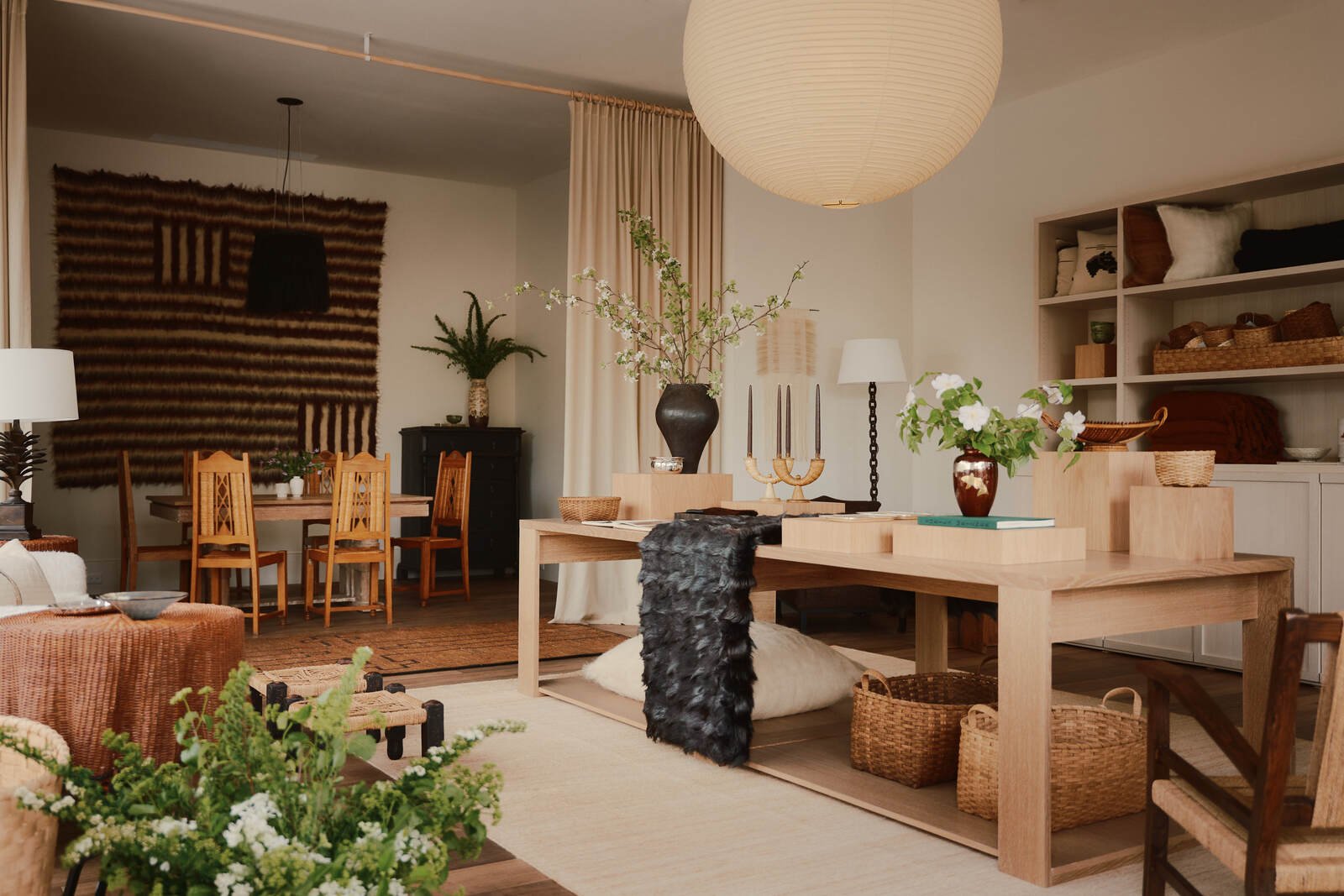
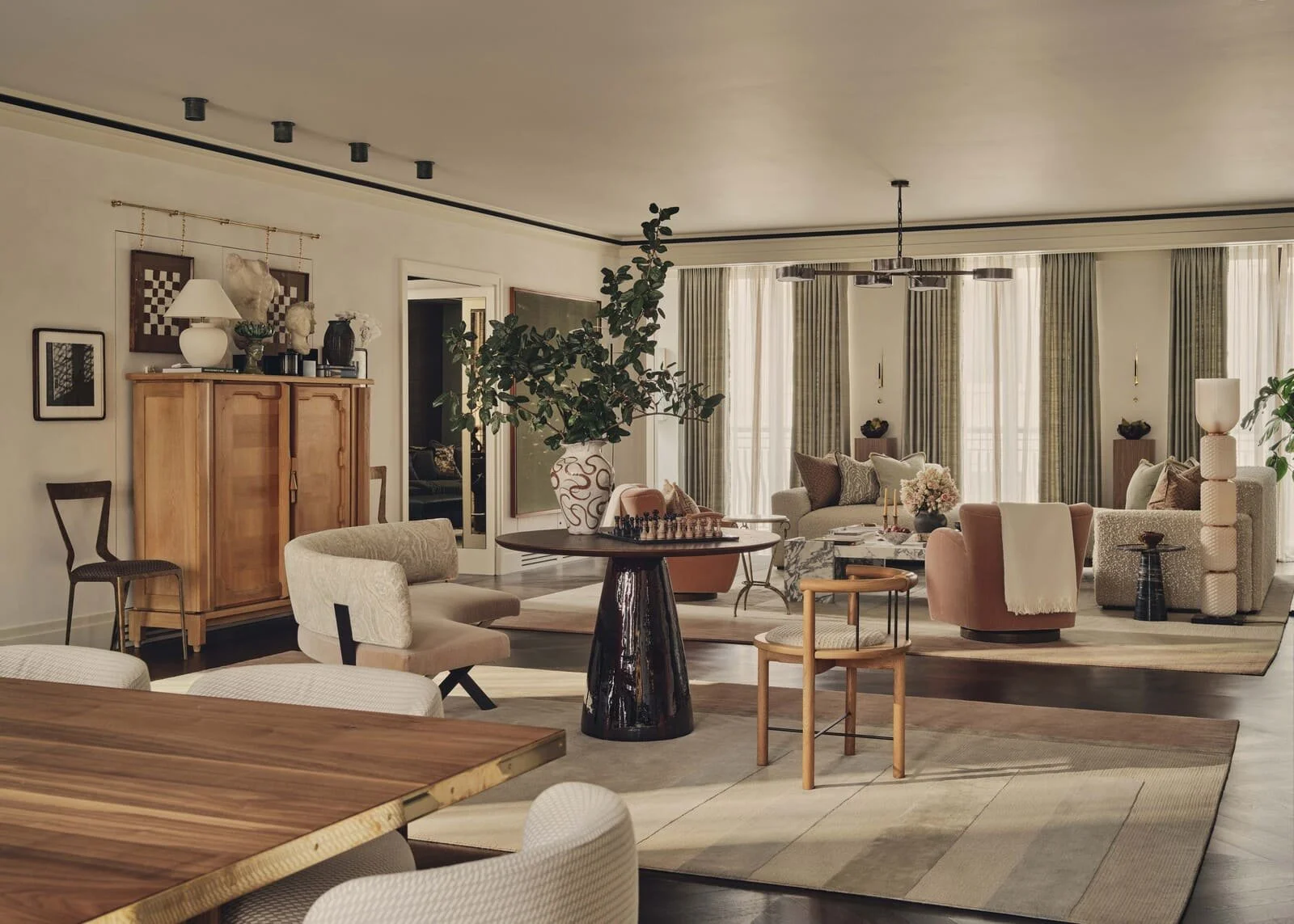
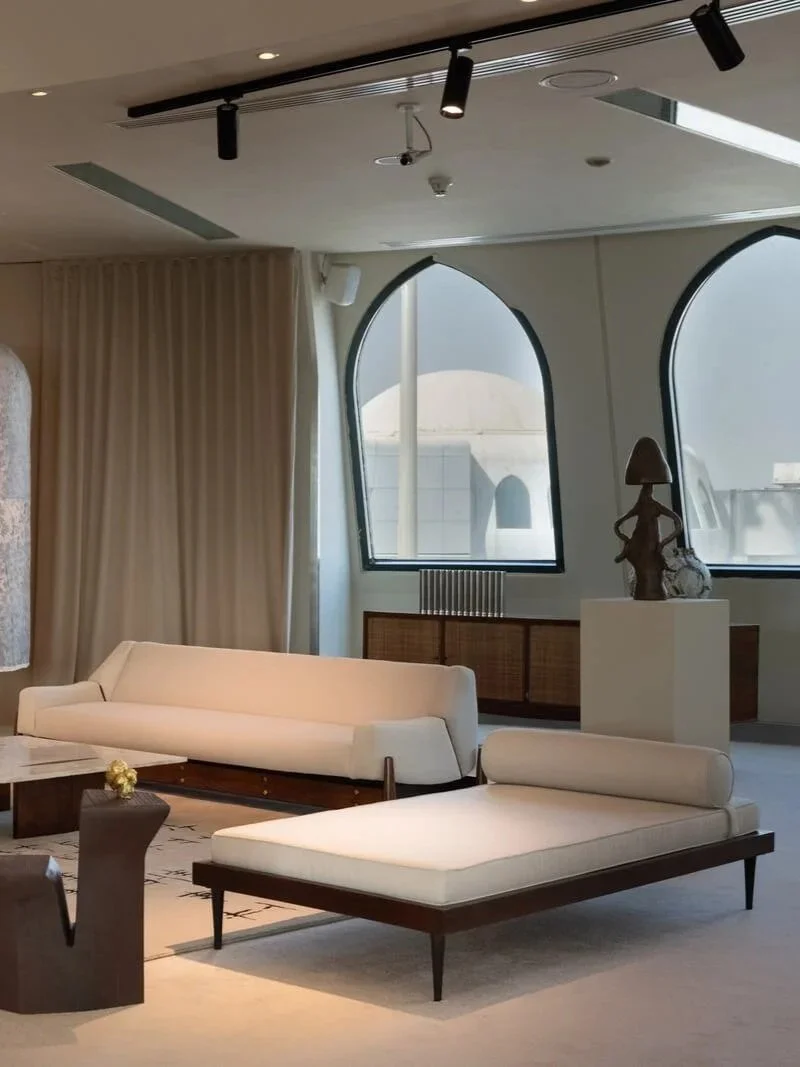
For NOMAD Abu Dhabi, I wanted to recreate that same sensation of presence and emotion. So rather than choosing one work, I chose a feeling: pieces that hold memory, that reveal the hand, that speak through material. That led me naturally toward a dialogue between mid-century masters and today’s most sensitive contemporary voices: a sofa set by Móveis Cimo from the 1960s showing mastery of Brazilian craftsmanship, together with the Jorge Zalszupin Onda bench and limestone coffee table from the same period, in dialogue with the Andrea Branzi Japanese rice paper floor lamp, a contemporary work reflecting the magic of autumn leaves.
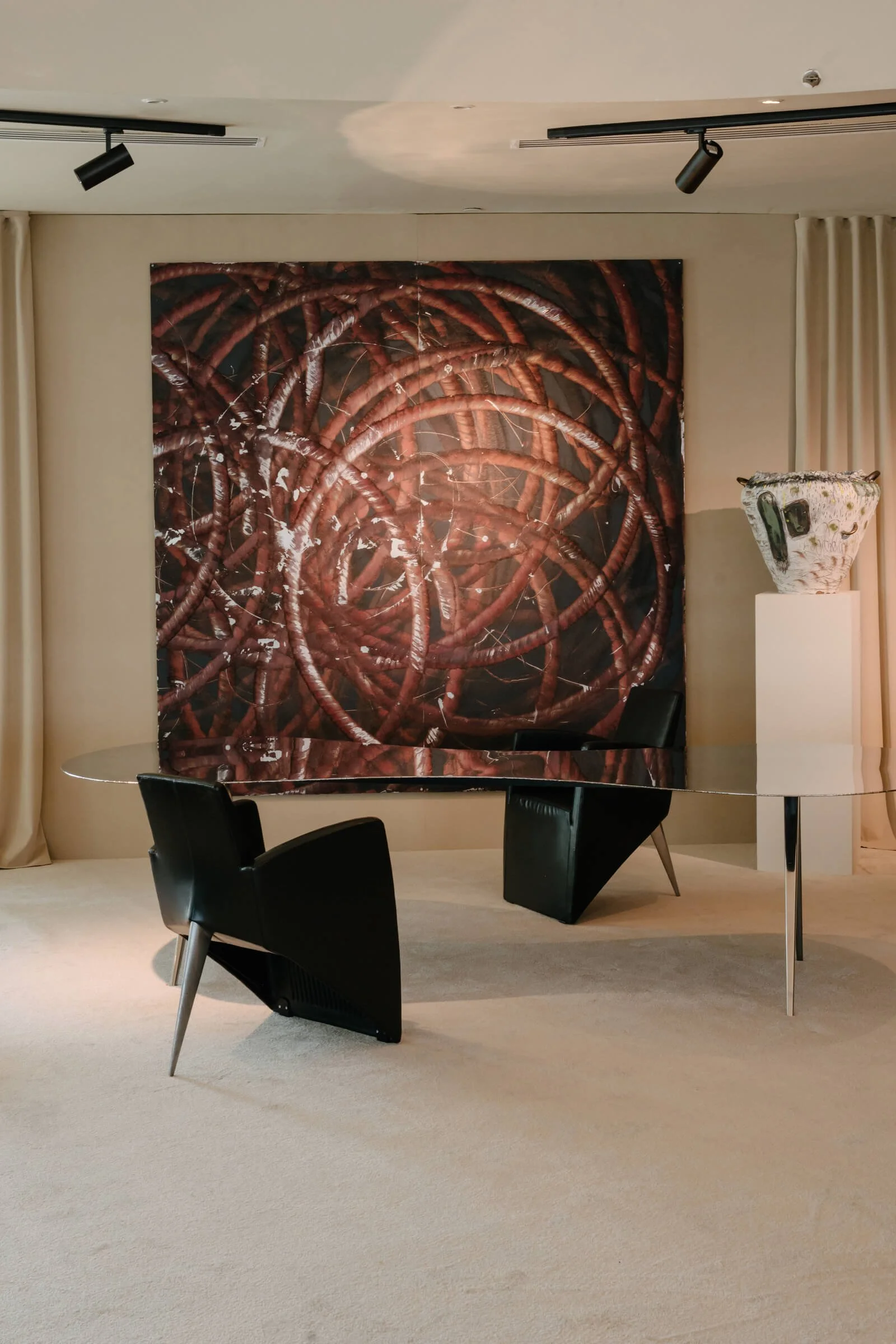
A/P Room at NOMAD

A/P Room at NOMAD
DESIGNEERS
What’s the design object you’d save first if your house were on fire, other than your phone!?
ELIE KHOURI
If I had the time, it would either be my Jorge Zalszupin Petalas side table or the second one, and I have many of them, and the Africa chair by Afra & Tobia Scarpa.
DESIGNEERS
Which designer (living or not) would you love to sit next to on a long-haul flight and why?
Christelle Bassila
I would choose Isamu Noguchi. He moved effortlessly between sculpture, design, architecture, landscape, and light, always searching for harmony between form and soul. I would love to speak with him about how he listened to materials, how he approached emptiness, and how he balanced functionality with poetry. I think the conversation would feel like sitting inside a sculpture.
A living artist, I would choose Vincent Dubourg. His relationship with material is almost alchemical; he doesn’t shape metal, he liberates it. I would love to speak to him about how he balances violence and poetry in his process, how he lets energy guide form, and how a piece can feel both raw and impossibly refined. I imagine the conversation unfolding like one of his sculptures: structured yet explosive, intuitive yet deeply thought through.
DESIGNEERS
What is one thing people get wrong about Middle Eastern design?
ELIE KHOURI
That we are lacking talent it’s a big misconception. There is a lot of talent; we just need to give designers the space to expand, express, and shine.
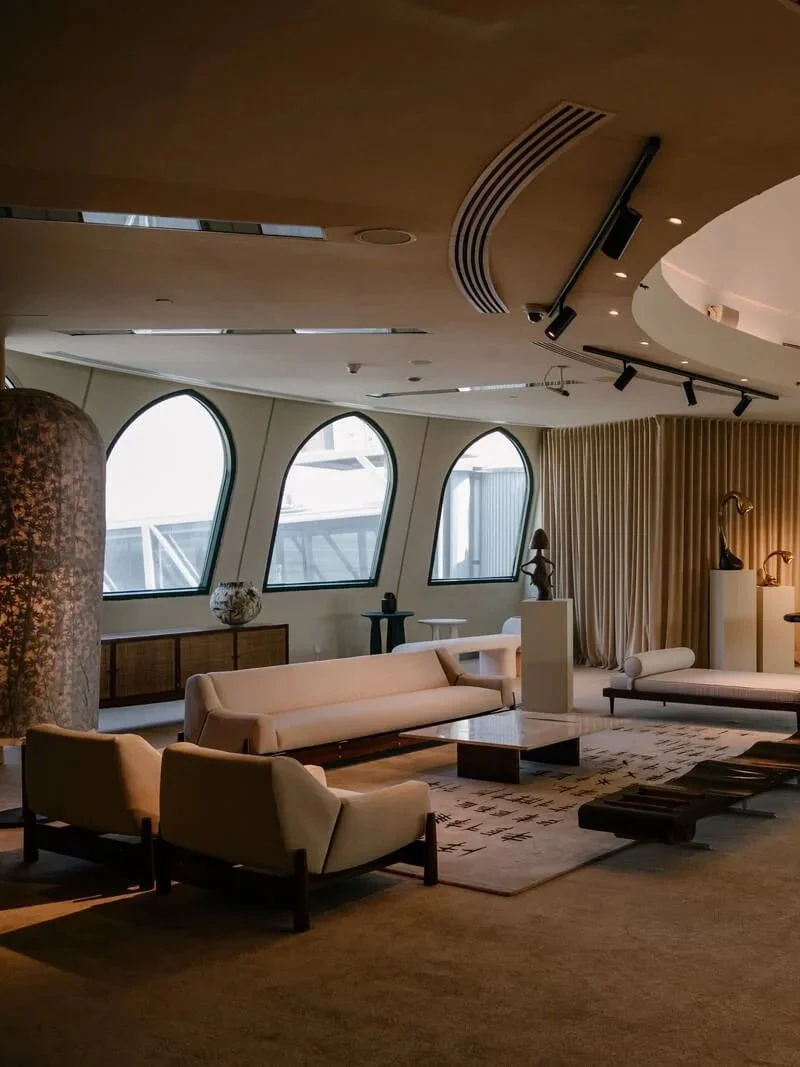
A/P Room at NOMAD

A/P Room at NOMAD
“Today, sustainability in collectible design is also a key factor in the equation. In a few words, when emotion is fused with technical mastery and a clear narrative, that’s when a piece becomes truly collectible.”
Christelle Bassila
DESIGNEERS
A Middle Eastern designer everyone should know right now, someone you think is about to break out globally?
Christelle Bassila
The Middle East is entering a major global design moment. Rather than point to one name, I would highlight a new generation of designers united by a shared language: deep material sensitivity, refined craft, and sculptural forms that feel both timeless and contemporary.
They treat materials: bronze, stone, wood, and ceramics, as living mediums, creating work marked by purity, restraint, and quiet presence. What’s breaking out now isn’t a single designer but a collective voice that’s mature, subtle, and ready for the world stage.
DESIGNEERS
Is there a collectible piece that changed the way you think about design forever?
ELIE KHOURI
Not one specific piece. It’s the experience of living with collectible design, mixing it with furniture, placing art alongside it, and letting it become part of daily life.
Beyond aesthetics, beyond durability, beyond value and craftsmanship, collectible design is functional. You live with it; you use it. Sometimes the more you use a piece, the more beautifully it ages. The scratches, the marks, they add to its intrinsic story and value. That changes the way you see design.
DESIGNEERS
What makes a piece “collectible” to you: the story, the material, the experimentation, or the feeling?
Christelle Bassila
For me, a collectible piece is born when all four converge, adding to it the scarcity, of course. I am not attracted to mass-produced pieces.
But if I had to choose, the feeling comes first. A piece must stop you. It must alter your breath for a second. Then comes material experimentation and craftsmanship.
Today, sustainability in collectible design is also a key factor in the equation. In a few words, when emotion is fused with technical mastery and a clear narrative, that’s when a piece becomes truly collectible.

A/P Room at NOMAD
A/P Room at NOMAD
DESIGNEERS
Dream dinner guest at your new A/P Room gallery in Dubai?
ELIE KHOURI
Family. We’re trying to create spaces that are human and personal, places where conversations and special moments happen, for building legacy over time. And the best people to share those moments with are family.
DESIGNEERS
A city that always resets your creativity?
Christelle Bassila
Tokyo: Its contrasts, precision and chaos, serenity and overload, heritage and futurism, reset my senses instantly. Every corner feels intentional. The way objects are made, presented, and cared for reminds me why craftsmanship matters.
DESIGNEERS
If you had to describe the region’s creative energy right now in three words, what would they be?
ELIE KHOURI
Ambitious. Progressive. Creative
DESIGNEERS
The best gift you ever received?
Christelle Bassila
A small, imperfect wooden bowl my father once brought back from a trip. It had no label, no signature, no pedigree, just the warmth of a hand that shaped it. It reminds me that beauty often lives in simplicity and that objects hold stories long before they reach us.
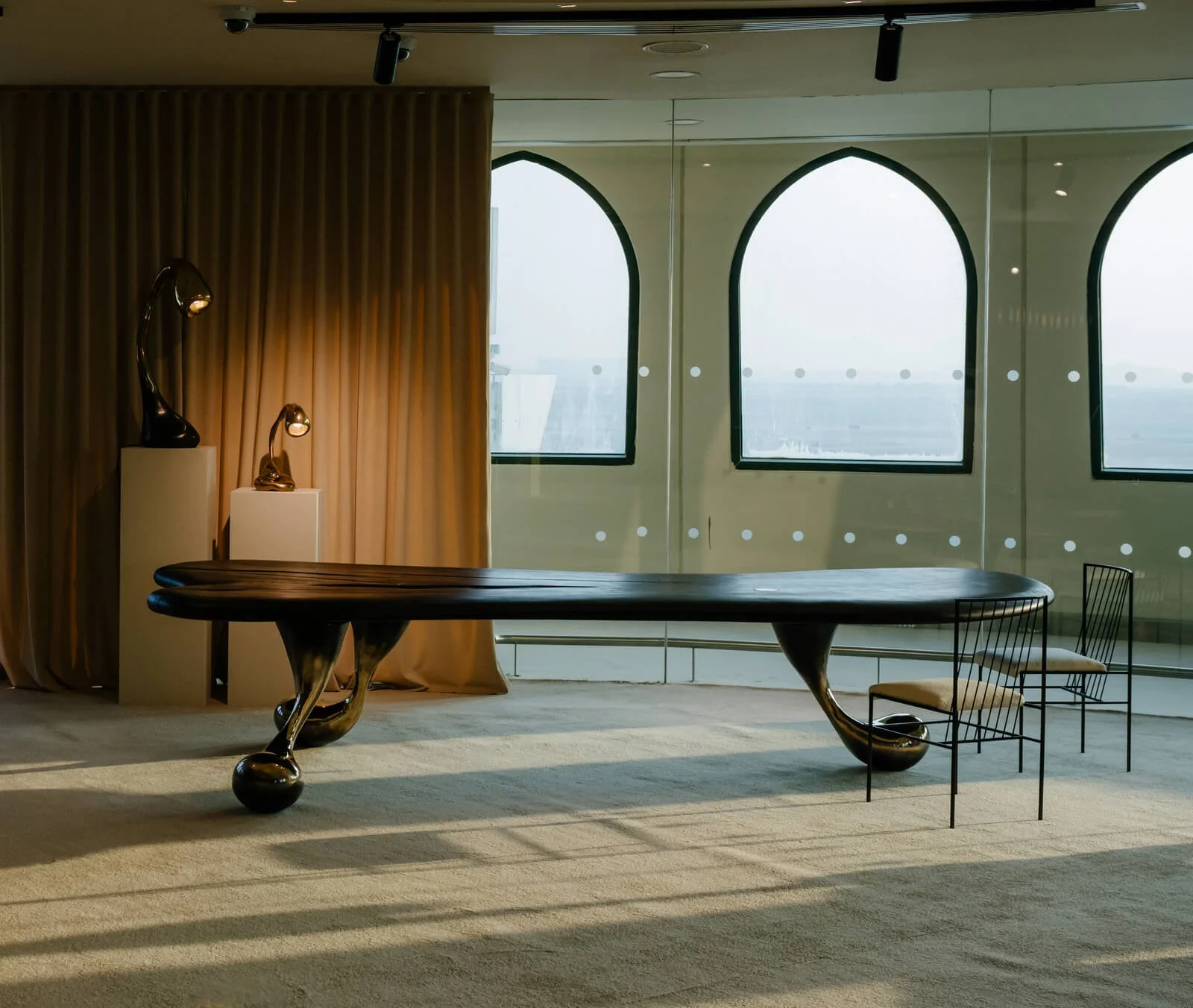
A/P Room at NOMAD
The launch exhibition at NOMAD Abu Dhabi is only the beginning. In 2026, The A/P Room will solidify its presence with the opening of its permanent gallery in Dubai a landmark moment for the Middle Eastern design landscape.
This new space will bring together established international names and rising regional talent, offering collectors, designers, and architects a year-round destination for thoughtful, collectible design. The Dubai gallery marks the evolution of a vision: giving the region the platform, visibility, and cultural dialogue it has long deserved.