people • MAKERS
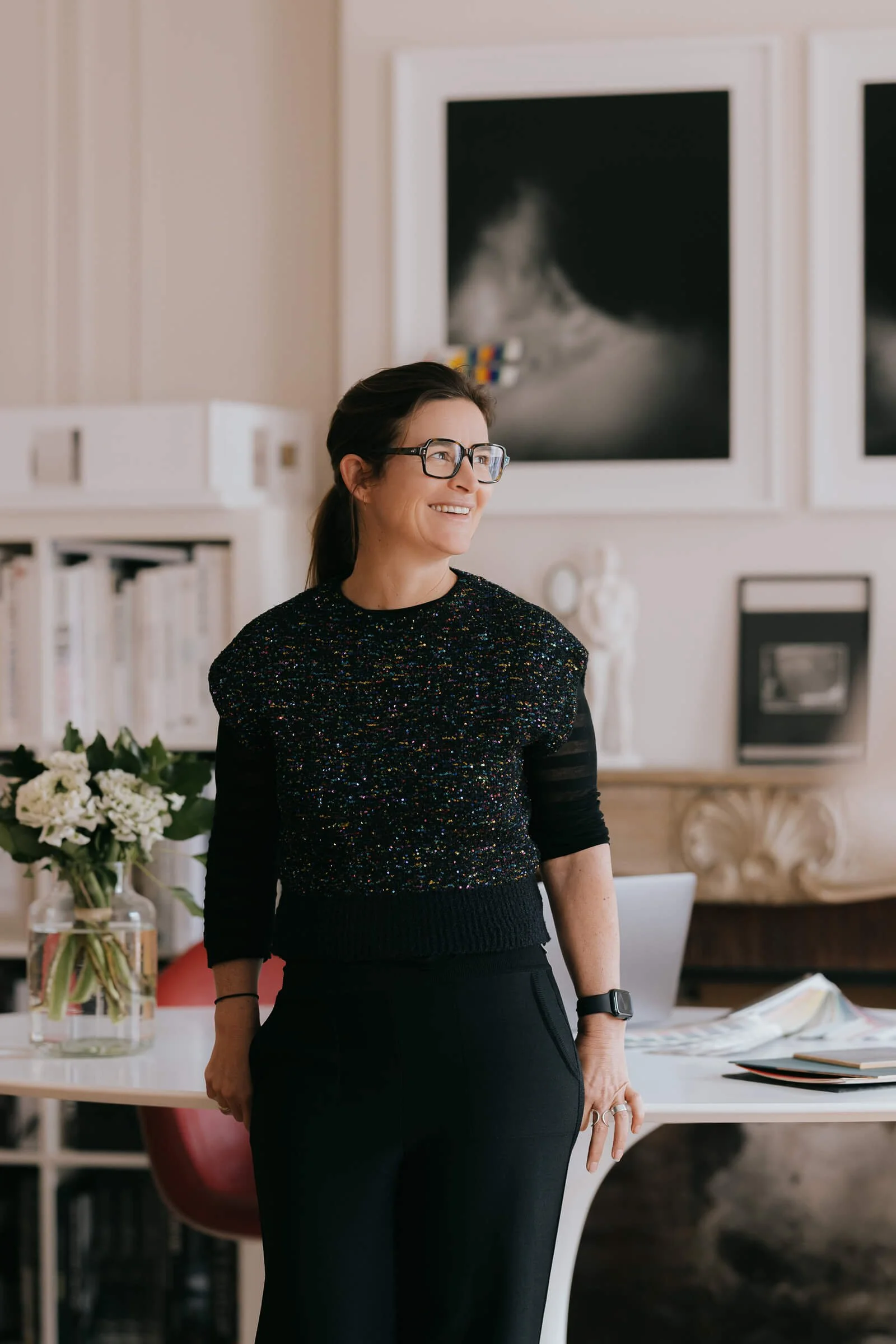
Cécile Degos is a Paris-based scenographer and museographer renowned for her experiential exhibition design that merges storytelling, architecture, and sensory immersion. With a multidisciplinary background in architecture, visual communication, and spatial design, she transforms complex cultural narratives into emotionally resonant, three-dimensional journeys. Her practice is rooted in emotional architecture—spaces that engage the mind and body through light, rhythm, and atmosphere.
She has worked on major projects such as the installation of the Pinault Collection at the Bourse de Commerce in Paris, and has contributed to prestigious exhibitions at the Royal Academy of Arts in London, the Palais de Monaco, and Christie's (Hubert de Givenchy Collection). Cécile also works with several international galleries, including Gagosian, Kamel Mennour, and Perrotin. Her spatial compositions merge scenography architecture with narrative clarity, shaped by visitor flow and materiality in exhibition design. From raw wood exhibition finishes to colour palettes that absorb light, her use of materiality design brings depth and emotion to each project. In this interview, she reflects on the role of memory and place, the emotional potential of scenography, and what defines powerful spatial storytelling in today’s cultural landscape.
Words: designeers
june 2025
WEBSITE: www.ceciledegos.com
INSTAGRAM: @ceciledegos
DESIGNEERS
Cécile, your work blends spatial design with storytelling. How do you begin conceptualising an exhibition? What comes first, the narrative or the space?
Cecile Degos
The two are inseparable. But more often than not, it begins with an emotion, a word in the brief, an archival image, or a detail in a work of art. Then come the readings, the visual research, and the dialogue with the curators. The space is born from the narrative. I see it as dramaturgy: a spatial journey structured by silences, intensities, and breathing points. The space carries the story, and the story gives the space its meaning.
DESIGNEERS
You mention wanting to connect with audiences both intellectually and emotionally. What are some ways you approach this balance in your designs?
Cecile Degos
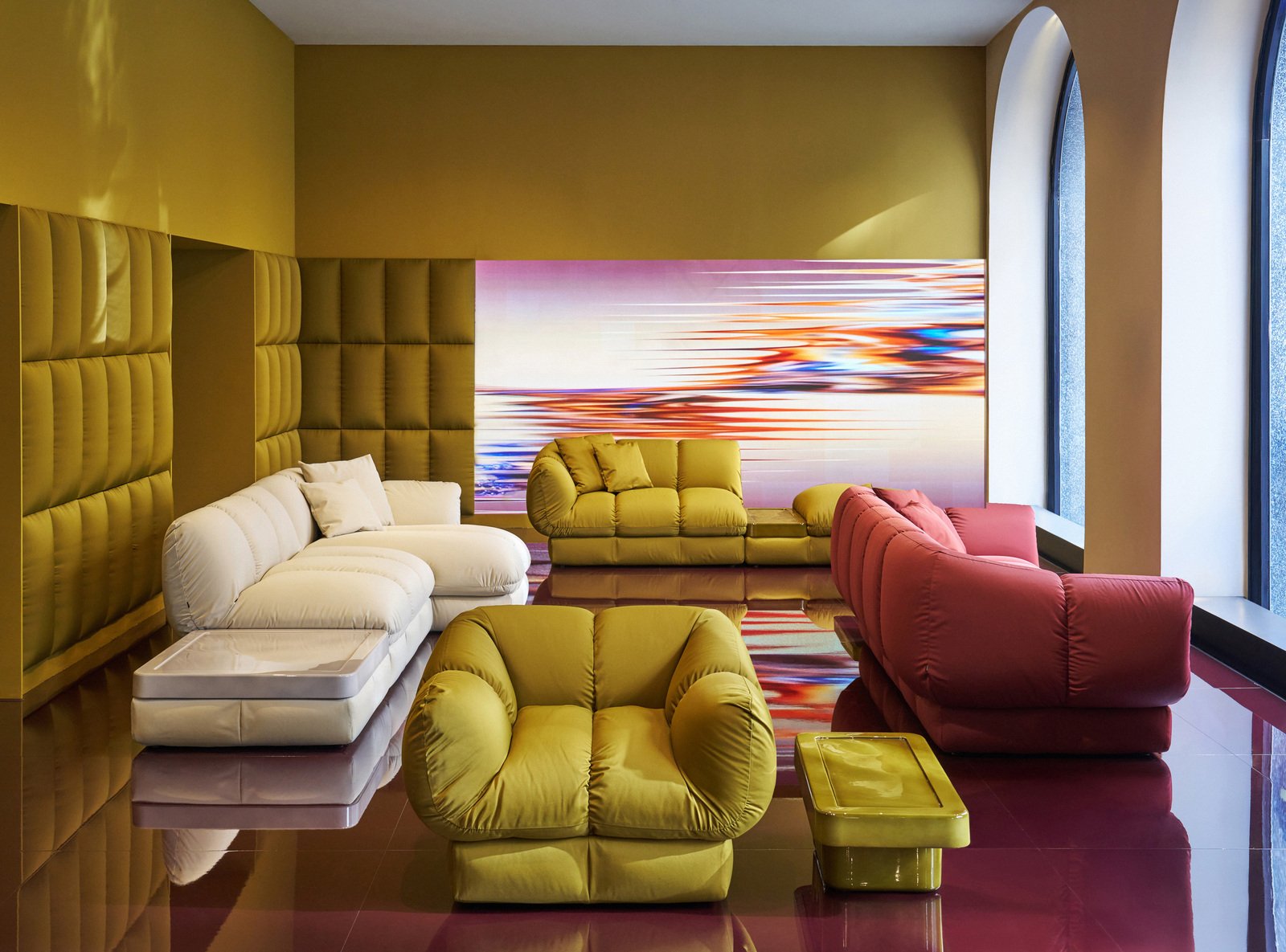
I’m convinced you can’t have one without the other. A work of art may fascinate with its story, but if the space evokes no emotion, it risks feeling distant. My role is to create a sensorial environment that fosters understanding through light, colour palettes, the rhythm of the path, and spatial proportions. I try to compose immersive environments that are balanced, legible, and emotionally resonant, allowing visitors to feel, to make the space their own, and to interpret it freely.
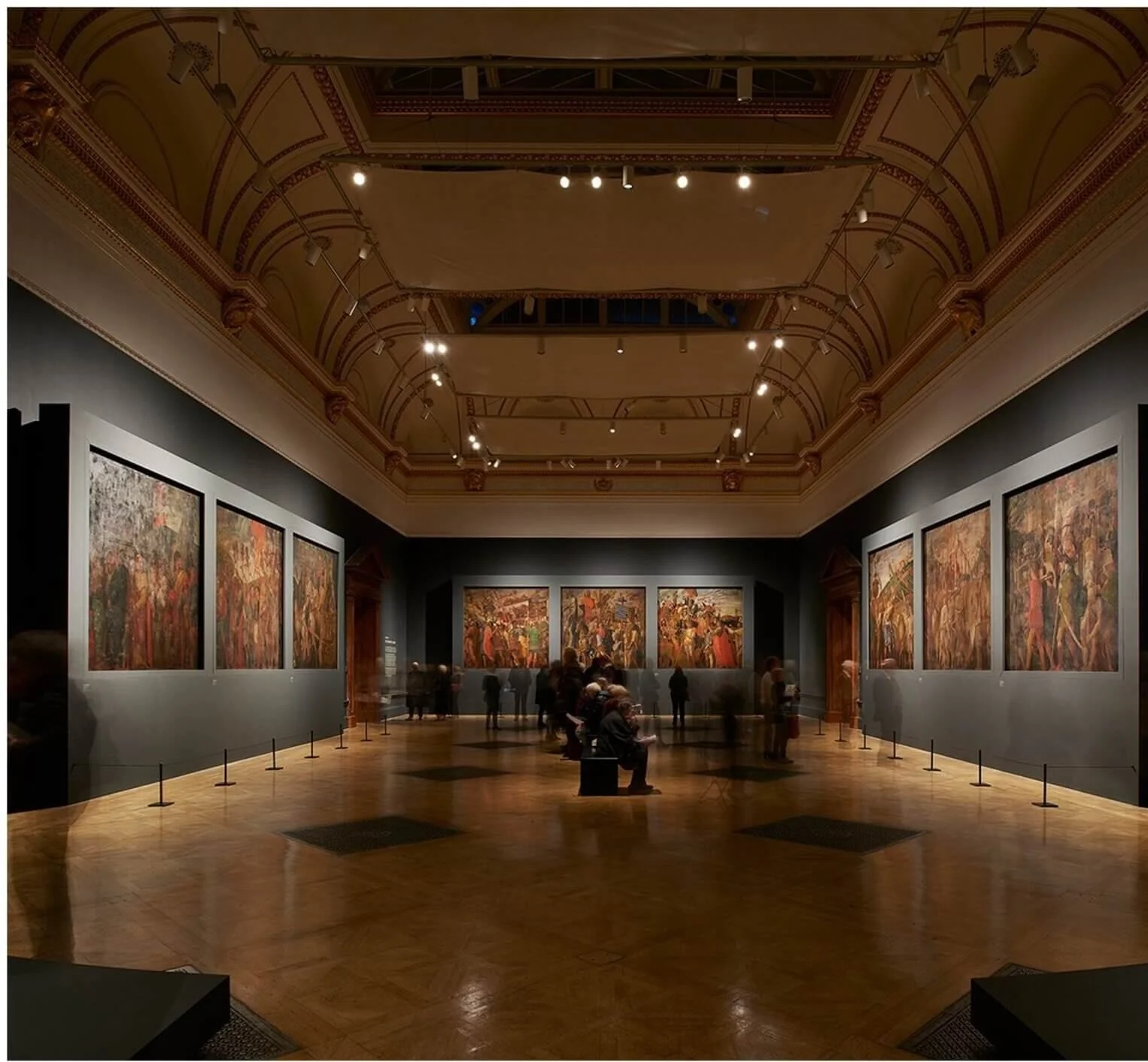
©Installation view of ‘Charles 1st’ at the Royal Academy of Arts, London
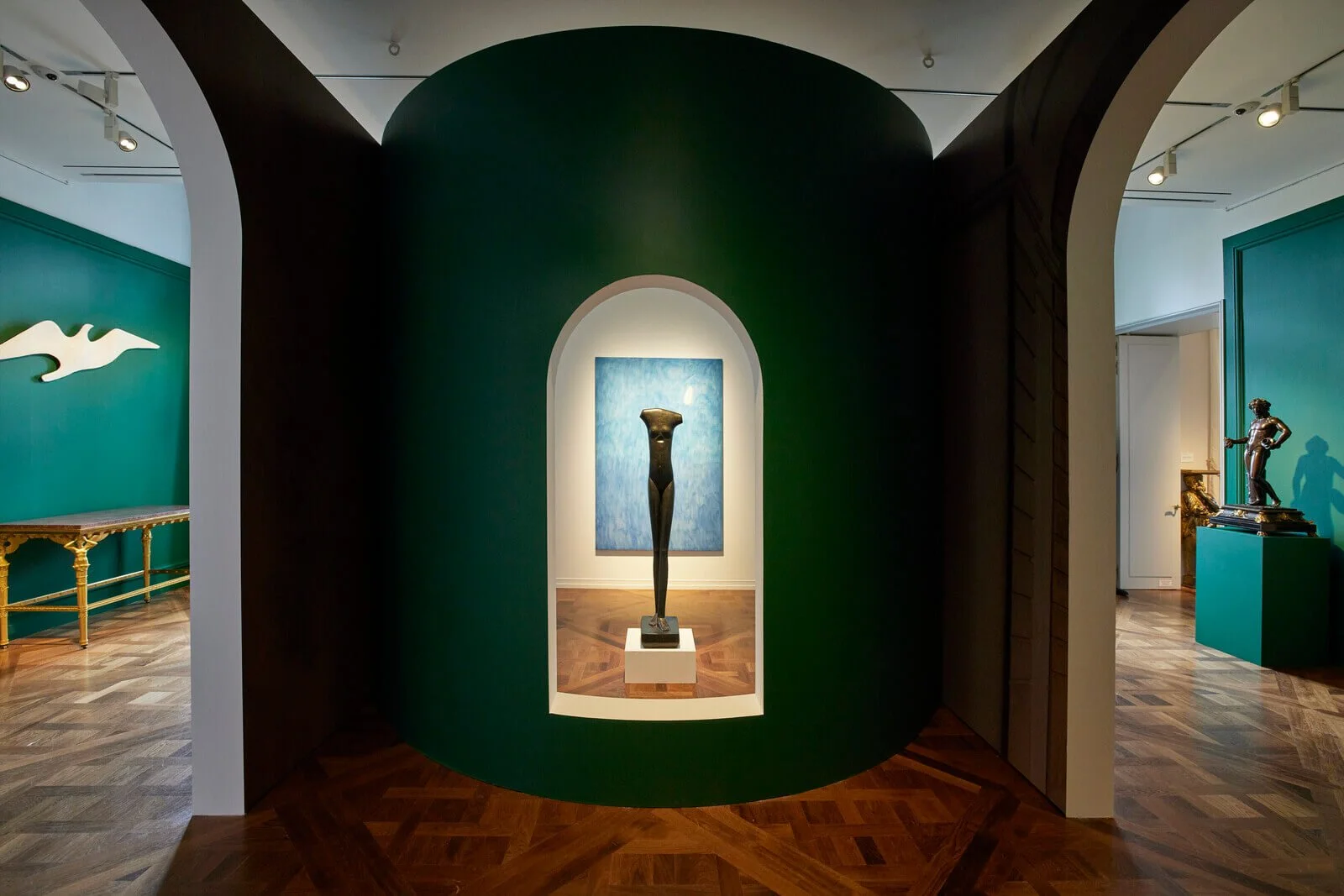
©Anna Buklovska
DESIGNEERS
Can you tell us about a recent project that felt particularly meaningful?
Cecile Degos
Paths to Modernity at the Museum of Art Pudong in Shanghai was one of the most impactful projects this year. It posed a real diplomatic, cultural, and spatial challenge: bringing masterpieces from the Musée d'Orsay into dialogue with a Chinese audience in a monumental space and with very specific expectations. I had to rethink the legibility of the displays to create a scenography that felt both universal and poetic. I also have very vivid memories of my collaborations with the Royal Academy in London, especially the exhibition Charles I: King and Collector. Right now, I’m working on George Condo at the Musée d’Art Moderne de Paris, a challenging and inspiring project that constantly questions the codes of exhibition design.
DESIGNEERS
What role does materiality play in your scenography? Are there certain textures or techniques you gravitate towards to evoke a mood or message?
Cecile Degos
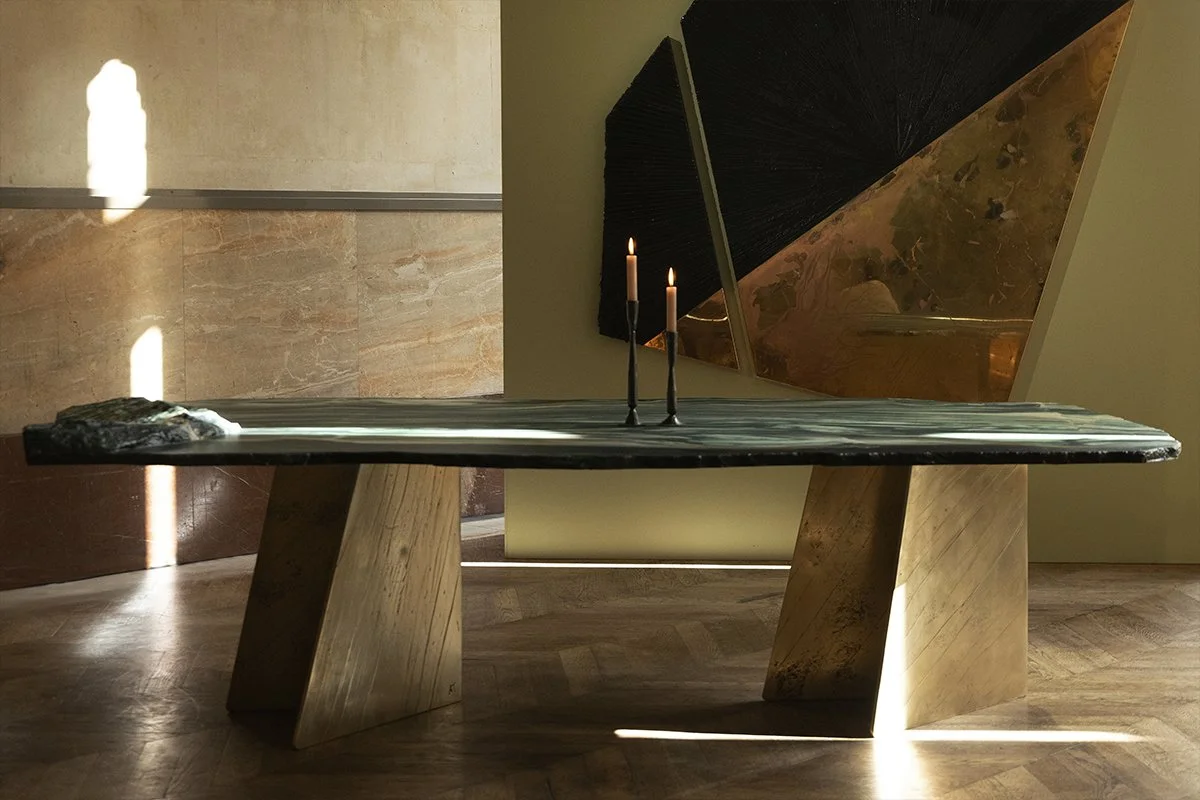
Scenography is a vehicle for emotion, and materiality is a key component of that. I have a preference for raw materials, wood, and patinated metal, and for colour, which plays a fundamental role. I’m drawn to surfaces that absorb light and create depth. Sometimes, a single texture, grain, or muted hue is enough to anchor a work in space. I even create my colour ranges to find just the right tone. Materiality makes atmosphere tangible; it leaves a sensory and lasting imprint.
DESIGNEERS
Exhibition design often lives in the tension between permanence and ephemerality. How do you approach this temporality in your work?
Cecile Degos
It’s a tension I truly enjoy, because it forces you to focus on the essential. Everything we build is destined to disappear, but that brevity gives the experience a unique intensity. I work with modular structures and dismantlable systems, especially within an eco-design framework, and I think about how materials evolve. The ephemeral frees you: it allows you to dare, to experiment, to bring new forms to life.
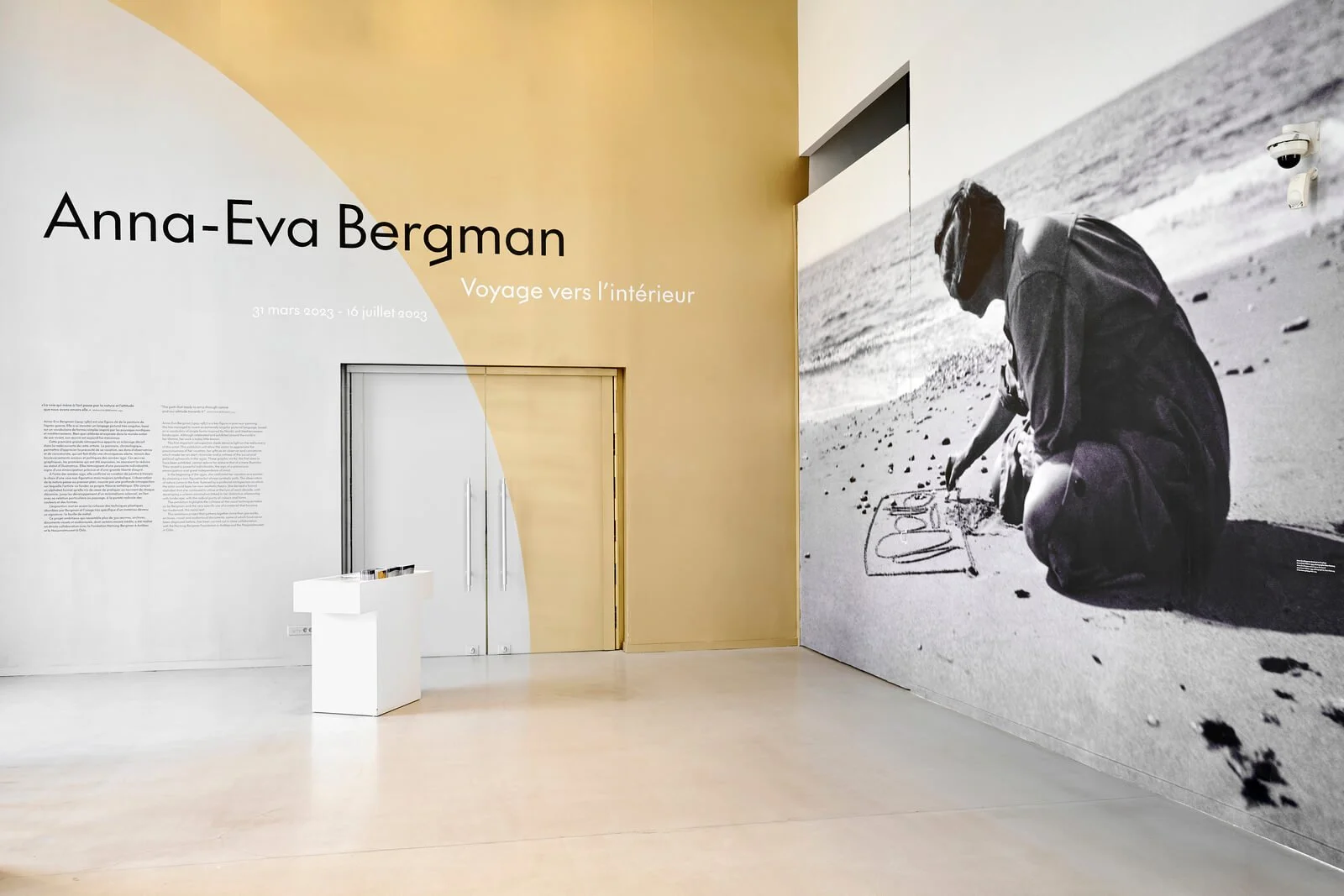
©Palais de Monaco - G. Moufflet

©Gregory Copitet

©ADAGP Martial Raysse
“Scenography is an art of listening and translating. You need to cultivate your eye, feed your visual culture, and embrace doubt as a driving force.”
Cecile Degos
DESIGNEERS
In your view, what distinguishes a truly powerful exhibition space from a purely functional one?
Cecile Degos
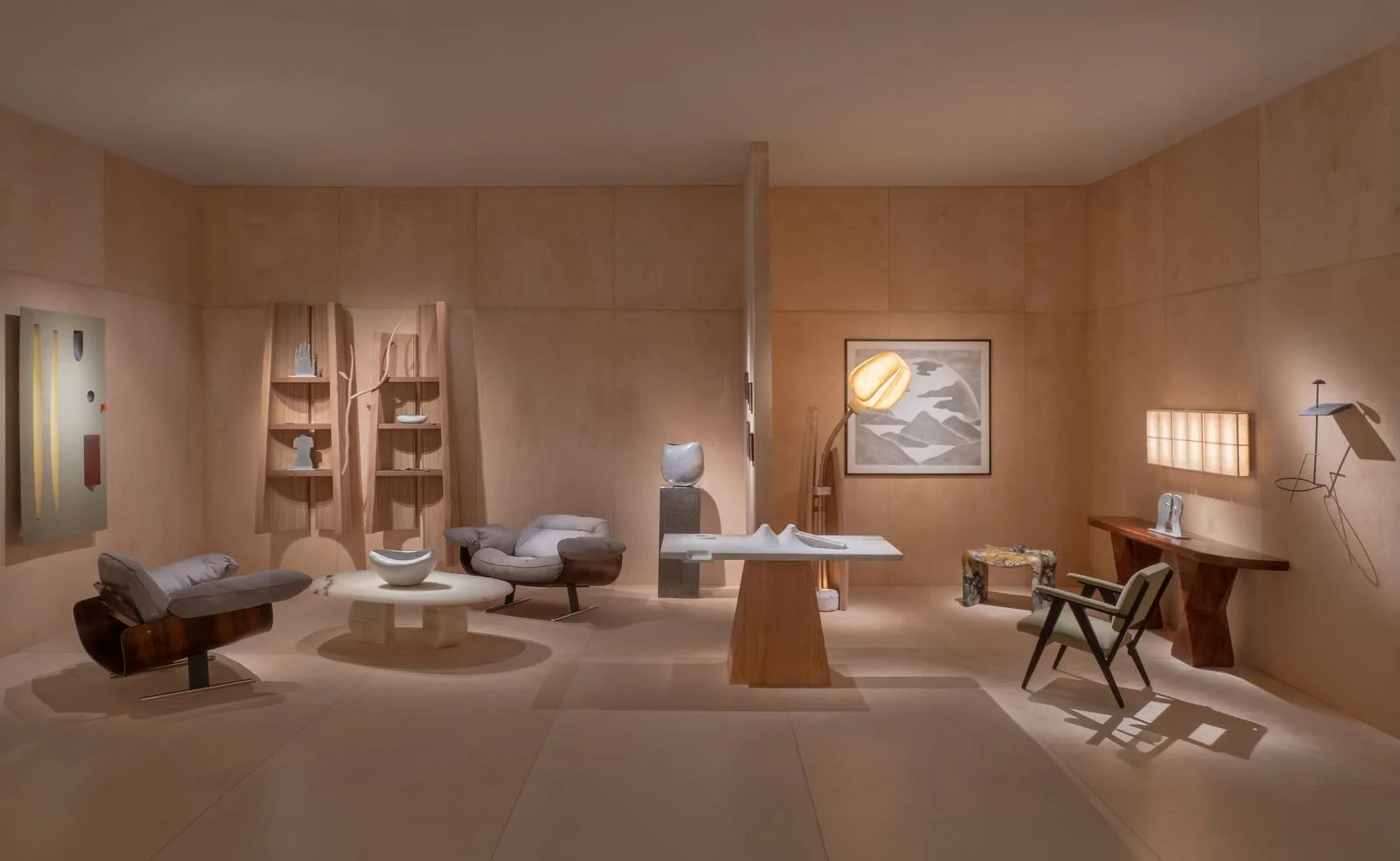
A powerful space creates resonance. It doesn’t just accommodate the artworks, it brings them into tension, engages the body, the gaze, and the memory. It leaves a trace. A purely functional space can be clear but still feel cold. I pay close attention to proportions, perspectives, and vanishing lines. Sometimes, power lies in an invisible detail, a subtle tilt, a precisely directed light, or a carefully framed void. I’m always searching for that elusive moment when emotion takes hold.
DESIGNEERS
You’ve collaborated with cultural institutions across Europe. Are there any differences you’ve noticed in how audiences engage with exhibitions in different cities or countries?
Cecile Degos
Each country has its own culture. In France, visitors pay close attention to texts, interpretation, and curatorial discourse. In London, I sensed a more intuitive, freer relationship with space. In China, the monumental scale of venues demands a specific effort to create intimacy and focus the viewer’s attention. These differences inevitably influence my choices; I adapt my proposals without abandoning my scenographic grammar, always searching for a spatial language that is both personal and universal.
DESIGNEERS
What’s one piece of advice you’d offer young designers entering the world of scenography and spatial storytelling?
Cecile Degos
Be curious, open, and attentive. Scenography is an art of listening and translating. You need to cultivate your eye, feed your visual culture, and embrace doubt as a driving force. You also need to love people; it’s a deeply collaborative profession, built on constant dialogue with curators, architects, lighting designers, graphic designers, registrars... and above all, don’t try to “make it pretty”; strive to make it right.

©Gautier Deblonde

©Pierre Antoine
DESIGNEERS
Finally, is there a space, gallery, museum or a public installation that you return to again and again for inspiration?
Cecile Degos
There are many... I like to return to certain places for their light, a sculpture, a sense of proportion, or a silence. The Musée Rodin, for example, is a beautifully balanced space. But I also find inspiration in empty places: a bare stage, a former workshop, an abandoned warehouse. These open spaces hold infinite narrative potential. I observe everything, and I keep fragments of space, material, and atmosphere in mind; that’s where future exhibitions begin.
Details make perfection, and perfection is not a detail.

©ceciledegos.com - 2023