The Most Memorable Galleries at PAD London 2026
events
PAD London is never short on beautiful objects. The harder question is which ones remain with you once the fair is over.
This year, we found ourselves drawn to galleries where material, process and imagination felt especially alive. Pig intestine became light, salvaged aluminium met Iranian onyx, wood seemed to ripple like water, and marquetry escaped the flatness of the surface altogether. From established names to first-time exhibitors, these were the presentations that made us stop, look again and, in several cases, discover someone entirely new.
Galerie Boketto
gallery fumi
Making its PAD London debut this year, Galerie Boketto was our standout. Paris-based, with Polish, Portuguese and Bulgarian ownership, Hristo Lachezarov, the gallery brings together a wide range of artists without forcing them into a single visual language.
The name Boketto, a Japanese word for gazing into the distance without thinking, suits the mood: curious, open-ended and slightly dreamlike.
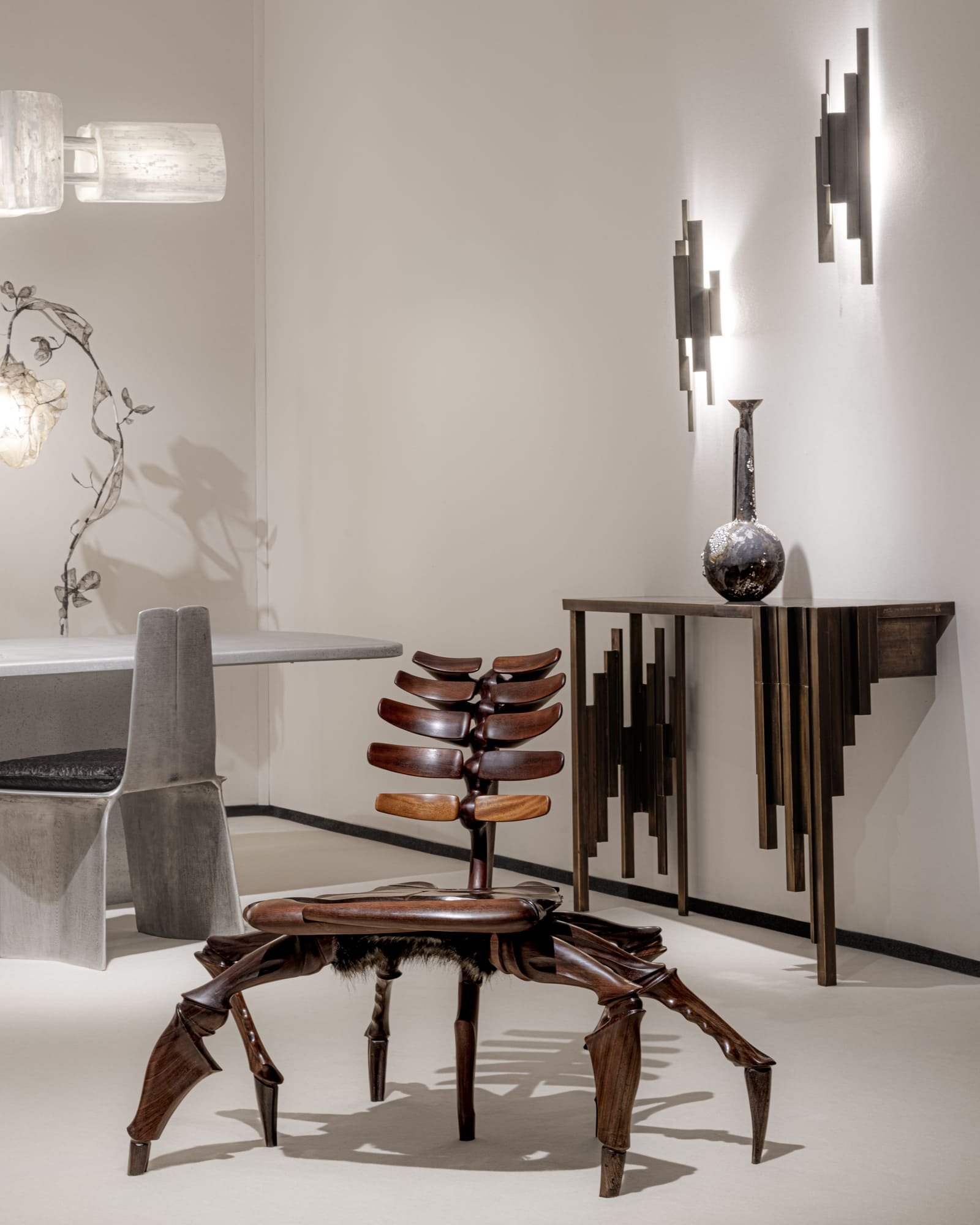
Highlights included William Guillon’s light sconce, Filomena Smola’s hand-blown glass, Wojtek Józefowicz’s sculptural chairs, Natalia Landowska’s ceramic sconces, and Moulay Hafid Sdikiene’s reclaimed aluminium cabinet with Iranian jade onyx.
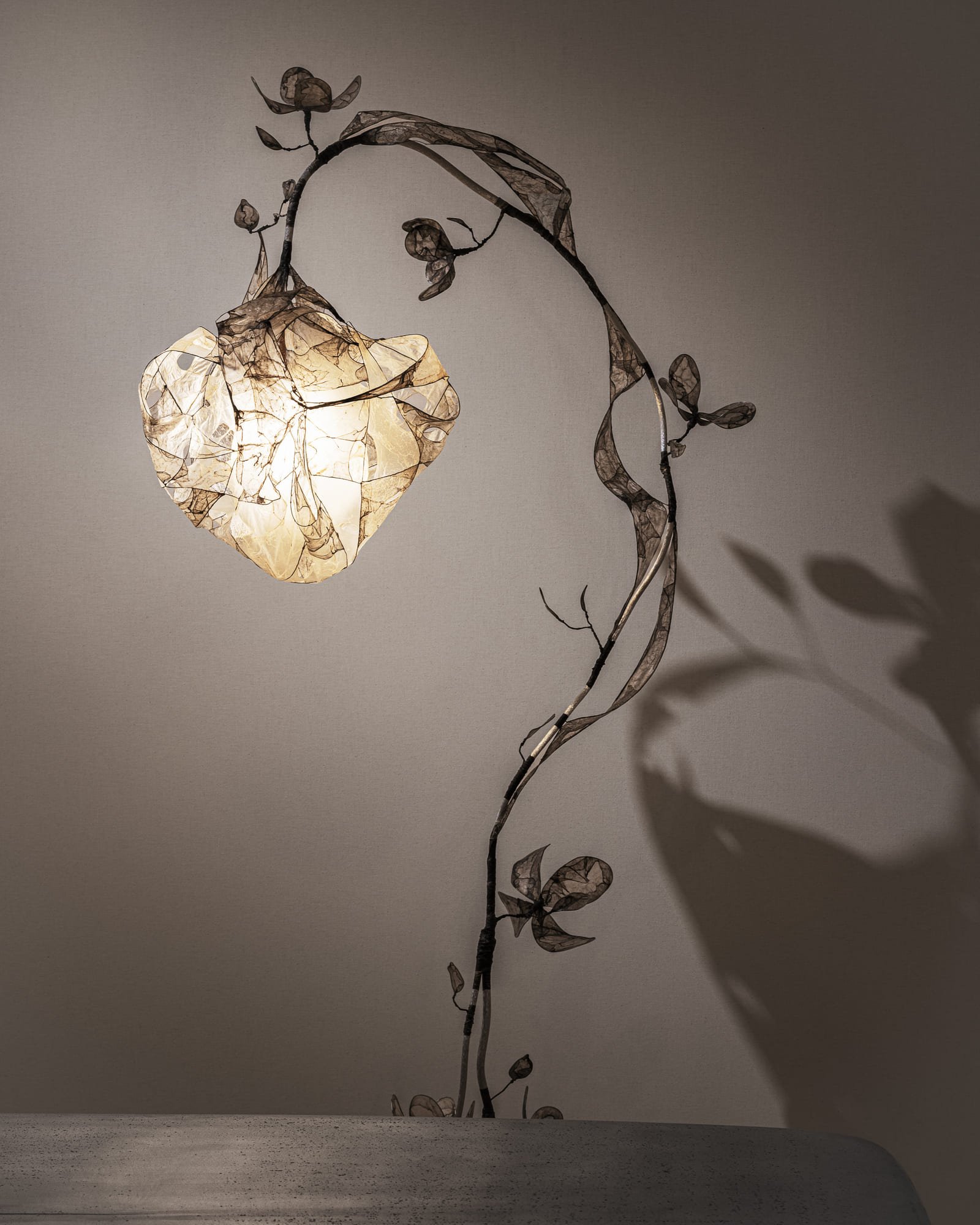
But the piece that stole our hearts was Thibault Philip’s lamp made from pig’s intestines. Delicate, translucent and unexpectedly beautiful, it captured what made Boketto memorable: a willingness to make unusual materials feel poetic rather than provocative.
2. gallery fumi
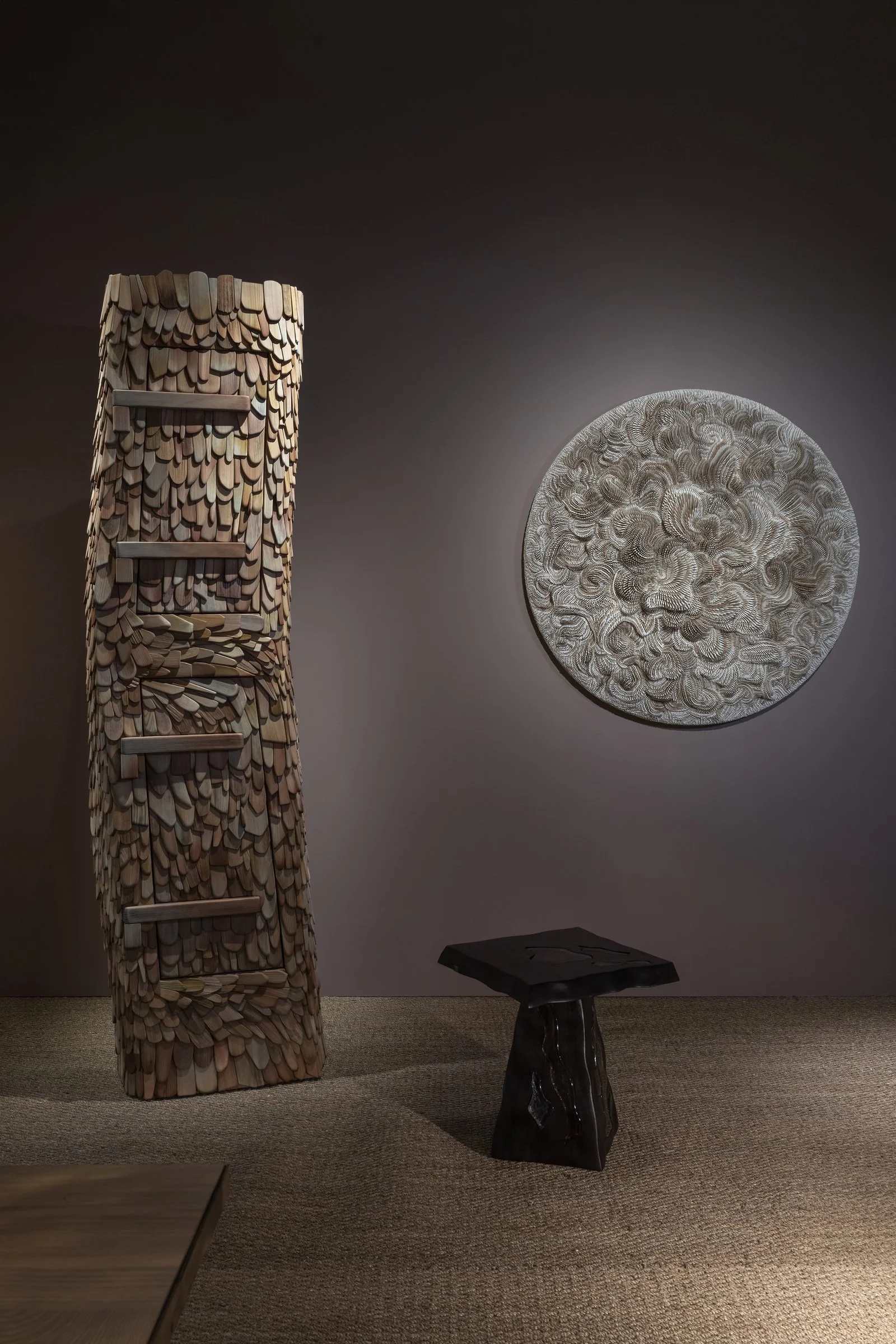
At Gallery FUMI, our standout was Lukas Wegwerth and Corinna Dehn’s Armadillo series, assembled from salvaged wooden shingles and inspired by the protective structures found in nature. The overlapping surfaces turn discarded timber into something almost armour-like, balancing fragility with protection and raw material with precise construction.
We were equally drawn to the delicacy of Emma Witter’s work, which reassembles fragments of metal, glass, bone and shell into intricate compositions that feel both archaeological and strangely contemporary. Where Armadillo has weight and presence, Witter’s pieces reward a much closer, quieter look.
Elsewhere, Rowan Mersh translated the geometry of a dreamcatcher into monumental cast bronze, Charlotte Kingsnorth framed mirrors with floral metalwork, Voukenas Petrides explored bronze through sculptural seating, and Shinta Nakajima extended his Alder series with mirrors wrapped in hammered branches.
What held the presentation together was a fascination with transformation, and with how familiar materials can be made to feel entirely new.
Sarah Myerscough Gallery
Galerie Melissa Paul
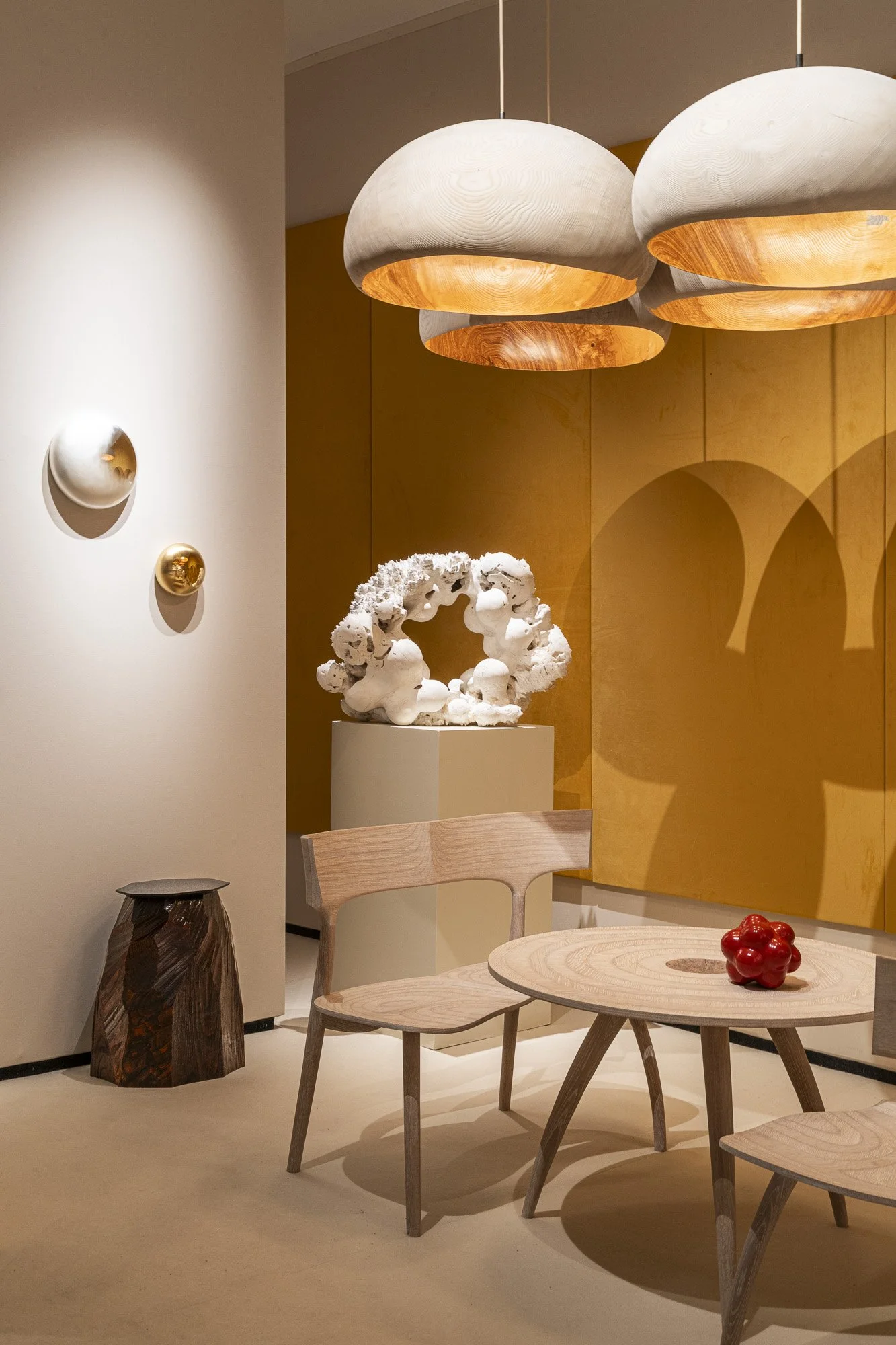
At Sarah Myerscough Gallery, the most compelling works were the ones that seemed to ask the least for attention. The presentation was quieter than many at PAD London 2026, with bleached timber and pale, tactile surfaces creating a restrained setting for pieces rooted in natural materials and slow, exacting craftsmanship.
The gallery brought together 17 artists and makers, including Christopher Kurtz, Eleanor Lakelin and Adi Toch, whose work moves between sculpture, furniture and object-making. Laura Ellen Bacon, Aneta Regel and Diana Scherer extended that conversation through woven structures, ceramics and plant-based processes.
What held the selection together was a sensitivity to material itself. Wood, metal and organic matter were not simply shaped into finished objects, but allowed to retain something of their original character, giving the presentation a sense of calm, tactility and restraint.
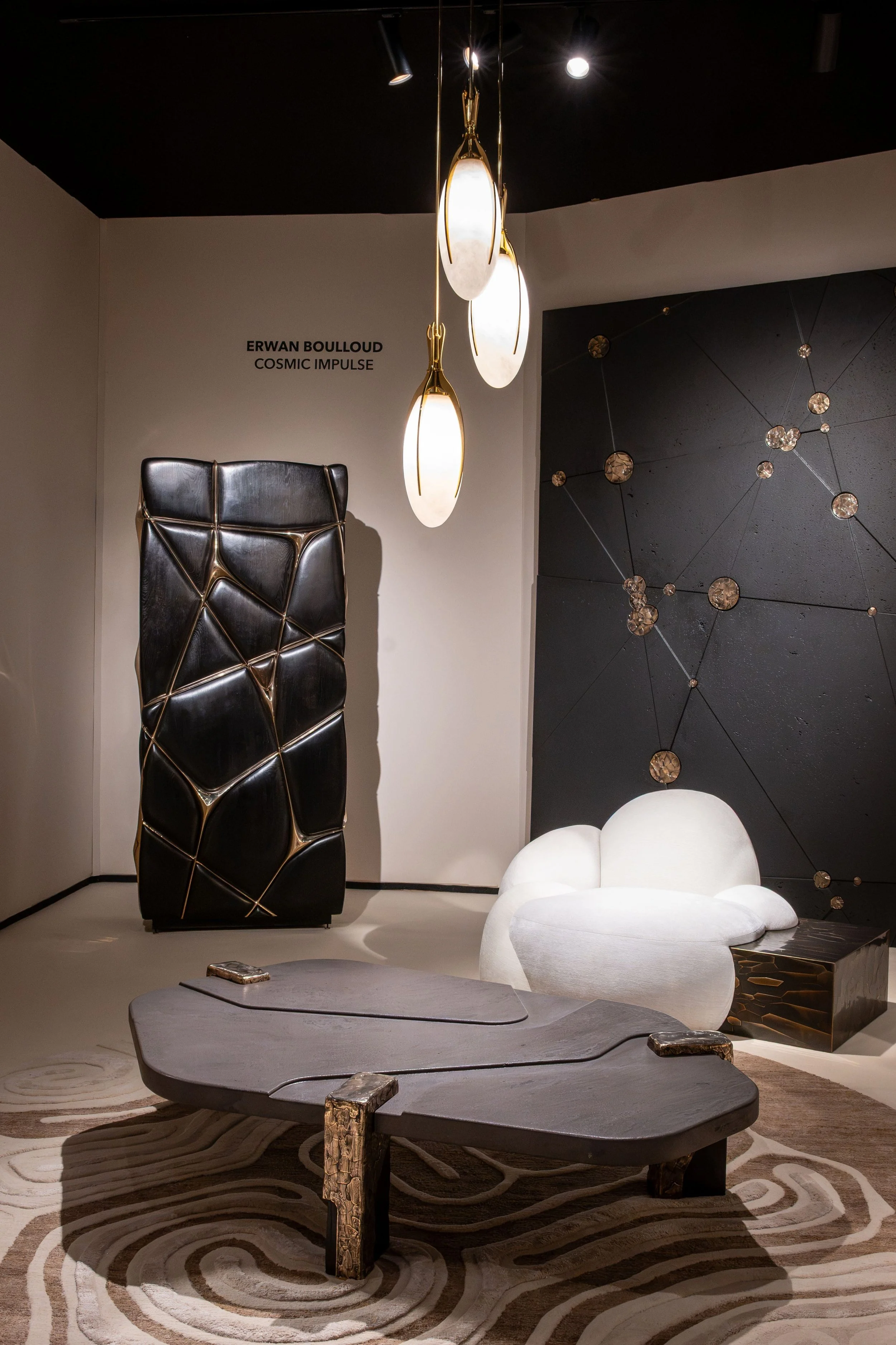
At Galerie Melissa Paul, the focus falls entirely on French designer Erwan Boulloud, whose new and recent works turn material experimentation into something almost archaeological.
Bronze, wood, metal and richly worked surfaces appear fractured, eroded or fused together, giving the furniture a sense of having been excavated rather than simply made. A monumental dark cabinet traced with metallic seams anchors the presentation, while softer sculptural seating and low tables create an intriguing tension between weight, texture and form.
What makes Boulloud’s work compelling is the way craftsmanship remains visible. Surfaces are not polished into anonymity but allowed to carry scars, irregularities and evidence of the hand, giving functional objects the presence of sculpture.
Charles Burnand Gallery
Booroom Gallery
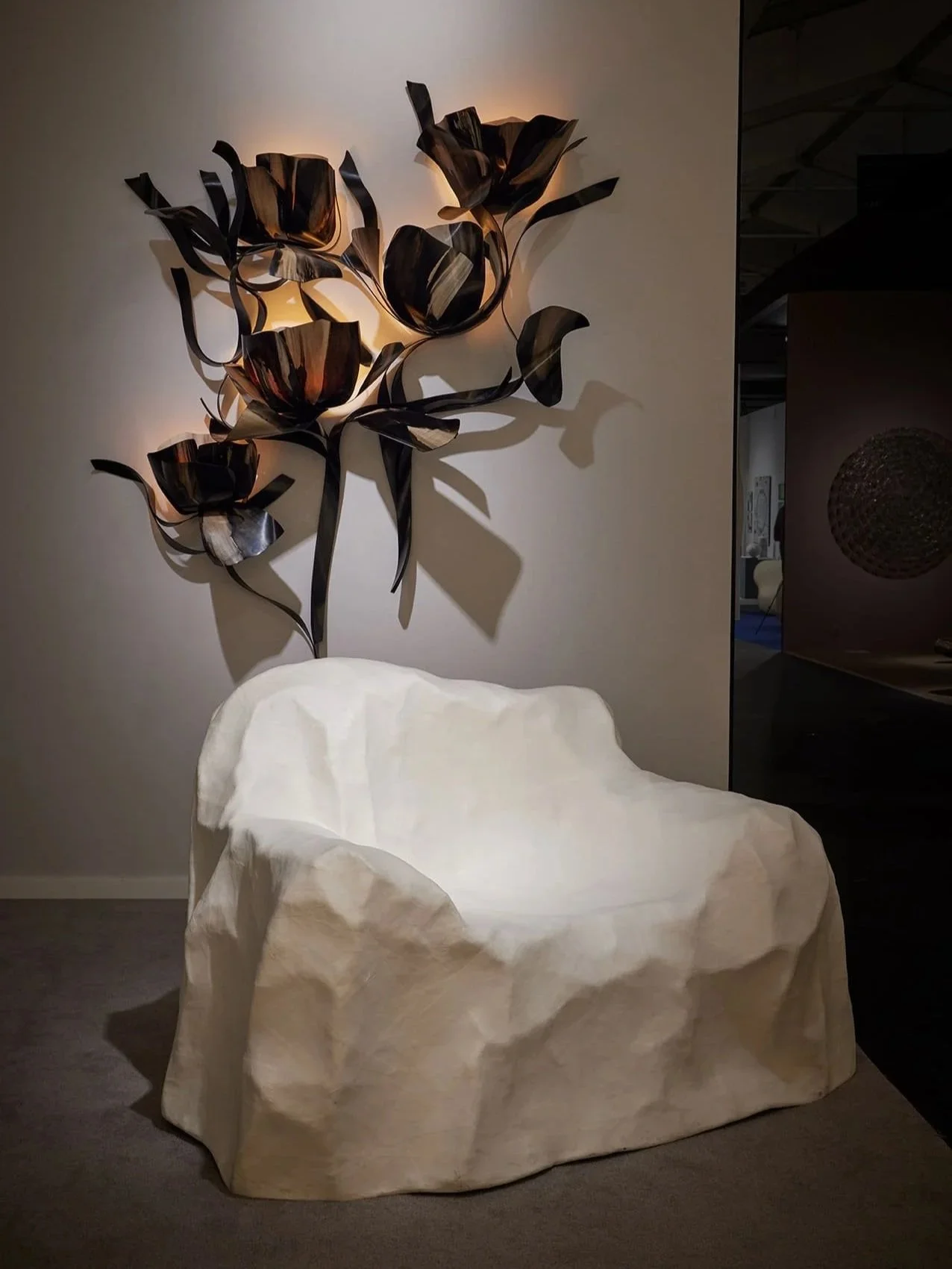
At Charles Burnand, States of Resolution blurred the boundaries between sculpture, material and function, with several works rewarding a much closer look.
Two stood out in particular. Kyeok Kim’s Revealed Memories built an intricate, almost cellular surface through repetition and material transformation, while Ian Milnes’ Creeping Midnight pushed marquetry far beyond its decorative origins. Made from sycamore, walnut, cherry and resin, its dark floral forms seemed to grow directly from the wall, somewhere between furniture, sculpture and botanical apparition.
With Burnand also opening a new Mayfair gallery nearby, the presentation felt like a confident statement of a programme increasingly interested in material experimentation, craftsmanship and objects that resist easy categorisation.
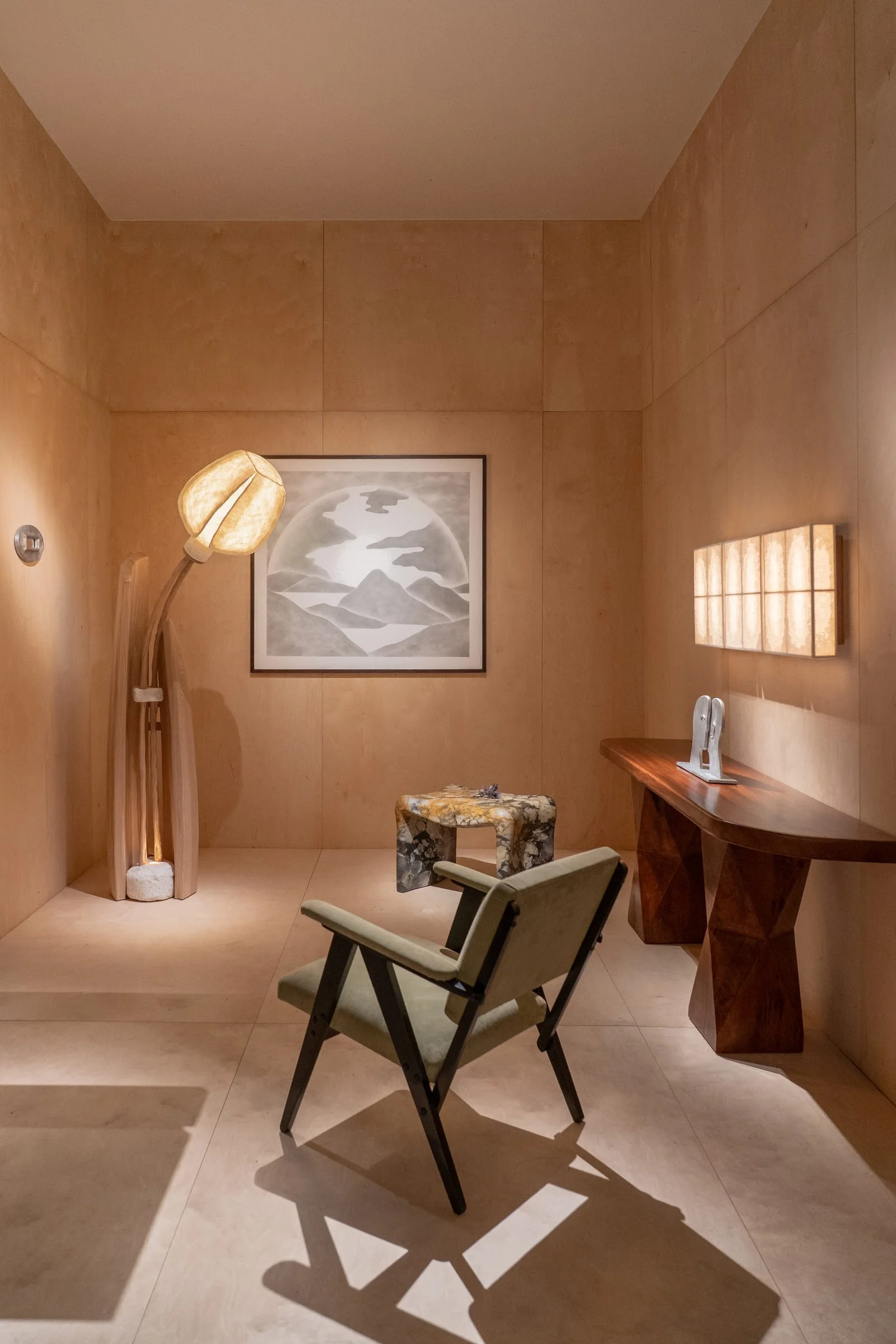
At BOOROOM Gallery, resilience becomes less a theme than a way of thinking about material itself. Founded by Irina Budtseva-Vinitskaya, the gallery brings contemporary collectible design into dialogue with historical works, asking how familiar materials can be pushed into new territory.
The presentation moves confidently between generations and geographies. Rui Matos combines the structural force of metal with the expressive weight of stone, while works by José Zanine Caldas bring a very different relationship to material and form. Nikita Erokhin’s KAMEH.06 takes its cue from the crystalline geometry of the desert rose, translating its layered, petal-like structure into something sculptural and almost geological.
A particular standout is Ksenia Breivo’s Dream Catcher, a tulip-like floor lamp that introduces a more lyrical, atmospheric note to the stand. Pieces by Charles Kalpakian and Ariana Ahmad extend the conversation, making the presentation feel less like a single stylistic statement and more like a study in how artists and designers rethink material, craft and form through very different lenses.
Initio Arts & Design
GALERIE STÉPHANIE COUTAS
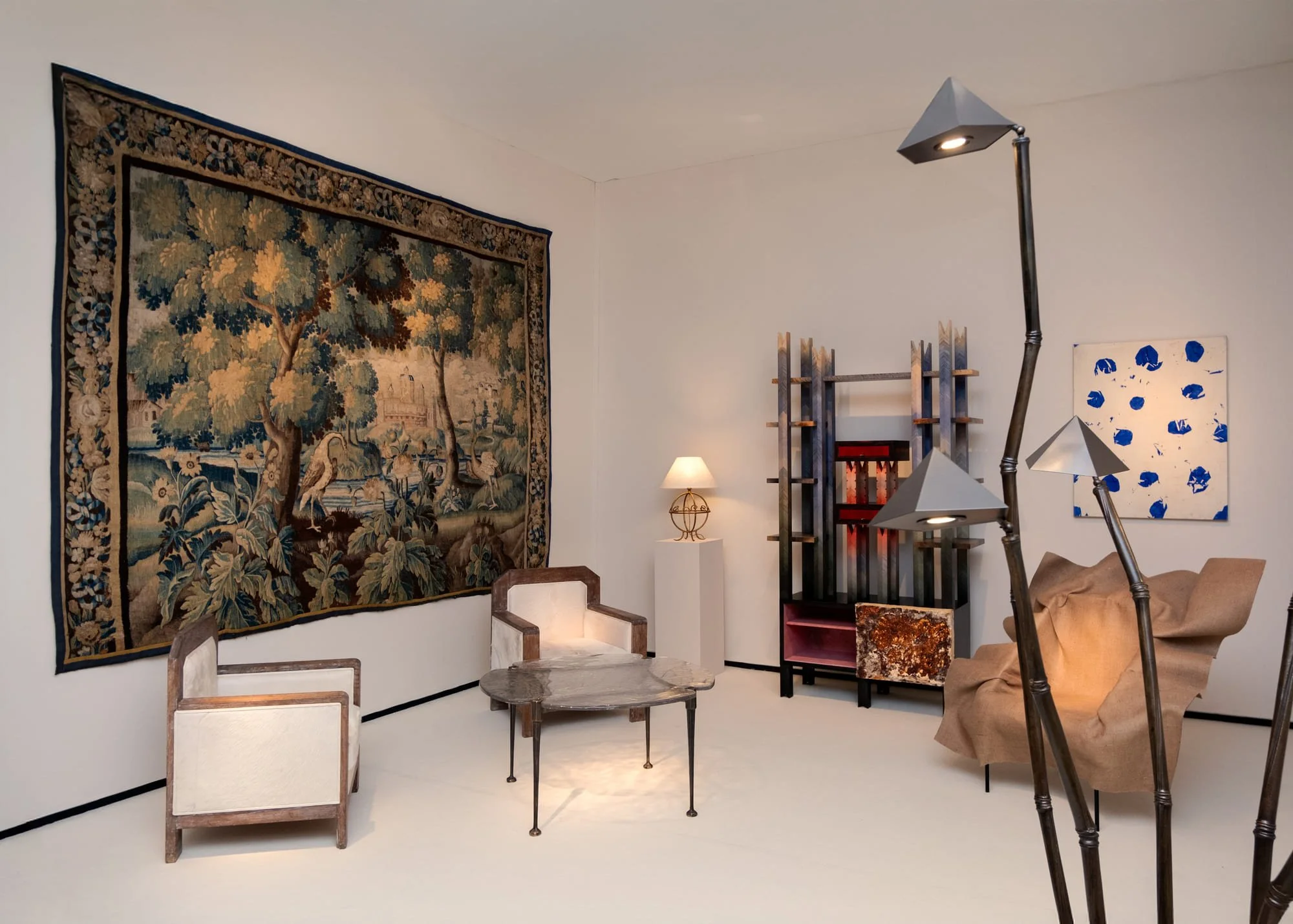
For its PAD London debut, Initio Arts & Design brought together Eastern European design history and contemporary making with a particularly tactile sensibility. Two works stood out for us: Demeter Fogarasi’s Frozen Textile Chair, which captures the softness and movement of fabric in a form that feels almost suspended in time, and a group of ceramic side tables whose weight and irregular surfaces gave the stand a quieter, more elemental rhythm.
Operating between Saint-Ouen and Budapest, the gallery places research-led historical pieces alongside contemporary makers, allowing regional heritage to sit in conversation with new approaches to craft. Works by Sándor Kecskeméti, Rebeka Rácz, Kim Moltzer and Jindrich Halabala appeared alongside rare French design, including a unique coffee table by Jules Leleu.
What made the presentation memorable was that balance of scholarship and material presence: historical context never overwhelmed the objects themselves, and Fogarasi’s chair in particular showed how something familiar could be made poetic, sculptural and unexpectedly strange.
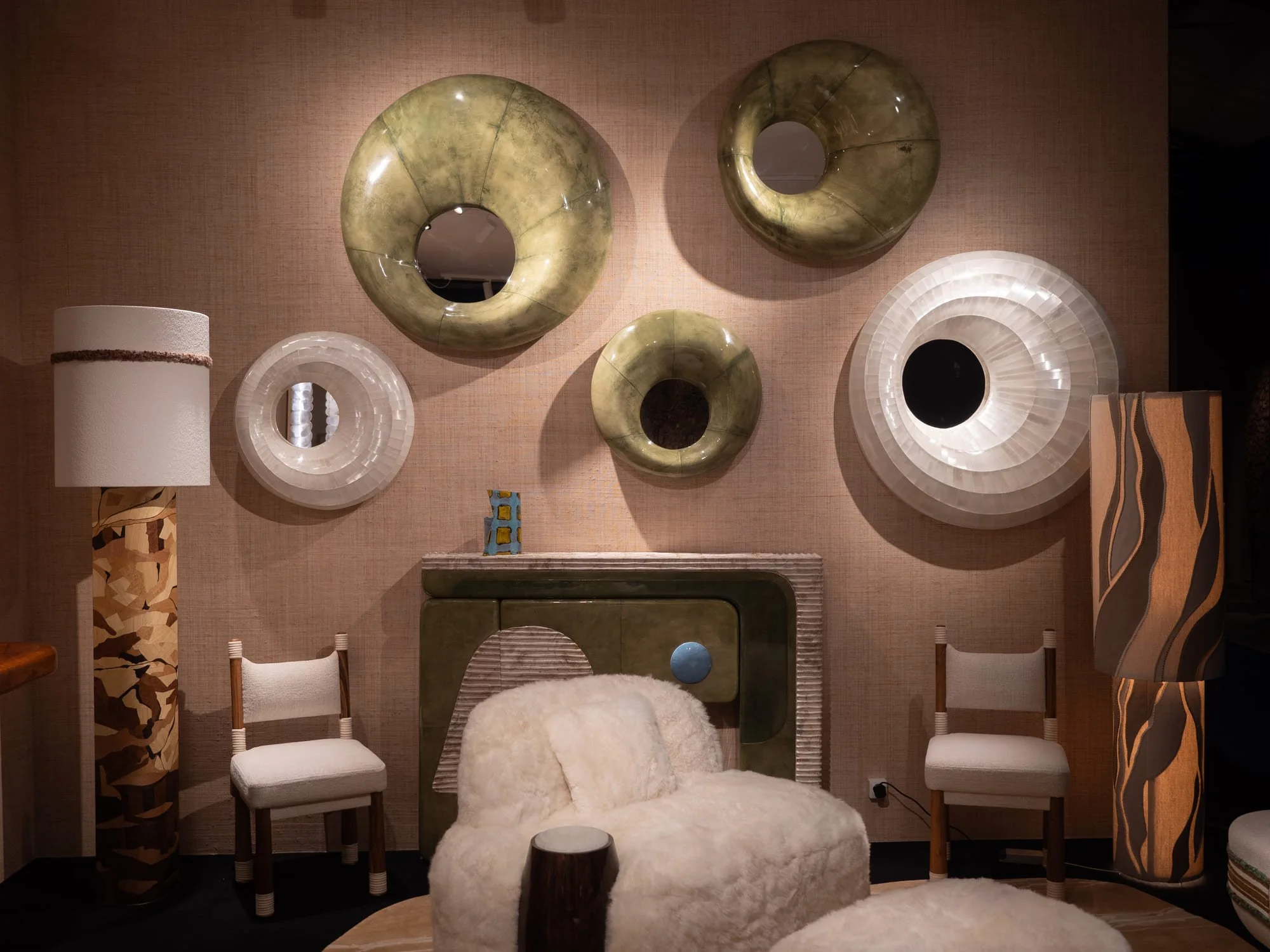
At Stéphanie Coutas, autumn was translated into an interior through tobacco tones, deep greens, precious woods and softly layered textures, but two elements gave the stand its real personality: the sculptural fireplace and a series of playful mirrors.
The fireplace acted almost like an anchor, bringing weight and warmth to the space, while the mirrors introduced a lighter, more whimsical note against the otherwise restrained palette. Together, they captured what made the presentation work: material richness without heaviness, and enough wit to keep the room from becoming too polished.
Mia Karlova Galerie
Rademakers Gallery
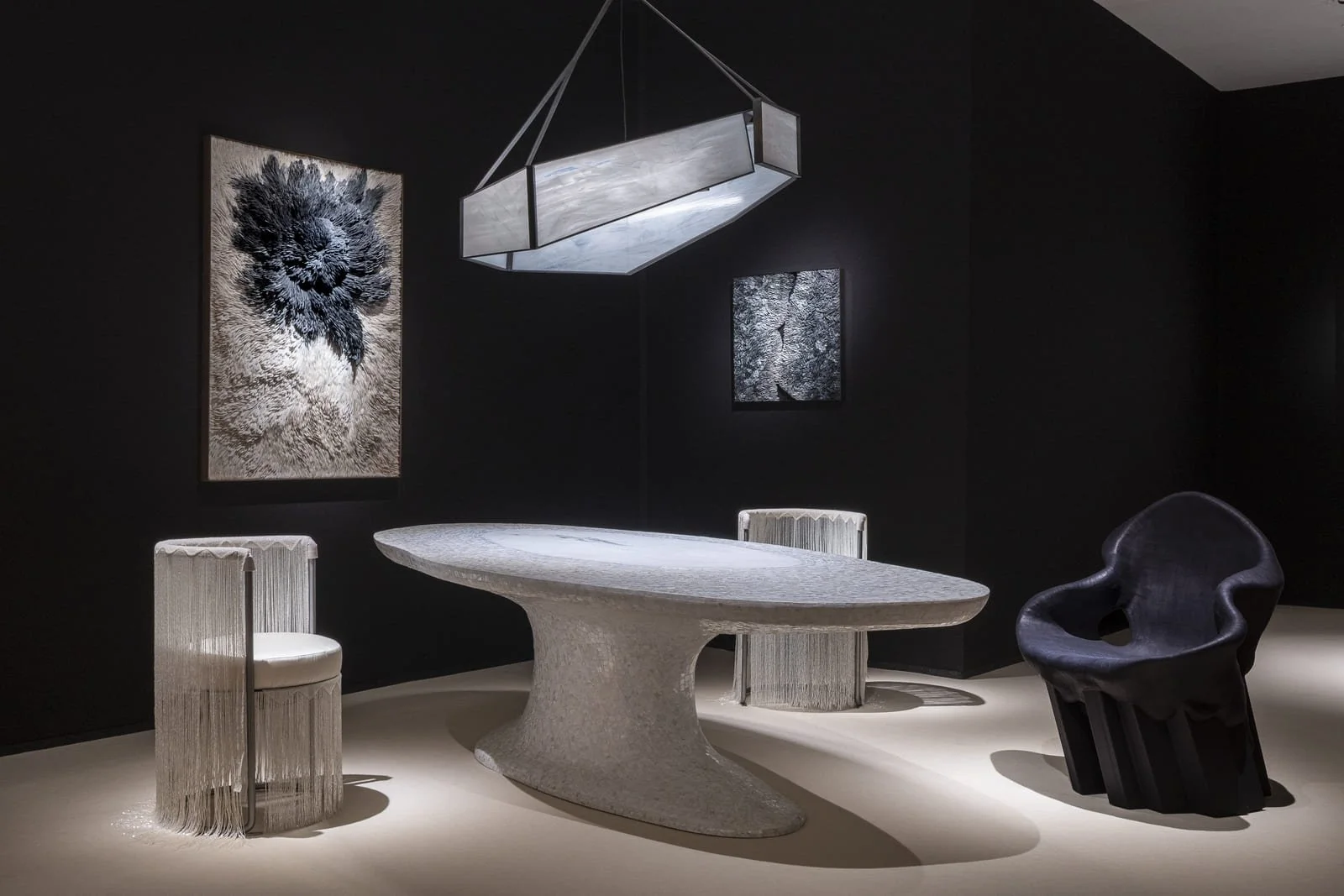
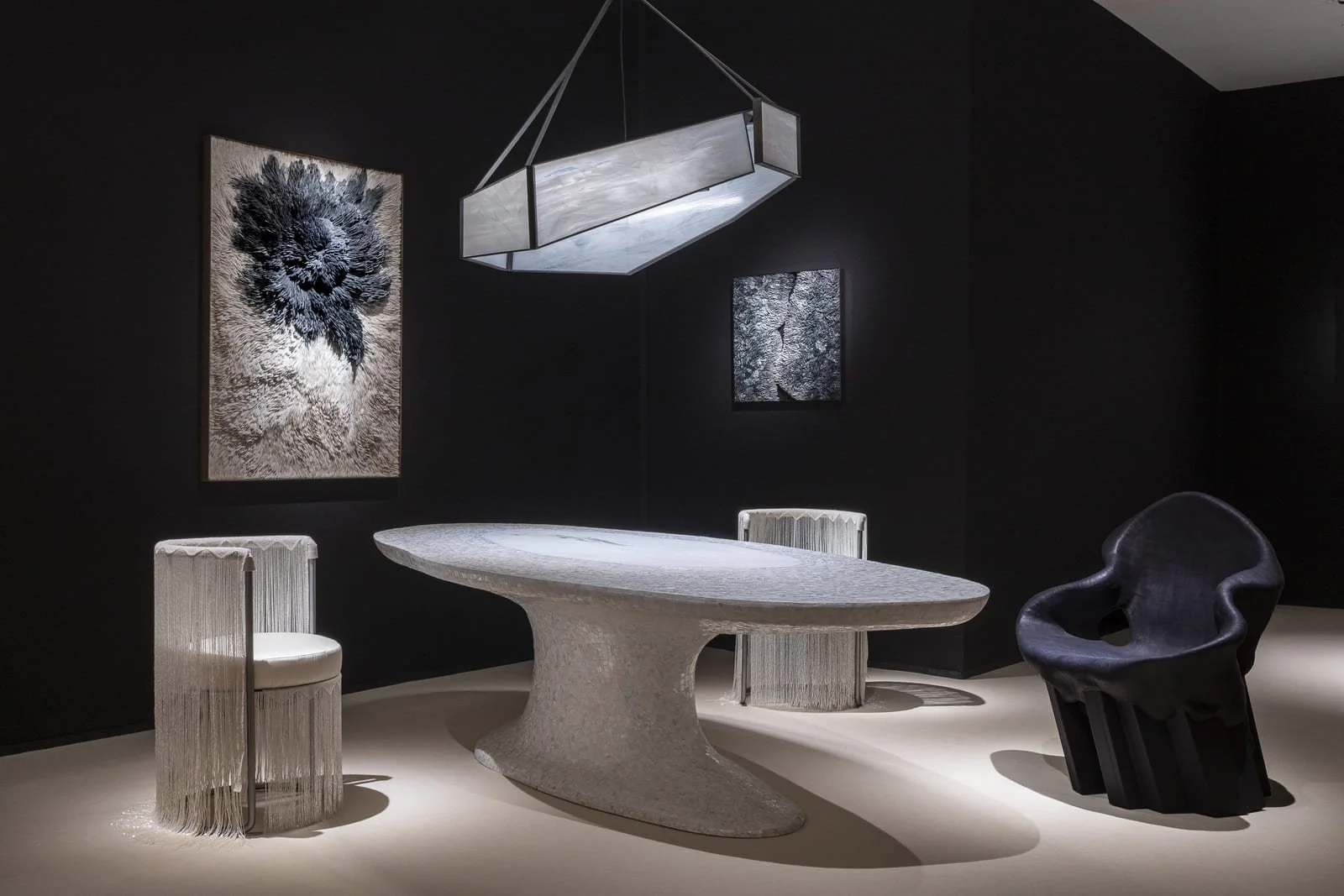
At Mia Karlova Galerie, the presentation moved between architectural precision and more intuitive, organic forms. Maria Sipińska was a particular standout: her Rain Chair surrounds a solid upholstered seat with cascading textile strands, while the Sea Foam Credenza, sculpted from solid beech, turns wood into a surface that seems to ripple and erode like water.
Elsewhere, Olga Malygina’s Woven Moon mosaic brought a quieter, more meditative texture, alongside new works by Valeriya Iayak, a material dialogue between Vadim Kibardin and Jesse Visser, and Tommaso Spinzi’s marble Medusas.
What held the stand together was its sensitivity to material and movement, with furniture and art feeling less static than softly transformed by light, texture and touch.
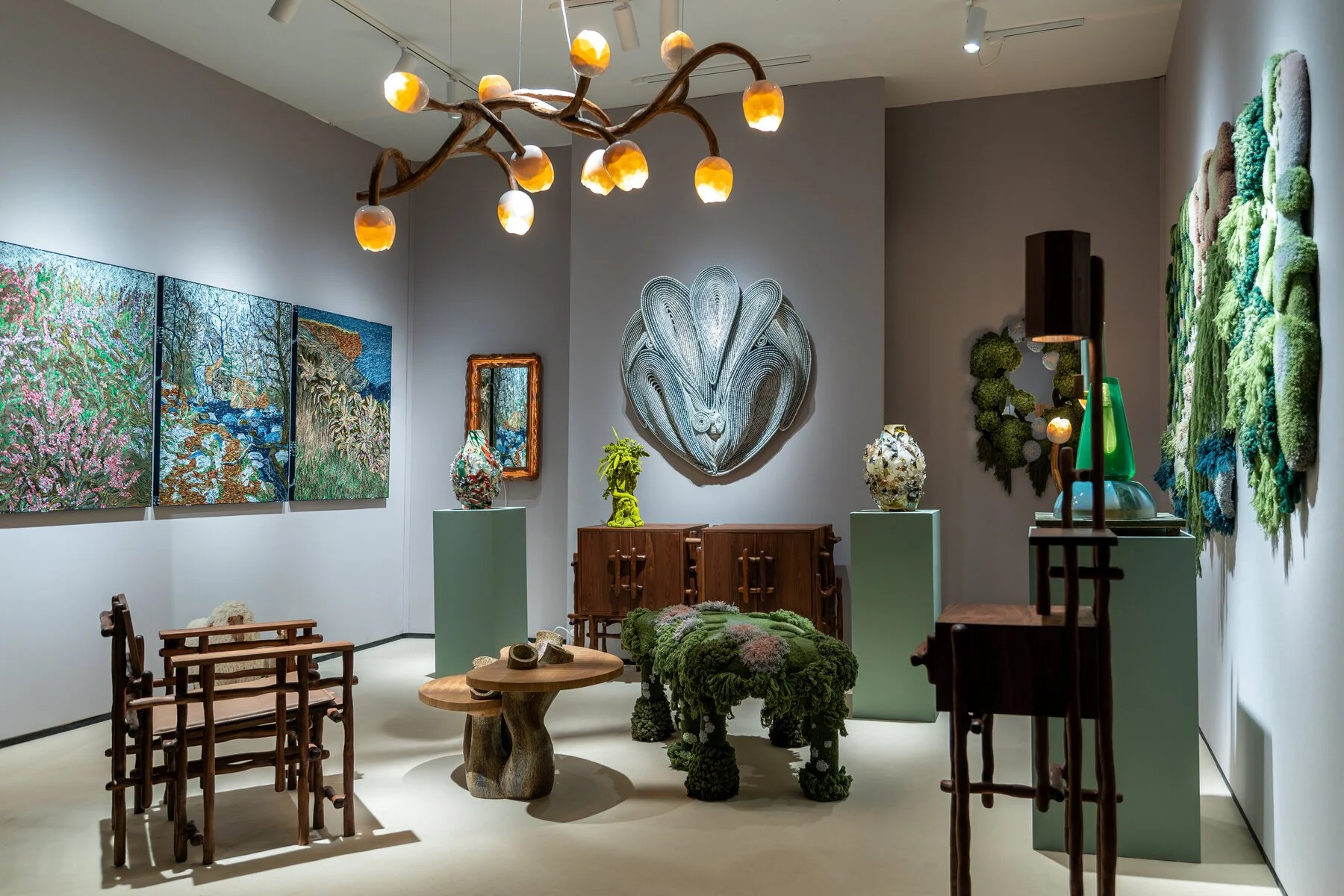
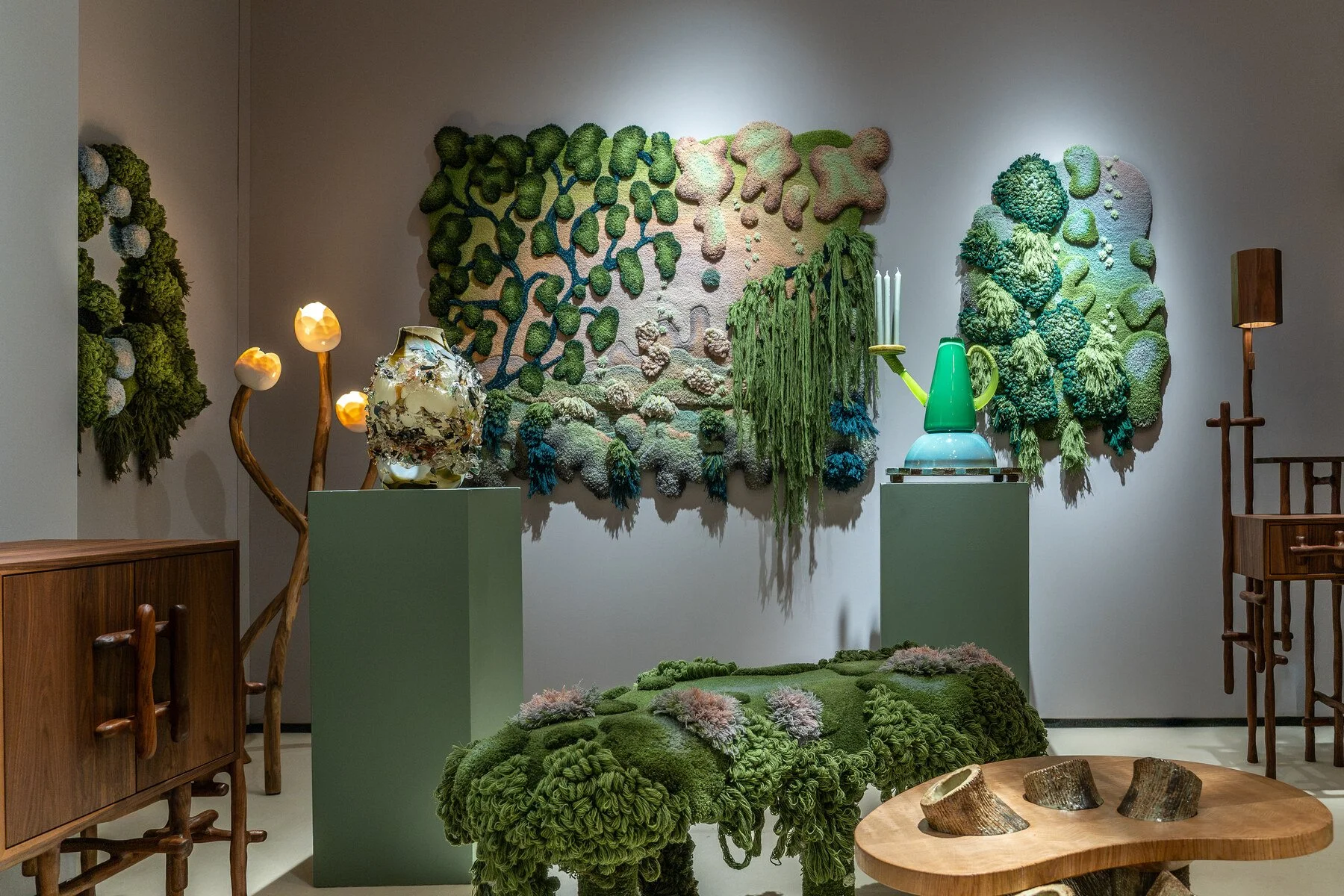
At Rademakers Gallery, Overgrown imagined the interior as something slowly being reclaimed by nature. Wood, wool, cotton and ceramics appeared in layered greens, vivid colour and richly tactile surfaces, giving the stand a sense of growth rather than decoration.
Textile art, long central to the gallery’s programme, sat alongside ceramics, sculpture and collectible design, with each work approaching nature through a different material language. What made the presentation compelling was its atmosphere: organic forms, hand-worked surfaces and a sense that the objects belonged to the natural world as much as to the room around them.
Rademakers Gallery
What connected our favourites was not a single aesthetic, but a willingness to push material beyond expectation. Bronze became soft, textiles architectural, wood fluid and discarded matter unexpectedly precious.
At its best, PAD is not simply about acquiring beautiful objects. It is about encountering work that changes the way we look at materials we thought we already understood. These were the galleries that did exactly that for us this year.
IMAGE Credits
COVER IMAGE: Galerie Boketto
GALLERY FUMI: Photography by Penguins Egg Studio. Courtesy OF Gallery FUMI
Charles Burnand Gallery: BY Artist Ian Milnes, Creeping Midnight, 2026. Courtesy of the artist and Charles Burnand Gallery
Rademakers Gallery: photographY BY Jitske Nap
BOKETTO PARIS: PHOTOGRAPHY BY Nicky Roding
GALERIE STÉPHANIE COUTAS: IMAGE COURTESY OF STÉPHANIE COUTAS
Initio Arts & Design: IMAGE COURTESY OF Initio Arts & Design
Sarah Myerscough Gallery: IMAGE COURTESY OF Sarah Myerscough Gallery
Galerie Melissa Paul: IMAGE COURTESY OF Galerie Melissa Paul
Booroom Gallery: photography by Elisa Garbarino
Mia Karlova Galerie: IMAGE COURTESY OF Mia Karlova Galerie