The Makers We Kept Thinking About at London Design Festival
lifestyle
For nine days in September, London Design Festival 2026 turned churches, showrooms and unexpected corners of the city into temporary stages for new work. It was impossible to see everything. What stayed with us were the makers who made process part of the story: fractured steel, felted landscapes, recycled cotton, inflated metal, old bulbs and familiar forms made strange again.
What stayed with us this year were the makers who made process part of the story: fractured steel, felted landscapes, recycled cotton, inflated metal, old bulbs and familiar forms made strange again. These are the objects we kept thinking about.

Vidushi Gupta | Fragments
2LG Studio x North South AD | Briar
1. Vidushi Gupta | Fragments
There is a school of design devoted to concealing how an object was made. Vidushi Gupta takes the opposite position.
Each piece in Fragments begins with a single sheet of steel, cut by hand using a gas torch before being reconstructed. The welds, cuts and joins remain visible. Even the offcuts that might ordinarily disappear from the workshop floor are brought back into the object.
It gives the collection an appealing tension. The pieces have been broken apart, but they are not interested in pretending otherwise. Their surfaces move from deep aubergine into burnished gold, while the evidence of cutting, joining and repair remains plainly visible.
What makes Fragments compelling is not simply the technique, but the attitude behind it. Gupta treats transformation as something worth recording. The scars are not imperfections to be corrected. They are the history of the object.
2. 2LG Studio x North South AD | Briar
With Briar, 2LG Studio and North South AD turn to a very different material language, but arrive at a similarly revealing relationship with making.
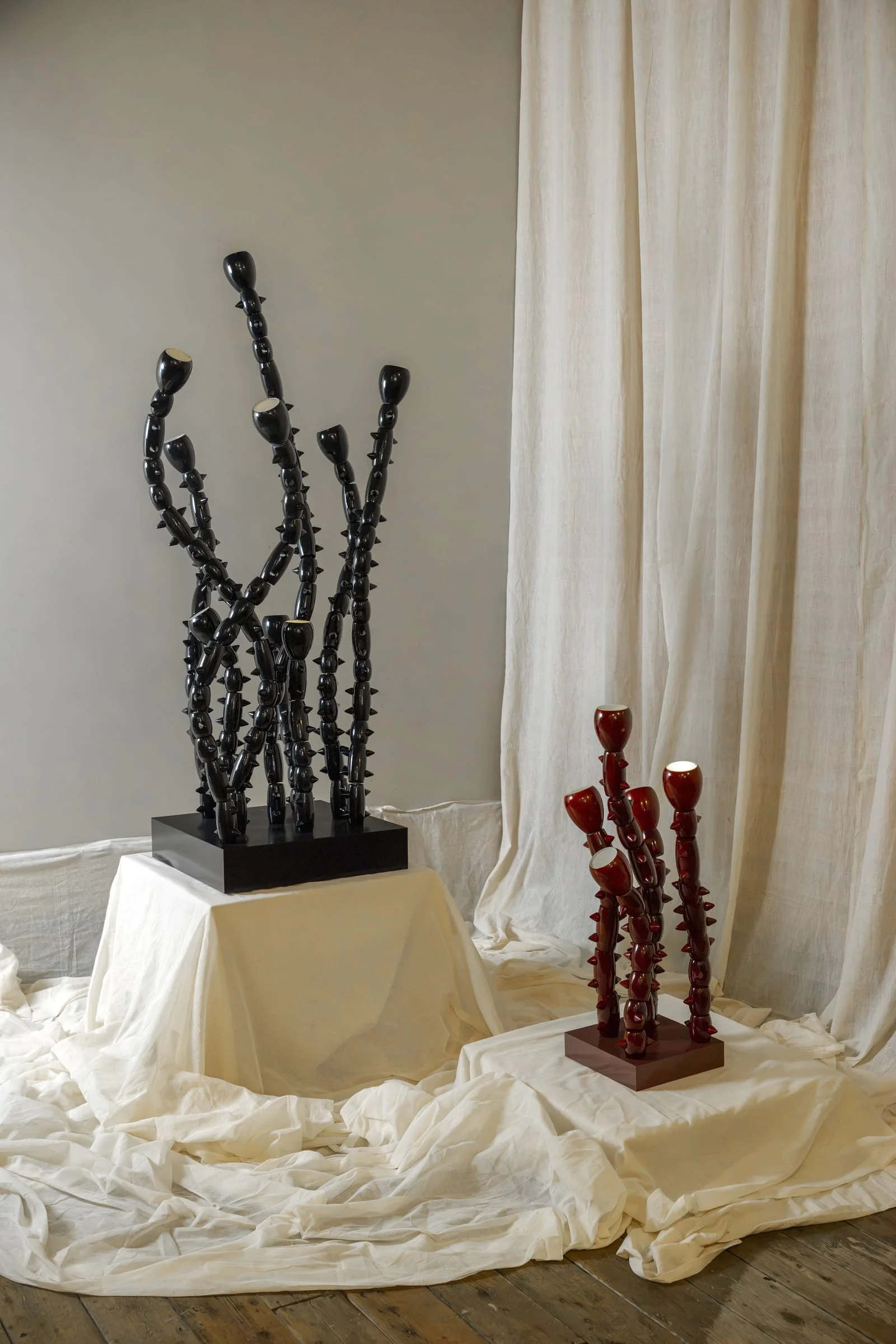
The collection takes its vocabulary from the garden. Stems, buds, branches and thorns are translated into sculptural floor, table, wall and pendant lights. Rather than reproduce nature literally, the designers allow those references to become slightly strange. The forms are familiar enough to recognise, but exaggerated enough to feel almost fantastical.
Each light is assembled from individually turned wooden elements made using traditional South Indian toy-making techniques and finished with natural dyes. That craft tradition gives the collection its character, but Briar never feels nostalgic. Instead, an inherited method is used to make something distinctly contemporary.
There is humour here, too. The lights twist and sprout rather than standing politely in the corner, bringing an almost animated quality to an object usually expected simply to illuminate a room.

ALEA | Flora of Kazakhstan
Jordan Keaney Studio | SLAB and the SugarCubes
3. ALEA | Flora of Kazakhstan
With Flora of Kazakhstan, ALEA begins not with folklore or familiar national symbols, but with an archive.
The collection draws on the botanical research of Laura Osmanova, whose photographs, negatives and handwritten notes documented Kazakhstan’s plant life from the 1950s through the 1970s. ALEA takes that scientific record and translates it into something more tactile, abstracting forms from individual flowers to the broader ecology of the steppe.
The resulting pieces, Regel’s Tulip, Poppy and The Steppe, are handmade in Kazakhstan from 100 per cent Merino wool using traditional wet-felting techniques.
What makes the collection compelling is the distance it travels. A botanical specimen becomes a photograph, the photograph becomes an archive, and decades later that archive becomes an object. Rather than reproducing nature literally, ALEA turns memory, landscape and scientific observation into a contemporary material language.
4. Jordan Keaney Studio | SLAB and the SugarCubes
At Shoreditch Town Hall, where the work was presented by Isola as part of House of ICON, Jordan Keaney Studio approached industrial materials with an unexpectedly light touch.
SLAB brings together heavily textured aluminium and a transparent glass surface, setting visual weight against something almost immaterial. The material does much of the work: rough, irregular metal sits beneath an immaculate plane of glass, making the table as much about surface and contrast as function.
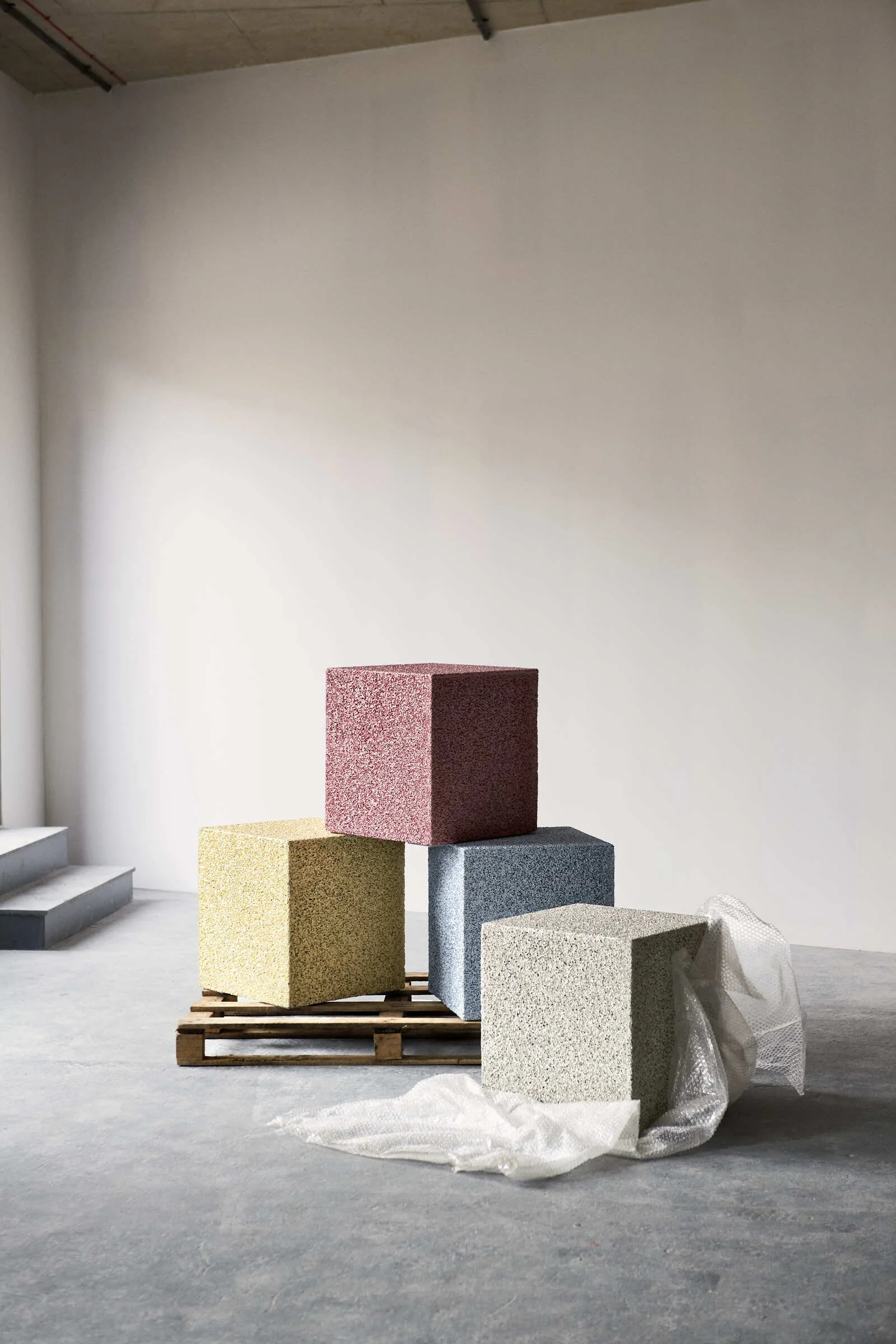
The SugarCubes take a more playful route. Enlarging the instantly recognisable geometry of a sugar cube, Keaney turns it into stools, side tables, benches, consoles and coffee tables. Soft pastel finishes temper the solidity of the forms and make objects that might otherwise feel monumental strangely inviting.
Across both collections, there is an interest in contradiction: heavy materials that appear light, industrial processes producing tactile objects, furniture that behaves almost like sculpture. Keaney’s work invites touch rather than keeping the viewer at a respectful distance.
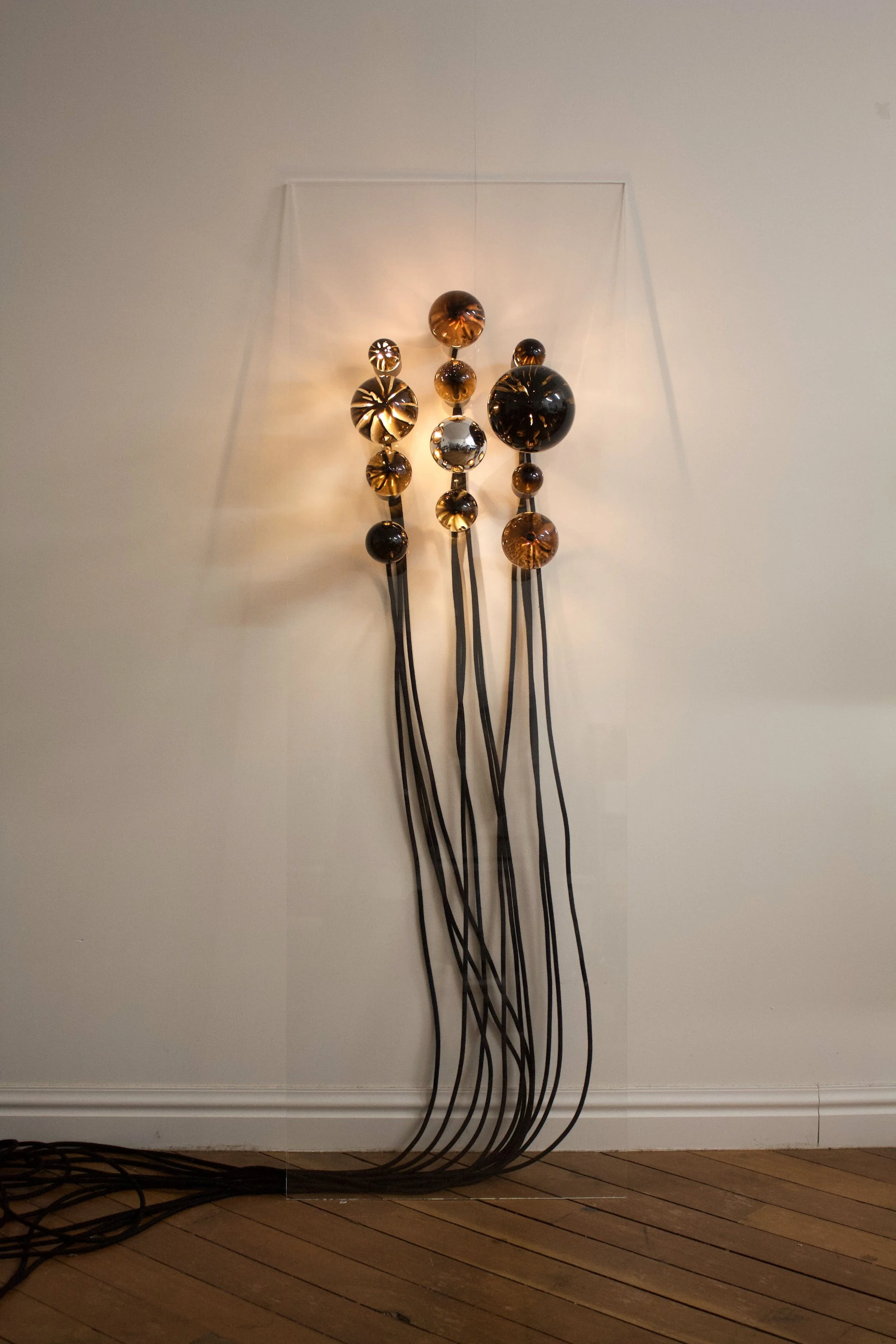
Faro Studio | Tint
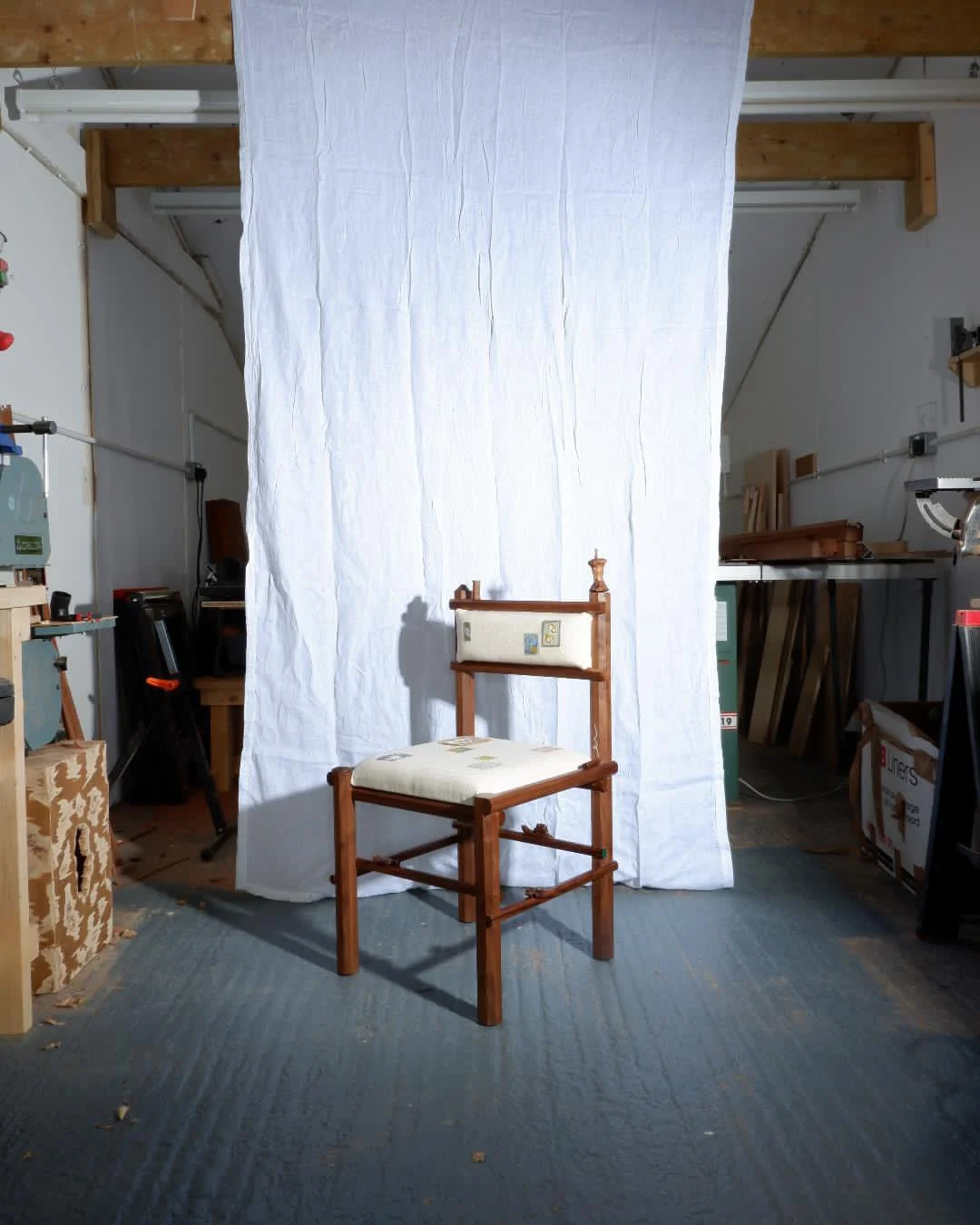
Josh Page | The Charming Chair
5. FARO STUDIO | TINT
For FARO Studio, light is less an accessory than a material in its own right. With studios in New York, Mexico City and London, the multidisciplinary practice often begins with the mechanics of illumination itself.
TINT, made by the London team in FARO’s Hoxton studio, starts with something considerably less glamorous: old light bulbs left over from previous projects.
Rather than discard them, the studio paints each bulb by hand and reassembles them into loose compositions that appear somewhere between carefully ordered and on the verge of coming undone. Propped casually against the wall, the resulting pieces hover between lighting, sculpture and found object.
Each is unique and made to order, but what makes TINT interesting is that its previous life has not been erased. Waste becomes the starting material, rather than an inconvenient detail to conceal.
6. Josh Page | The Charming Chair
Among the pieces in 2LG Studio’s group show You Can Sit With Us at Shoreditch Town Hall, Josh Page’s The Charming Chair offered visitors a small challenge: somewhere in its carved walnut frame was an ear.
Finding it was part of the point.
Made in walnut with embroidery by Sows Studio, the chair is immediately appealing as an object, but its charm lies in something more intimate. The unexpected detail asks the viewer to slow down and inspect a piece of furniture they might otherwise understand in a glance.
It is a small gesture, almost mischievous, but an effective one. Page takes one of design’s most familiar typologies and gives it a personality of its own.

Zieta Studio | Whispers Bench
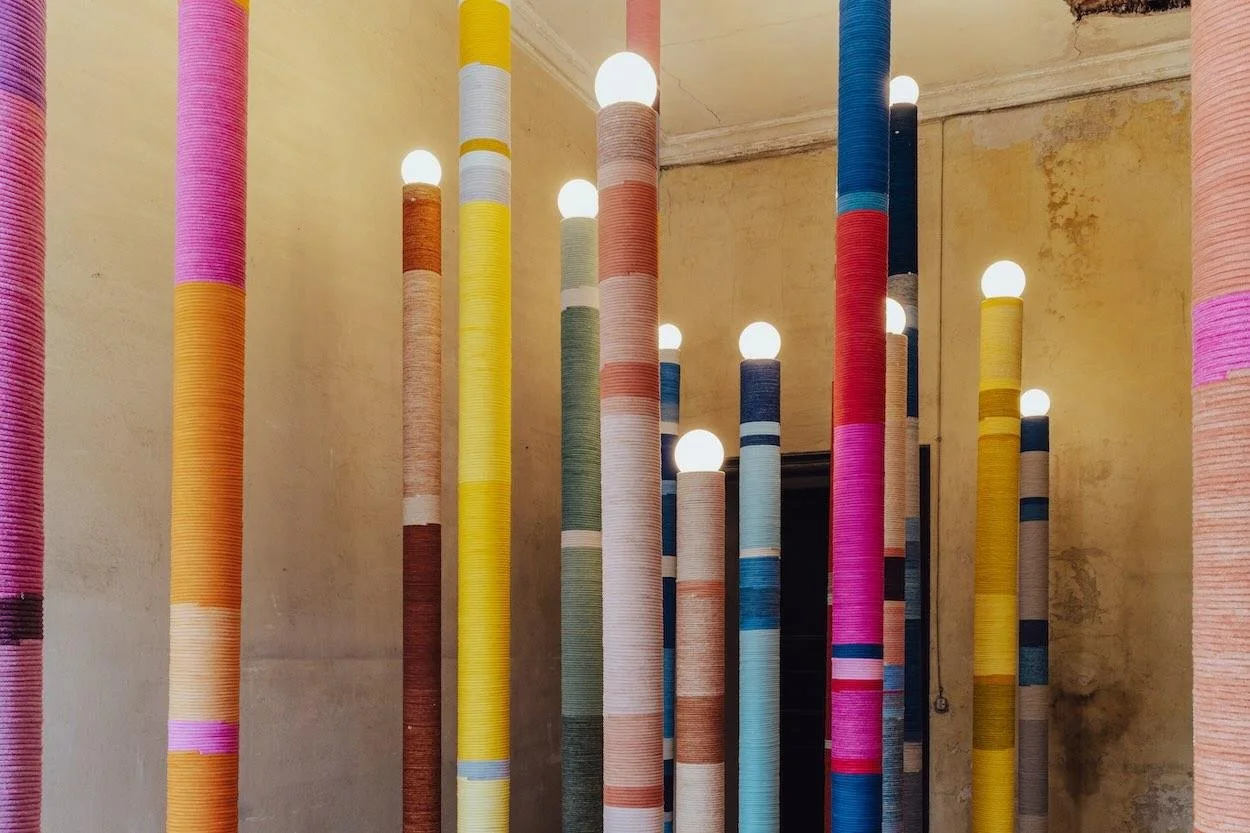
Studio Gonzalo Bascuñán | Carding Collectibles
7. Zieta Studio | Whispers Bench
Steel is not a material naturally associated with softness. Oskar Zięta has spent much of his practice making that assumption look increasingly questionable.
Presented at the entrance to the fair, the Whispers Bench uses Zieta Studio’s FiDU process, in which flat sheets of steel are inflated into three-dimensional forms. The technique gives the metal an almost upholstered appearance, creating swollen contours and a surprising sense of lightness despite the material’s inherent strength.
The contradiction is what makes the bench so compelling. It looks pressurised rather than constructed, closer to something filled with air than fabricated from steel.
Industrial engineering becomes a means of producing something unexpectedly sensuous.
8. Studio Gonzalo Bascuñán | Carding Collectibles
Some of the most seductive objects at the festival began with considerably less seductive material.
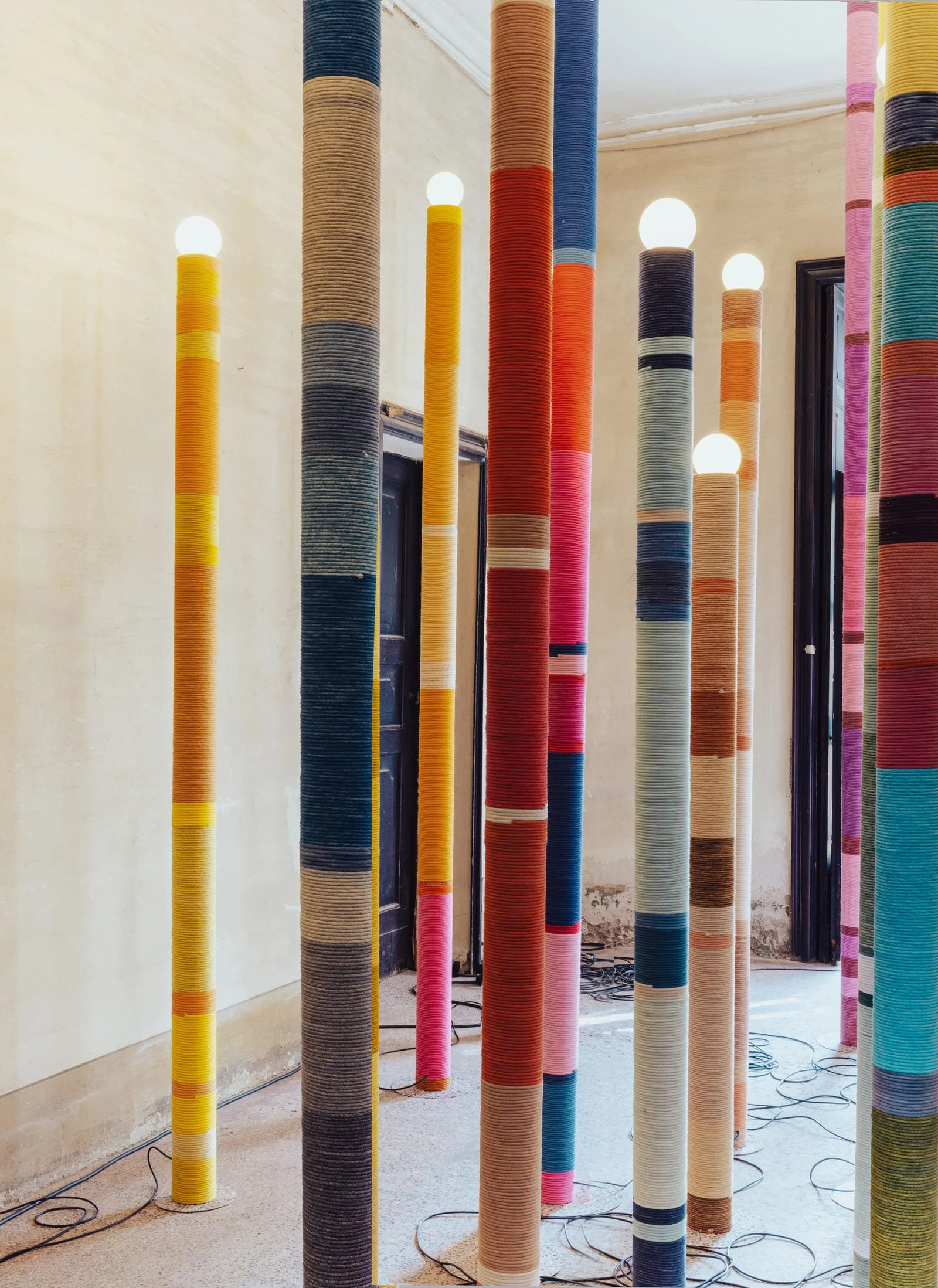
Working in Chile, Gonzalo Bascuñán creates his Carding Collectibles lighting largely from recycled cotton, responding to the environmental impact of fast fashion and the accumulation of textile waste in the Atacama Desert.
The resulting pieces are bright, tactile and almost exuberant, an aesthetic that makes their origin all the more striking. Material associated with overproduction and disposal is reworked into objects intended to be kept.
There is an interesting reversal at work. Bascuñán does not make waste disappear. He gives it enough presence that we are forced to consider where it came from in the first place.
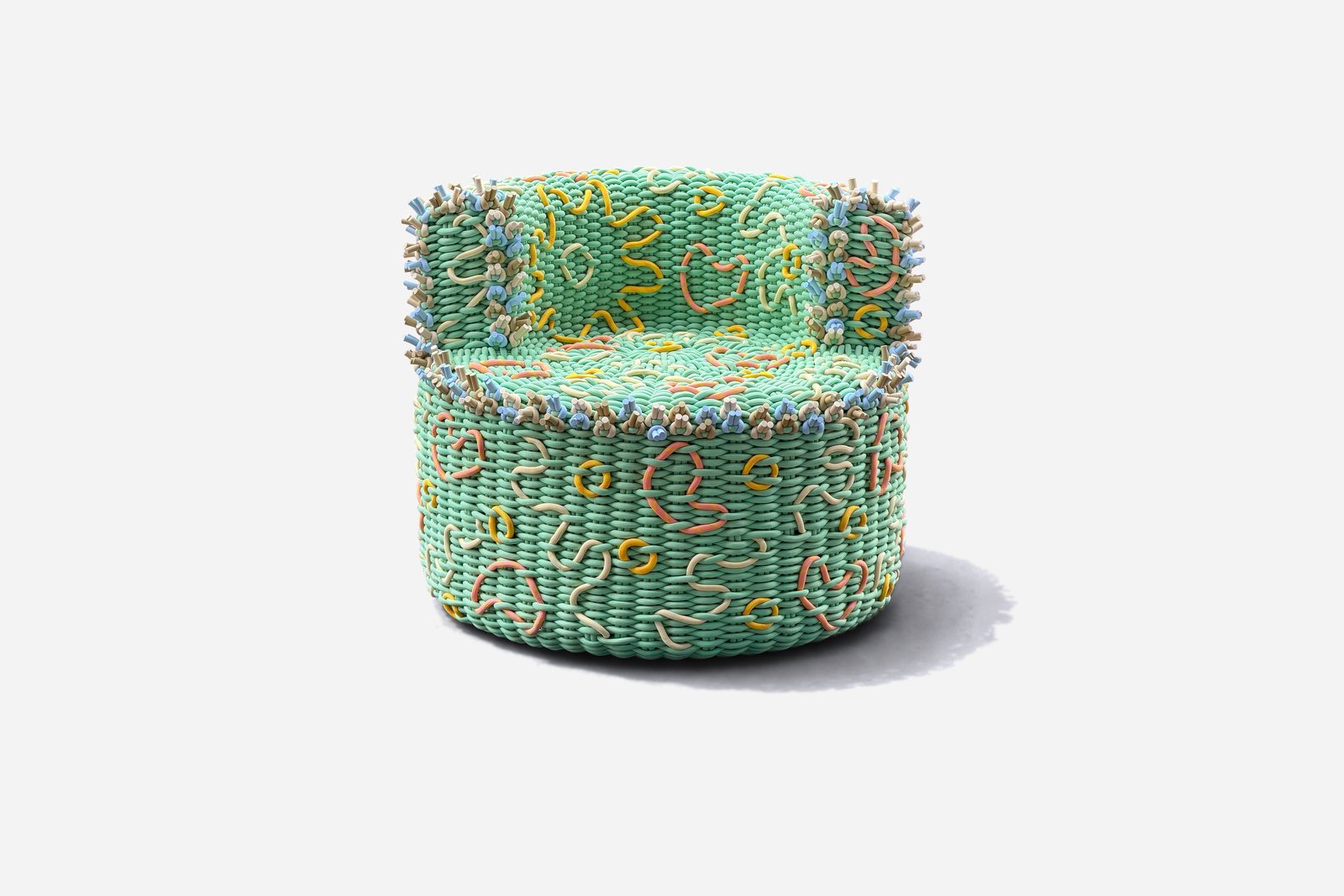
Shore Studios x Bethan Laura Wood | Extra Trimmings Round Side Chair: Dinosaur
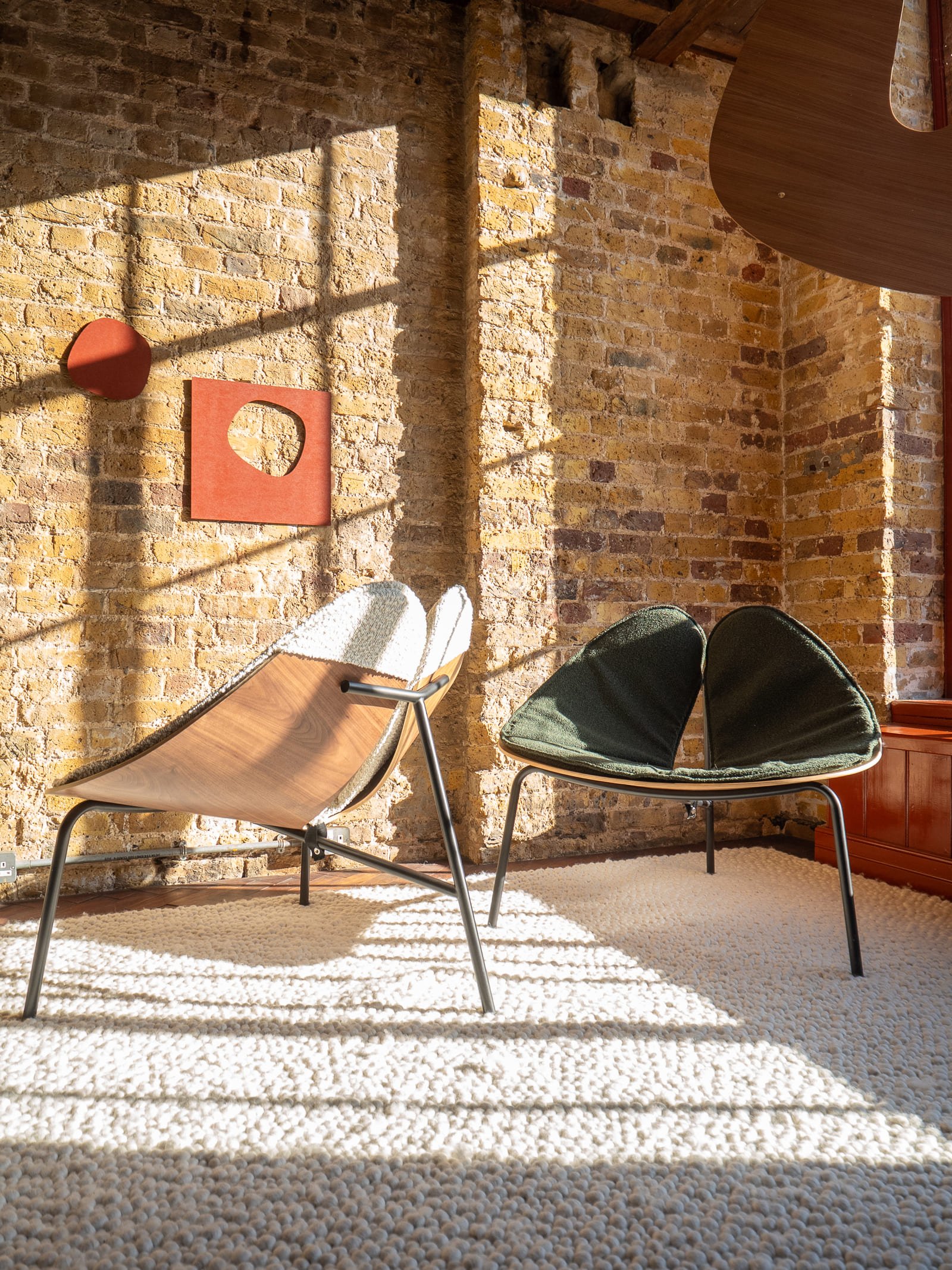
Ernst & Jensen | Ginkgo chair
9. Shore Studios x Bethan Laura Wood | Extra Trimmings Round Side Chair: Dinosaur
Minimalism was never going to be the point here.
For Extra Trimmings, London-based Shore Studios joins forces with Bethan Laura Wood to revisit the exuberance of 1970s upholstery, complete with florals, scallops, ruffles and an unapologetic appetite for decoration.
In the Dinosaur round side chair, Shore’s woven rope construction meets Wood’s highly expressive approach to colour and ornament. But decoration is not simply applied afterwards. The frills, curves and dimensional motifs become part of the architecture of the chair itself.
The result is playful without becoming pastiche. At a moment when ornament is returning to interiors after years of restraint, Dinosaur makes a persuasive case for treating decoration not as excess, but as another form of structure.
10. Ernst & Jensen | Ginkgo chair
Not everything memorable at London Design Festival needed to be new.
Danish furniture architects Anne-Mette Bartholin Jensen and Morten Ernst originally designed Ginkgo for Weber Furniture in the early 2000s. More than two decades later, the chair returned at Cozmo’s Soft Geometry showroom after two years of careful reworking.
Its construction remains strikingly economical: a moulded plywood shell in oak or walnut rests on a slender three-legged steel frame, with a detachable cushion completing the seat.
What has changed is subtler. Proportions and comfort have been reconsidered without disturbing the character of the original, particularly the curved shell that wraps around the body.
In a festival dominated by launches, Ginkgo offered another proposition altogether: sometimes good design does not need reinvention. It needs another look.
What stayed with us
The ten projects could hardly look more different. There is fractured steel and wet-felted wool, recycled cotton and turned timber, inflated metal, embroidered walnut, woven rope and a chair first conceived more than twenty years ago.
Yet a pattern emerged.
Again and again, the work that held our attention involved some act of transformation. Vidushi Gupta leaves the evidence of destruction and repair visible. ALEA turns a scientific archive into material memory. FARO gives obsolete bulbs another life. Gonzalo Bascuñán converts the waste of fast fashion into objects designed to endure. Zięta makes steel appear soft, while Shore Studios and Bethan Laura Wood make ornament structural. Ernst & Jensen remind us that transformation can also mean knowing what not to change.
Perhaps that is what felt most convincing at London Design Festival this year. Not novelty for novelty’s sake, but designers looking more closely at what already exists: a material, a technique, an archive, a waste stream, even an old idea, and asking what else it might become.
Those were the objects that remained once the installations came down and London returned to being London.
IMAGE CREGITS
IMAGE COURTESY OF THE DESIGNERS
COVER IMAGE: Studio Gonzalo Bascuñán
Jordan Keaney Studio: MF Barranco