André Fu Has Been Designing Journeys Since He Was Six
people • designers
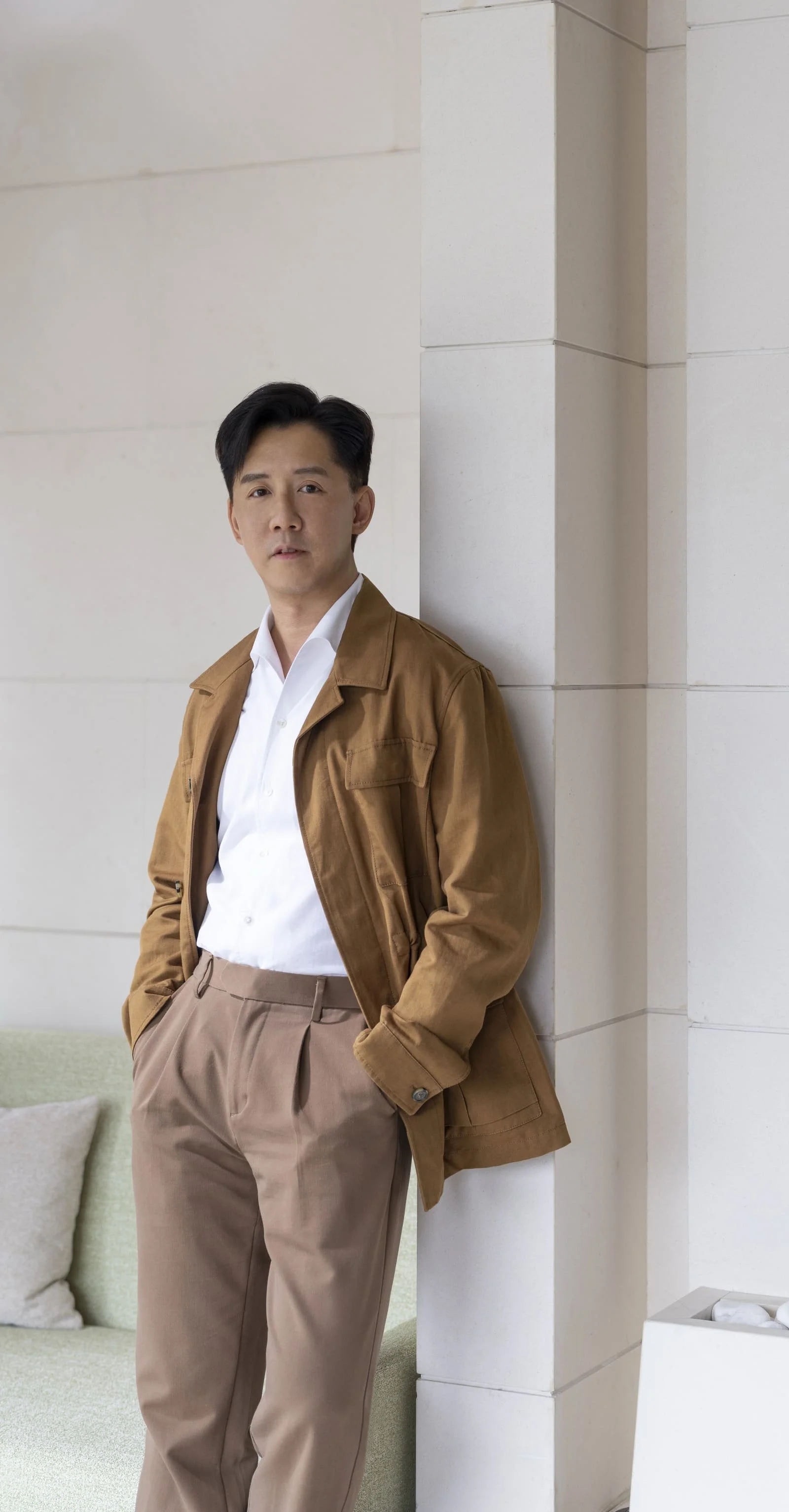
For André Fu, design has always been closely connected to the experience of moving through a space. From the mazes he drew as a child to the hospitality environments created by his Hong Kong-based studio today, his work is shaped by an interest in journey, atmosphere, cultural dialogue and the human experience. His studio is known for a contemporary interpretation of relaxed luxury, with projects spanning hotels, restaurants, residences and cultural spaces internationally.
As André Fu Studio marks 25 years, a new book, André Fu: A Designer’s Vision, brings together recent projects through three recurring themes: Escape, Cultural Dialogue and Heritage. Rather than looking back simply as a retrospective, the book reflects on the ideas that continue to inform Fu’s approach, from the role of travel and cultural immersion to the relationship between technology, comfort and thoughtful hospitality.
Words: designeers
september 2026
WEBSITE: andrefustudio.com
INSTAGRAM: @andrefustudio
Before The Upper House, before Claridge’s Spa, before hotels and restaurants carried his particular language of quiet, calibrated luxury across continents, André Fu drew mazes.
He was six, perhaps eight. The appeal was not simply drawing the lines, but inventing the journey through them. A person entered at one point, encountered choices, wrong turns and different possibilities, and eventually found a way through. The anecdote could almost sound too neat in hindsight, a childhood memory retrofitted into a design philosophy. Except that, decades later, Fu still asks his team to do essentially the same thing.
“I always ask my team to walk the plan,” he tells Designeers. Stop looking at it as designers, he tells them, and become the person who will actually occupy it. Where do you put your bag? Where do you sit? What do you see when you lie down? Where does your eye travel next?
“Once you start to not look at it as a piece of design, but look at it as the person experiencing the space,” he says, “that actually informs the whole spirit.” For Fu, a plan is still a maze of sorts. The difference is that now there should be no wrong turns.
A BOOK, BUT NOT QUITE A RETROSPECTIVE
The timing of André Fu: A Designer’s Vision is significant. Fu’s studio is marking its 25th year, yet he is quick to resist the idea that the book represents some grand career retrospective.
Instead, it gathers a selection of recent projects around three ideas that have followed him throughout his work: Escape, Cultural Dialogue and Heritage. There are conversations, too, with people from outside his own discipline. Fu wanted the book to reveal something less easily captured by a portfolio: the wider creative world he inhabits.
“I don’t necessarily look out for inspiration,” he says. “I think it naturally comes to me.”
Sometimes that means fashion, photography or food. Sometimes it is a collaborator. Sometimes it is simply getting into a car in an unfamiliar city and watching how quickly people move. Fu describes his own process as building a kind of “mental collage”. Fragments accumulate until, almost imperceptibly, they begin to form a place.
“It could be a certain light,” he says. “Sometimes it’s going to the oldest café, somewhere that represents an extension of street life.” In other words, inspiration is not necessarily waiting at the monument everyone came to photograph. Often, it is happening around the corner.
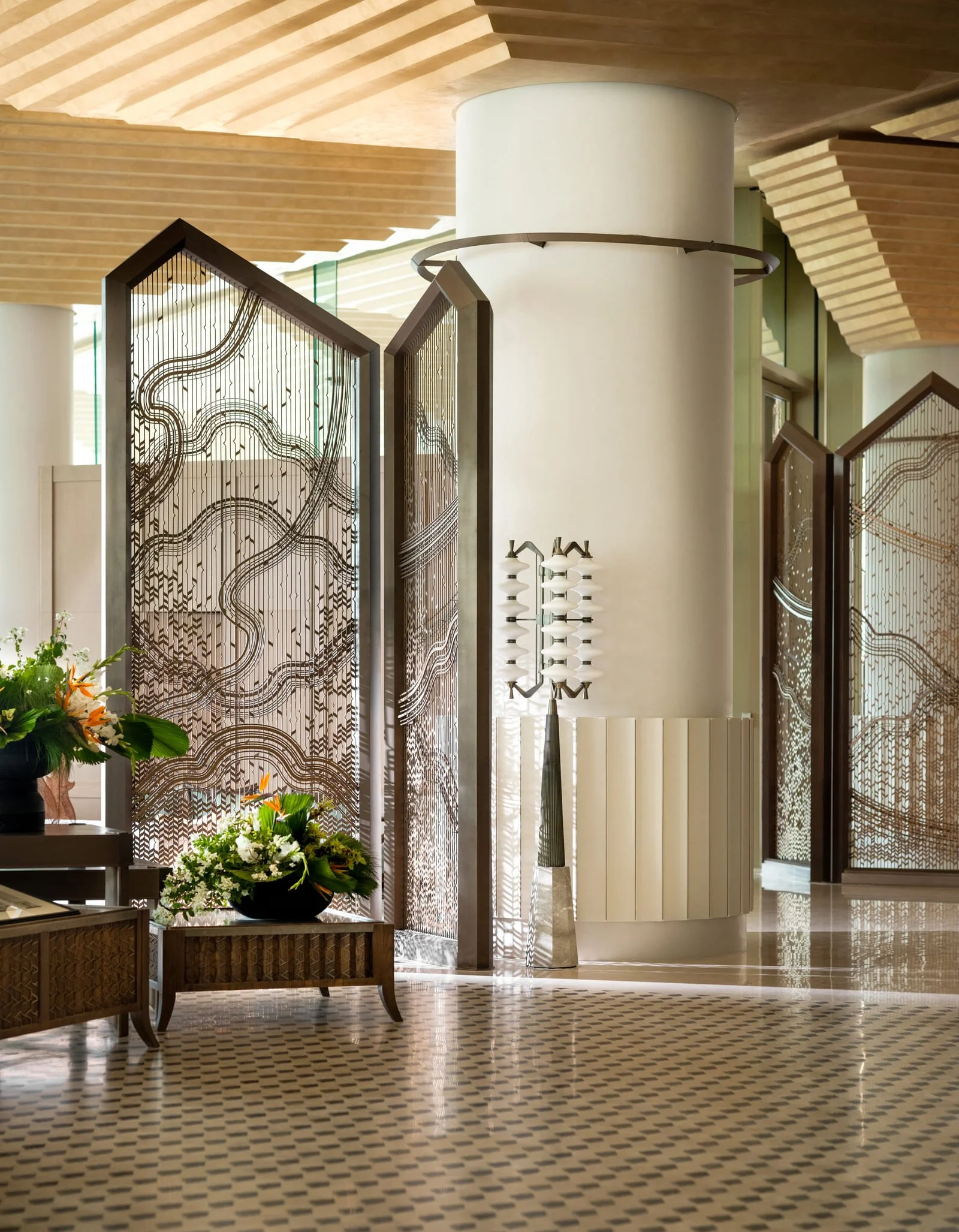
Dusit Thani Lobby | Bangkok
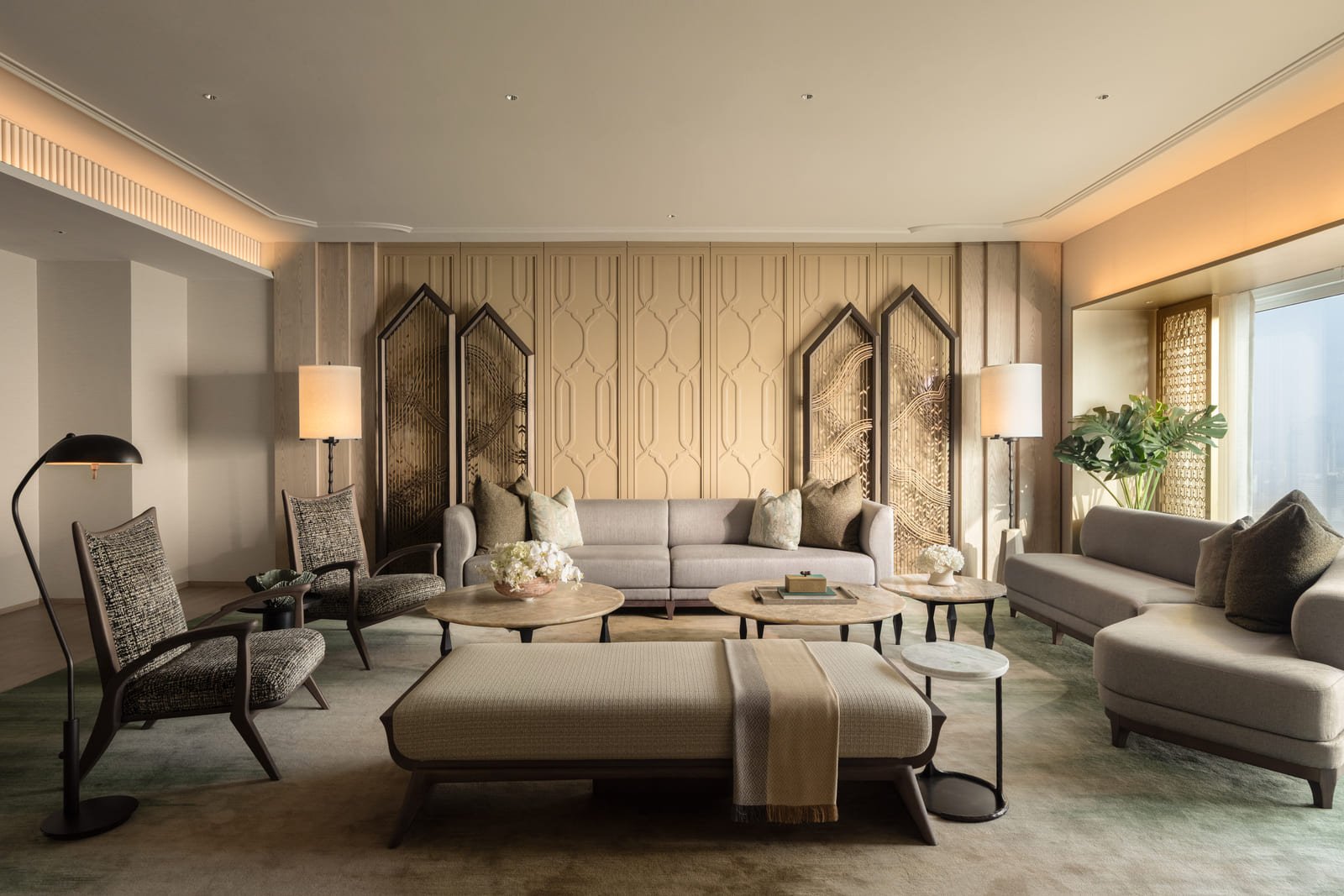
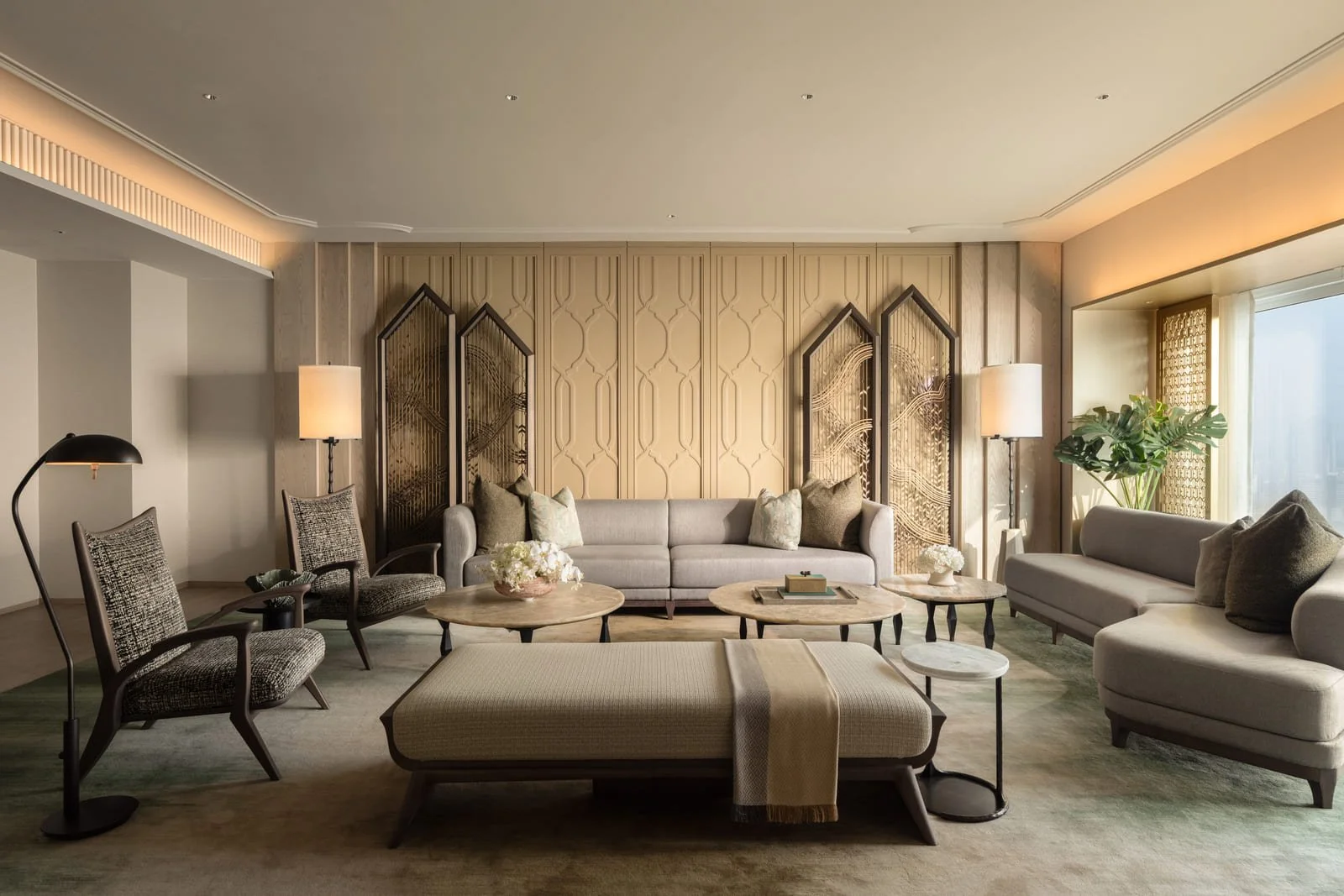
Dusit Thani Presidential Suite | Bangkok
THE ARCHITECTURE OF RELAXED LUXURY
Fu’s geographical reach has expanded dramatically over 25 years, and with it the vocabulary of his work. Yet he says the central idea has barely moved.
He calls it relaxed luxury. It is a phrase that sounds straightforward until one considers how much choreography is required to make a sophisticated space feel effortless.
“The core belief in creating places that connect, places that are comfortable and visually or experientially relaxing, hasn’t changed at all,” he says.
What has changed is us. Twenty years ago, a hotel room needed a desk because guests sat down at one. Today, they may work from an iPad on a sofa or conduct half their lives through a phone. Wellness has moved from an amenity to an industry of its own. Restaurants are being asked to perform several functions rather than one. Space, particularly in major cities, has become more precious.
Fu is interested in these shifts not because they are trends, but because design has to respond to the behaviour underneath them. The room changes because the person inside it has changed.
THE BEST TECHNOLOGY DISAPPEARS
For all the discussion around AI, automation and increasingly intelligent buildings, Fu is notably un-dramatic about technology.
It is neither enemy nor saviour. It is infrastructure. “The best technology is when it’s invisible,” he says. “But it’s there when you need it.”
That distinction feels increasingly important. For Fu, technology earns its place when it supports the journey of the person using the room, not when it announces its own sophistication.
He is equally resistant to the idea of removing technology simply to manufacture some fashionable version of disconnection. What matters is choice. And choice, he suggests, has become a form of luxury. It leads him to a bigger idea about hospitality, one considerably less tangible than marble, thread count or square footage: thoughtfulness.
The most successful spaces anticipate without dictating. They understand what somebody may need before insisting on showing them how clever the solution is. Luxury, in this reading, becomes less about abundance and more about consideration.
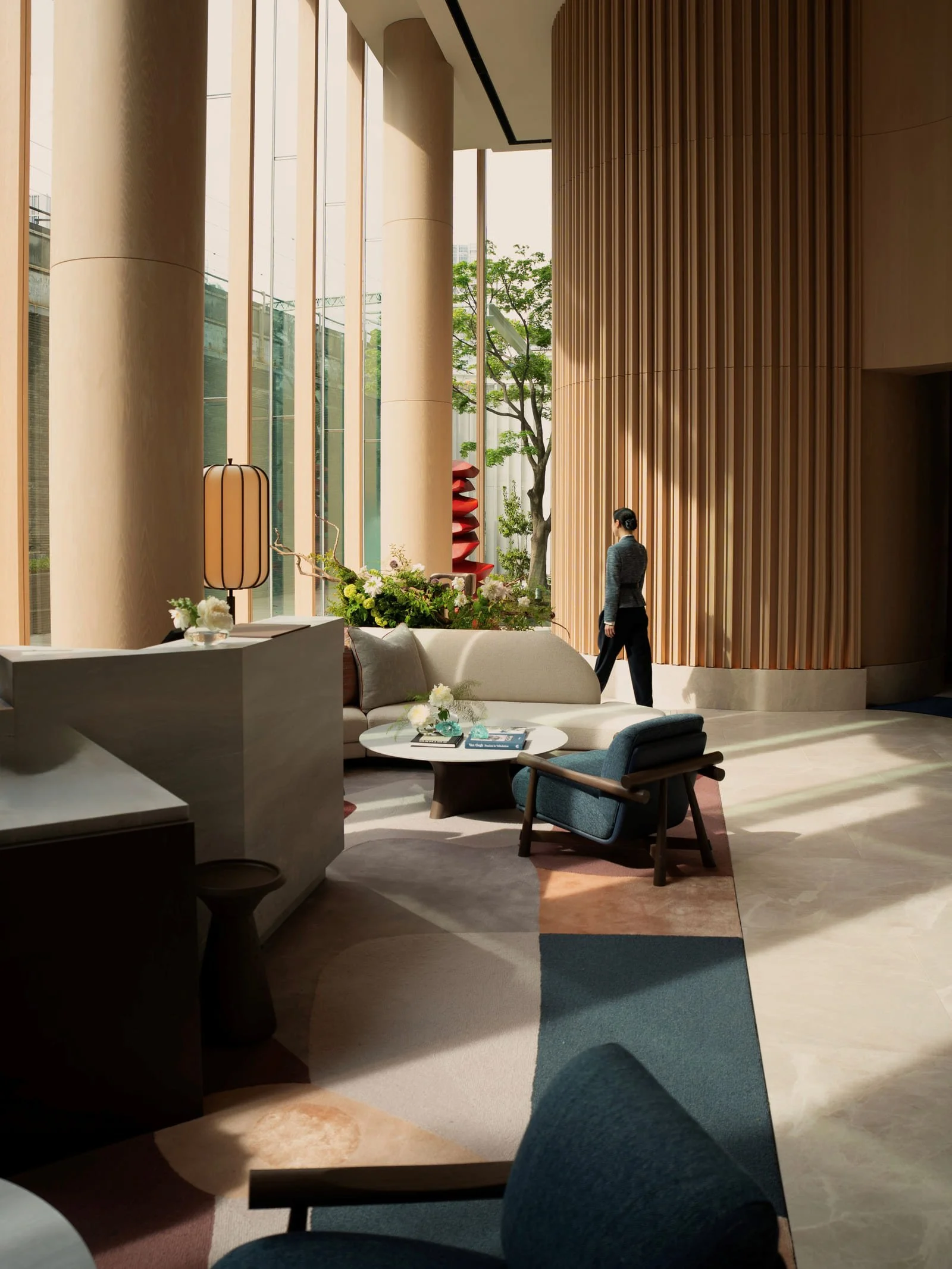
Four Seasons Lobby | Marunouchi
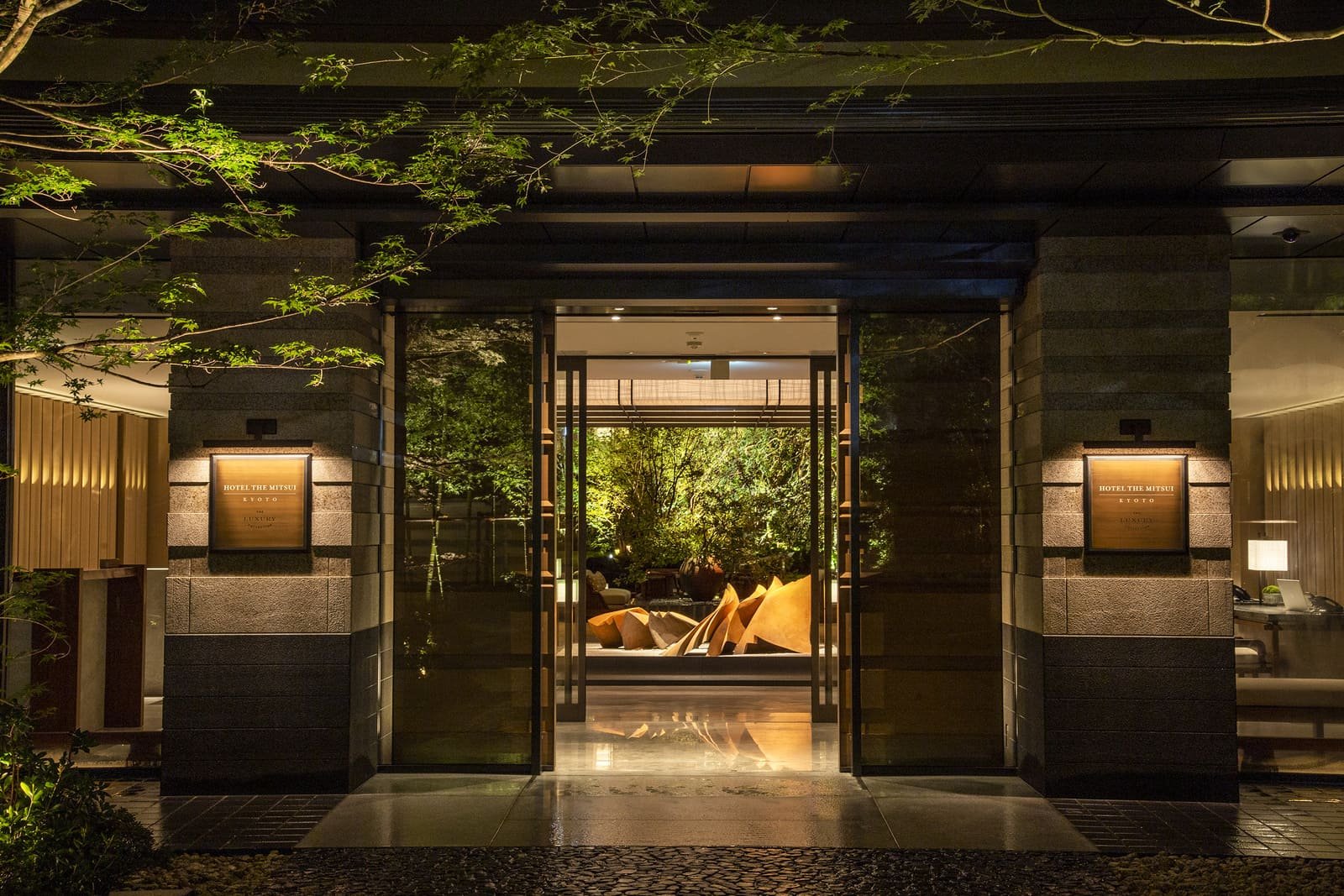
The Mitsui Hotel Entrance | Kyoto
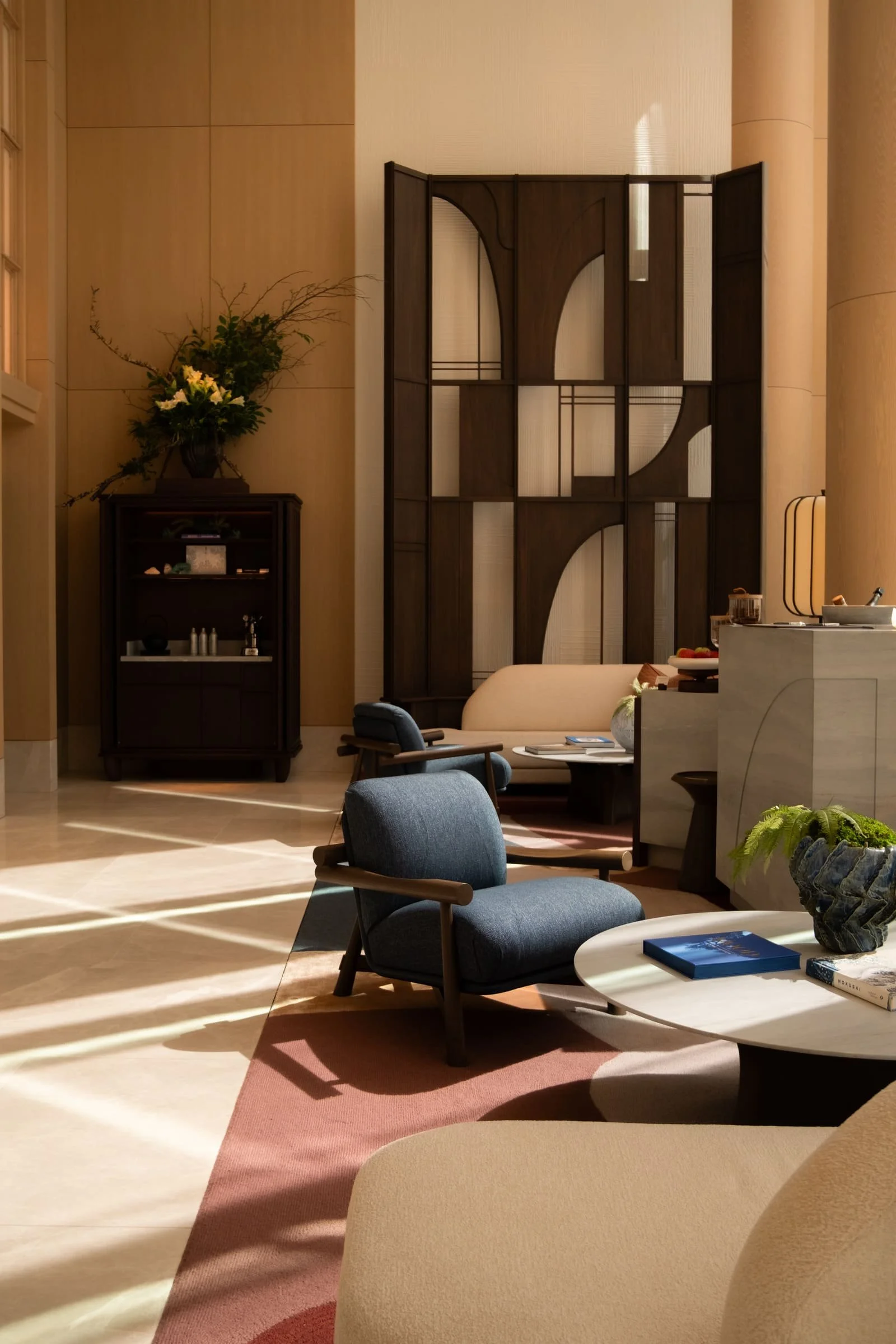
Four Seasons Lobby | Marunouchi
“Heritage or culture is not for you to interpret; it’s for you to immerse and reimagine.”
andre fu
WHAT ARE WE ESCAPING FROM?
Escape is the first of the three ideas structuring A Designer’s Vision, although Fu does not define it simply as leaving the city for somewhere remote. There are, he says, different kinds of escape.
One is geographical. Leave London, arrive in Tuscany, and the entire register of life changes. Landscape, architecture, food and pace conspire to create another world.
But the other can happen without leaving the city at all. He points to Claridge’s in Mayfair, where descending into the subterranean spa he designed can produce its own kind of rupture from the outside world. A person can move from one atmosphere into another within minutes. What connects the two is not distance. It is emotion.
For Fu, escape is ultimately a place capable of provoking a feeling strong enough to interrupt everyday life. That is one reason hospitality continues to fascinate him. A hotel, he says, is a rare “360-degree experience”. You encounter its scent, proportions, surfaces and sound. You eat there. You sleep there. You move through it at different hours and in different states of mind. Unlike an object, a hotel cannot be understood from one angle. You have to enter it.
BETWEEN THE FAMILIAR AND THE UNFAMILIAR
If escape is one part of Fu’s universe, cultural dialogue may be its most personal. Born in Hong Kong and educated in Britain, Fu has spent much of his life being described through an East-meets-West lens. It is a label he appears increasingly uninterested in. The binaries have become too crude.
“Rome is different from Florence. Florence is different from Venice. Venice is different from London,” he says. Even within a single city, Mayfair and King’s Cross offer different rhythms, behaviours and identities.
Fu no longer feels the need to “switch on” one culture and switch off another. Instead, he talks about dancing between the familiar and the unfamiliar. The distinction matters because cultural reference can become dangerously literal in design. A motif, material or historical reference is inserted and declared authentic. Fu is interested in something subtler.
“Heritage or culture is not for you to interpret,” he says, before reconsidering the word. “It’s for you to immerse and reimagine.”
Kyoto might become a feeling of mystery rather than a recognisable Japanese symbol. At Claridge’s, history might emerge as atmosphere and nostalgia rather than pastiche. Sometimes, he says, the answer is to amplify a familiar silhouette. Sometimes it is to create its antithesis. What matters is knowing enough to understand the difference.
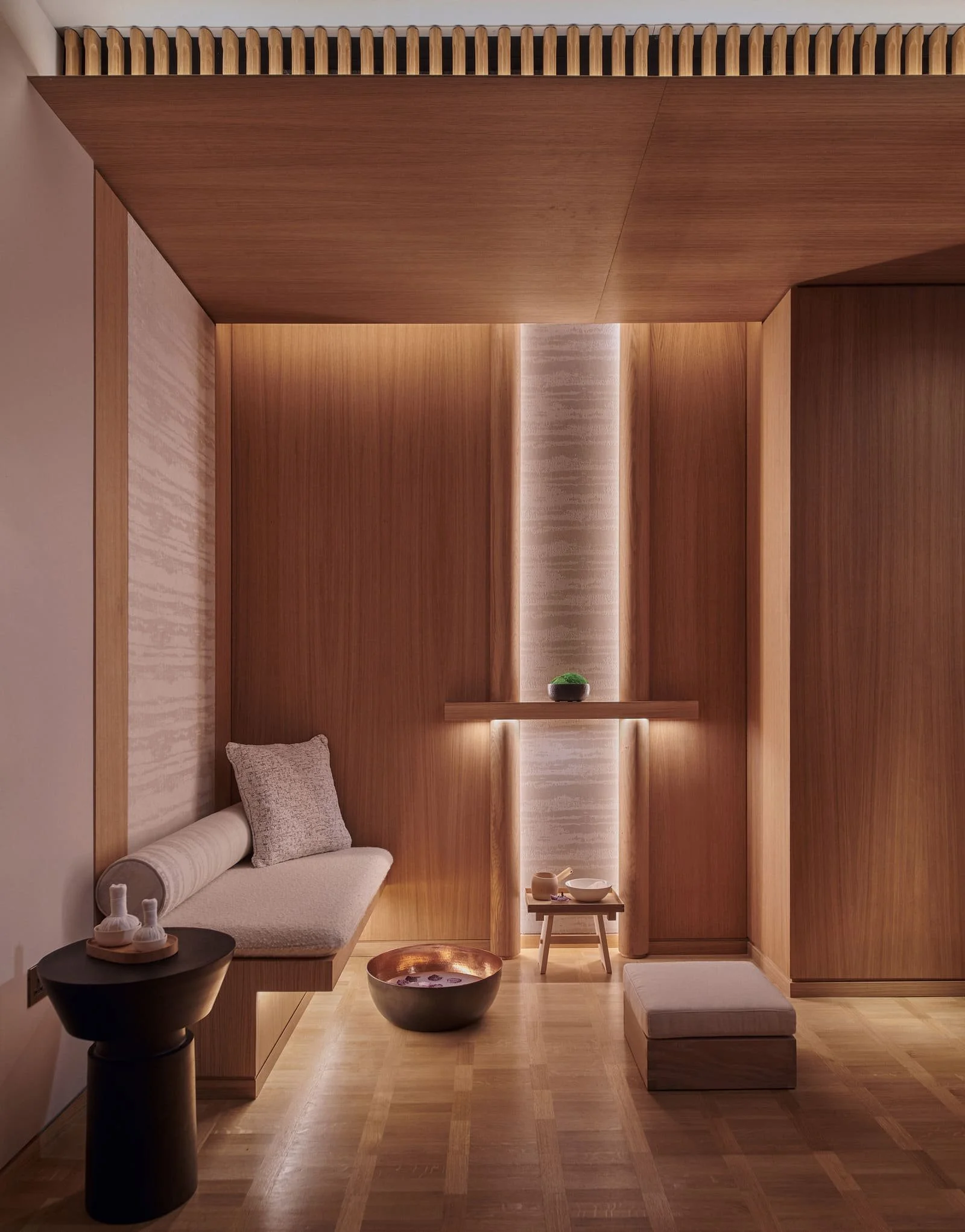
Claridge's Spa Treatment Room | London
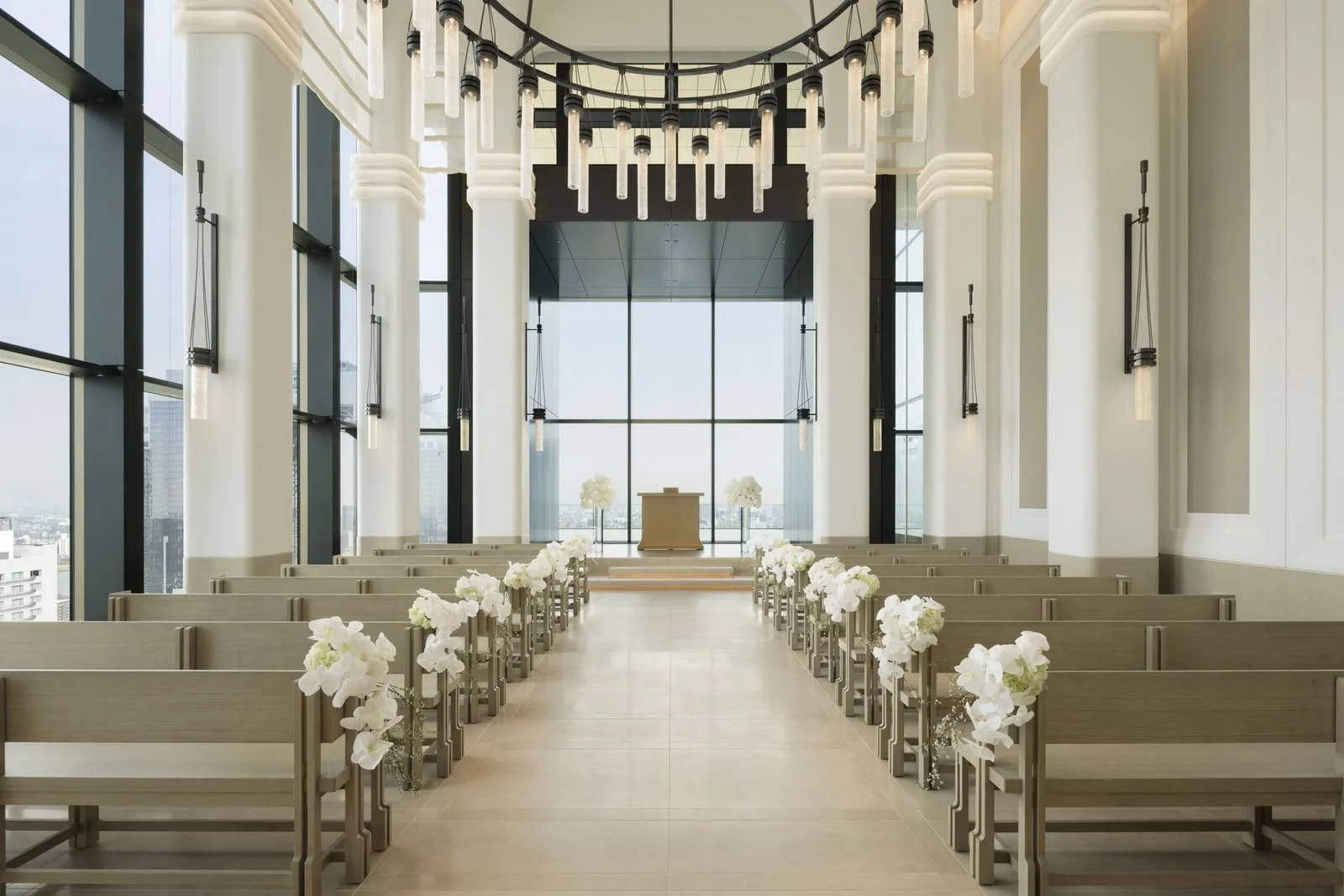
Waldorf Astoria Chapel | Osaka
WITHOUT ROOTS, THERE IS NOWHERE TO DANCE
Heritage, the book’s third theme, is not synonymous with preservation for Fu.
It is knowledge. “If you understand the past, then you have the capacity to innovate,” he says. Without that understanding, “you’re just dancing without roots.” It is perhaps one of the clearest expressions of his design philosophy.
Innovation, in Fu’s world, does not require amnesia. Quite the opposite. The deeper the understanding of what came before, the greater the freedom to move away from it intelligently.
That might mean understanding the history of a hospitality brand. It might mean discovering how a family used a particular piece of land generations earlier. The point is not to reproduce history, but to allow knowledge of it to make the contemporary response feel more grounded. More authentic, in other words, because the design belongs to somewhere.
YOU CANNOT GOOGLE A SENSE OF PLACE
It is here that Fu becomes most emphatic. At a time when an image of almost anywhere in the world can appear on a screen within seconds, he remains convinced that culture cannot be absorbed remotely.
“Go to Bali, go to Bangkok, go to Shanghai. See it for yourself.”
He recalls learning that even something as apparently minor as the dimensions of a table in a French brasserie belong to a much wider cultural ecosystem. The table is not simply small because somebody specified it that way. Its proportions influence the food, the proximity of people, the conversation, the atmosphere and ultimately the entire experience.
You cannot understand that from an image alone. “You have to experience it,” Fu says.
Travel, for him, means going further than visiting the correct buildings. It means seeing how colleagues meet after work, noticing where people sit, how they talk, how close they stand to one another, how a café spills into the street. Technology may give designers unprecedented access to visual information. AI may speed up communication and production. But Fu remains convinced that the emotional act of designing a place remains fundamentally human. The technology can assist once the vision exists. It cannot have the experience for you.
25 YEARS IN, CURIOSITY IS STILL THE POINT
So what changes after 25 years? Fu’s answer is less romantic than one might expect. Experience, he believes, should simply make you better.
“I look at it from almost the opposite direction,” he says. The more he has learned and the more he has encountered, the greater the obligation to push further. Not necessarily towards something visually louder or more radical, but towards something that functions better, feels better or resolves an experience more precisely.
He remains, he says, curious. And increasingly, he is thinking about what to pass on. The next chapter may involve more sharing with younger designers, particularly as technology accelerates and the profession becomes more competitive. What he wants to protect is not a particular aesthetic, but a mindset: the curiosity, perseverance and willingness to pursue the craft of creating experiences.
Which brings us back to the maze.
At six, Fu was drawing routes through imagined spaces. At 25 years into his practice, he is still thinking about movement, choice, anticipation and what someone encounters along the way. Perhaps that is why A Designer’s Vision feels less compelling as a record of where André Fu has been than as a map of how he gets there. For the child drawing mazes, after all, the destination was never really the interesting part.
It was the journey through.
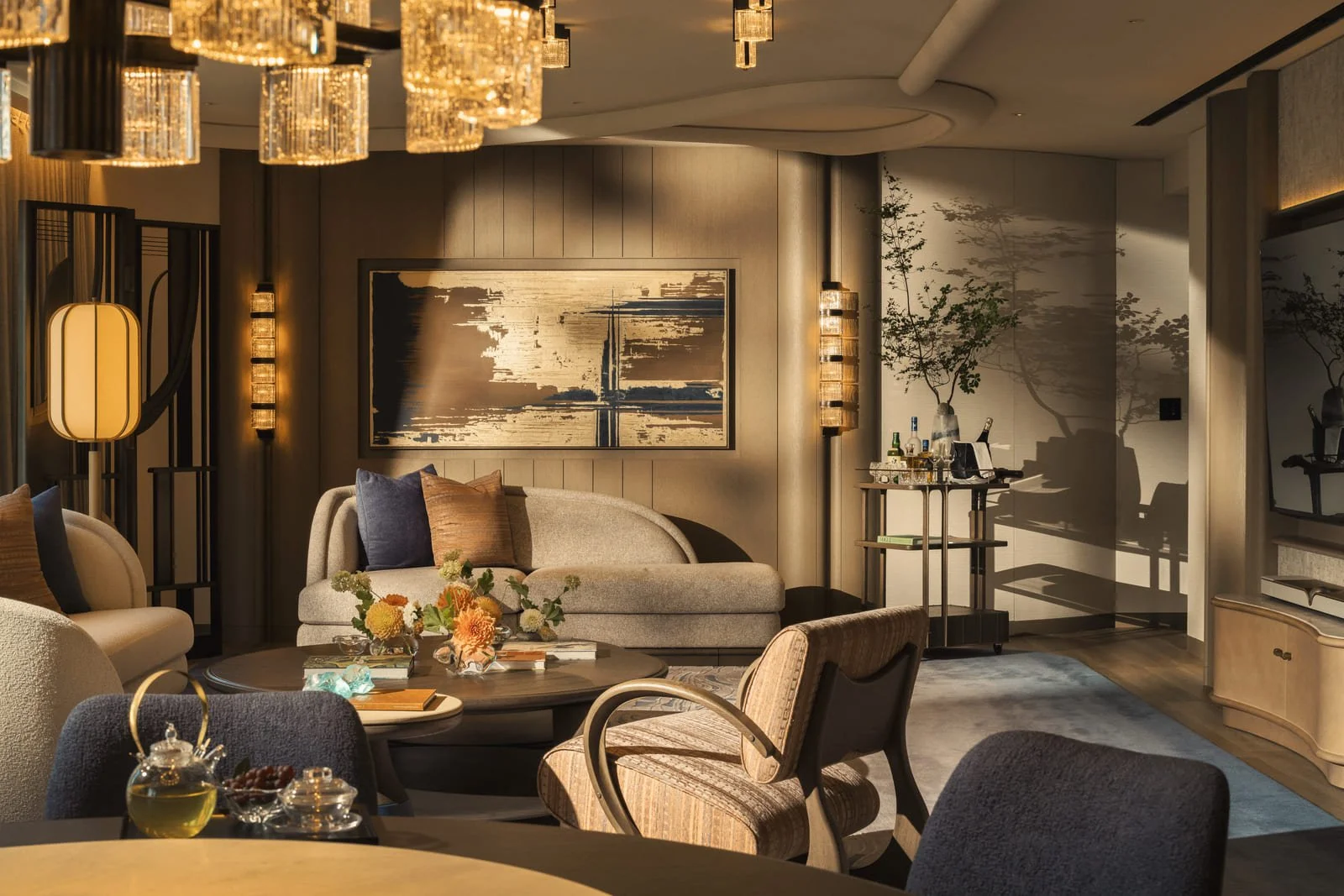
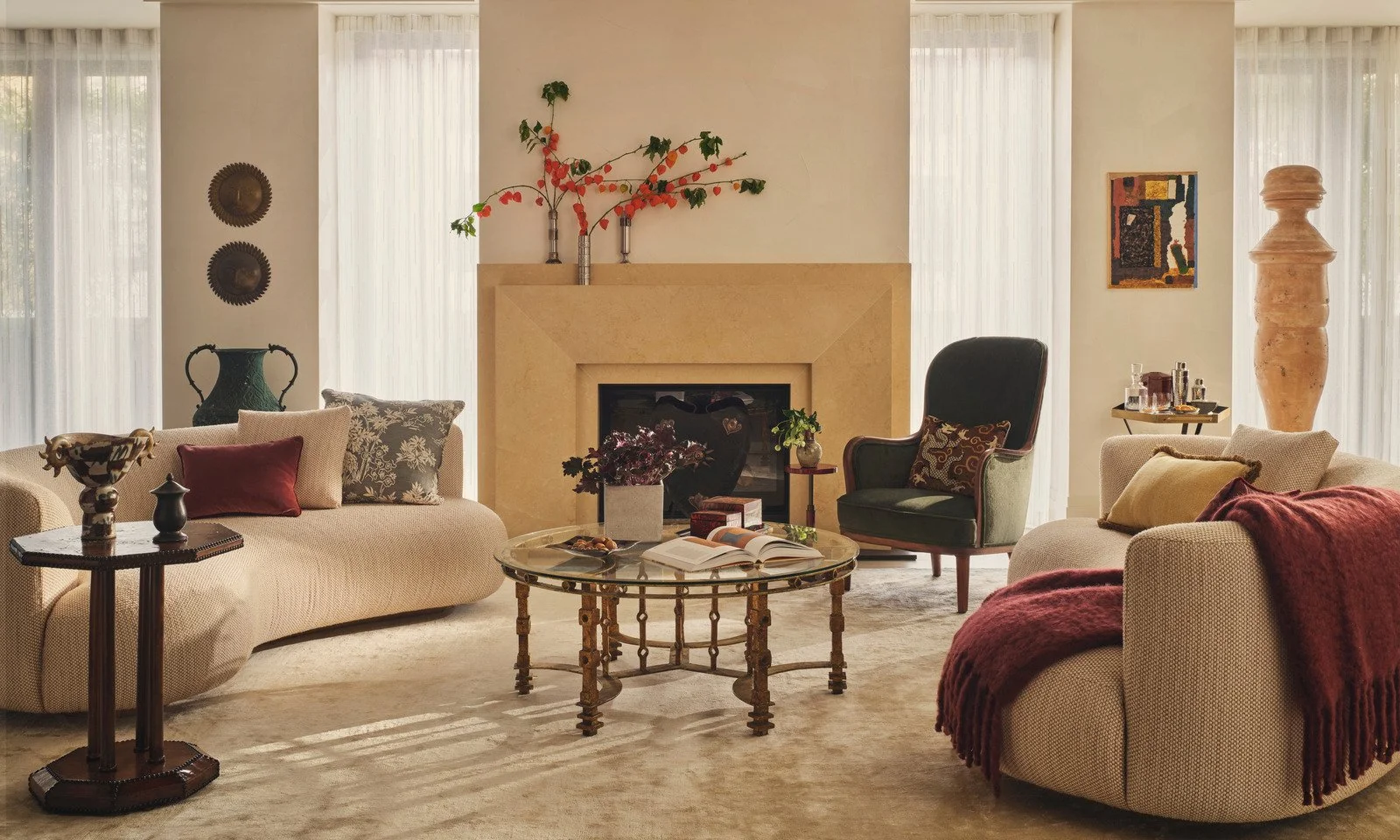
Four Seasons Living Room | Marunouchi
Image credits:
claridge’s spa: Courtesy of Claridges Hotel
Marunouchi: Common Studio
hotel the mitsui: Nacasa & Partners
Waldorf Astoria: Common Studio
four seasons at marunouchi: Four Seasons Hotel Tokyo at Marunouchi & Ken Seet