people • DESIGNERS
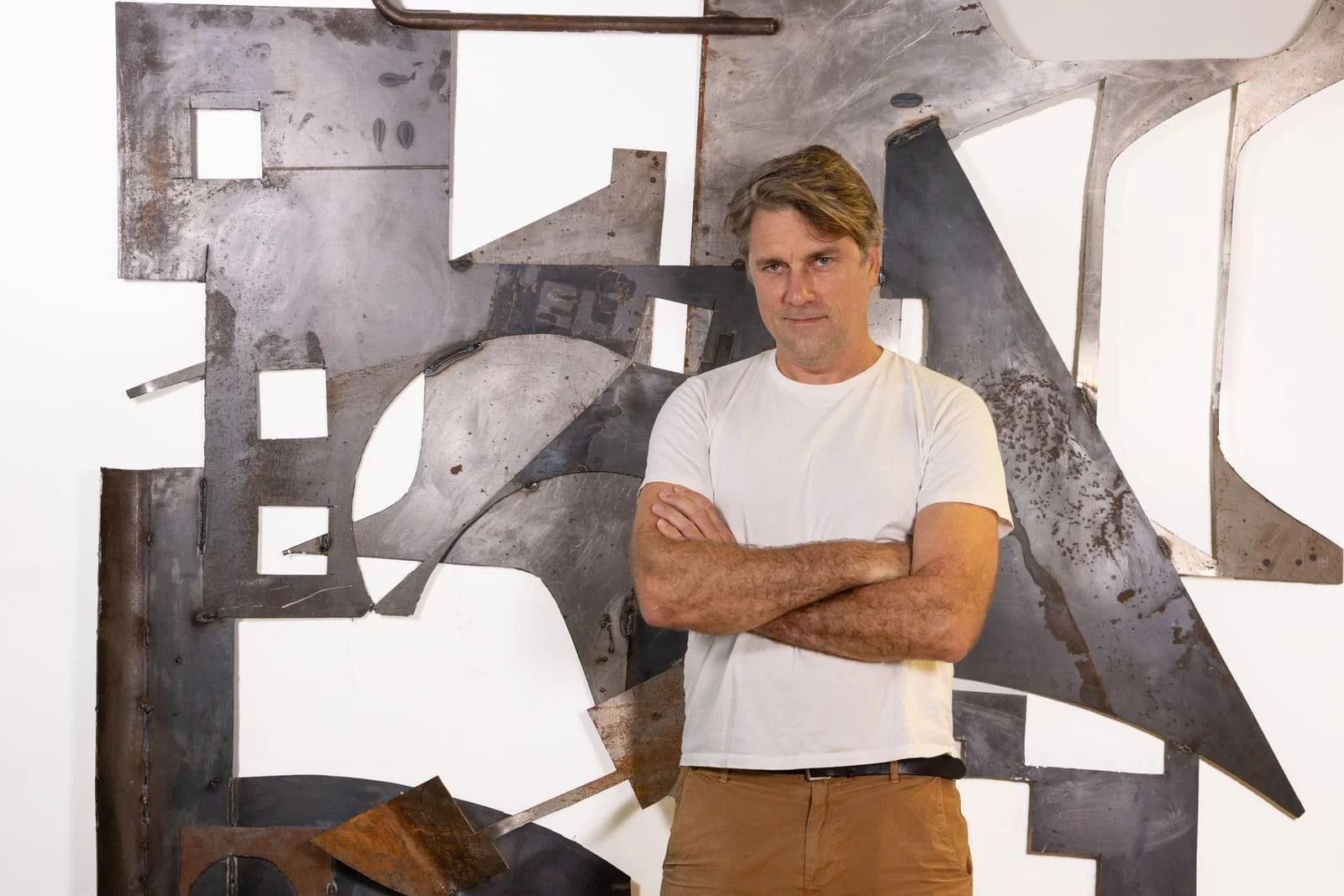
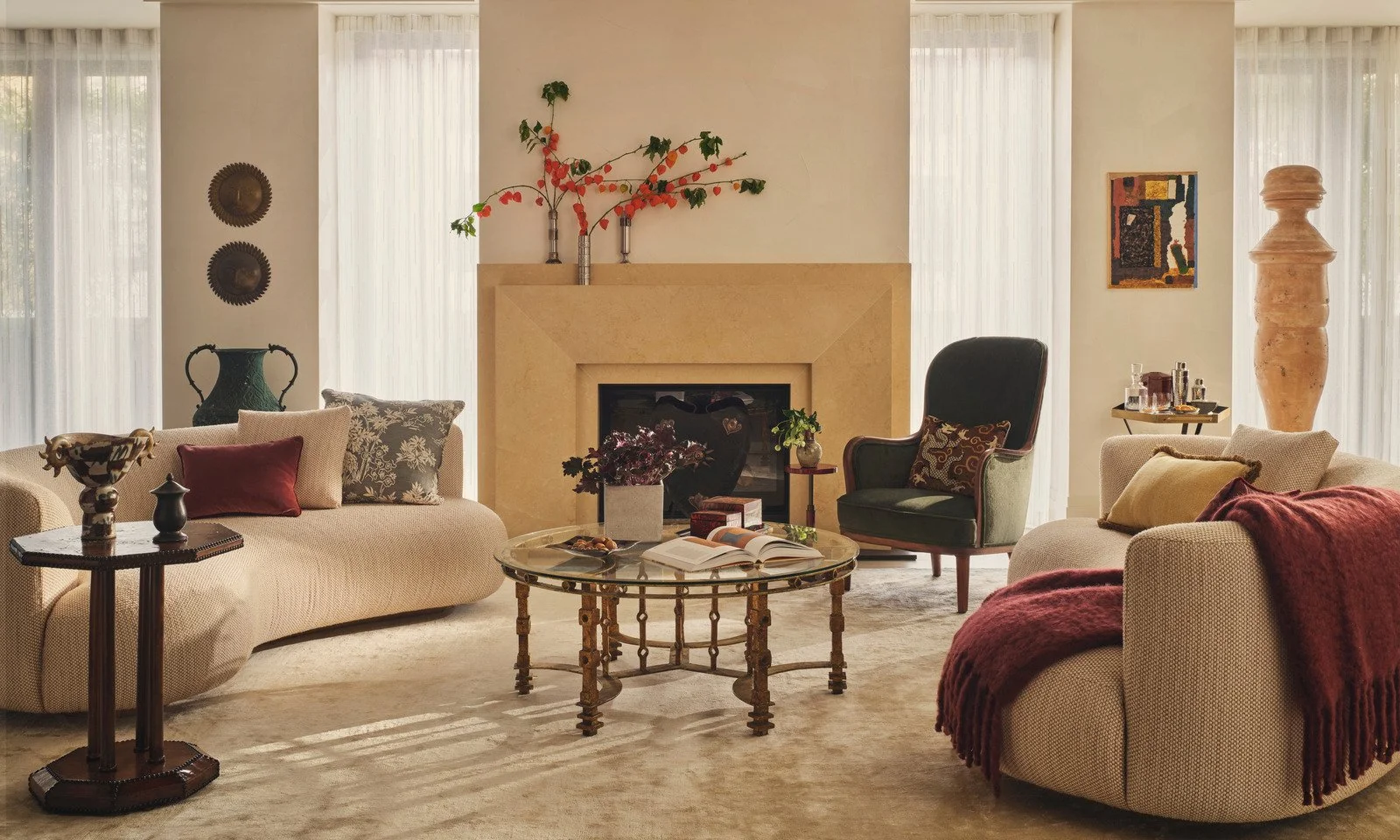
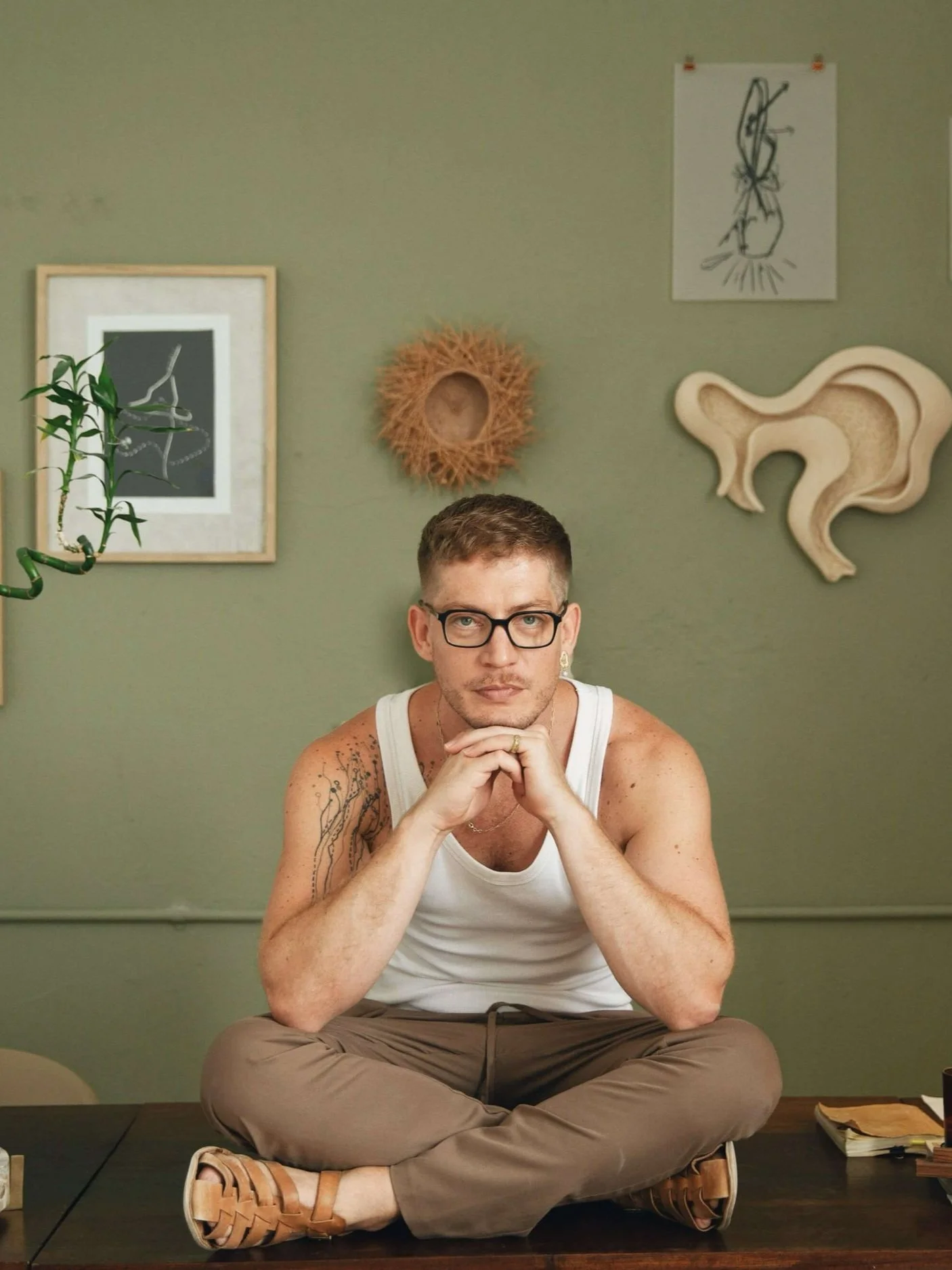
Jan Ernst is a versatile multidisciplinary artist from Cape Town, South Africa, whose distinctive biomorphic artwork merges sculpture, functional design, and architectural storytelling. His work is characterised by a harmonious blend of organic forms and abstract sensibilities, a fusion that owes much to his background in architecture. Through his creations, Ernst invites viewers to explore the commonalities between the artistry of nature and the artistry of our existence.
Words: designeers
MAY 2025
WEBSITE: jan-ernst.com
INSTAGRAM: @jan_ernst_
DESIGNEERS
Your work feels like a dialogue between architecture and nature. Where does a new form usually begin with a memory, a sketch, or something more instinctual?
Jan Ernst
The dialogue between architecture and nature is at the core of my work, it’s impossible to separate the two, as one continually informs the other. My first love was nature; it has always been present, shaping my earliest memories. Growing up in an agricultural family only deepened that connection on a subconscious level. Architecture came later, something I had to fall in love with during my studies in Barcelona.
The beginnings of a new form are never fixed; they emerge in different ways. Sometimes, an idea comes to me in a dream. Other times, it reveals itself while walking in nature, collecting found objects, or sketching intuitively. If I had to define it, I’d say my approach is deeply instinctual, always rooted in storytelling. A form may start as something quite literal, but through a process of sculpting and distortion, it transforms, becoming more abstract, what I now understand as a kind of biomorphic artwork that bridges nature and imagination.
DESIGNEERS
Biomorphism is at the core of your language. What draws you to organic forms, and how do you interpret them in clay?
Jan Ernst
Biomorphism feels like a language that comes naturally to me, almost as if it were always there, waiting to be articulated. Nature operates without straight lines, everything grows, erodes, and evolves in its organic rhythm. This is what draws me in: the fluidity, the imperfections, the way forms emerge from a process rather than a predefined structure.
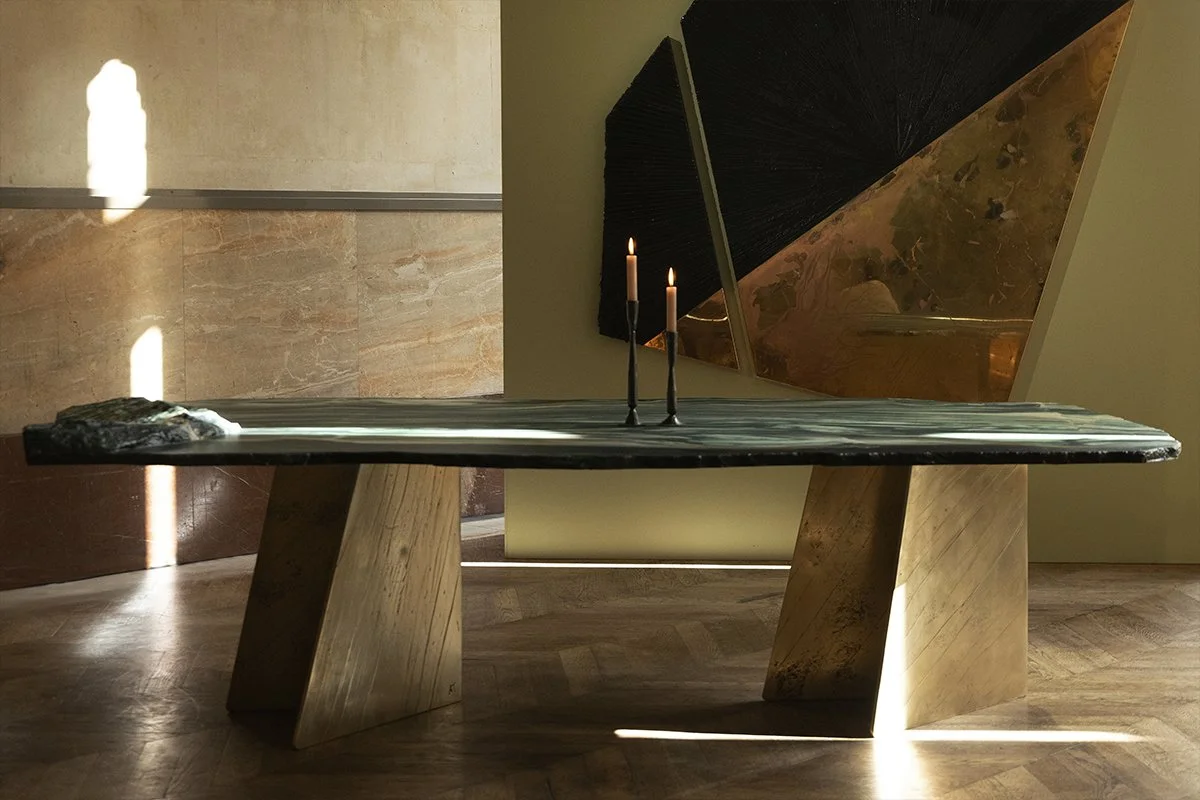
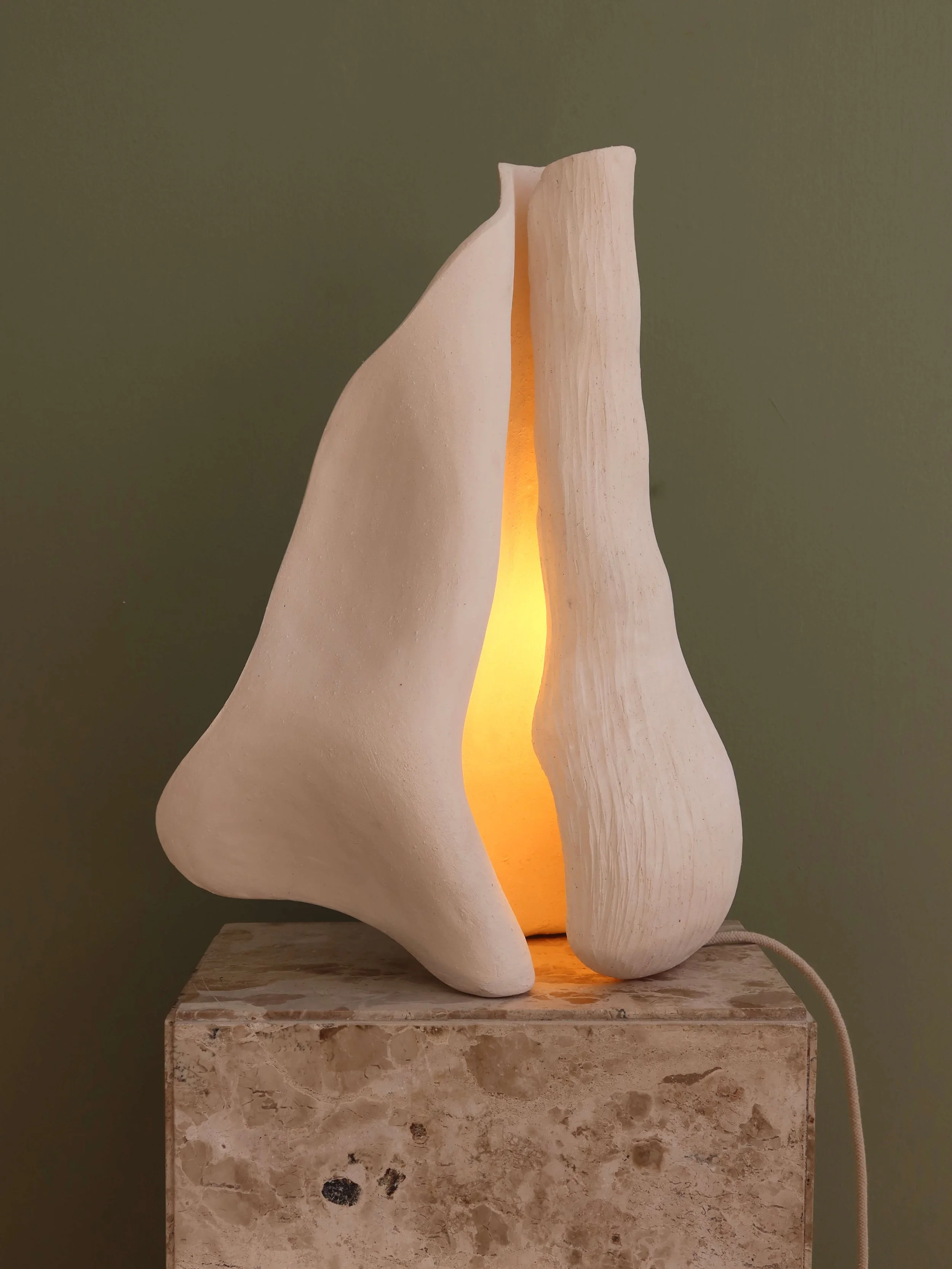
Clay, in particular, is a material that lends itself to this organic expression. It’s ideal for exploring organic shapes in art, forms that echo nature’s rhythms, textures, and quiet transformations. It has memory, it remembers touch, pressure, and movement. When I work with it, I’m not imposing a shape but rather guiding it, allowing it to find its form. I’m fascinated by how clay captures both the softness of something fleeting, like water shaping a rock, and the permanence of something ancient, like fossilised coral or weathered stone. My interpretation of organic forms is not about replicating nature but distilling its essence, its rhythms, textures, and quiet transformations.
DESIGNEERS
You’ve described your pieces as “functional sculptures.” Do you see utility and art as opposites or simply as part of the same spectrum?
Jan Ernst
Collectable design objects are created with intention at their core; they hold a story. Before a function is assigned, there must be a soul, something invisible at first but deeply felt over time. As makers, we engage with the material, shaping it into something that eventually finds utility. But true meaning comes later, through use, through the layers of nostalgia and personal history that accumulate: a grandmother’s favourite chair, a childhood quilt.
I can’t imagine separating form and function; they should inform and elevate one another. A well-conceived idea can always be refined to become functional, but a purely utilitarian object, made without love, will never hold a spirit. It’s this balance between purpose and poetry that makes an object truly resonate.
DESIGNEERS
The ocean and geology are recurring themes in your work. What specific elements or textures from the natural world are you most drawn to?
Jan Ernst
The way we perceive light in nature has always fascinated me; it sets the mood, creates atmosphere, and frames our experience of a place. Light in a forest is dappled and indirect, casting soft, shifting shadows that make textures feel almost fluid. On the dunes, by contrast, light is abundant, creating stark definitions and deep contrasts that sharpen our perception of form.
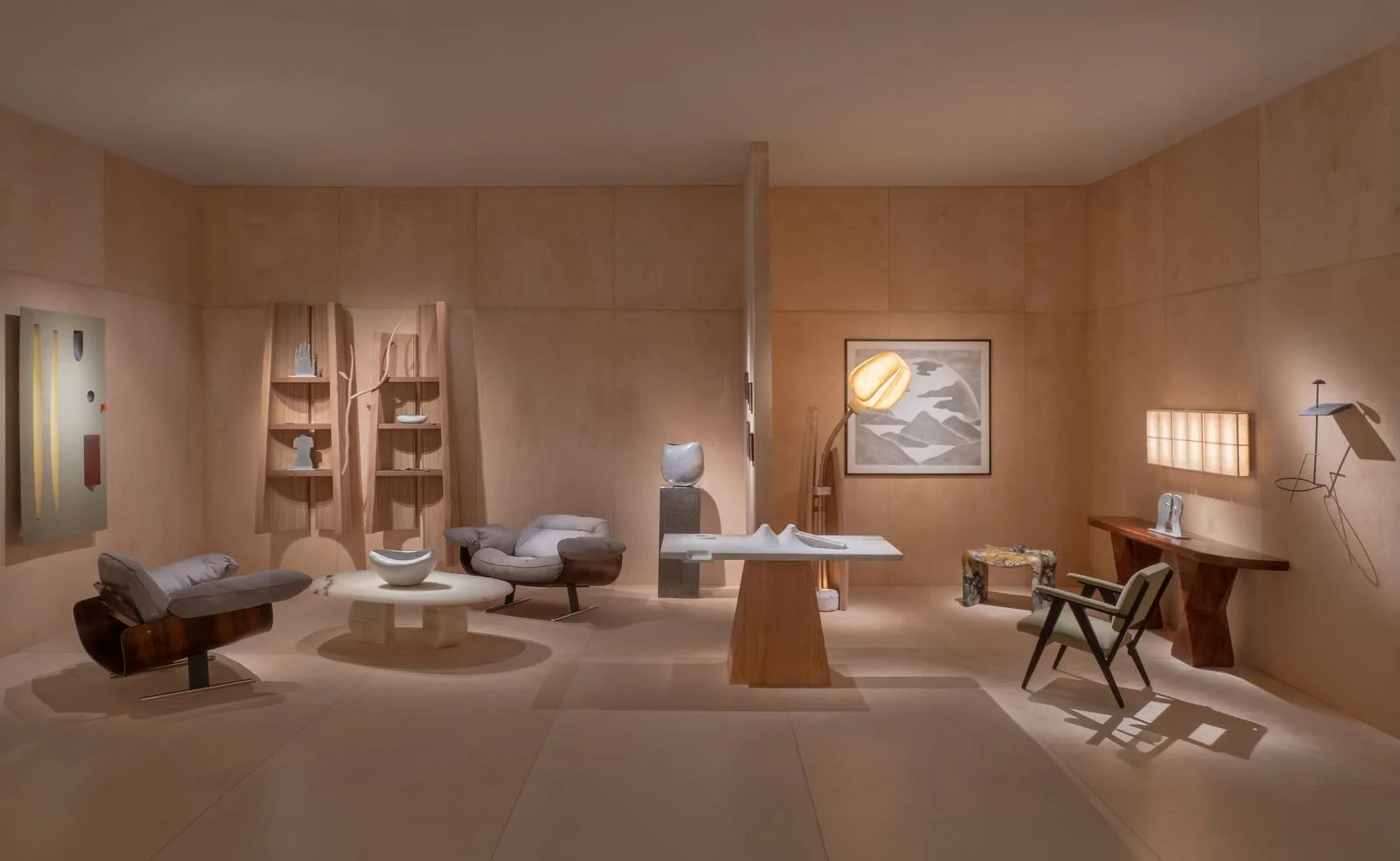
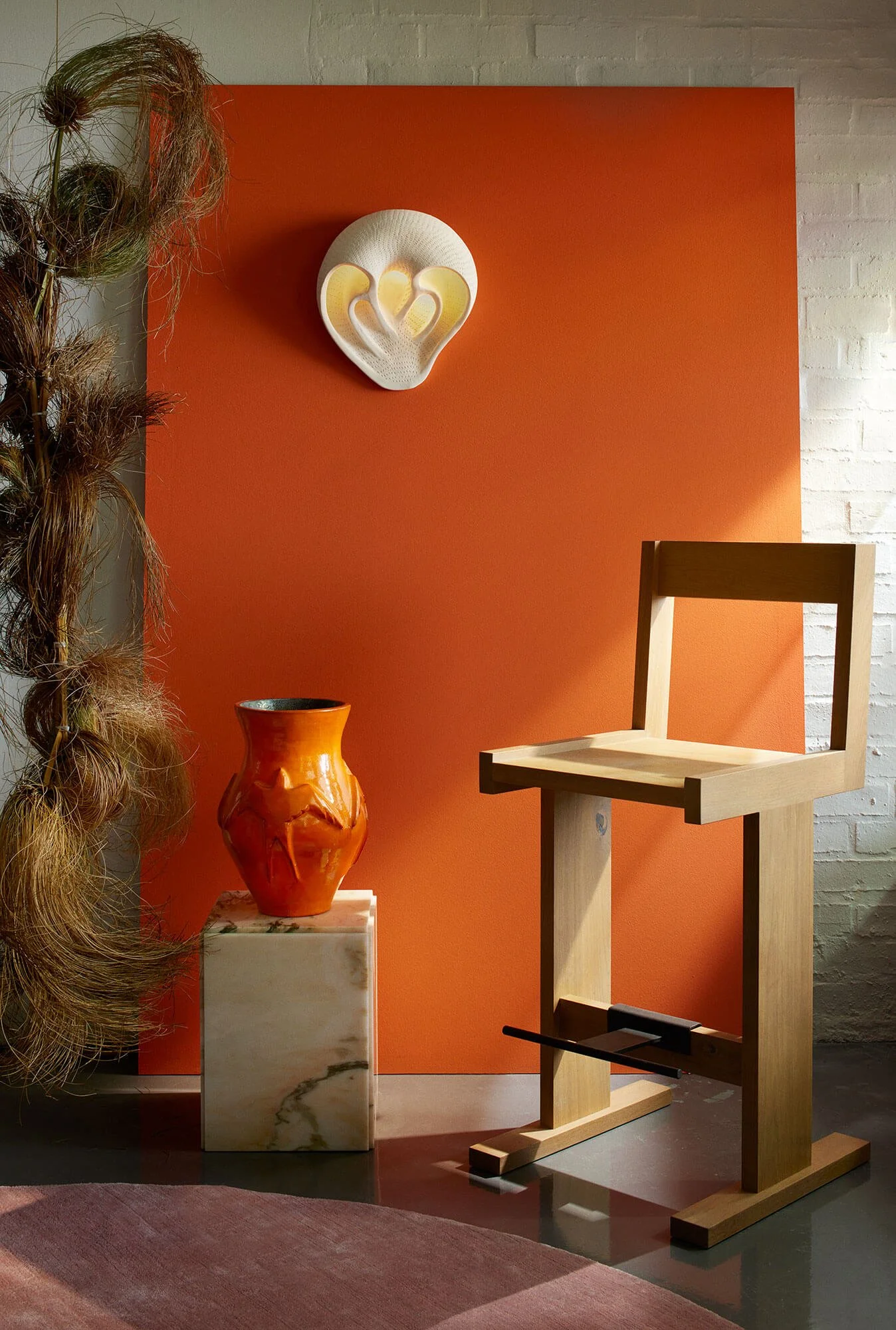
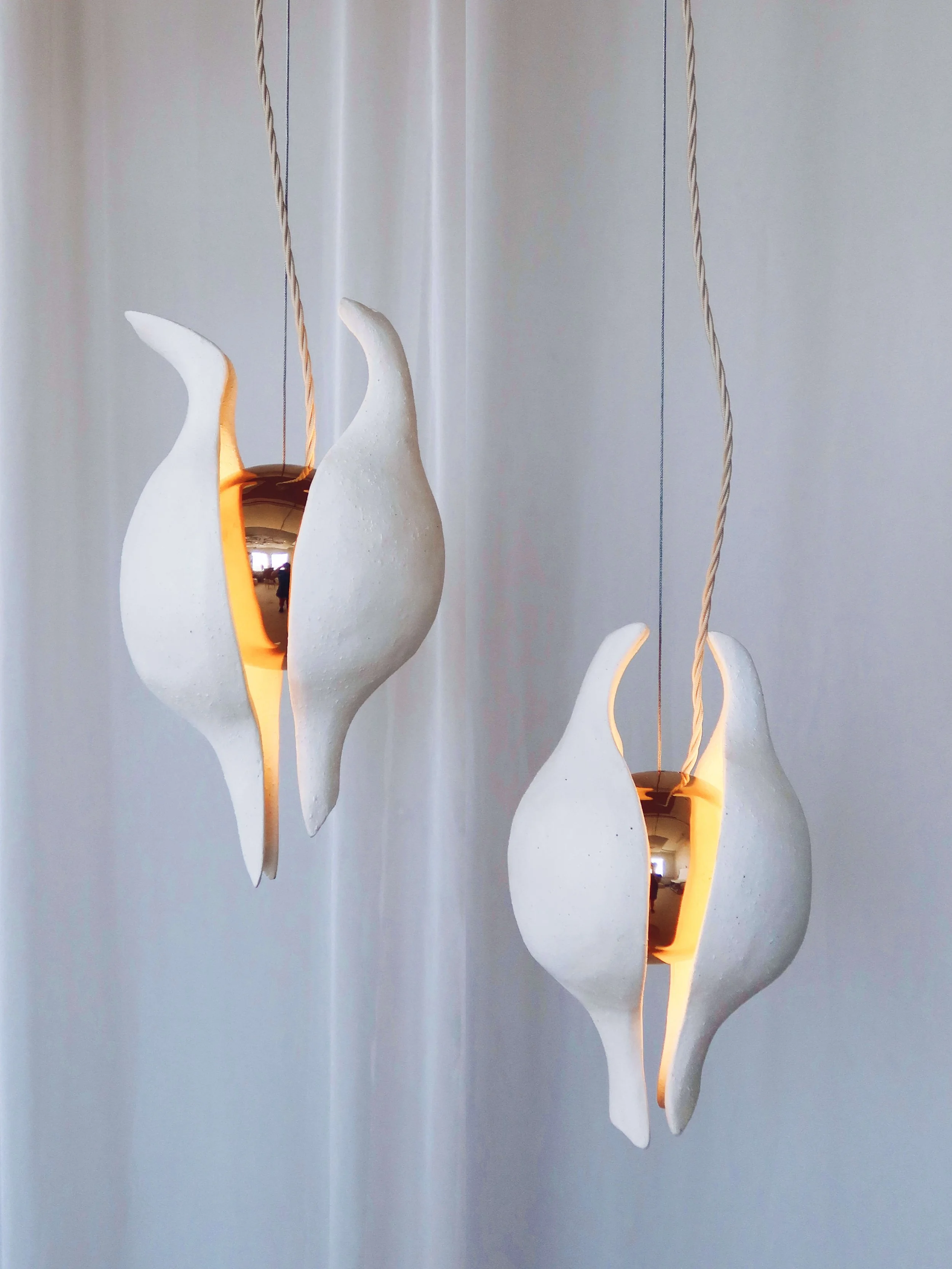
Light also plays a crucial role in shaping form. It defines lines, accentuates curves, or allows edges to dissolve into shadow. In some works, especially wall-mounted lighting pieces, this results in what could be seen as organic wall art, where form and shadow become a unified experience. I’m drawn to light because I see it as an extension of my material palette, not just a byproduct of the object but an integral part of its presence.
DESIGNEERS
What’s the relationship between fragility and power in your pieces? Is there a tension you intentionally cultivate?
Jan Ernst
I see the relationship between fragility and power as a dialogue between the masculine and feminine, an interplay that exists everywhere in nature. It’s something I’m constantly exploring in my work, whether through form, space, or materiality. We all experience moments of sensitivity and moments of dominance, and I find beauty in how these states coexist.
Rather than relying solely on contrast to create intrigue, I seek harmony. I’m interested in how opposing qualities, delicacy and strength, tension and fluidity, can exist both in isolation and as part of a greater composition. It’s in this balance that a piece finds its true presence.
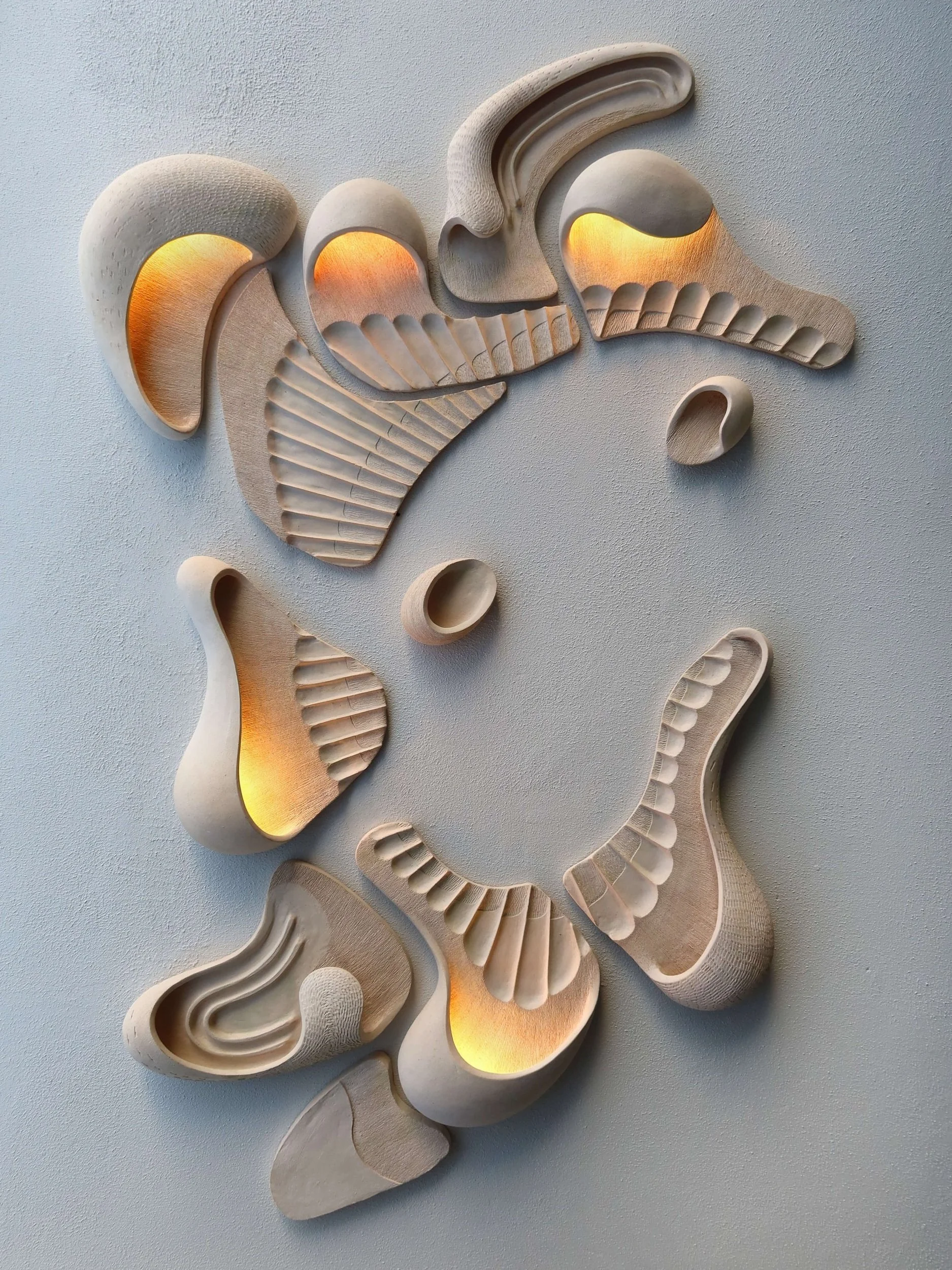
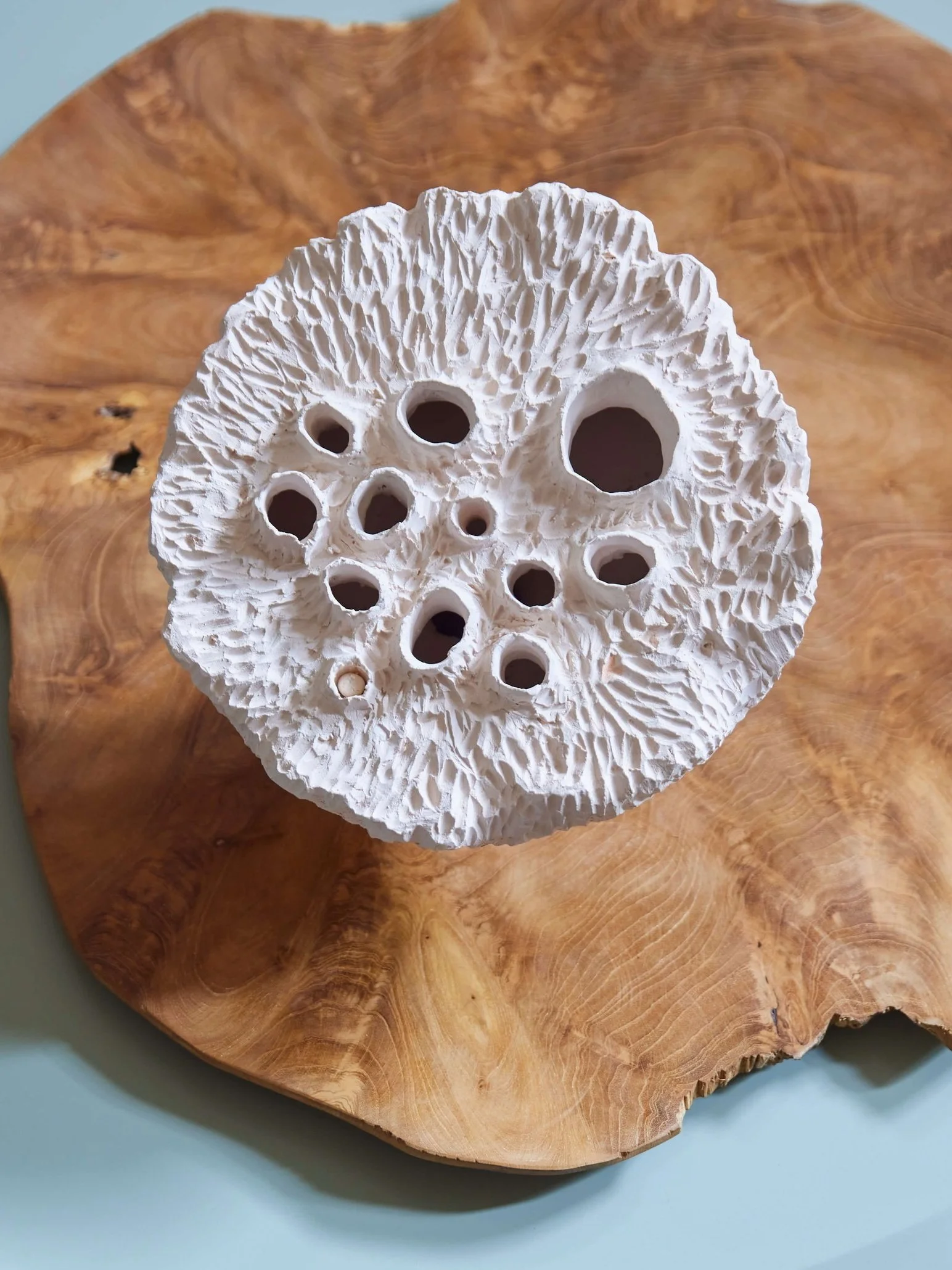
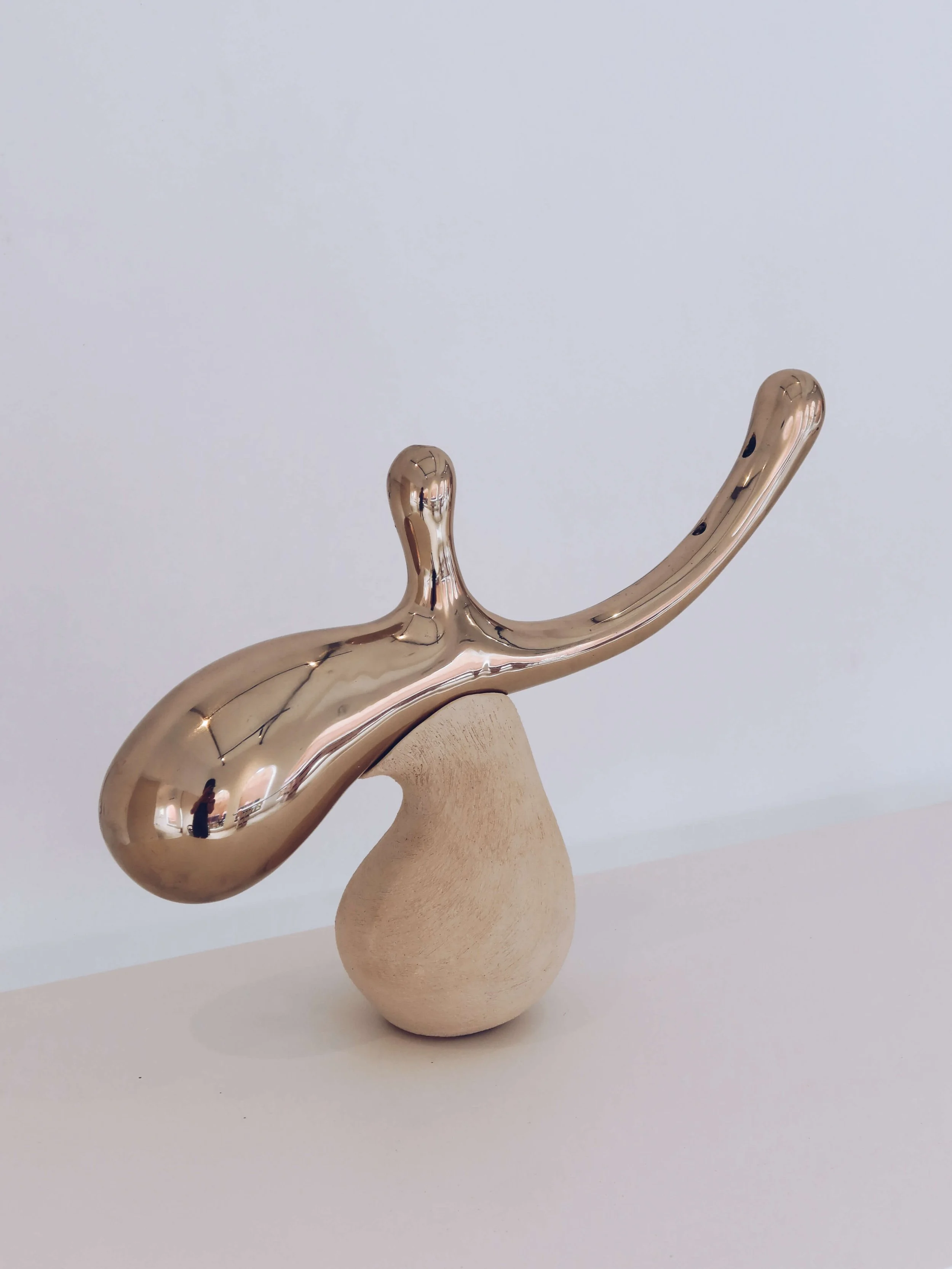
“I think we develop relationships with objects in the same way we do with people—through time, through touch, through the quiet rituals of everyday life.”
Jan Ernst
DESIGNEERS
Your pieces are unmistakably tactile. How important is the physical interaction between the viewer and the object in your work?
Jan Ernst
We understand space and objects through one or two senses at a time, three if we’re lucky. In an age where expression is becoming increasingly digital, I believe it’s the role of the artist to celebrate the tactile and physical nature of our work.
When I create a new piece, my own experience with it must translate to the viewer or user. Texture, for example, invites interaction; it’s alive both visually and through touch. Sometimes, engagement is more utilitarian, like the simple act of switching on a light. While beautiful photographs can capture a design, nothing compares to the emotion of experiencing it physically. That connection is irreplaceable.
DESIGNEERS
What object in your home carries the most personal significance, not necessarily the most beautiful, but the most meaningful?
Jan Ernst
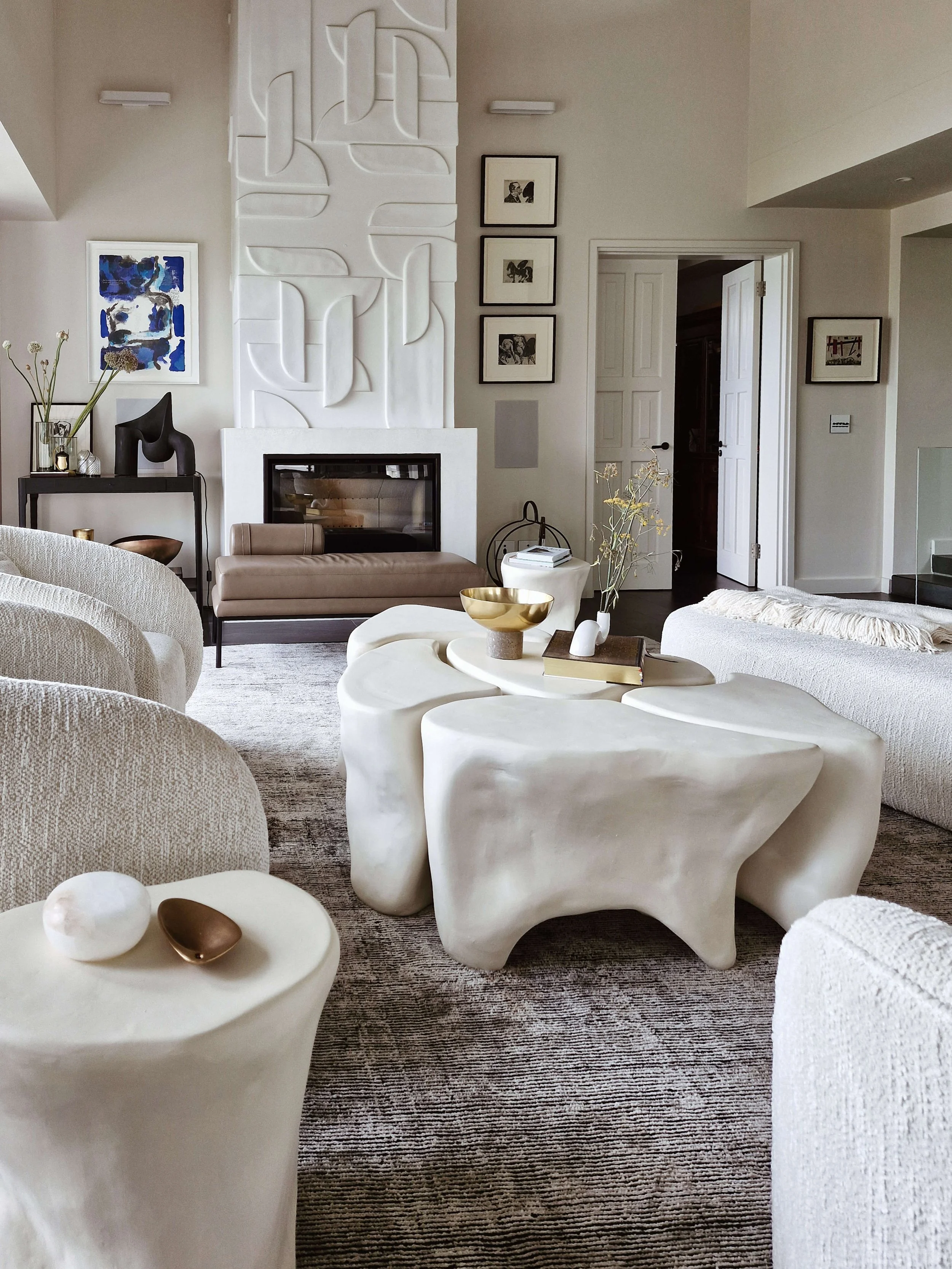
The objects that hold the most significance aren’t always the most beautiful or valuable, they carry meaning because of the stories they hold. For me, it’s a 1960s swivel armchair by Carl Eric. We found it at an antique store during a road trip, drawn to its character and history. But it didn’t quite fit in our car, so we had to rely on friends to bring it back to Cape Town for us. Since then, it has been a constant in our apartment, grounding the space with its quiet presence.
I think we develop relationships with objects in the same way we do with people, through time, through touch, through the quiet rituals of everyday life. This chair isn’t just a piece of furniture; it has witnessed conversations, moments of solitude, and creative contemplation. The things we cherish most are often the ones that have simply been with us, evolving alongside us.
DESIGNEERS
Finally, what’s capturing your imagination right now — a material, a place, or an idea you’re exploring next?
Jan Ernst
After completing my master’s degree in architecture in Spain, I always knew I wanted to return, this time with a deeper understanding and appreciation. Recently, I travelled back to Barcelona and visited one of my favourite Gaudí buildings, Casa Batlló.
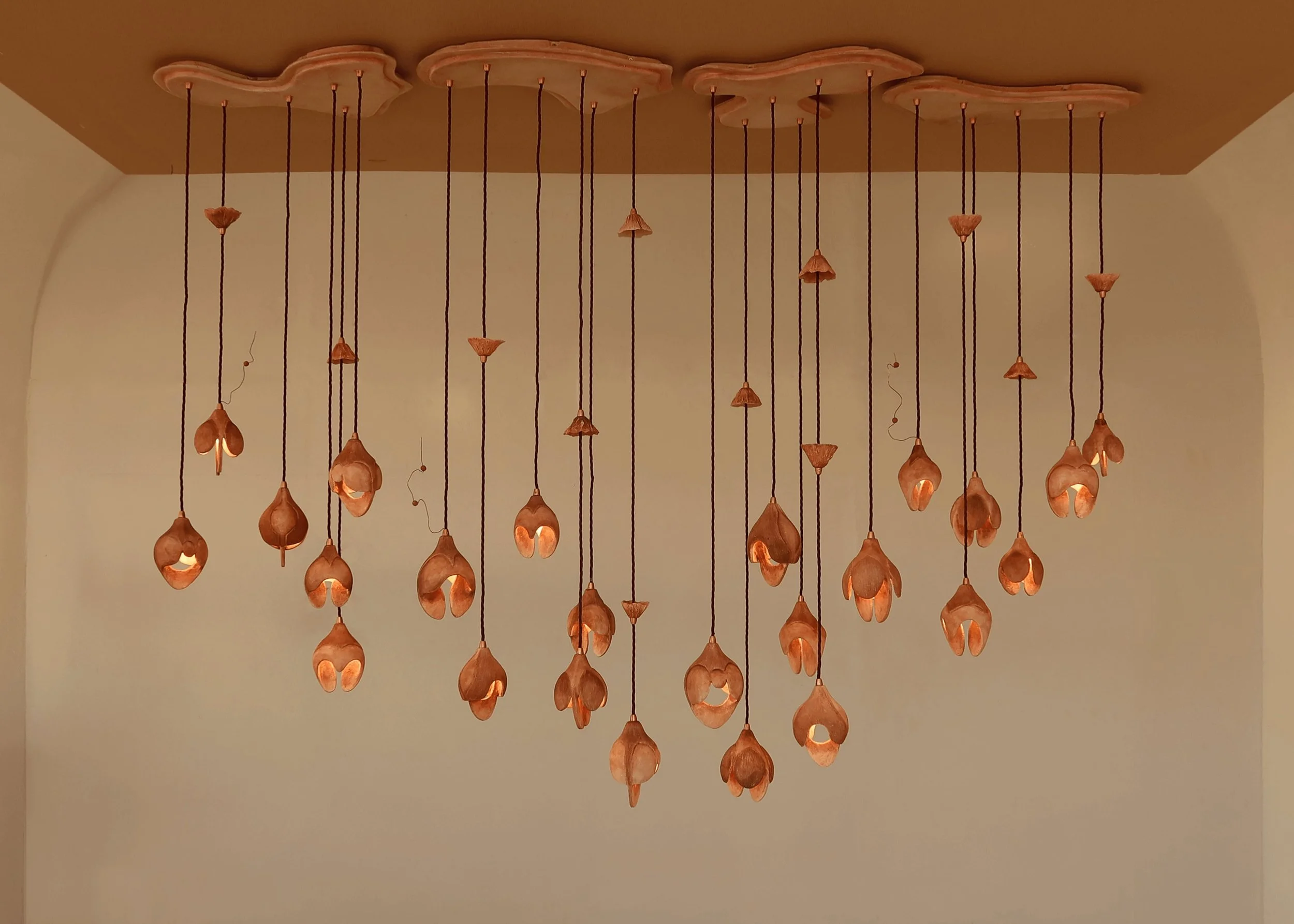
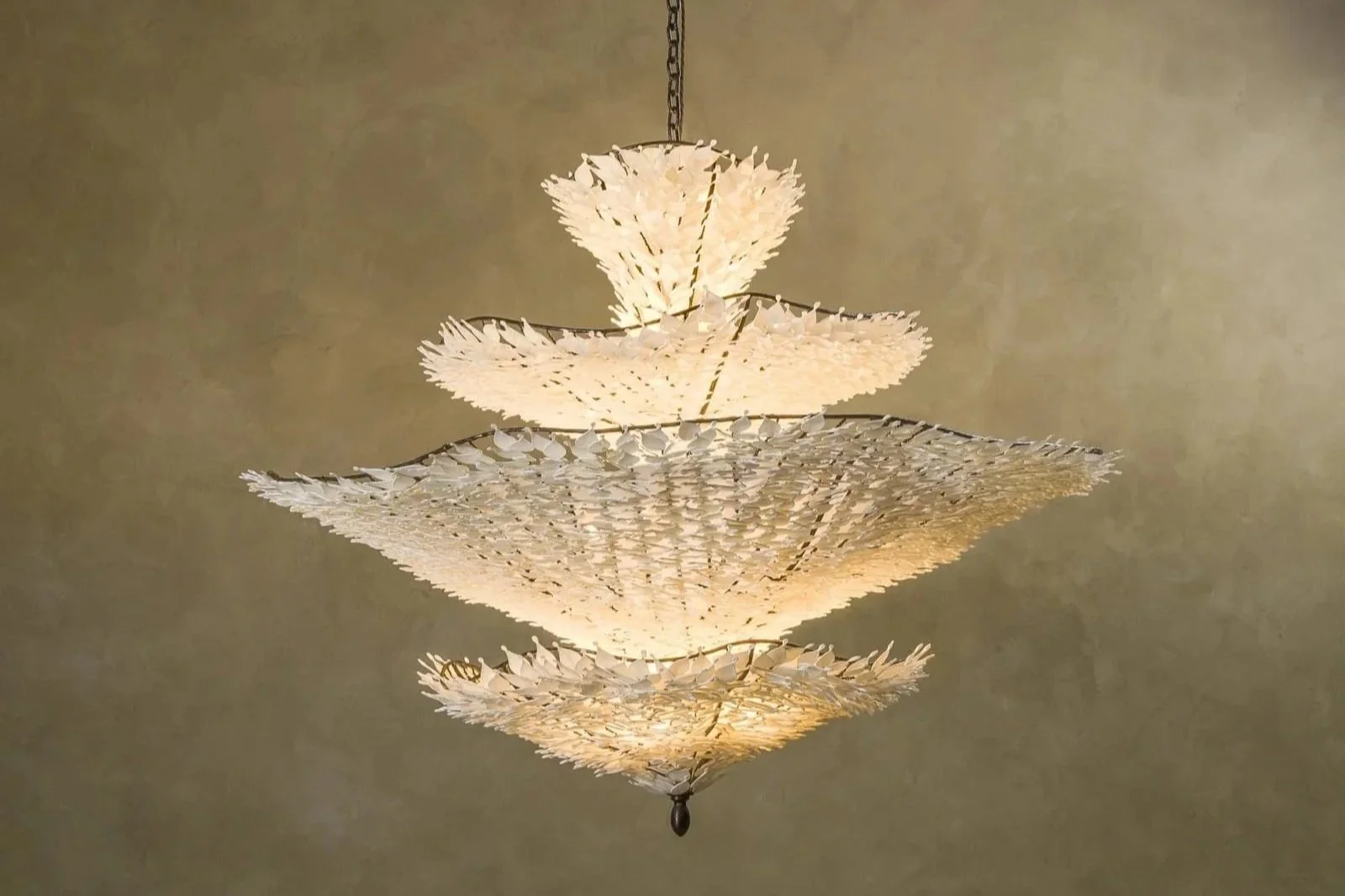
At the studio, we had been developing a chandelier for PAD Paris, and upon my return, experiencing Gaudí’s genius again sparked a flood of ideas about craftsmanship, materiality, and the transformative use of light. It felt only natural to bring these influences together, leading to the creation of a new iteration of the PAD chandelier, reimagined in ceramic and bronze.