people • designers
“I think it is time to move beyond beige.”
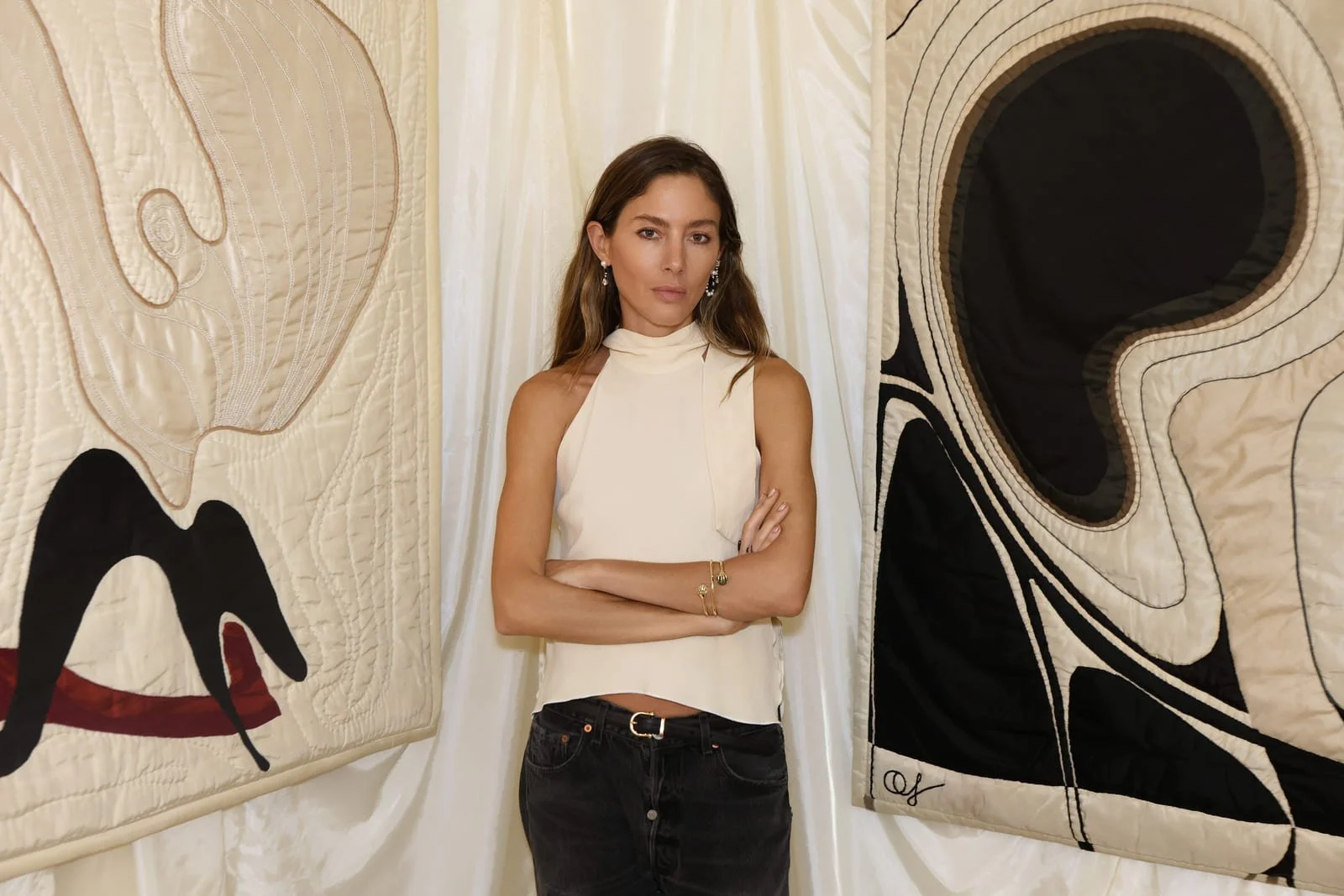
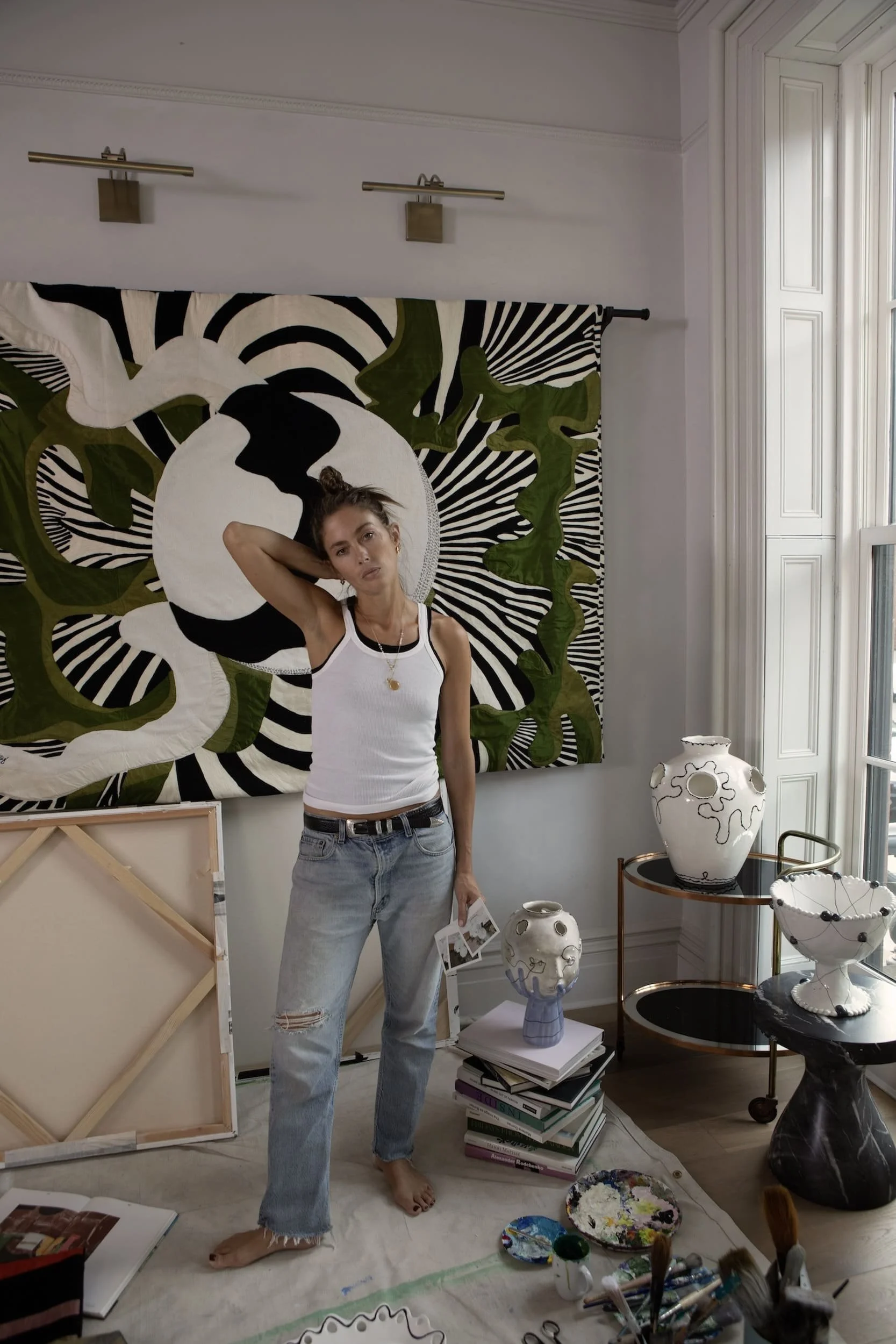
For multidisciplinary artist and filmmaker Quentin Jones, colour, collage and the unexpected have long shaped a distinctive visual language across image and film.
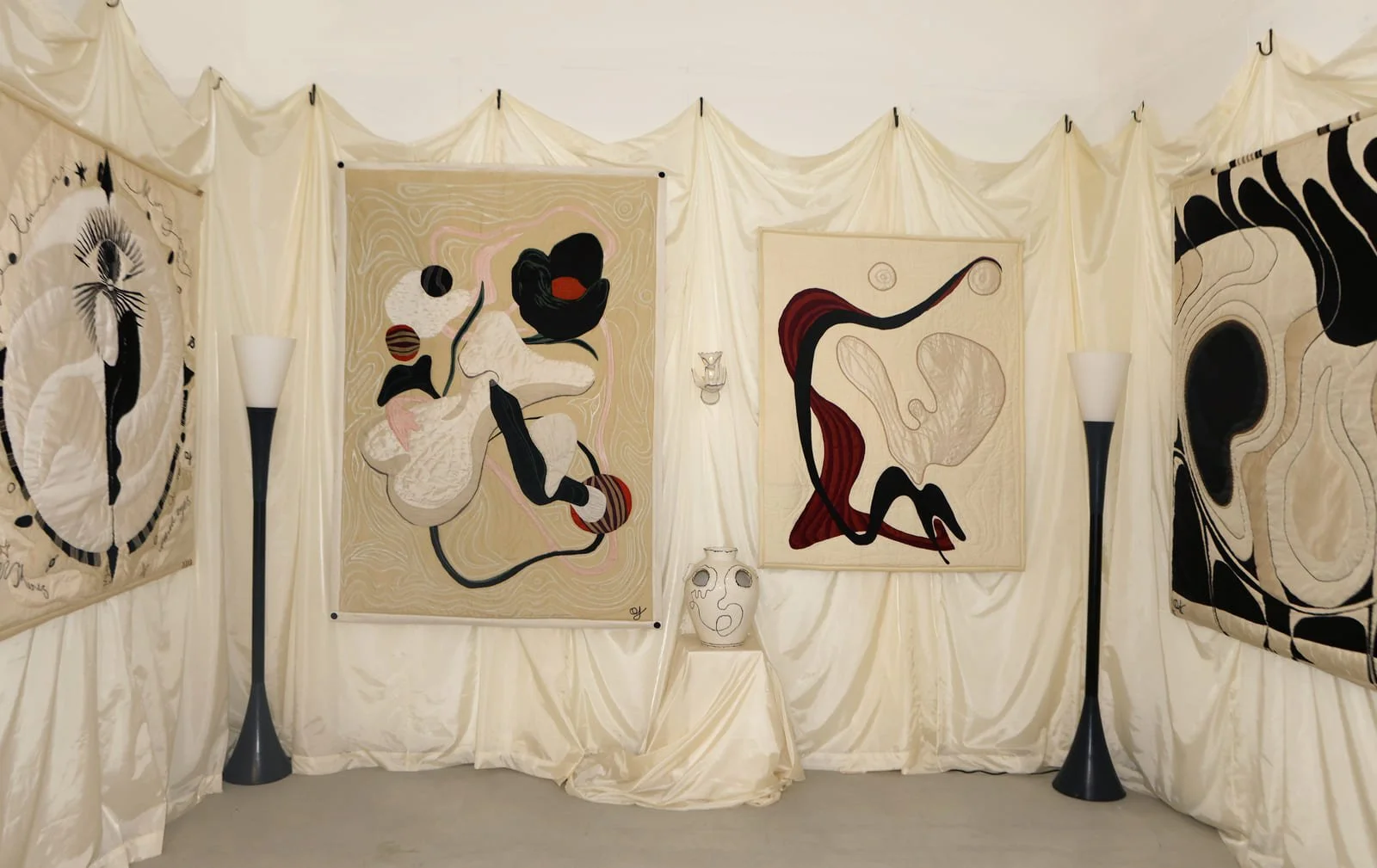
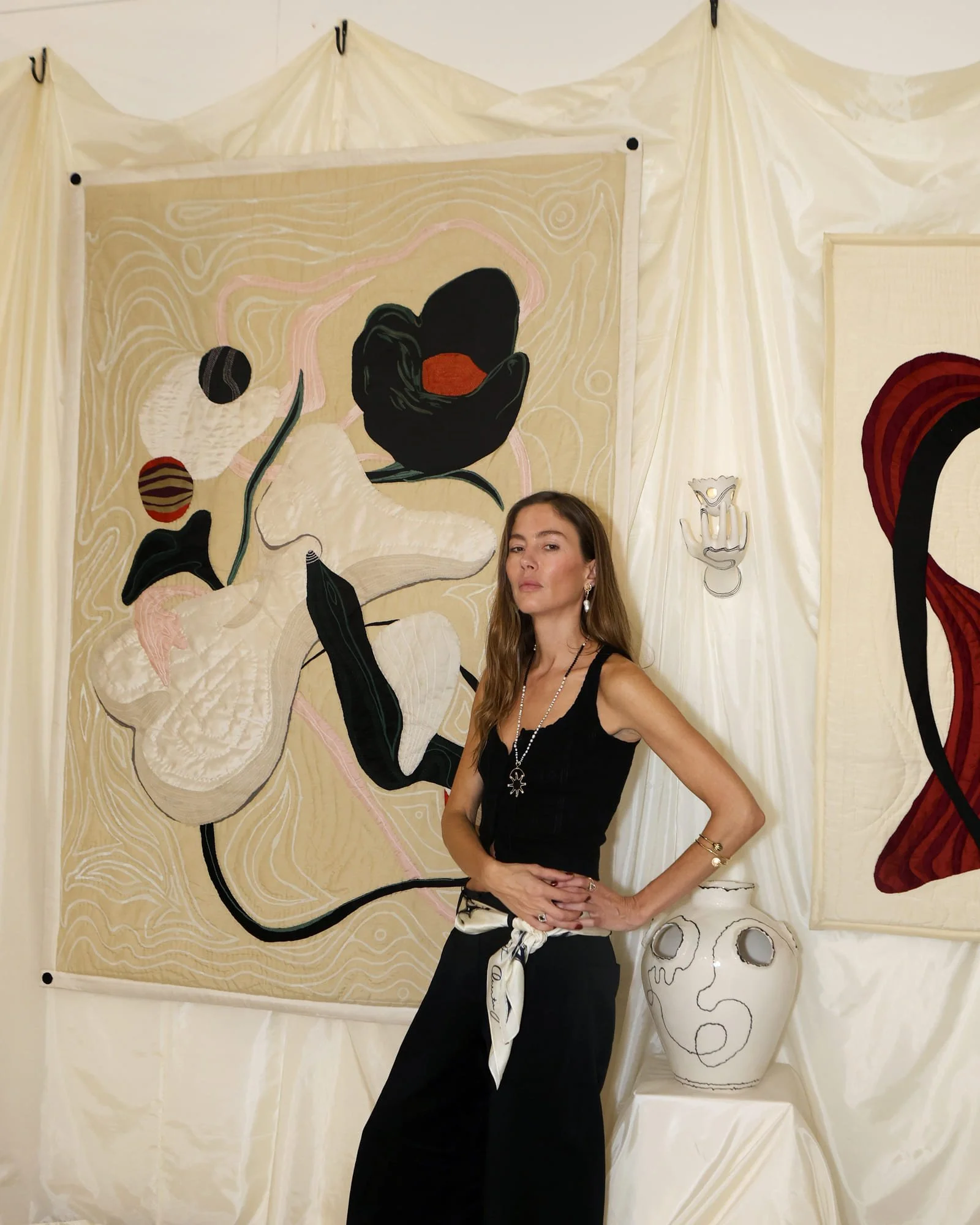
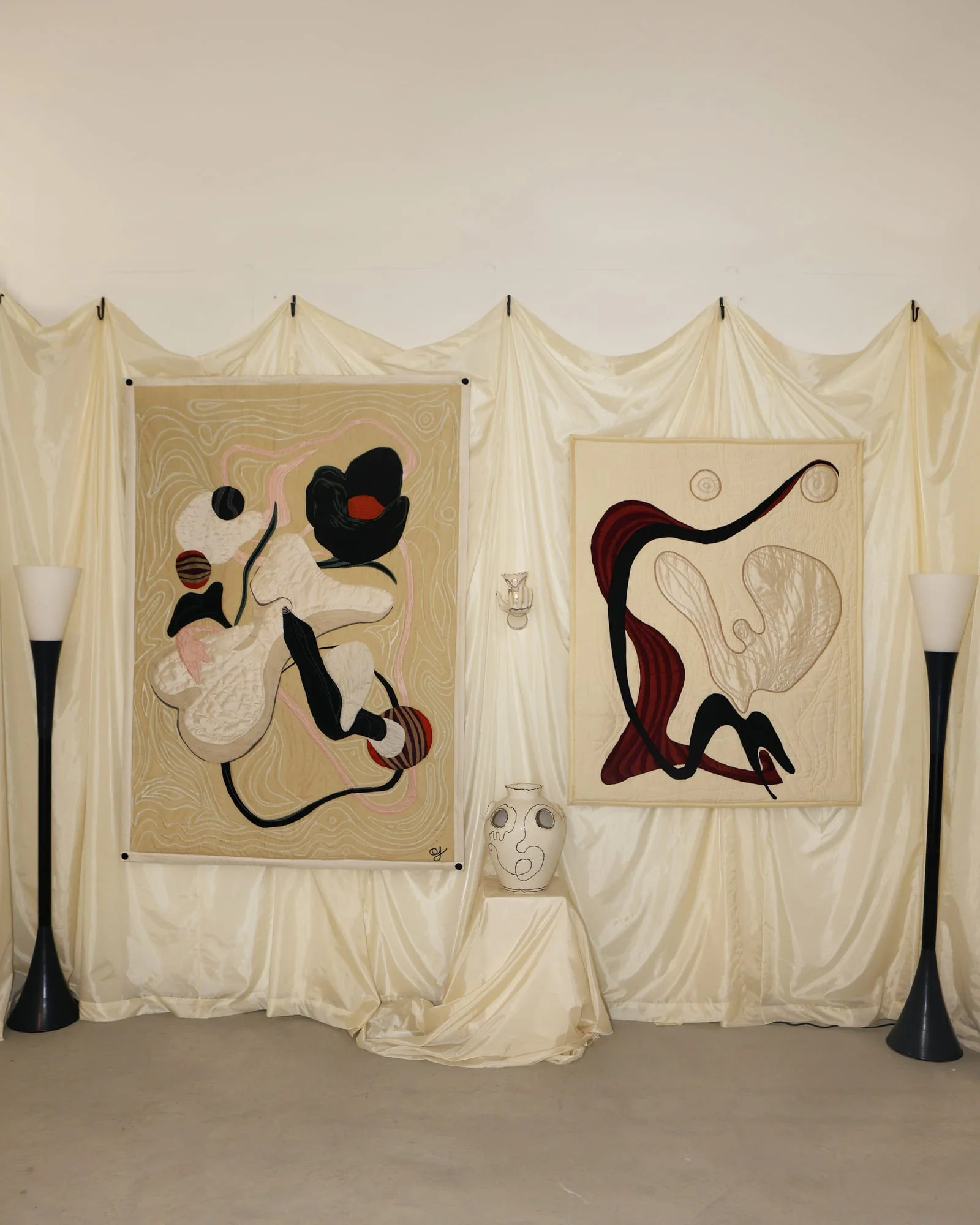
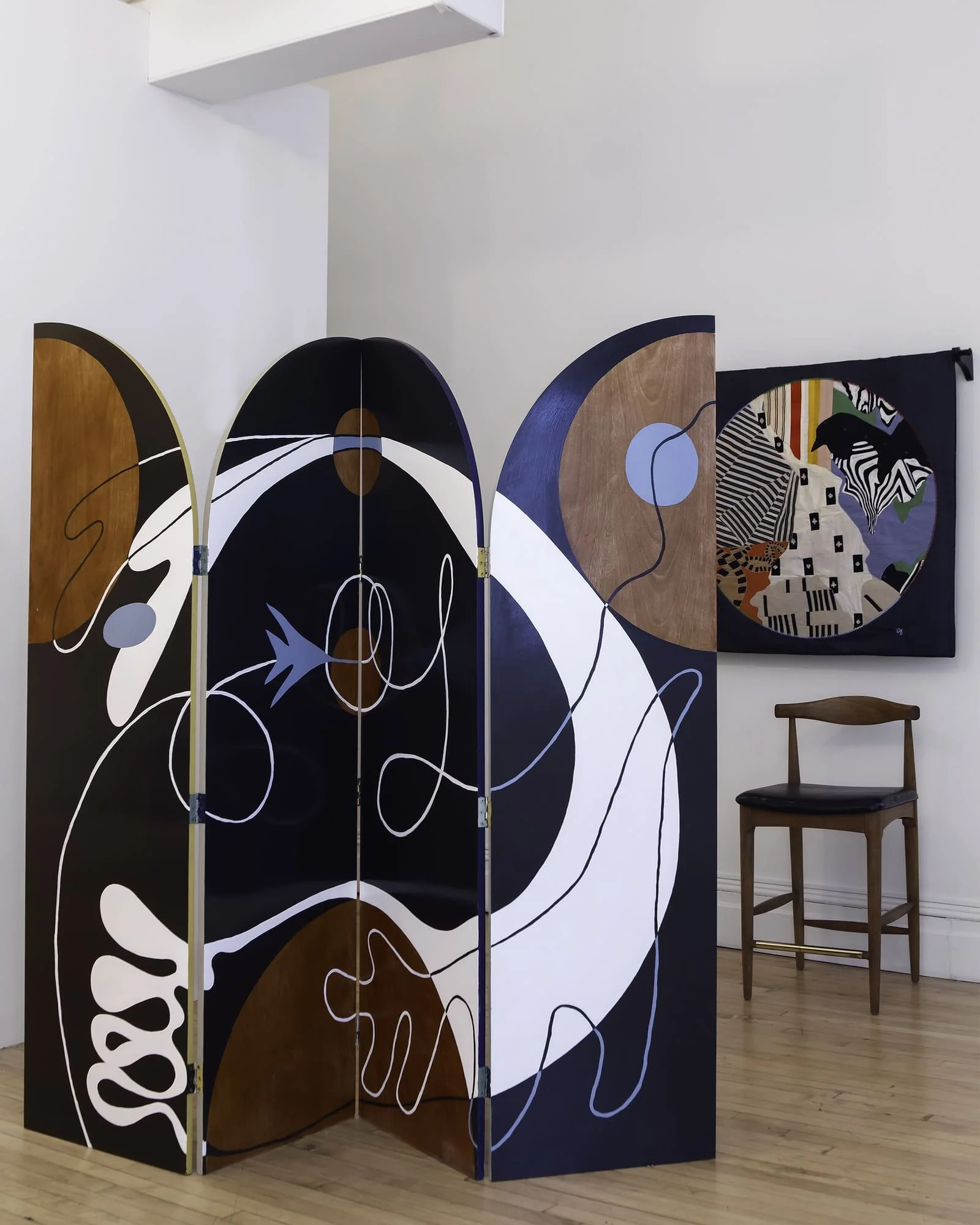
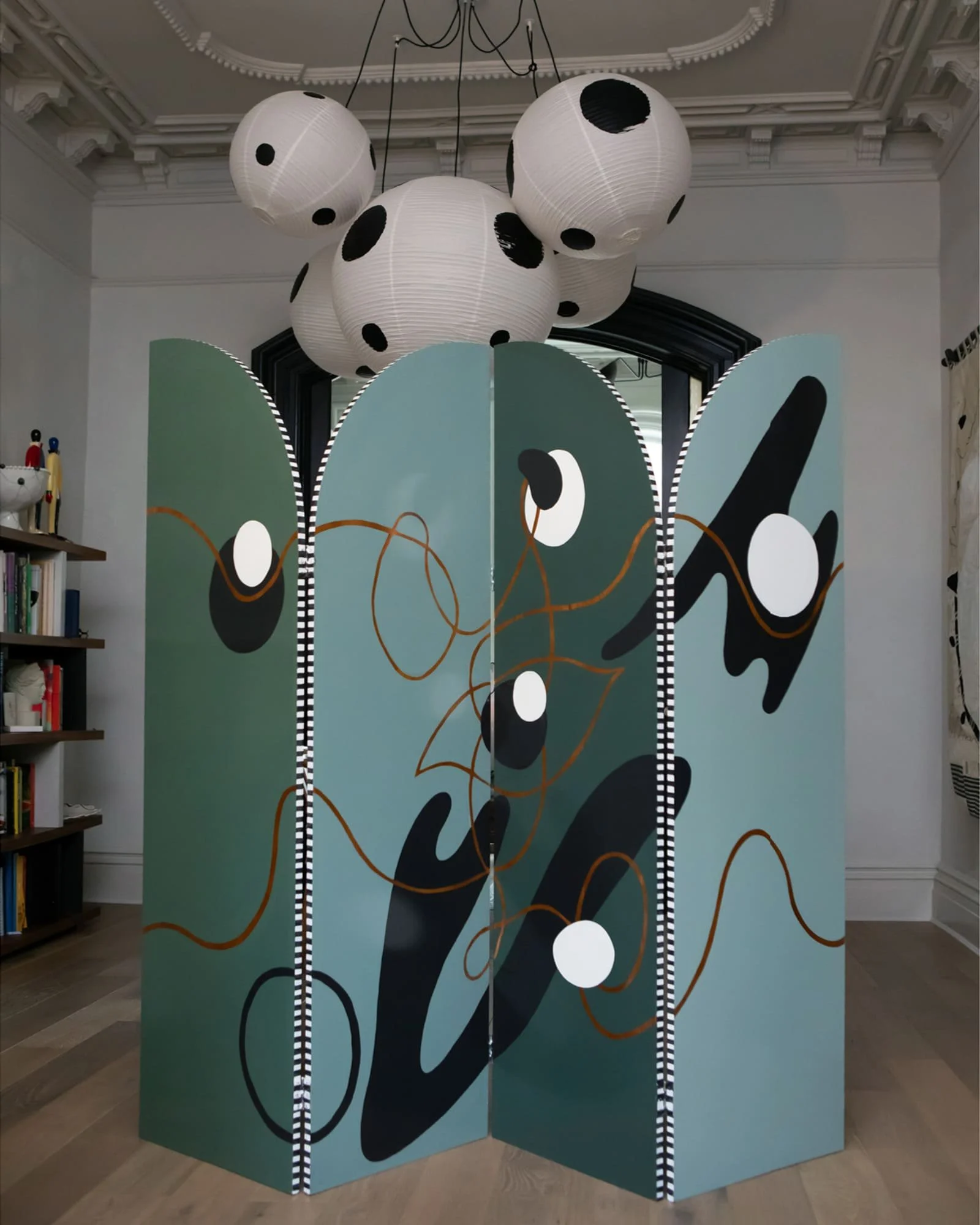
Now, with the launch of House of Quentin Jones, that world has moved into the home. Created with craftspeople in Lisbon and Jaipur, the collection spans tapestries, ceramics and decorative objects, translating Jones’s surreal, hand-worked sensibility into pieces designed to be lived with.
In conversation with Designeers, Jones reflects on the influences behind her creative outlook, the thinking behind House of Quentin Jones, and why our homes might benefit from being a little less beige.
Words: designeers
november 2026
WEBSITE: houseofquentinjones.com
INSTAGRAM: @quentin_jones & @house_of_quentin_jones
DESIGNEERS
What first shaped your creative eye? Were there particular people, places or objects in your childhood that influenced how you see the world?
Quentin Jones
Both my parents are architects, and my paternal grandparents were artists, so drawing and making things were part of everyday life. We spent our summers near Lucca, where my dad would take me out to paint watercolours before breakfast. The promise of pastries afterwards made it even better. I remember sitting on the city walls together, sketchbooks on our laps.
My parents also introduced me to the Bauhaus, Dadaist collage and Surrealism. By the time I was around nine, I was making little stop-motion films with Play-Doh and my mum’s camcorder. Looking back, many of the ideas and interests that shape my work today were already present.
DESIGNEERS
You studied philosophy before pursuing art and design. Does that background still find its way into your work?
Quentin Jones
Studying philosophy influenced the way I think, particularly my ability to move between rational, considered thinking and something much more abstract. The analytical side helps me understand briefs and clients, while the more abstract way of thinking gives me the freedom to explore ideas creatively. I find that moving between the two is important to my process.
DESIGNEERS
Your practice moves between collage, photography, film and objects. What connects everything you create?
Quentin Jones
Collage is the thread that runs through everything, even when there is no paper involved. I’m constantly bringing things together, taking them apart, changing their scale or placing them in an unexpected context. Certain forms, such as eyes, hands, bodies and other organic shapes, recur throughout my work. They might appear in an animation, then find their way into a vase or a tapestry.
I’m interested in the point at which something familiar becomes slightly strange, while still retaining an appeal. Moving between different materials gives me another way to explore that tension.
DESIGNEERS
What prompted you to launch House of Quentin Jones? Was there something you wanted to explore that your work for other brands couldn’t offer?
Quentin Jones
I wanted to give the visual world I had been developing for years a place of its own. Collaborating with other brands has been wonderful, but I wanted the freedom to follow ideas over a longer period and decide for myself what they could become. I was also interested in making things that felt a little stranger than the luxury brands I had been working with might typically allow.
Alongside that, I had spent years experimenting in my own homes, painting furniture, working with fabric, collecting and rearranging objects. House of Quentin Jones brought these interests together. It became a way to create the pieces I wished existed and build a world around how I like to live: surrounded by art, children, friends and, of course, big dinners.
DESIGNEERS
How does an idea begin in your studio? Could you take us through one recent piece, from its first sketch to the finished work?
Quentin Jones
Most ideas begin with drawing and collage by hand. I look through books, gather references and then step away from the computer to sketch and experiment. I like to give an idea room to change before deciding what it should become.
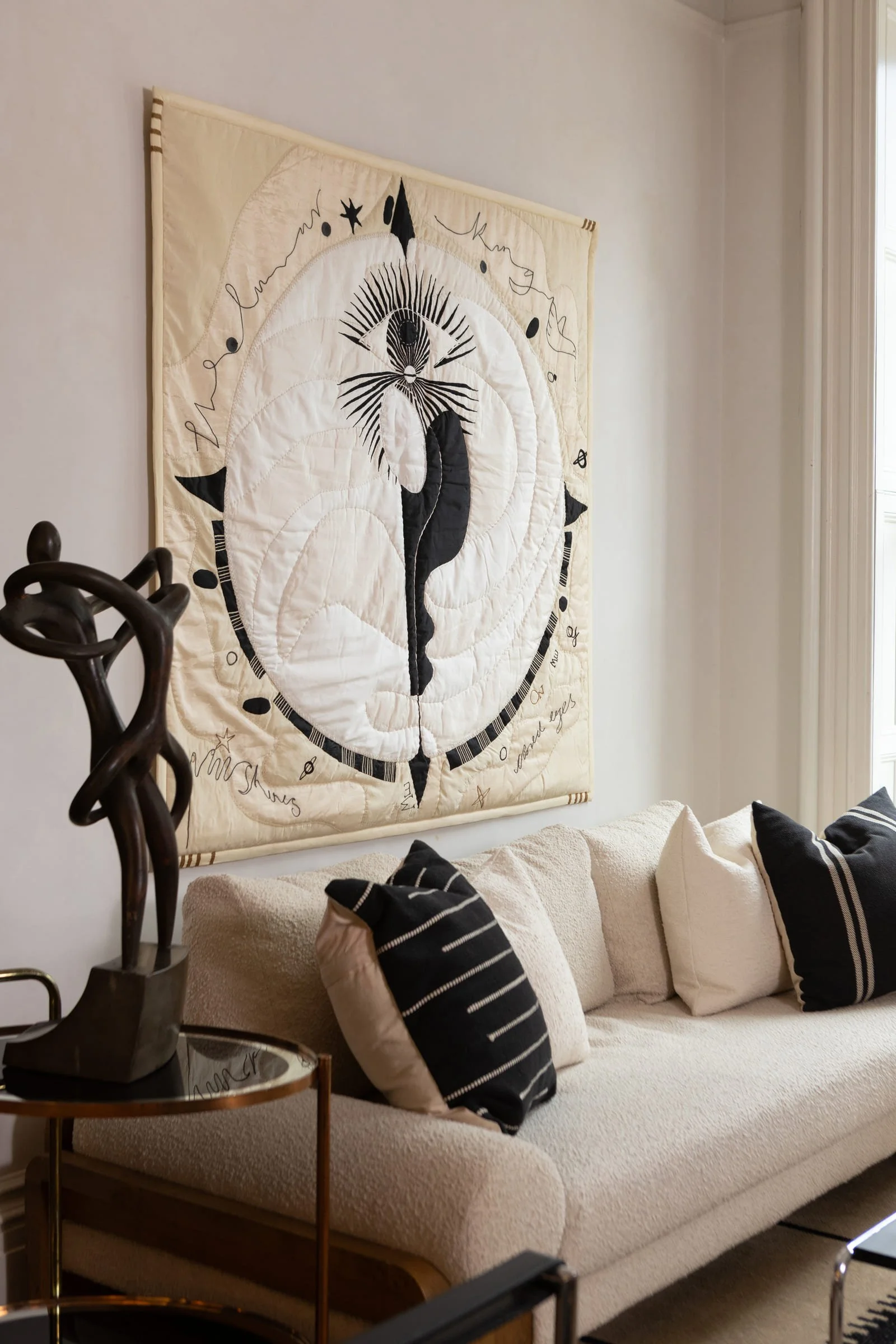
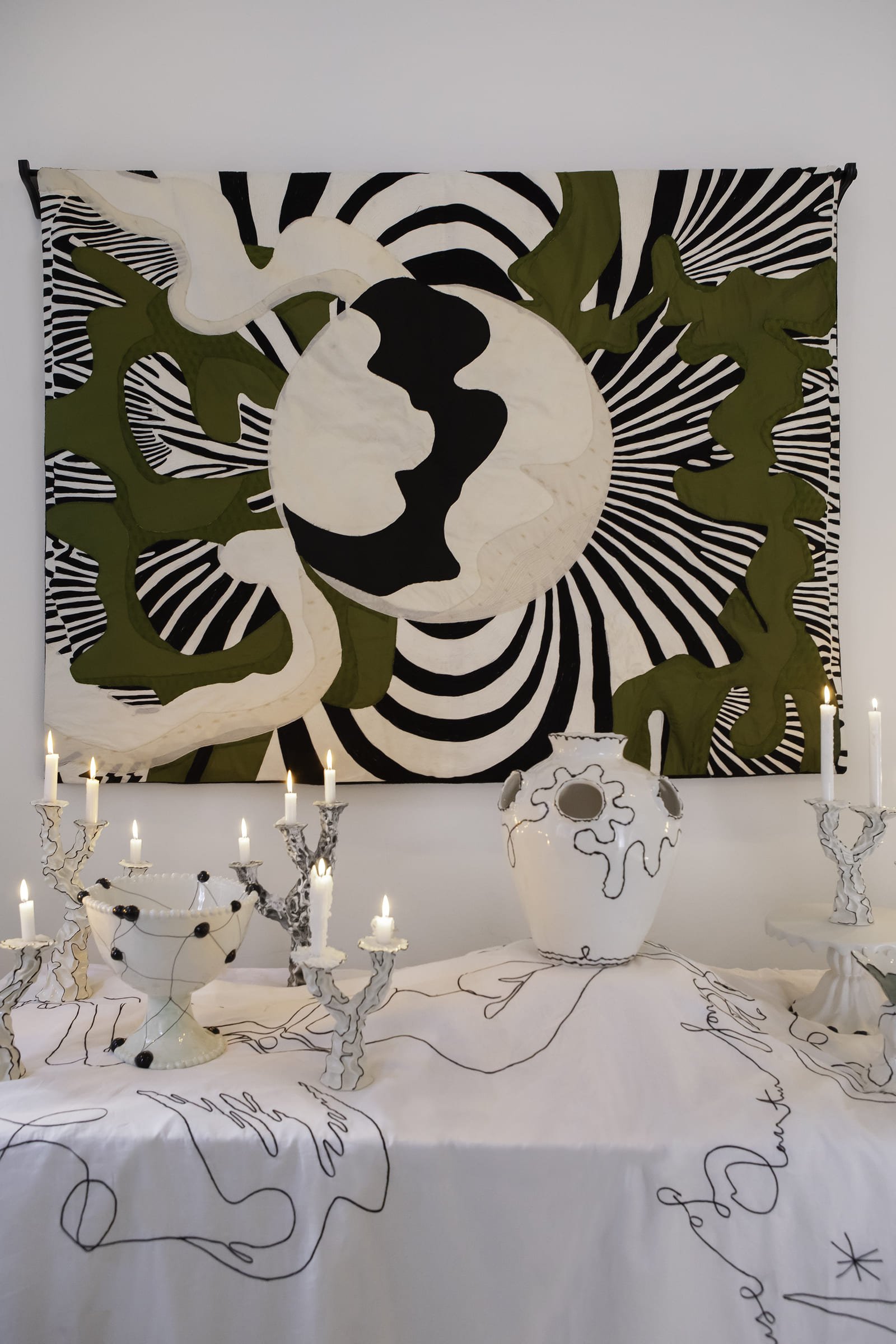
The tapestries are a good example. The initial composition takes shape in my Brooklyn studio, but selecting antique silk sarees in Jaipur becomes another stage of the collage process. Their colours, patterns and weaves introduce elements I could never have fully planned on paper. Hand embroidery then brings another layer of drawing and texture. The finished work holds the original composition, but it also carries the influence of the materials and the people involved in making it.
“I’ve always been drawn to accidental beauty. A slightly awkward line can have far more character than one that has been corrected over and over.”
Quentin Jones
DESIGNEERS
Your work leaves room for spontaneity and imperfection. How do you preserve that freedom when translating an image into a physical object?
Quentin Jones
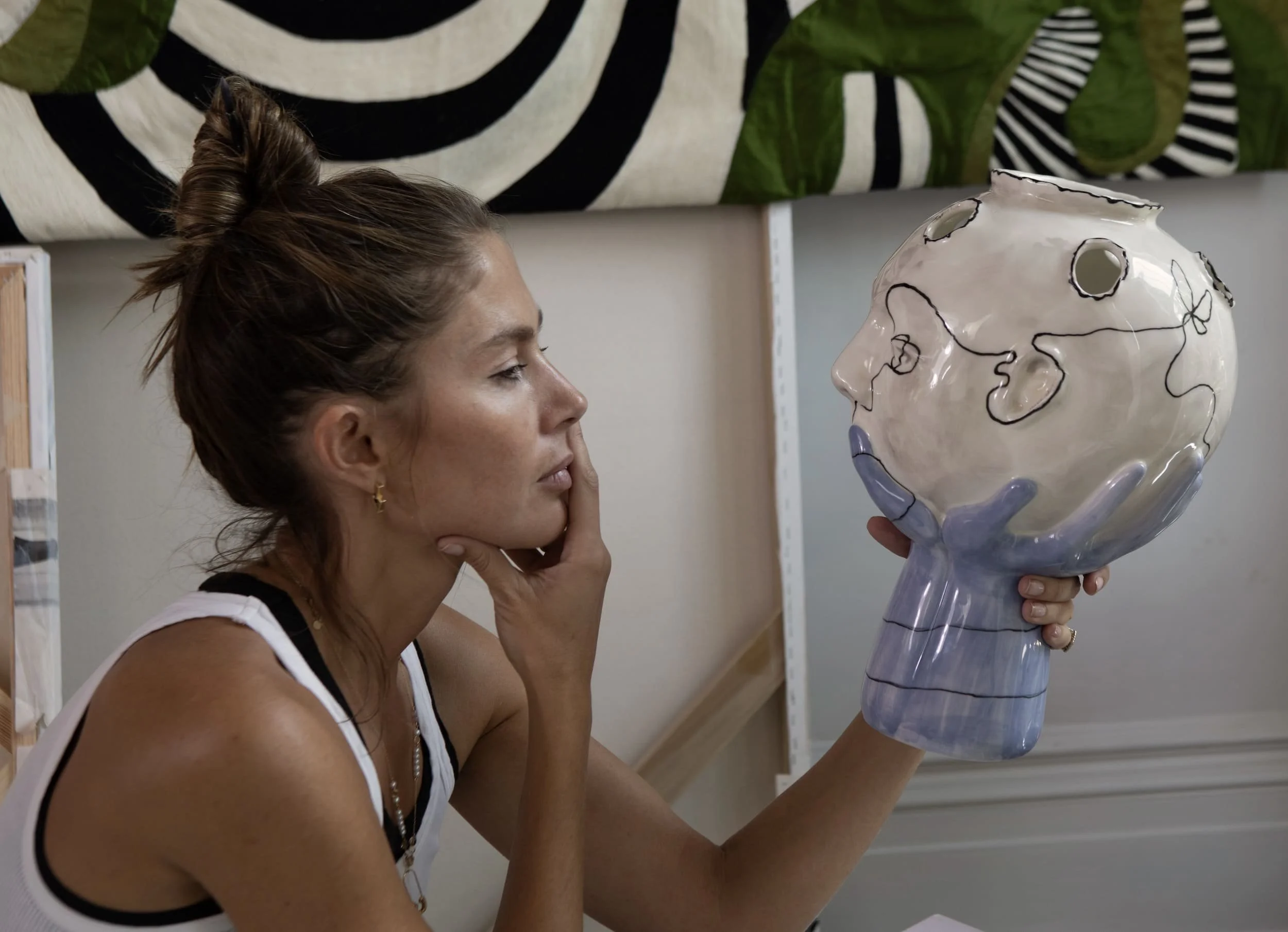
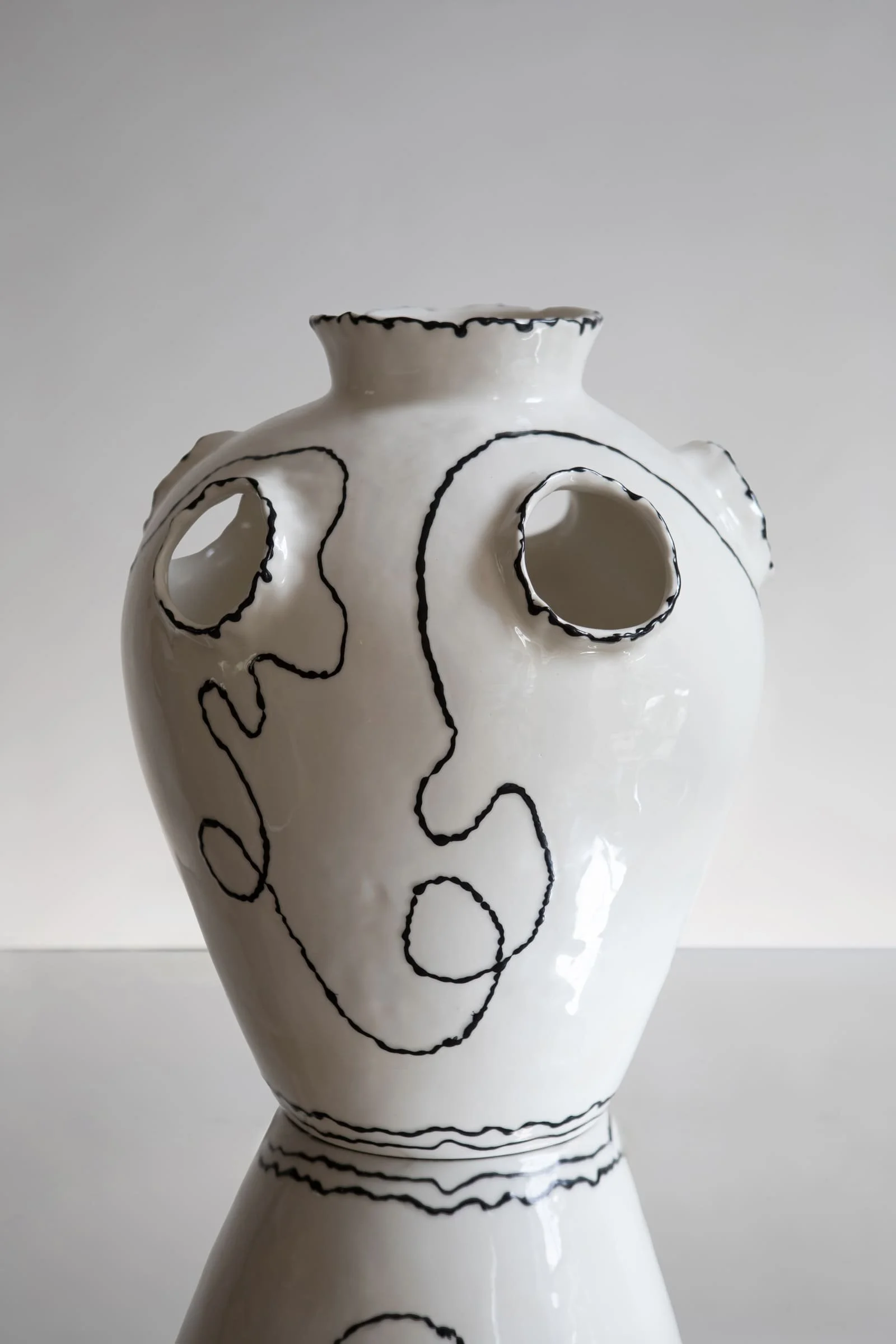
I try to keep my hand involved in the process for as long as possible. With the ceramics, for example, I sketch directly onto the clay to guide the painting, allowing the line to respond to the form of the object itself.
I’ve always been drawn to accidental beauty. A slightly awkward line can have far more character than one that has been corrected over and over. The making still requires care and skill, but I want that attention to preserve the energy of the original drawing rather than smooth it away. Knowing when to leave something alone is an important part of the process.
DESIGNEERS
You collaborate with textile artisans in Jaipur and a ceramics studio in Lisbon. How have their techniques changed or expanded your original ideas?
Quentin Jones
Working with craftspeople gives my drawings possibilities I wouldn’t necessarily arrive at on my own. In Jaipur, the antique sarees already carry their own history, colour and texture. Embroidery gives a drawn line weight and a physical presence. As I’ve come to understand more about the techniques involved, their craft has increasingly informed what I design. There is a growing exchange of ideas, and that understanding enriches the work.
In Lisbon, the process is different because the drawing has to respond to a three-dimensional form. I have to consider what happens as you turn an object and how a gesture moves across its surface. In both places, the craftspeople bring their own knowledge and interpretation to the work. That collaboration is not simply about translating a drawing into another material; it becomes part of the creative process itself.
DESIGNEERS
What interests you about making art that people can live with and use? Does function change the way you approach a piece?
Quentin Jones
I love the idea of someone developing a relationship with a tapestry over many years. It becomes part of the backdrop to their life, and the associations they form with it may be completely different from what I had in mind when I made it.
The role a tapestry will play in a home does influence how I approach it. I think about scale, texture and the way silk responds to light. Fabric has a softness that can change the atmosphere of a room, so I consider the physical experience of living with a piece as much as the image itself: how it feels to be around, not just what it looks like when you stop to study it.
DESIGNEERS
When creating a commission for an interior, where do you begin: with the room, the person who will live with it, or an idea of your own?
Quentin Jones
I would always begin with a conversation about the person and how they use the room. The architecture, light and proportions are important, but so is understanding what someone is drawn to and how they want to feel in their home.
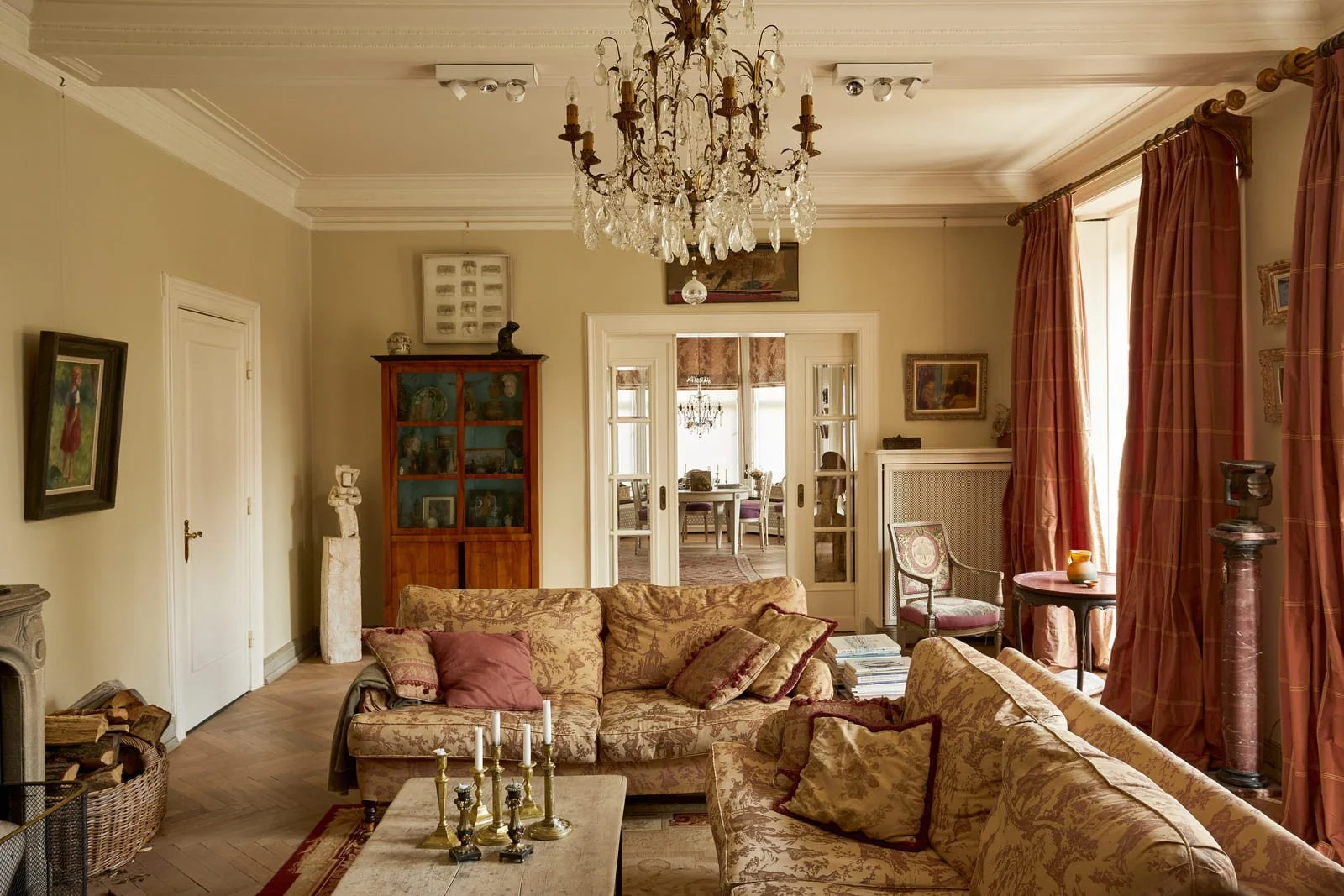
From there, I can bring my own ideas into the setting. I think of a home as a kind of self-portrait, shaped by the things you collect, the works you bring together and the objects you carry with you from one house to another. A commission should become part of that personal picture, rather than simply filling a space.
DESIGNEERS
What would you love to see interior designers be more adventurous about when choosing art and objects?
Quentin Jones
I would love to see rooms that leave space for surprise: an unexpected scale, something humorous or a piece that feels slightly strange alongside everything else. There is something compelling about a home where you can sense someone's particular taste and curiosity. It gives you something to discover.
I would also like people to be less afraid of using black and colour. There has been such a long, rather boring chapter of beige, tonal interiors. I think it is time to move beyond that.