lifestyle
COLLECTIBLE New York 2026 brought together a new generation of galleries, designers and makers pushing collectible design beyond familiar categories. The strongest work blurred the boundaries between furniture, sculpture, lighting, craft and art, often beginning with material rather than style.
What stayed with us were the presentations with a clear point of view: Romanian design reimagined through CRINA Architecture, Costantini’s dialogue between sculpture and function, Quentin Jones bringing surrealism into the domestic sphere, and emerging studios turning textile, ceramic, metal and wood into something unexpected.
These are the designers, galleries and objects that made us stop and look again.
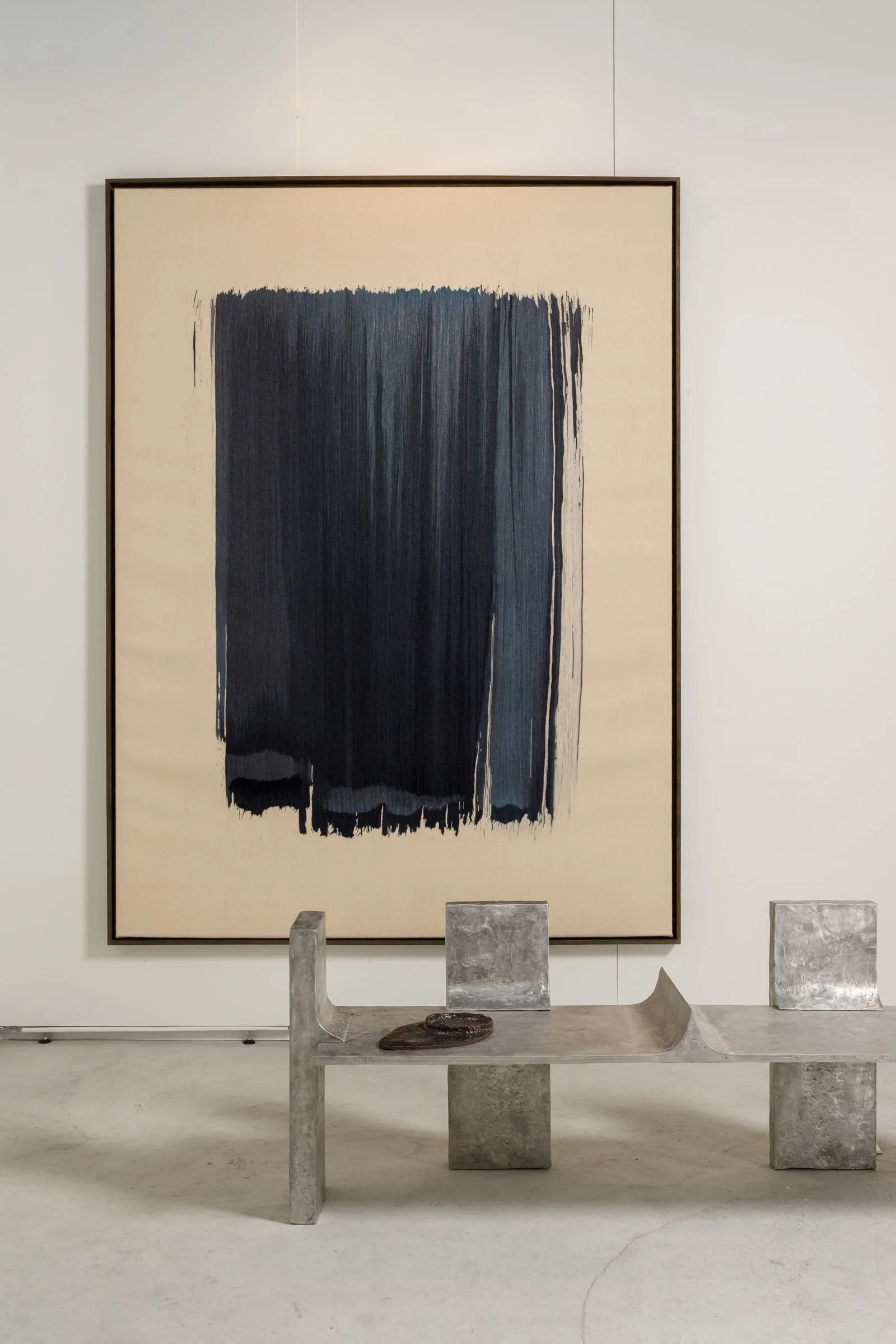
Go East Collection by Crina Architecture in collaboration with AÉ02 and Cucu and Cucu

Go East Collection by Crina Architecture in collaboration with AÉ02 and Cucu and Cucu
1. CRINA Architecture | Romania
CRINA Architecture approaches interiors as a form of cultural composition, where architecture, art and collectible design are allowed to overlap rather than sit in separate categories.
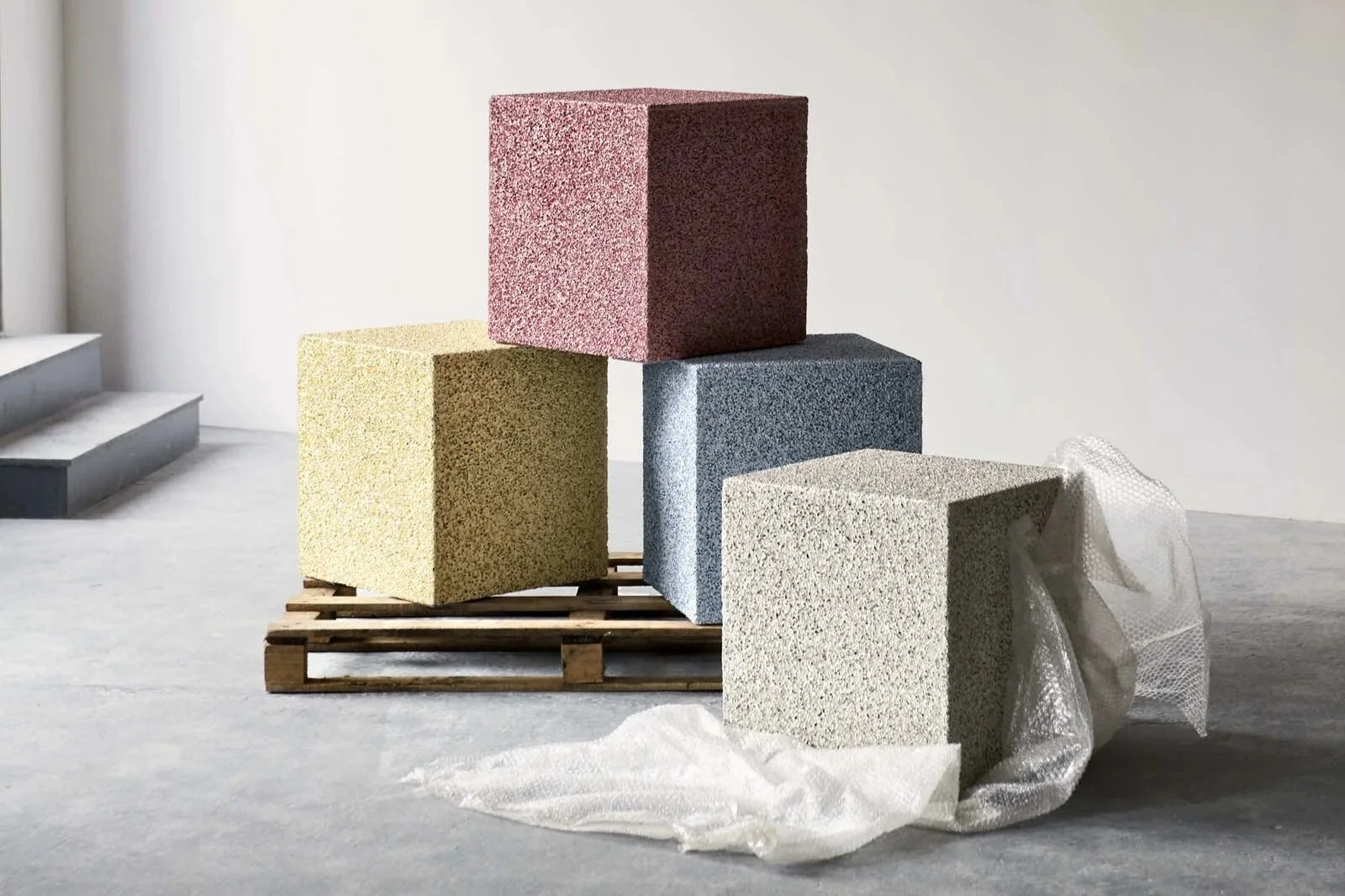
At COLLECTIBLE New York 2026, the studio presented Go East, a two-part installation developed with AÉ02 Architecture Studio and Cucu and Cucu, bringing together a distinctly contemporary reading of Romanian design. A suspended painted-canvas light installation introduced colour and movement overhead, while a brushed-steel coffee table, finished with blue pigment and resin, gave the space a cooler, more industrial counterpoint.
The presentation extended beyond Romania through wall sculptures by Moffat Takadiwa, represented by Nicodim Gallery, assembled from discarded computer keys and toothbrushes. AÉ02’s cast-aluminium bench was paired with a handwoven wool tapestry by Alexandra Mocanu, bringing a softer, tactile counterpoint to the harder architectural materials.
The result was less a conventional furniture setting than a layered conversation between craft, material experimentation and cultural identity.
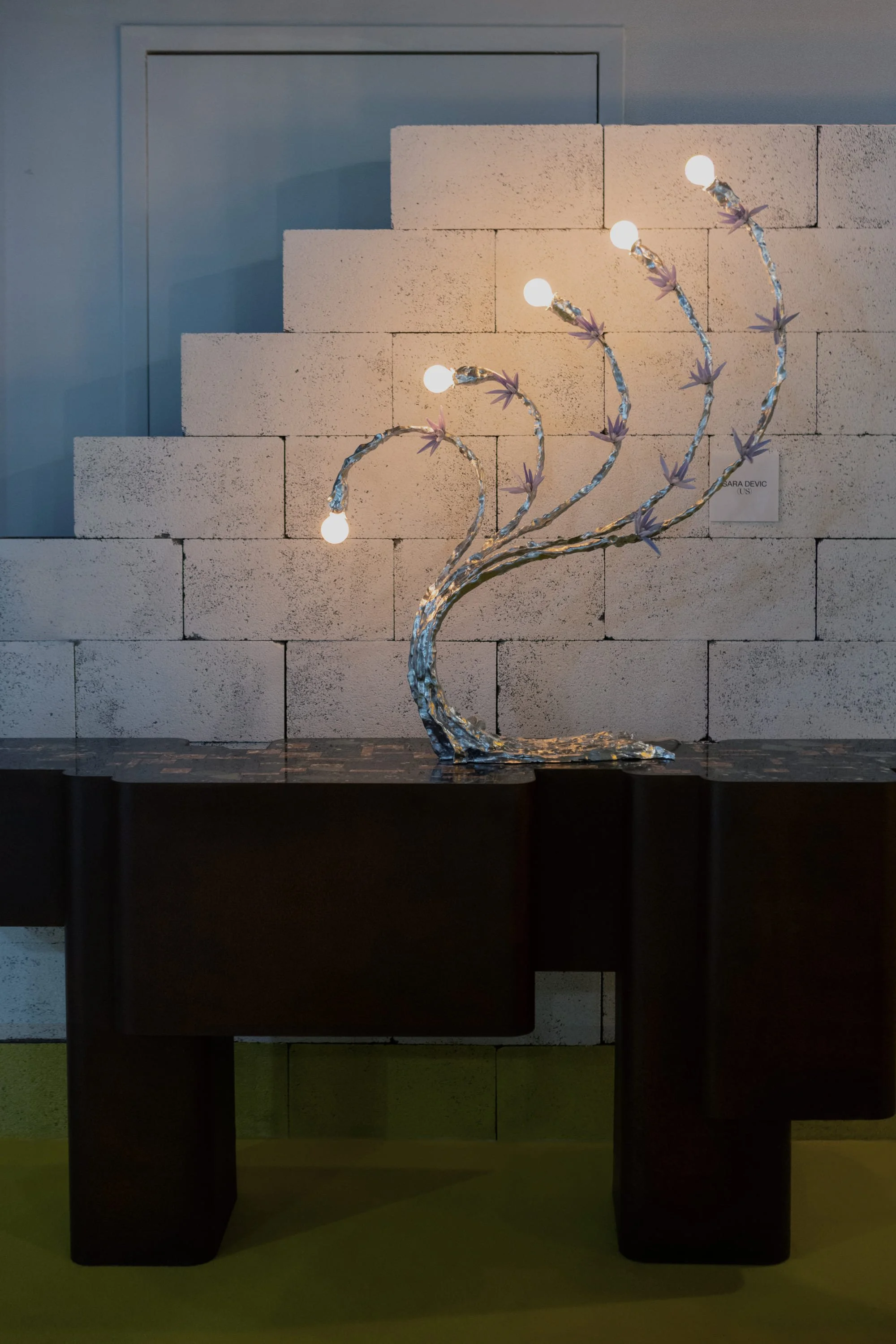
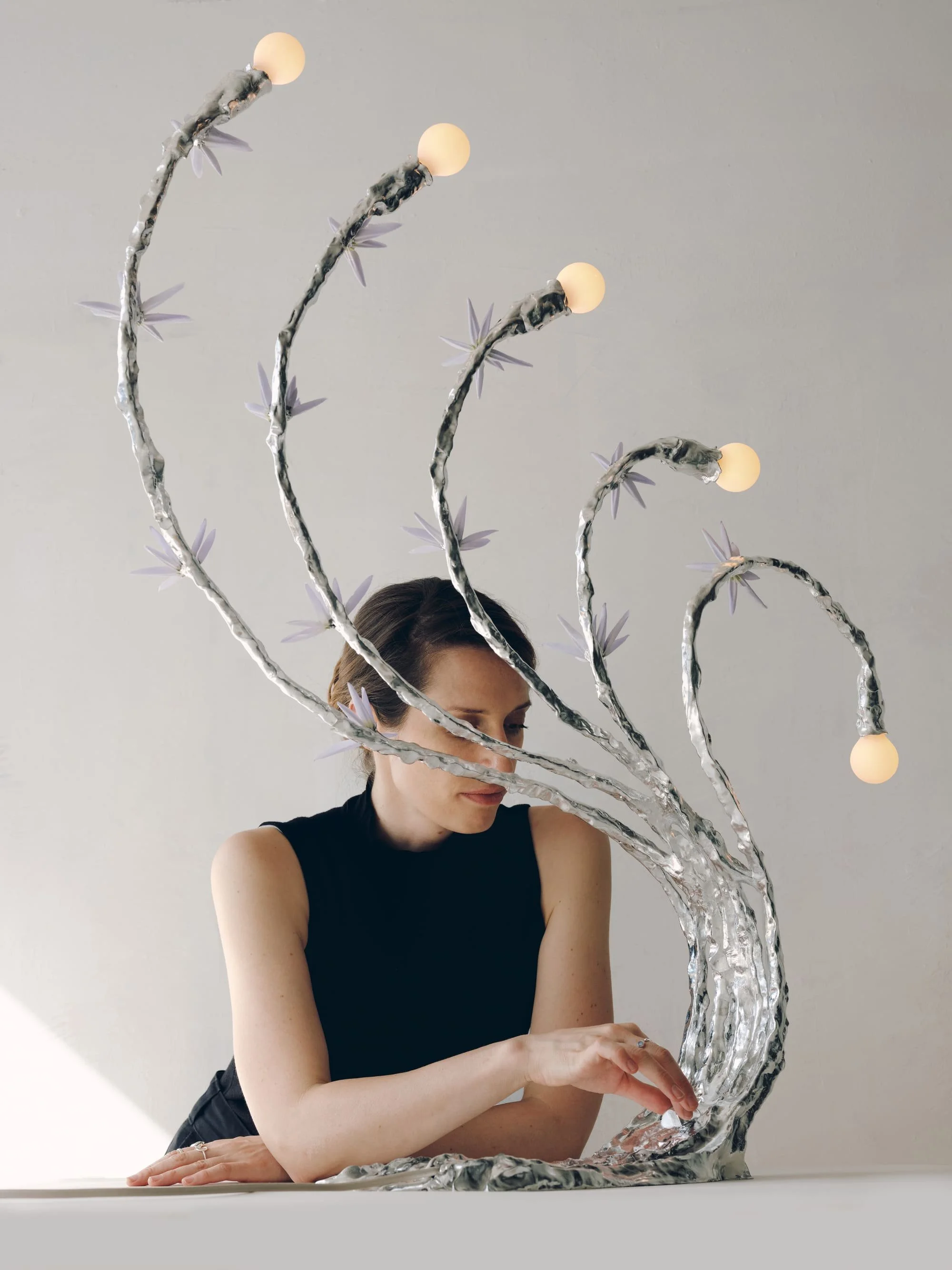
Blue Clematis by Ver Malum Lighting
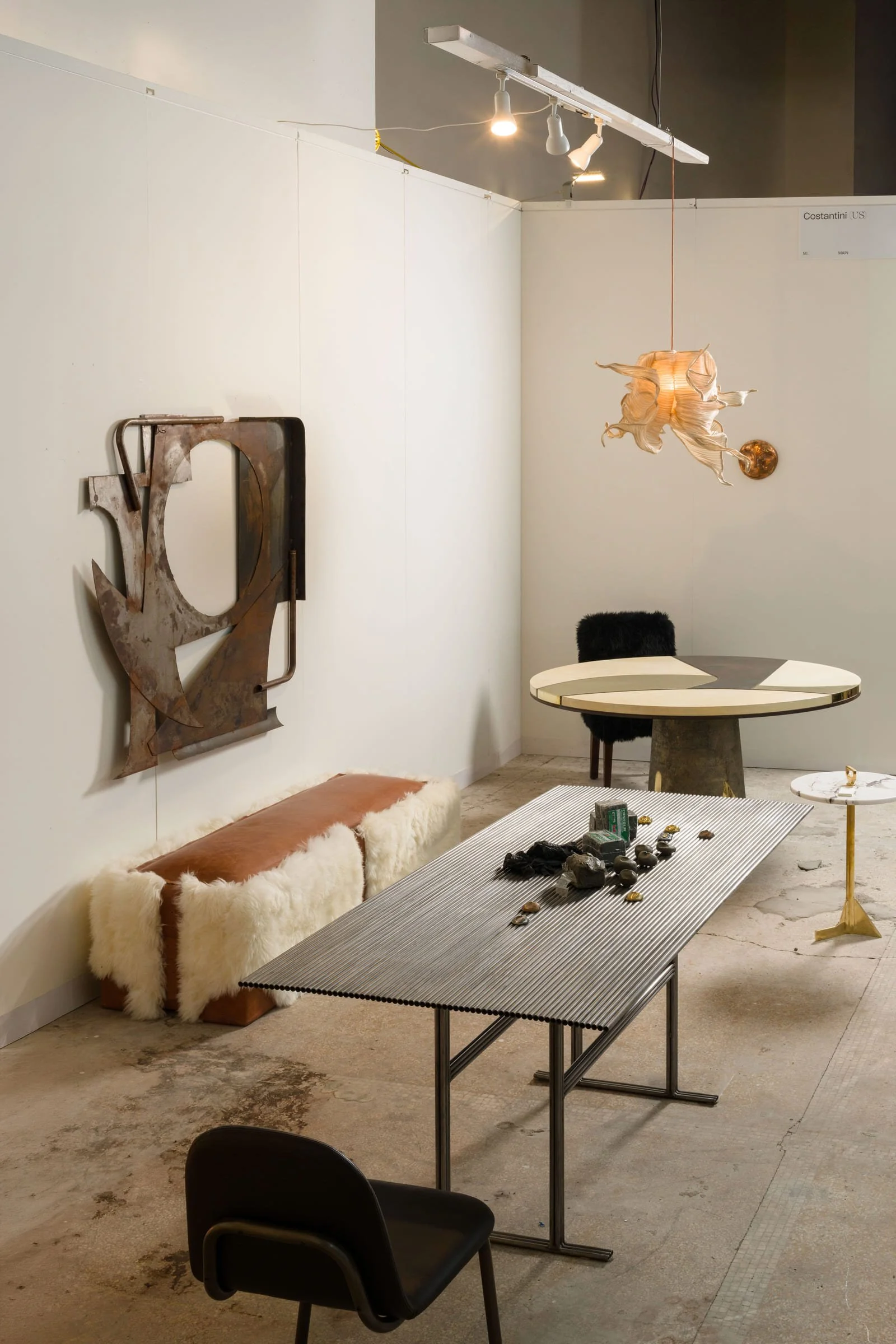
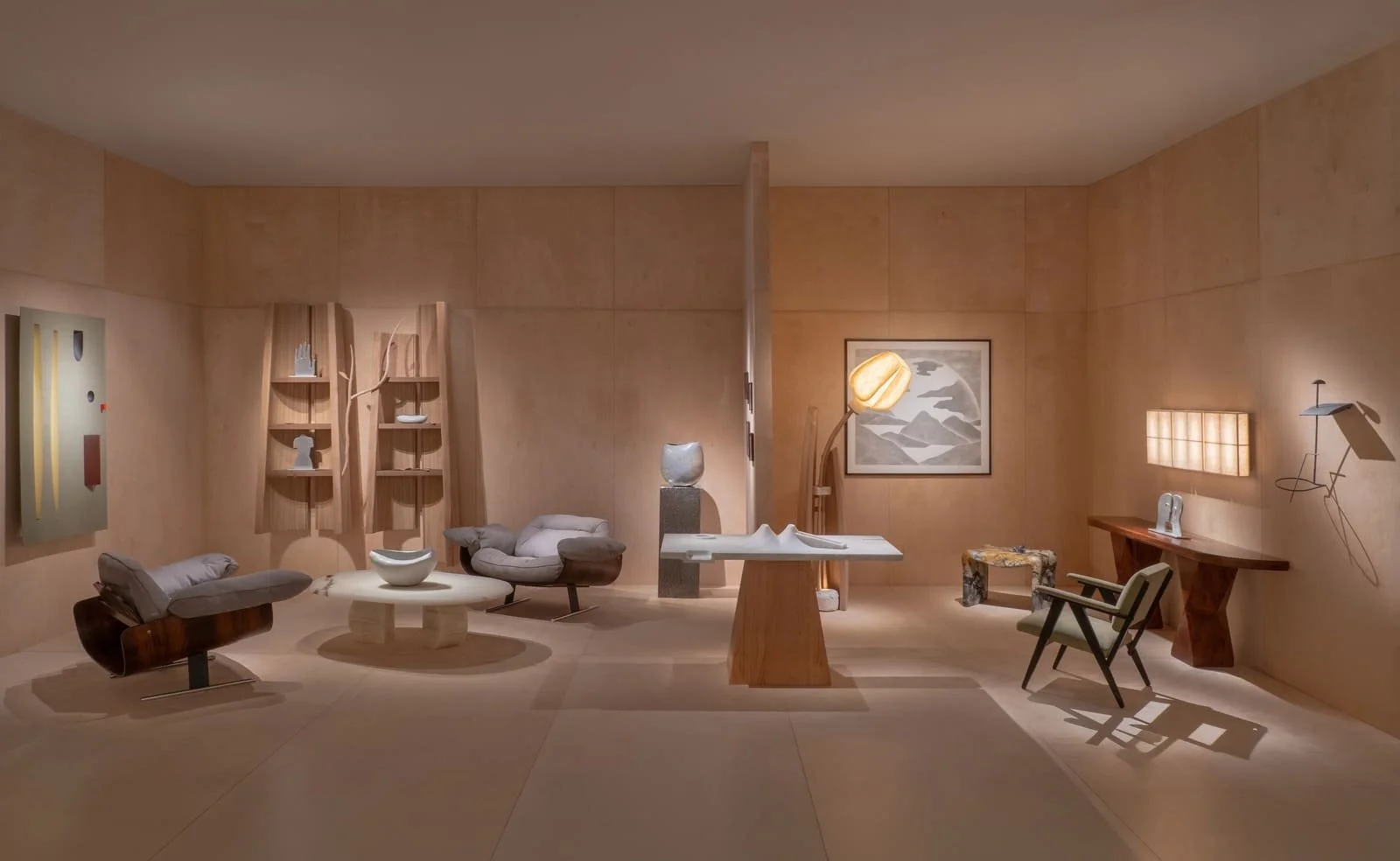
Re/iterate by Costantini Design
2. VER MALUM | USA
New York-based designer, researcher and maker Sara Devic has spent more than sixteen years exploring light through material, fabrication and craft. Trained in architecture and urbanism, her practice moves between sculpture, lighting design and material research, often using handwork and unconventional processes to give illumination a physical presence.
At COLLECTIBLE New York 2026, she introduced VER MALUM, a new body of sculptural linear lighting that pushes that research into a more expressive, ornamental language.
For the FASHION section curated by Lynette Nylander, VER MALUM presented Blue Clematis, a botanical light that draws on the sinuous ornament of Art Nouveau without slipping into nostalgia. Welded steel, hand-modelled clay, aluminium leaf and textile elements unfurl around five dim-to-warm LEDs, so illumination becomes part of the object’s composition rather than something added afterwards.
The result is somewhere between lamp and living form: decorative, functional and slightly uncanny, with light used not simply to reveal the sculpture, but to complete it.
3. Costantini Design | USA & ARGENTINA
Founded by sculptor William C. Stuart in 2002, Costantini Design has always occupied the space where furniture, sculpture and material research begin to overlap. Designed in New York and produced through its Buenos Aires atelier, the studio works across bronze, wood, stone, parchment and glass, with each piece made to order and shaped by the character of the material itself.
For COLLECTIBLE New York 2026, re/iterate looked back over nearly 25 years of making without slipping into retrospective mode. Earlier designs were placed in conversation with new furniture, lighting, sculpture and architectural surfaces, tracing how ideas evolve when they are revisited with the experience of having made them before.
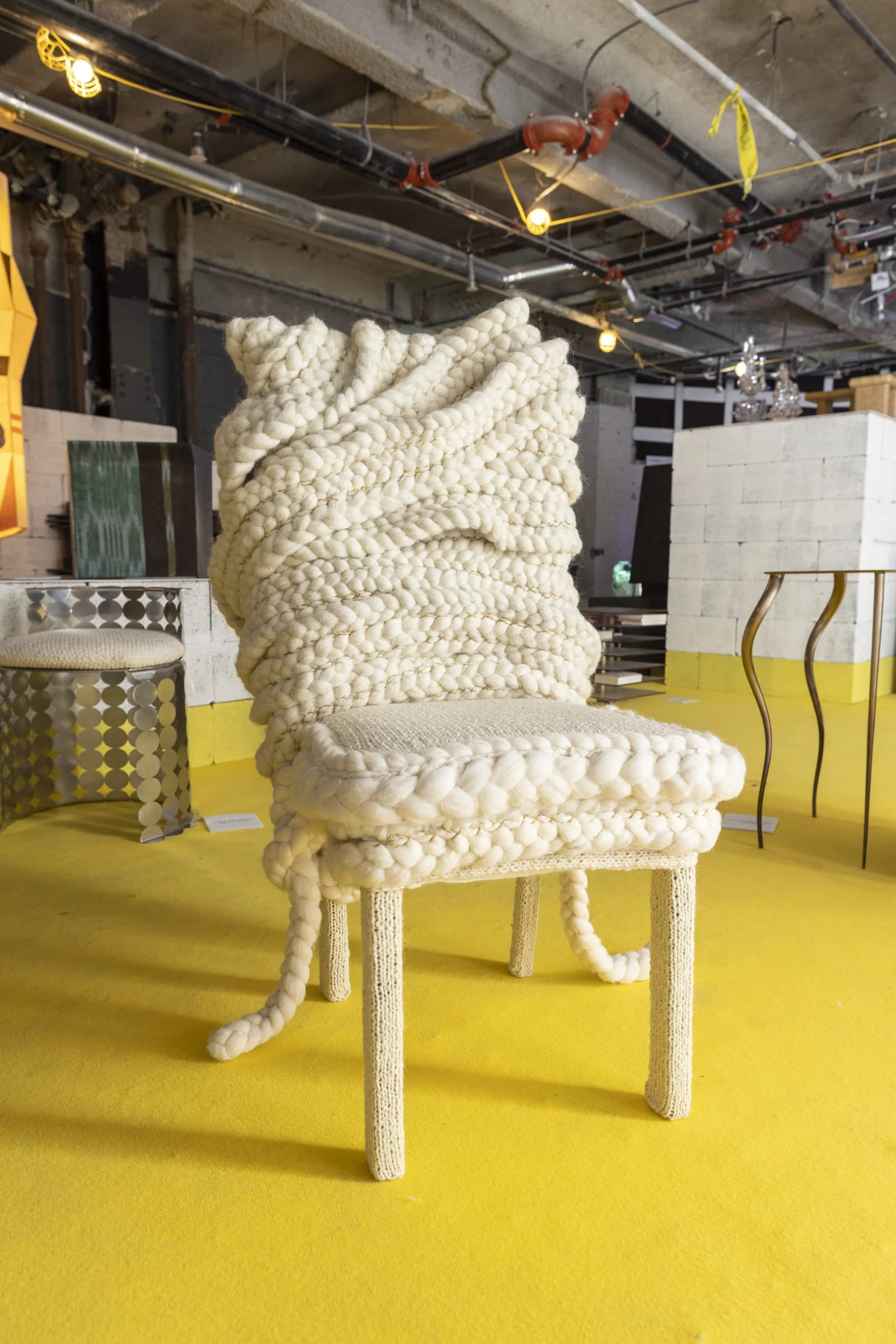
Sculptural Wool Chair by Ma Ra Mi Crafts
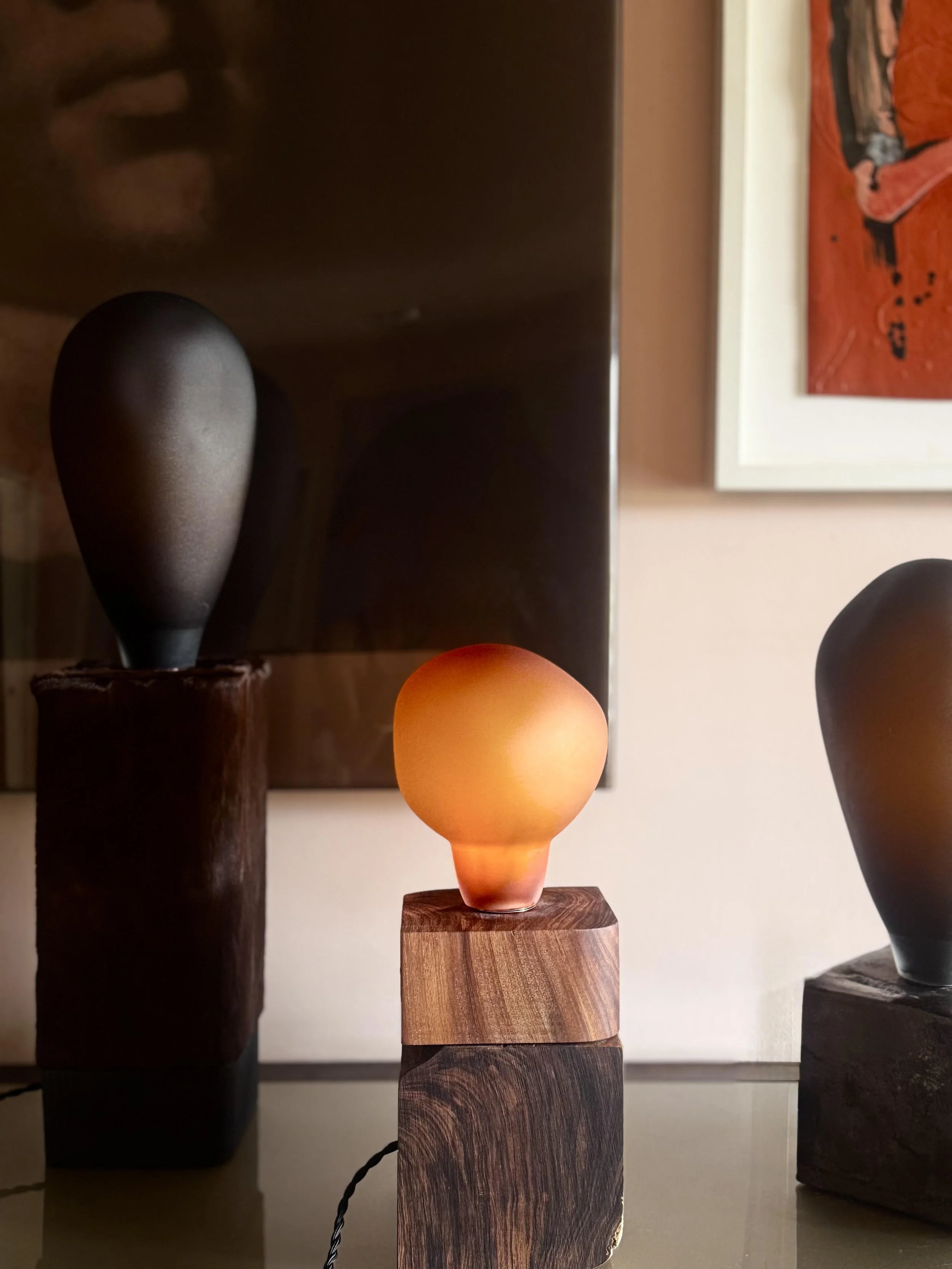
MEDII and AMPLUS Light Totems by Femme Brutale
4. MA RA MI Crafts | France
Working between Paris and Transylvania, Andra Camelia Clitan treats textile not as embellishment, but as architecture. Through MA RA MI Crafts, traditional hand-making techniques are carried into a contemporary design language shaped by wool, tactility and structural experimentation.
Presented in the Fashion section, the Sculptural Wool Chair turns hand-braided and knitted Transylvanian wool into the body of the object itself. Softness becomes structure, and inherited craft becomes a means of testing what furniture can be.
What makes the piece compelling is precisely that reversal: a material associated with warmth and surface is asked to hold form, weight and presence.
5. Femme Brutale | Australia
Founded by industrial designer and interior architect Helen Claire Davies, Femme Brutale approaches furniture and lighting as a form of spatial sculpture. Geometric silhouettes, tactile surfaces and carefully controlled proportions give the work a presence that extends beyond function.
For the Fashion section, MEDII and AMPLUS Light Totems pushed that language into lighting, treating illumination as part of the object’s architecture rather than an effect added afterwards. Their vertical, totemic forms give each piece a strong sculptural identity, allowing light to shape atmosphere while the object itself anchors the room.
The result sits somewhere between lamp, sculpture and architectural marker: functional, but never merely utilitarian.
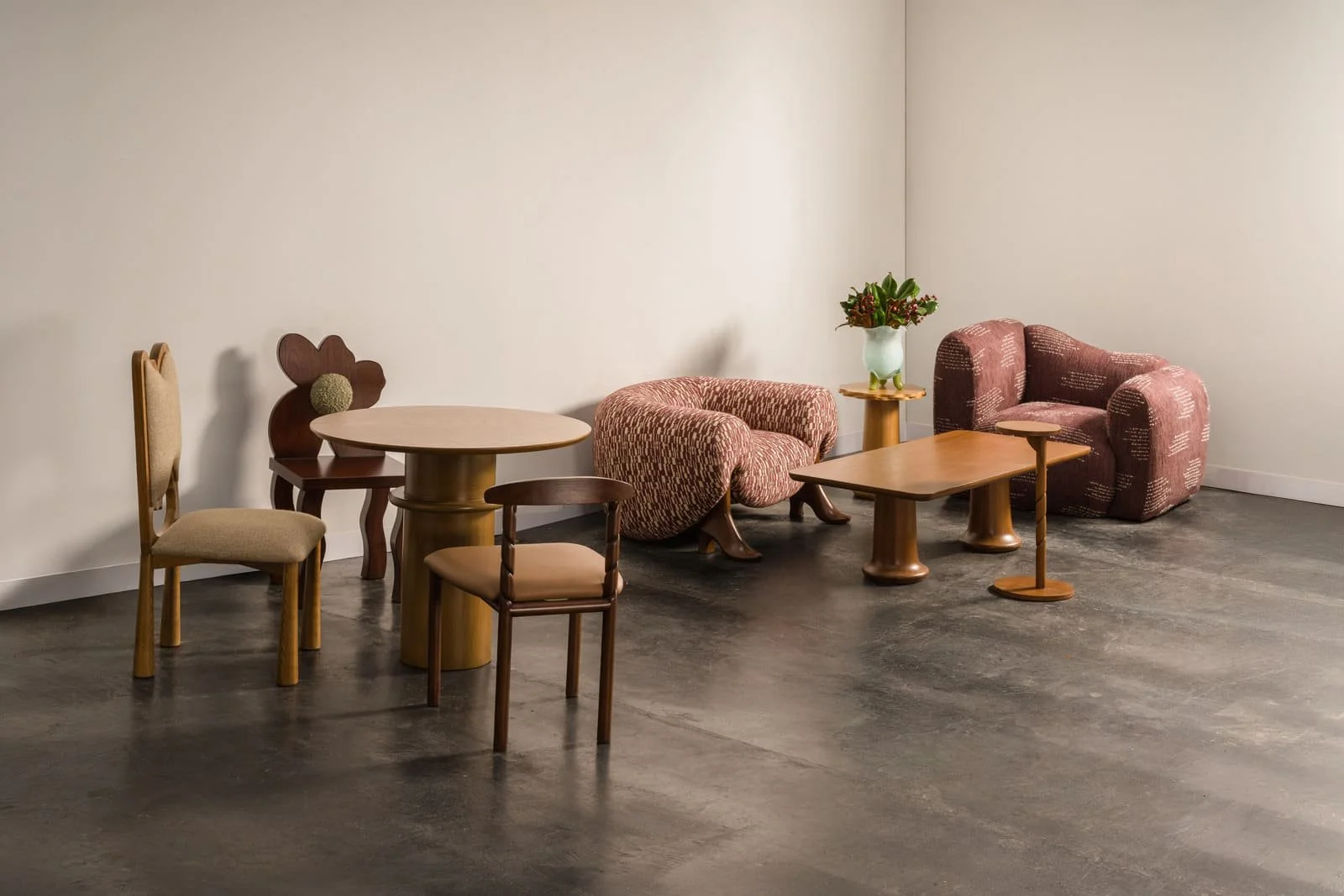
Deya presenting the High Heels chair, Poppy chair, Sister Chairs and the Twisted Side Table
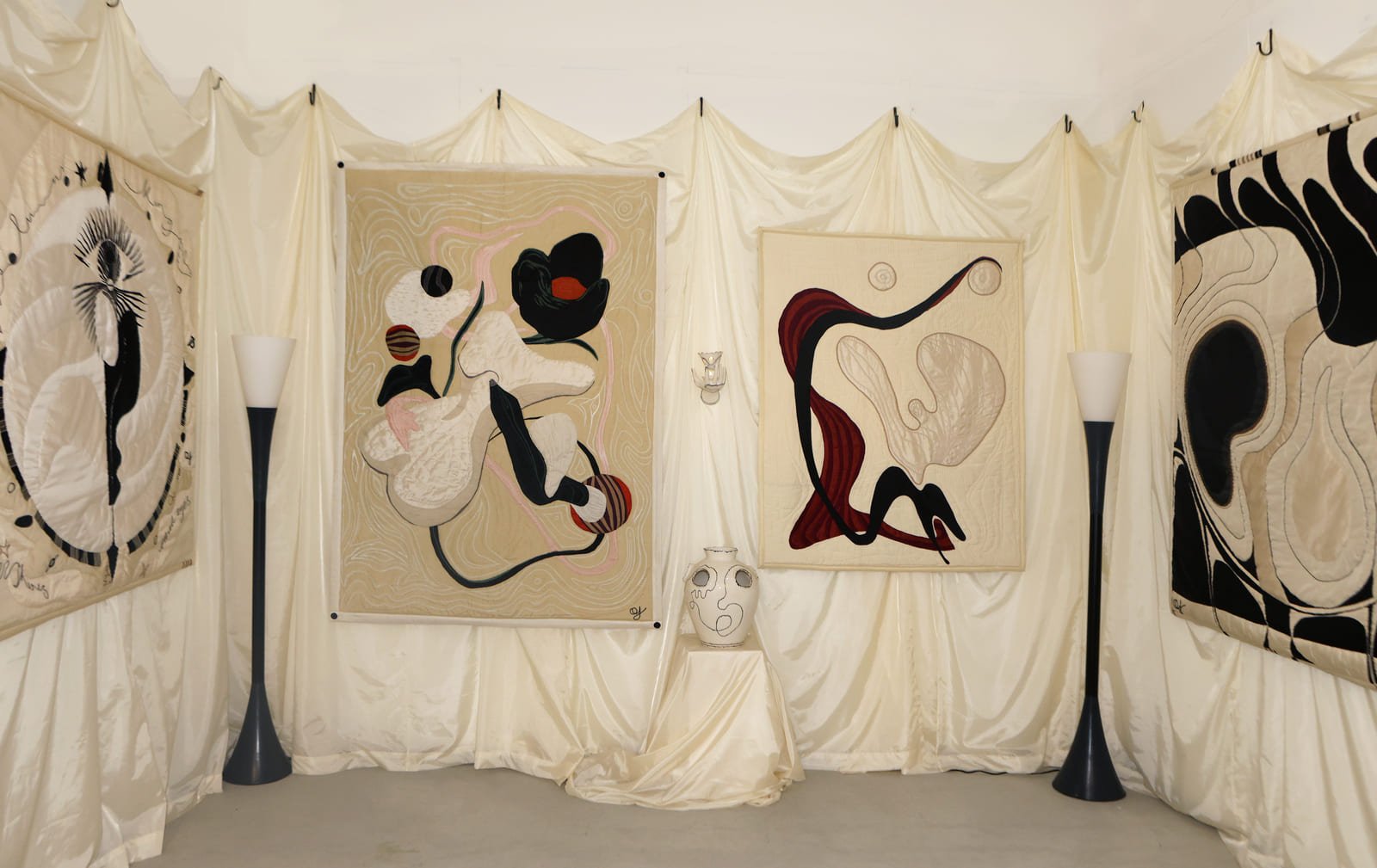
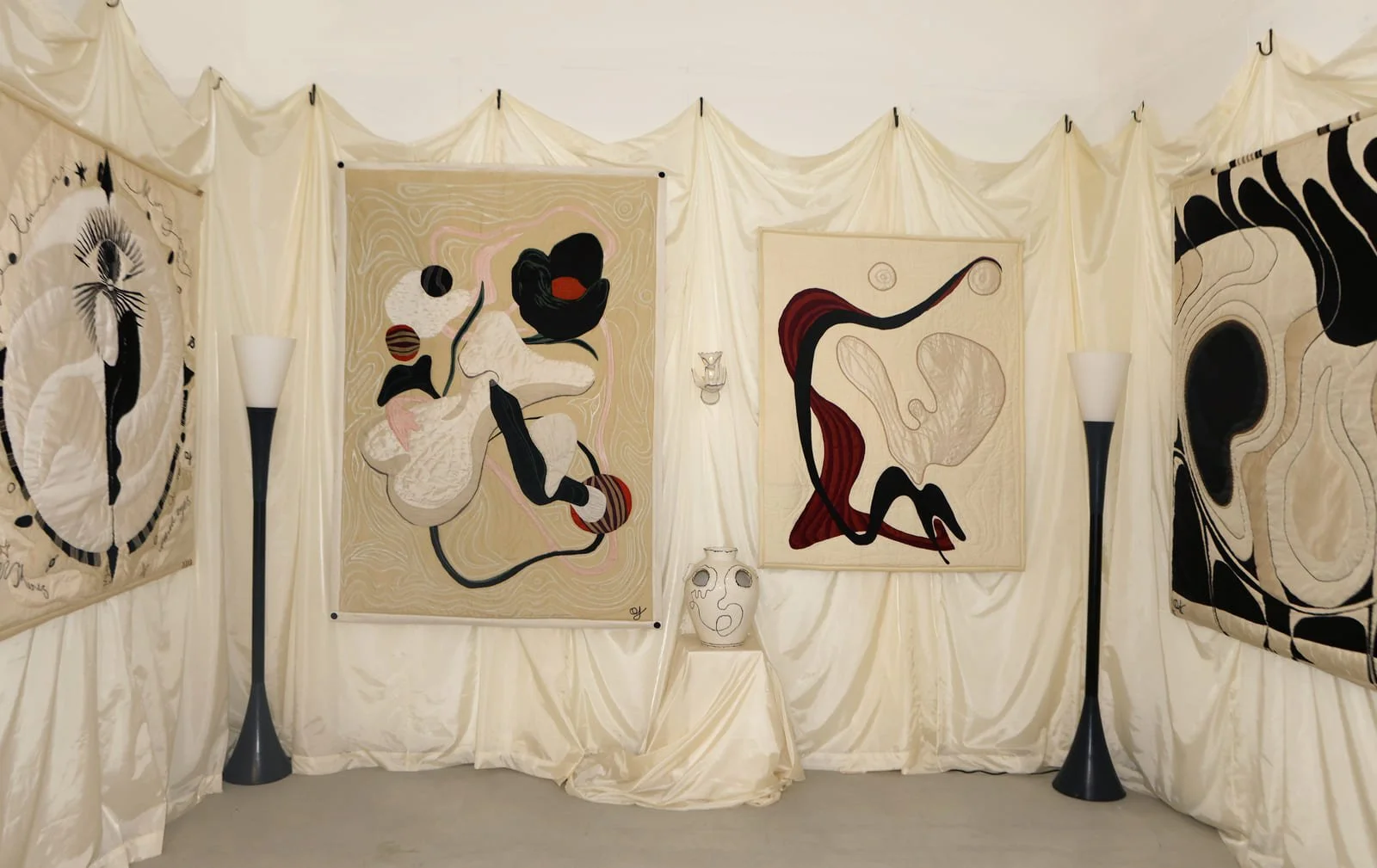
House of Quentin Jones showcasing sculptural ceramics and hand-embroidered tapestries
6. Deya | USA / Turkey
Founded in 2023 by childhood friends Defne Arıkoğlu and Yasmin Karamolla, Deya brings a playful, highly sculptural sensibility to Turkish craftsmanship. Working closely with artisans, the studio reinterprets familiar furniture typologies through expressive silhouettes, tactile materials and a distinctly contemporary point of view.
At COLLECTIBLE New York, pieces such as the High Heels Armchair and Poppy Chair sat alongside newer work that pushed the collection further into bold, characterful territory.
What makes Deya compelling is the tension between wit and rigour. The forms are playful, sometimes almost cartoonish, but the making remains grounded in material knowledge and hand production. The result feels fresh without trying too hard to be clever.
7. House of Quentin Jones | USA
For multidisciplinary artist and filmmaker Quentin Jones, the domestic interior is simply another surface for image-making. Through House of Quentin Jones, her familiar language of collage, surrealism and hand-worked imperfection moves off the page and into objects designed to be handled, displayed and lived with.
Presented in the Bespoke section, the collection brought together sculptural ceramics, embroidered tapestries and decorative pieces developed with artisans in Lisbon and Jaipur. Hand-painted surfaces and textiles made from antique silk sarees carried Jones’s irreverent visual world into a more intimate register.
The appeal lies in that shift of context: what might once have existed as an artwork becomes part of the room, without losing its strangeness.
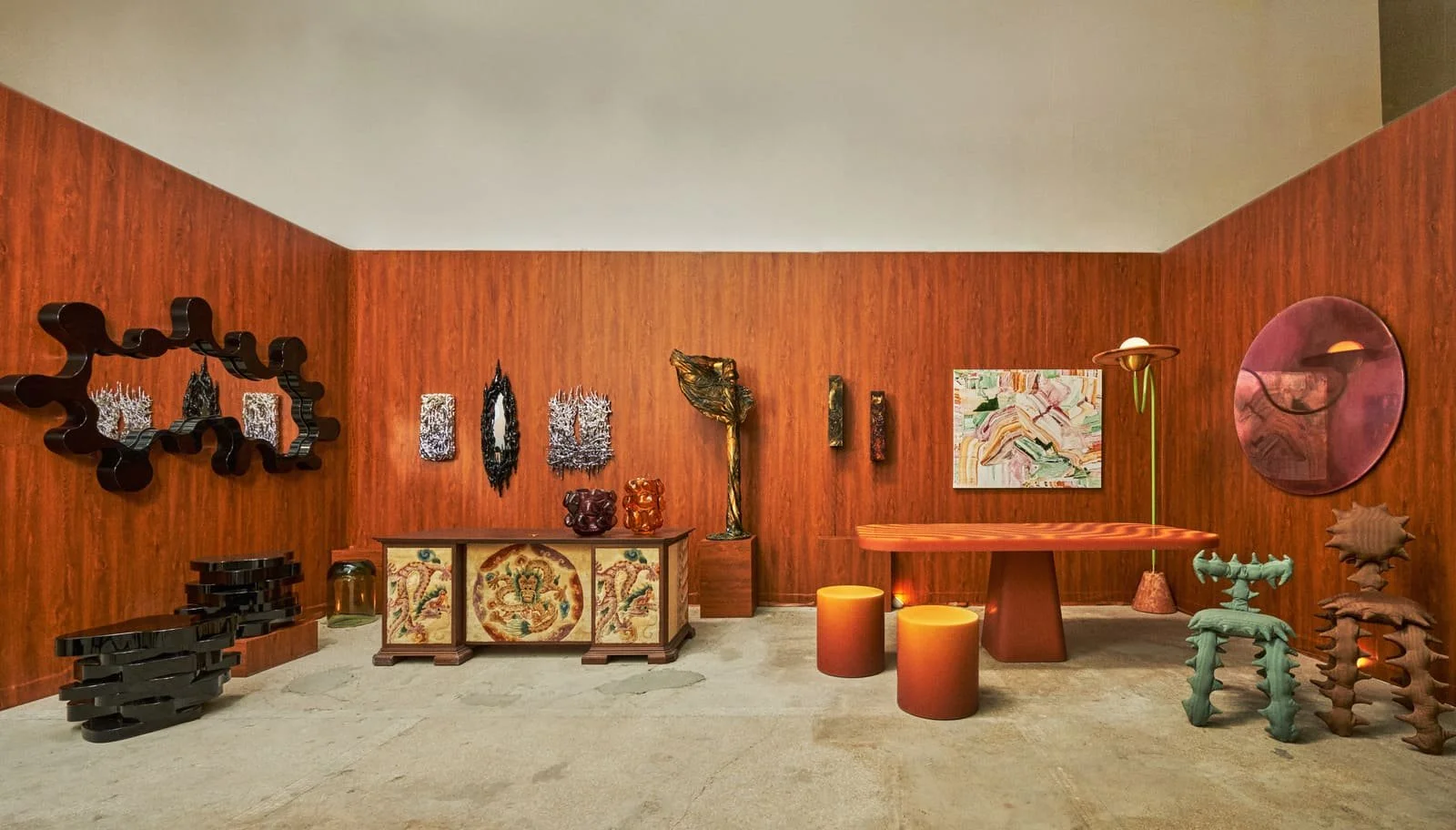
After Ours Collection by Tuleste Factory
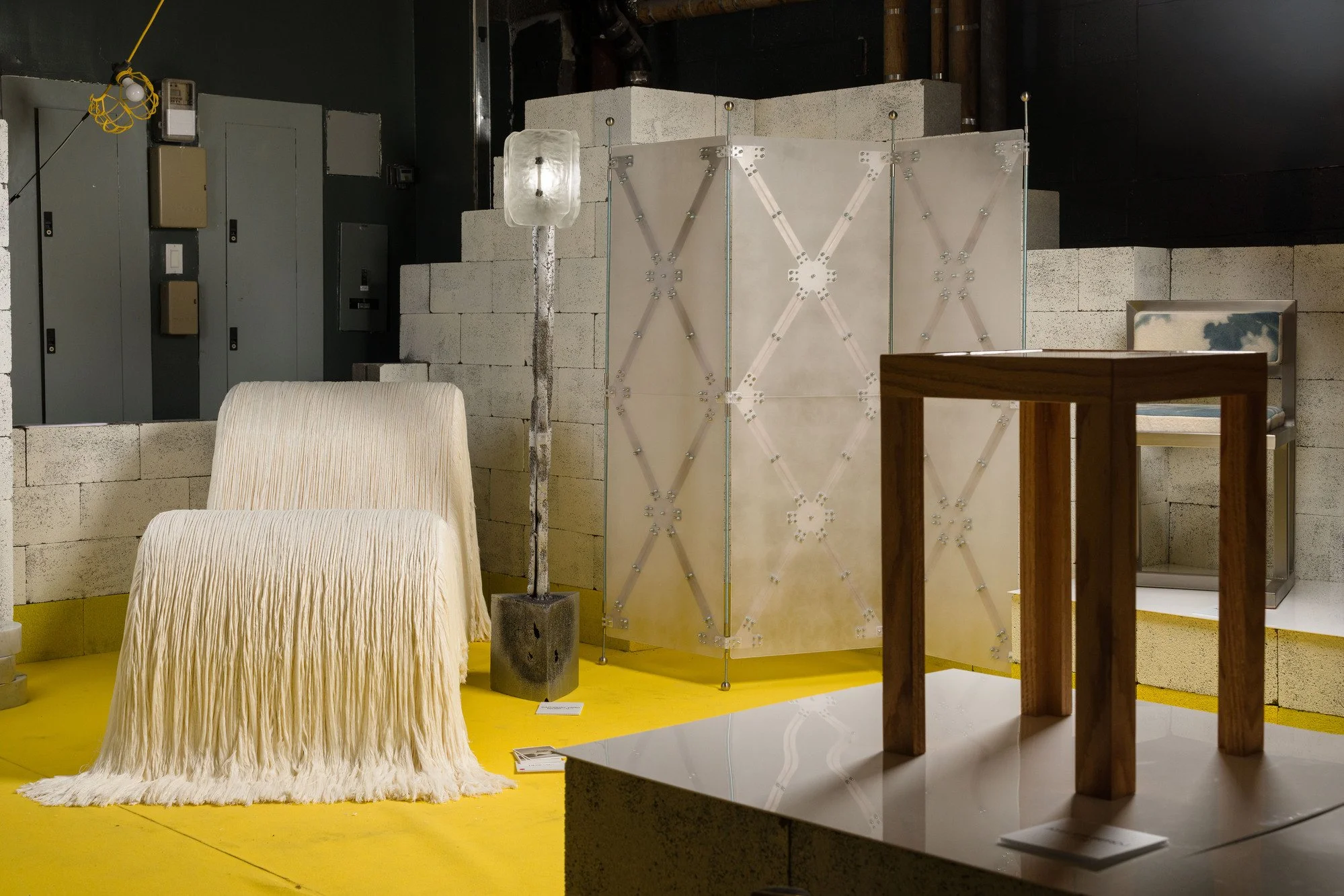
Le Drape by Nelli Hegi
8. Tuleste Factory | USA
Founded by sisters Satu and Celeste Greenberg, New York-based Tuleste Factory has built its identity around the fertile territory between contemporary art and collectible design, bringing established and emerging voices into deliberately unexpected company.
At COLLECTIBLE New York 2026, After Ours traded the conventional white-box presentation for something more seductive. Drawing on the mood of the 1970s, rich colour, layered texture and sculptural furniture came together as an intimate interior rather than a sequence of individual objects.
That sense of inhabitation was what made the presentation work. Furniture, lighting and art were allowed to play off one another, suggesting not simply how each piece might be collected, but how it might actually live.
9. HEGI | Australia
Founded by husband-and-wife duo Nelli and Juri Hegi, Australian studio HEGI combines Nelli’s sculptural design language with Juri’s deep knowledge of furniture making. Both born in Kazakhstan and raised in Germany, they bring Central Asian heritage, European discipline and Australian making into a practice centred on collectible furniture with a strong sense of material and narrative.
At COLLECTIBLE New York, Le Drape distilled that approach into a single gesture. Walnut provides the structure, while bamboo yarn falls across it with the softness of fabric, making the chaise feel almost dressed rather than upholstered.
It is that tension between solidity and drape that gives the piece its presence: part furniture, part garment, and unmistakably sculptural.

Otras Formas at Collectible New York
10. OTRAS FORMAS | New York
Founded by Alex Lithgow, New York-based OTRAS FORMAS operates somewhere between gallery and creative laboratory, bringing together independent designers and artists whose work resists easy categorisation.
At COLLECTIBLE New York 2026, the presentation moved fluidly between furniture, lighting and visual art. Lithgow and Christopher Merchant’s Double Floge played with asymmetry in ceramic, while Ayako Aratani’s WA Drink Table brought together wood, abacá paper and urushi with a quieter, more tactile sensibility. Blanca Codina’s Calo Lamp added another material contrast through ceramic, sand and brass.
Works by James Dieter, Bronsin Ablon, Malcolm Majer, Ruri Yi, Alexandra Rowley and David Mackenzie extended the conversation, giving the stand the feel of a tightly edited collection rather than a single aesthetic statement.
The Continuing Conversation Around Collectible Design
What we took from COLLECTIBLE New York 2026 was not a dominant look, but a shift in attitude. The most compelling designers were less interested in producing another beautiful object than in questioning how things are made, what materials can do and where the boundaries between art, furniture, fashion and craft still matter.
We found ourselves drawn to work with character: pieces that carried the trace of the hand, revealed an unexpected material, or introduced us to a designer we wanted to know more about.
That, for us, is the point of a fair like COLLECTIBLE. Not to confirm what we already know, but to leave with new names, new ideas and at least one object we cannot quite stop thinking about.
Photography Credits:
photography Sahra Jajarmikhayat, CASPER PLUM, Didem Civginoglu, Simon Leung, matthew gordon, TUDOR CUCU