people • art advisor
Amal Rakibi is a gallerist, collector and lifelong traveller whose relationship with contemporary art is rooted in curiosity, instinct and a deep belief in the power of personal encounters. With a background in law and a life shaped by experiences across continents, she brings both critical thinking and emotional openness to the way she discovers, collects and shares art.
Since first entering the contemporary art world in Houston in 2015, Rakibi has developed a distinctly personal perspective, one shaped as much by travel, architecture and culture as by the artists and works she encounters. For her, art is not simply something to look at, but something to experience, question and feel.
In conversation with Designeers, Amal Rakibi reflects on the places, artworks and experiences that have shaped her relationship with contemporary art.
Words: designeers
OCTOBER 2026
WEBSITE: amalrakibigallery.com
INSTAGRAM: @amalrakibigallery
DESIGNEERS
Is there a place that has fundamentally changed the way you see art or the world?
Amal Rakibi
Every place I travel to changes me in some way. Travelling constantly challenges your perception of the world and what you think you know or take for granted.
But Houston holds a very particular place in my story. It’s where I first opened my gallery and where I really leaped into the art world. Houston may not be the first city that comes to mind when you think of an art scene, but for me, it’s where everything started.
DESIGNEERS
Is there one work in your collection you know you would never sell? Why?
Amal Rakibi
I would probably say Toma-L’s Brown Monster. It has an incredible presence and tends to divide people as much as it fascinates them.
I love that about an artwork. I don’t need everyone to like it; I need it to make them feel something. And Brown Monster still does that to me every time I look at it.
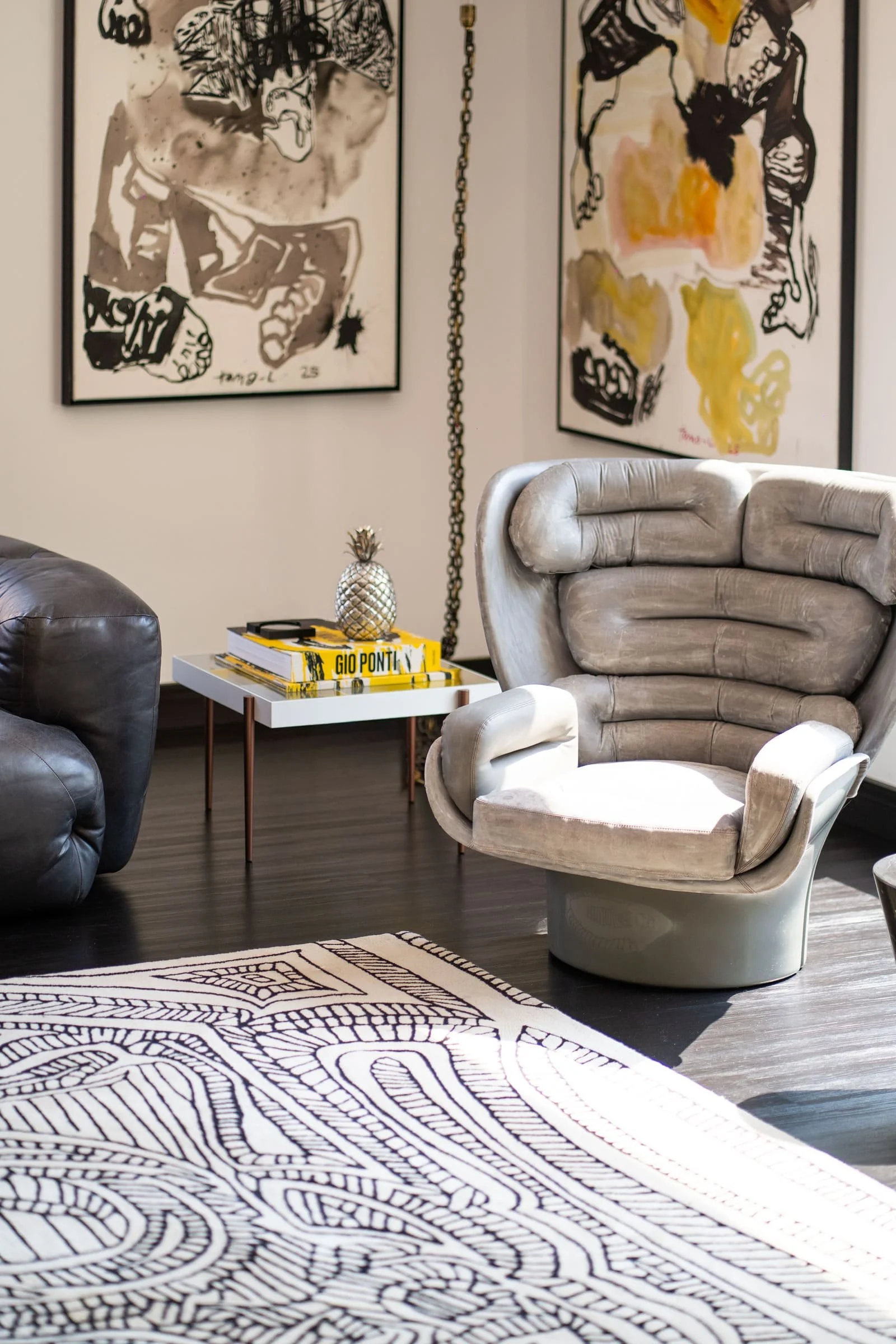
Artwork by Toma-L | Armchair by Joe Colombo Vintage | Side Table by Gio Ponti
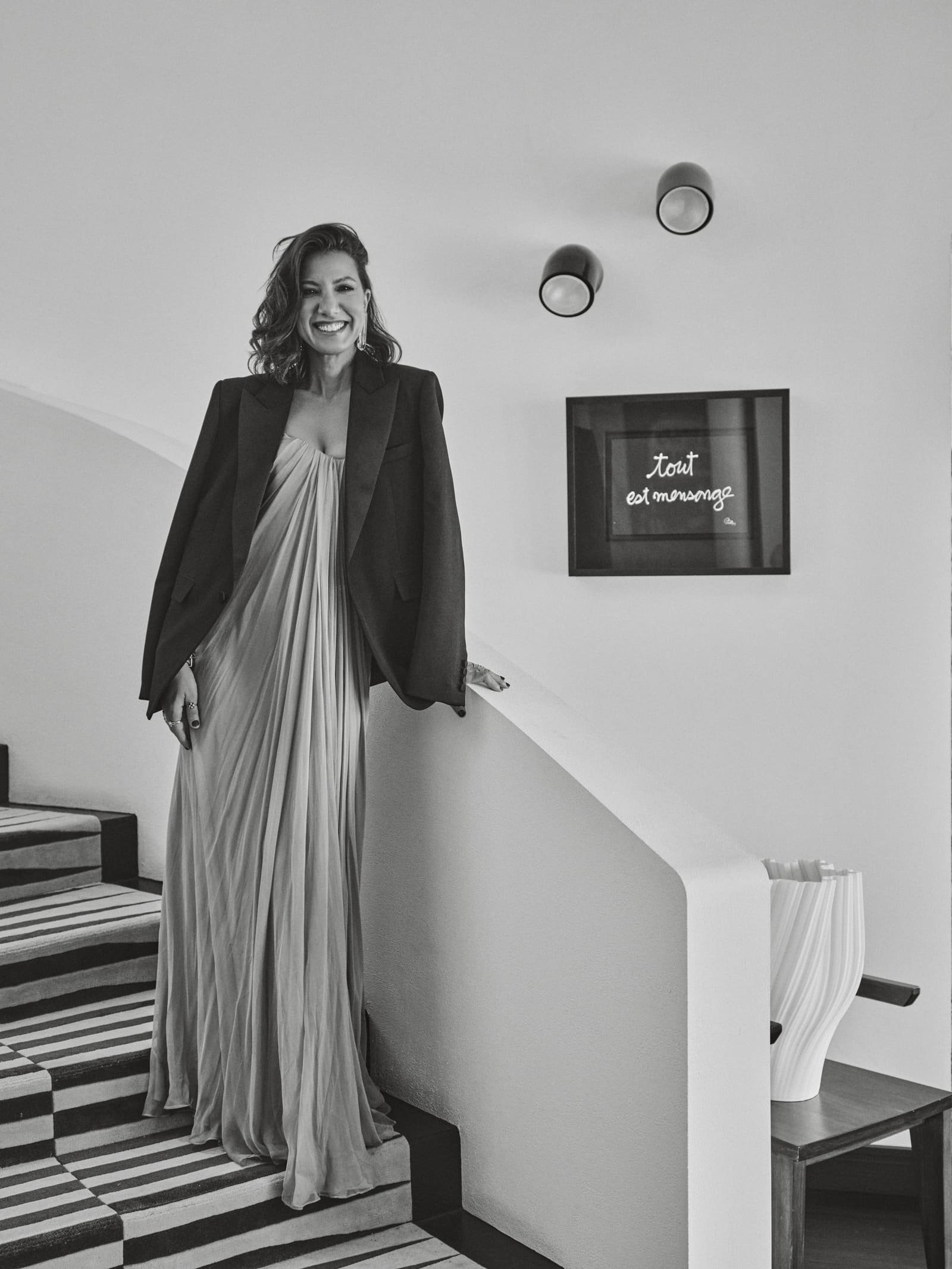
Amal Rakibi
DESIGNEERS
What is the most memorable setting in which you have ever experienced art?
Amal Rakibi
Naoshima, without hesitation. The entire island is an extraordinary experience because art, architecture and nature are so completely intertwined. But there was one moment in particular that I will never forget: discovering Cai Guo-Qiang’s Head On, with its 99 wolves suspended in motion.
I remember standing in front of it, literally with tears in my eyes. I was completely overwhelmed by the scale, the movement, and the tension of the work. It was one of those very rare moments when art hits you before you even have time to understand why. That feeling has stayed with me.
DESIGNEERS
Coming from a background in law, do you ever find yourself approaching art with the same instinct for research, analysis and questioning?
Amal Rakibi
Absolutely. Law taught me to question everything, to look beyond what is immediately visible and understand the context. I naturally bring that curiosity into art. I love understanding an artist’s story and what sits behind the work. But when it comes to falling in love with an artwork, my reaction is completely instinctive. I need to feel something before I understand it.
Law taught me to question everything. Art taught me that not everything needs an answer.
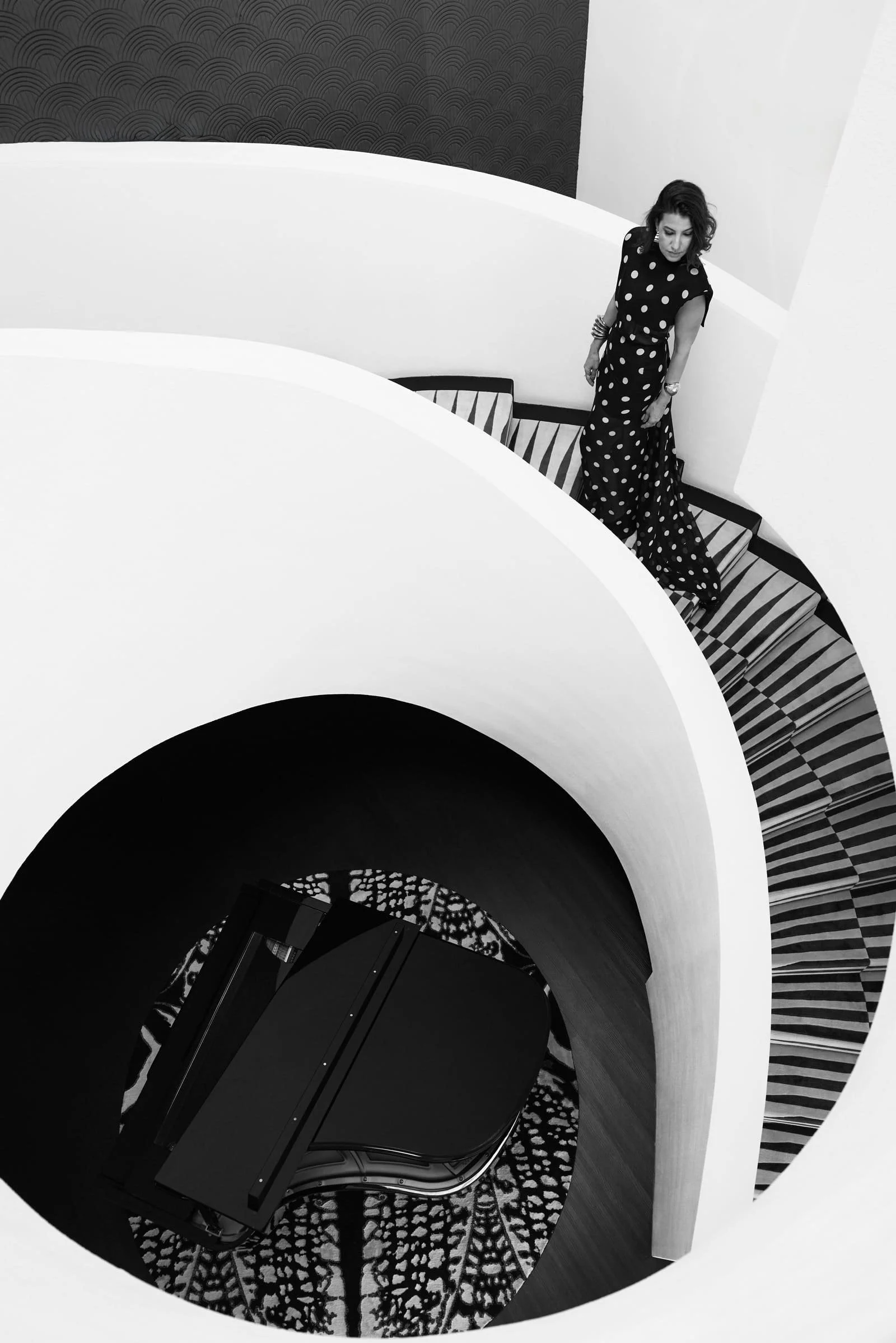
Amal Rakibi with a rug by Alexander McQueen
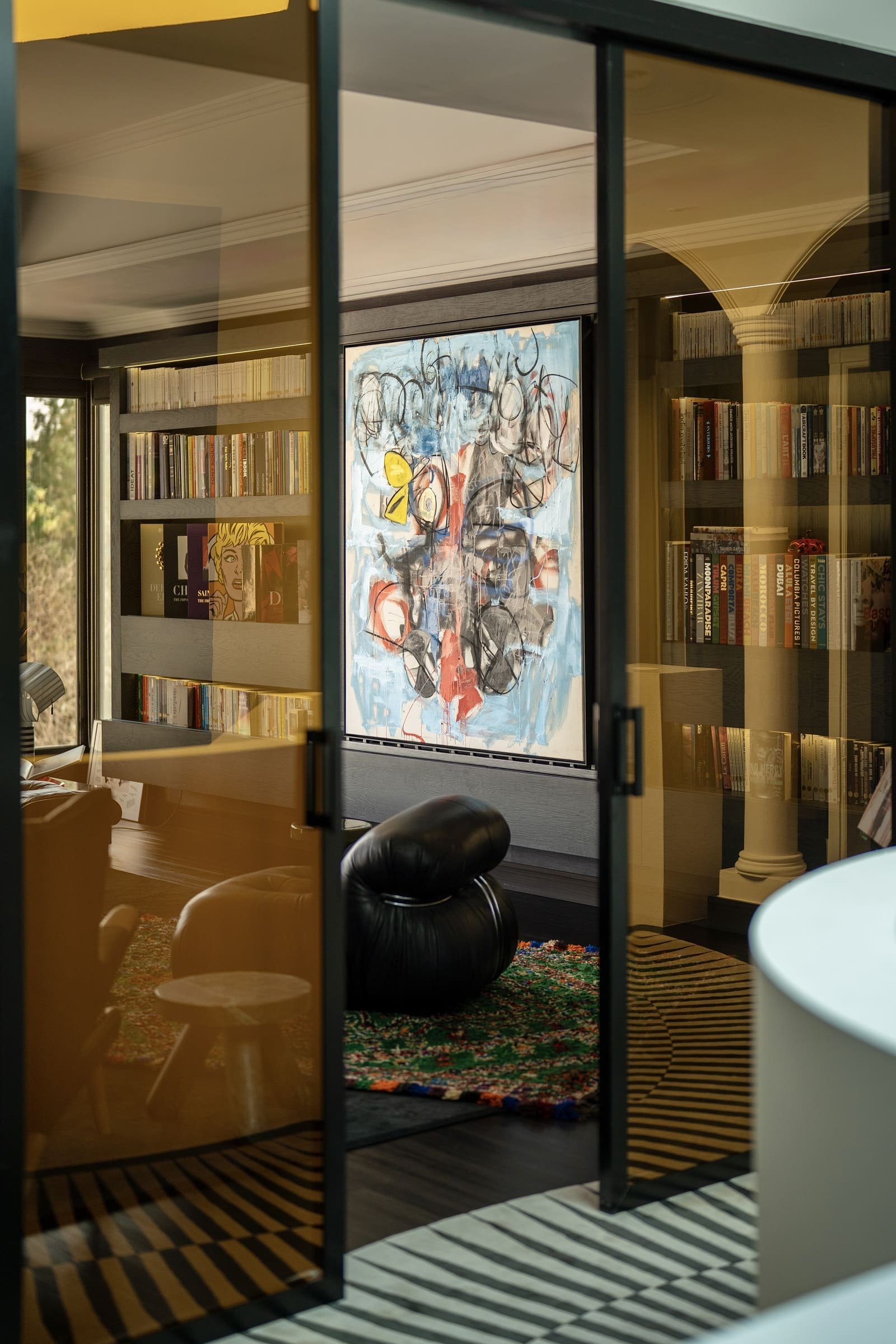
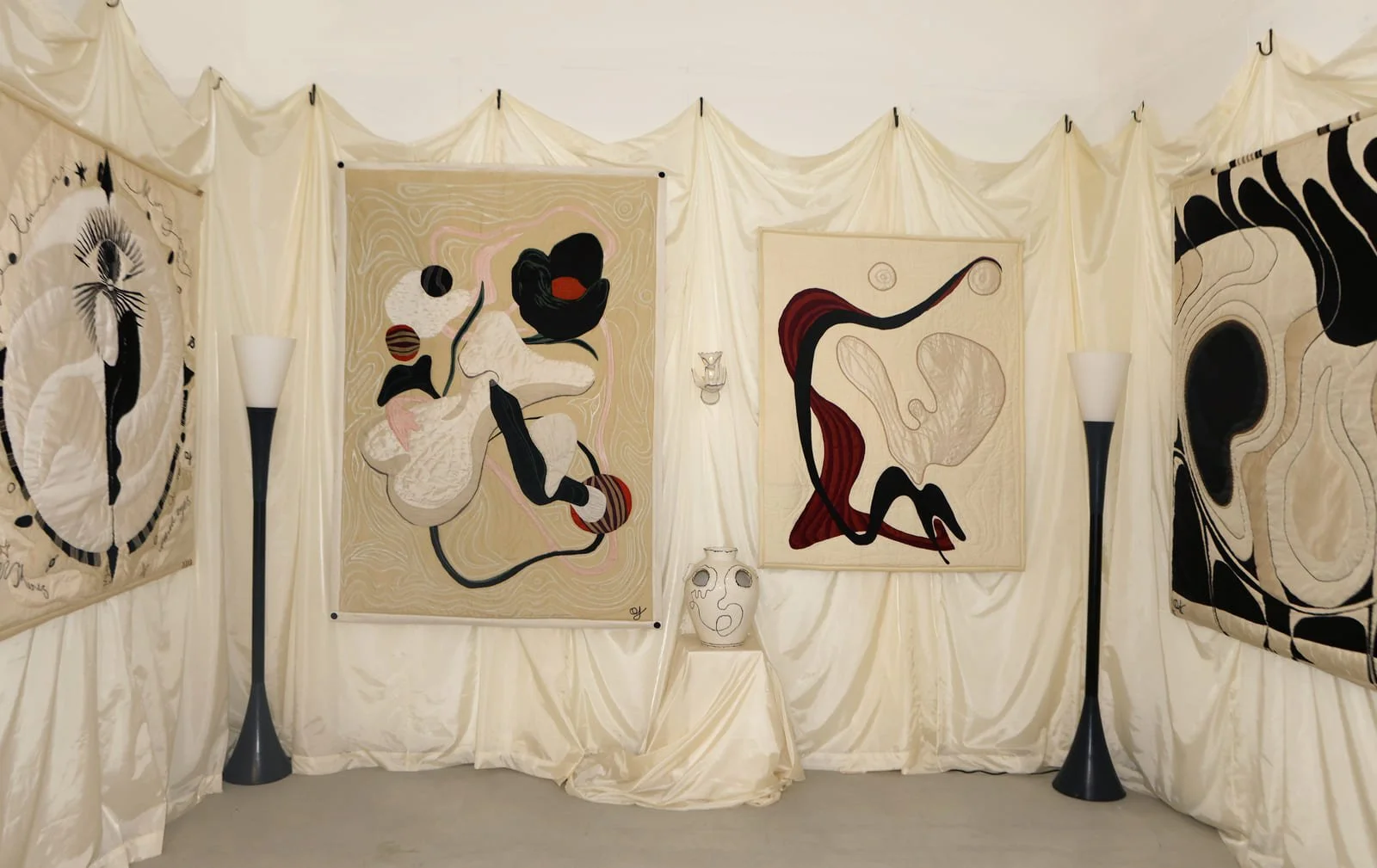
Oil and acrylic on canvas by Taher Jaoui
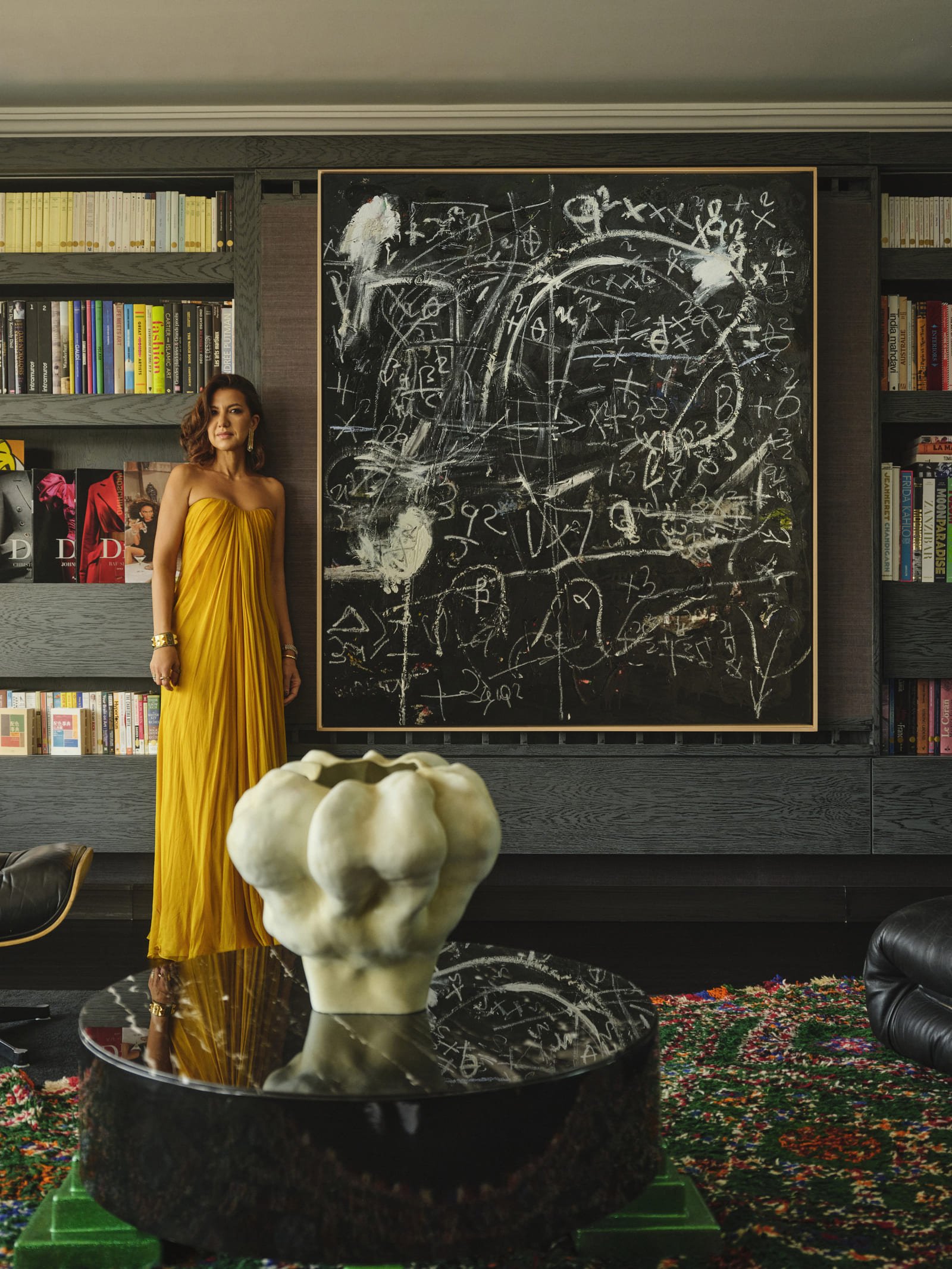
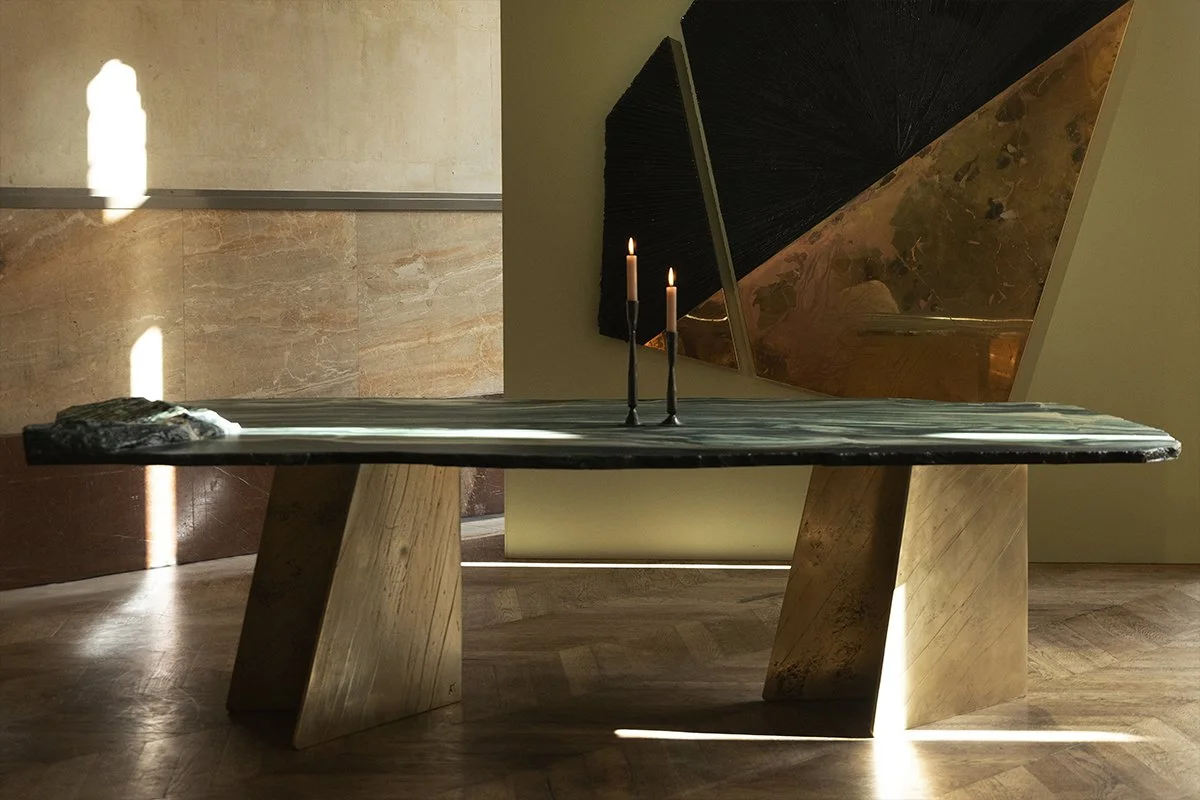
Amal Rakibi with an artwork by Taher Jaoui | Table by Memphis Milano | Vase L’Objet
“Law taught me to question everything. Art taught me that not everything needs an answer.”
Amal Rakibi
DESIGNEERS
Do you think we should consider art as separate from the artist?
Amal Rakibi
I think you can separate the two intellectually, but I’m not sure you can completely separate them emotionally. An artwork inevitably carries something of the person who created it: their experiences, their contradictions, their way of seeing the world. And perhaps because I work closely with artists, knowing the person behind the work often adds another layer to the way I experience it.
DESIGNEERS
If you could step inside one artwork and live there for a day, which would it be?
Amal Rakibi
I would probably choose one of Slim Aarons’ Photographs of Summer Holidays from the 1960s. I love the glamour and retro feel of that era, but also the happiness he captured: family and friends together, children playing, people on the beach, sitting in the sand or gathered around a pool. There is something incredibly carefree about those images.
DESIGNEERS
Which is your favourite design hotel in the world?
Amal Rakibi
I don’t think I could choose just one. Benesse House in Naoshima was an extraordinary experience: sleeping inside a museum and being able to wander downstairs in your pyjamas at one in the morning and find yourself alone with a Basquiat or a Cy Twombly.
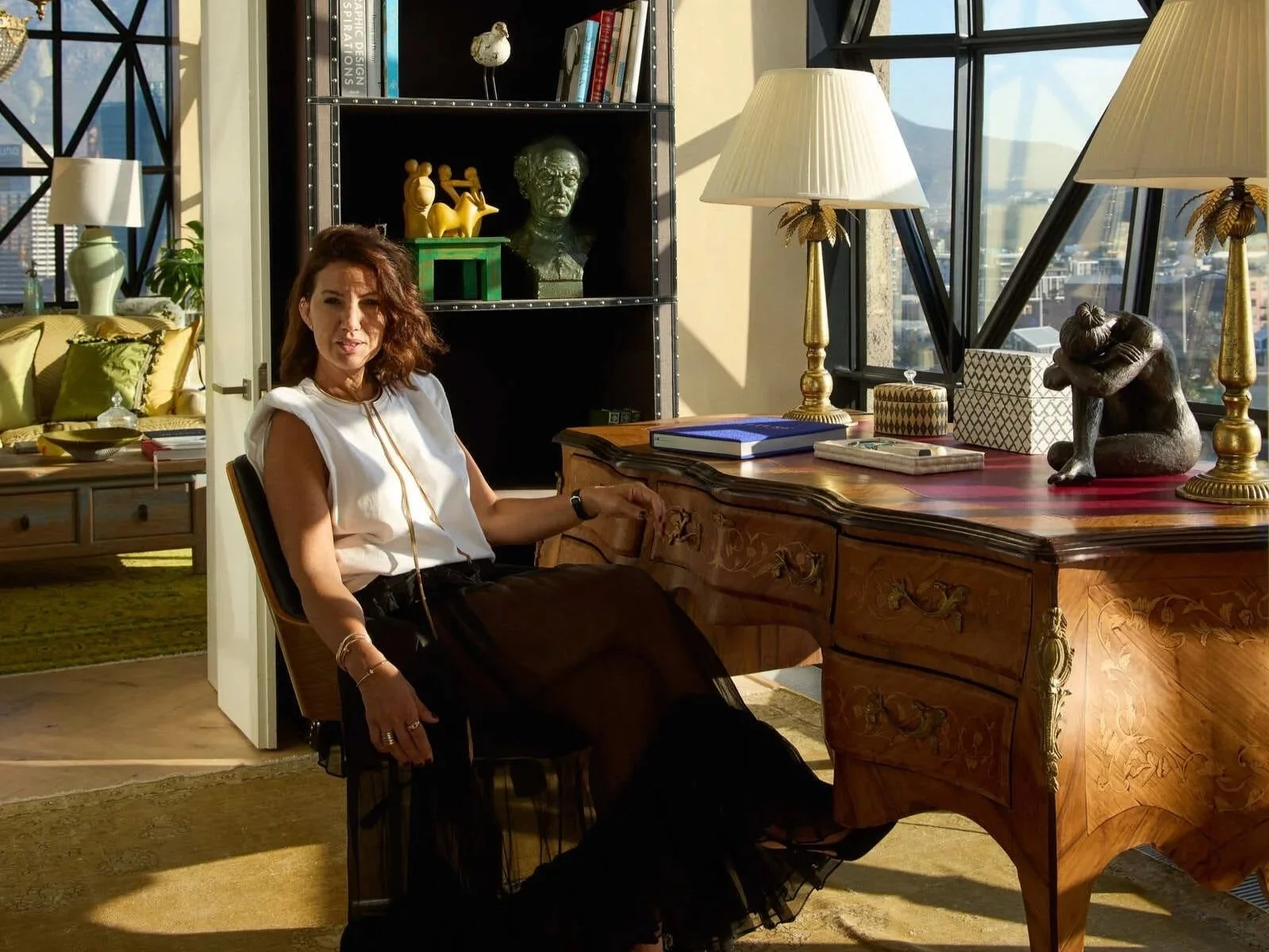
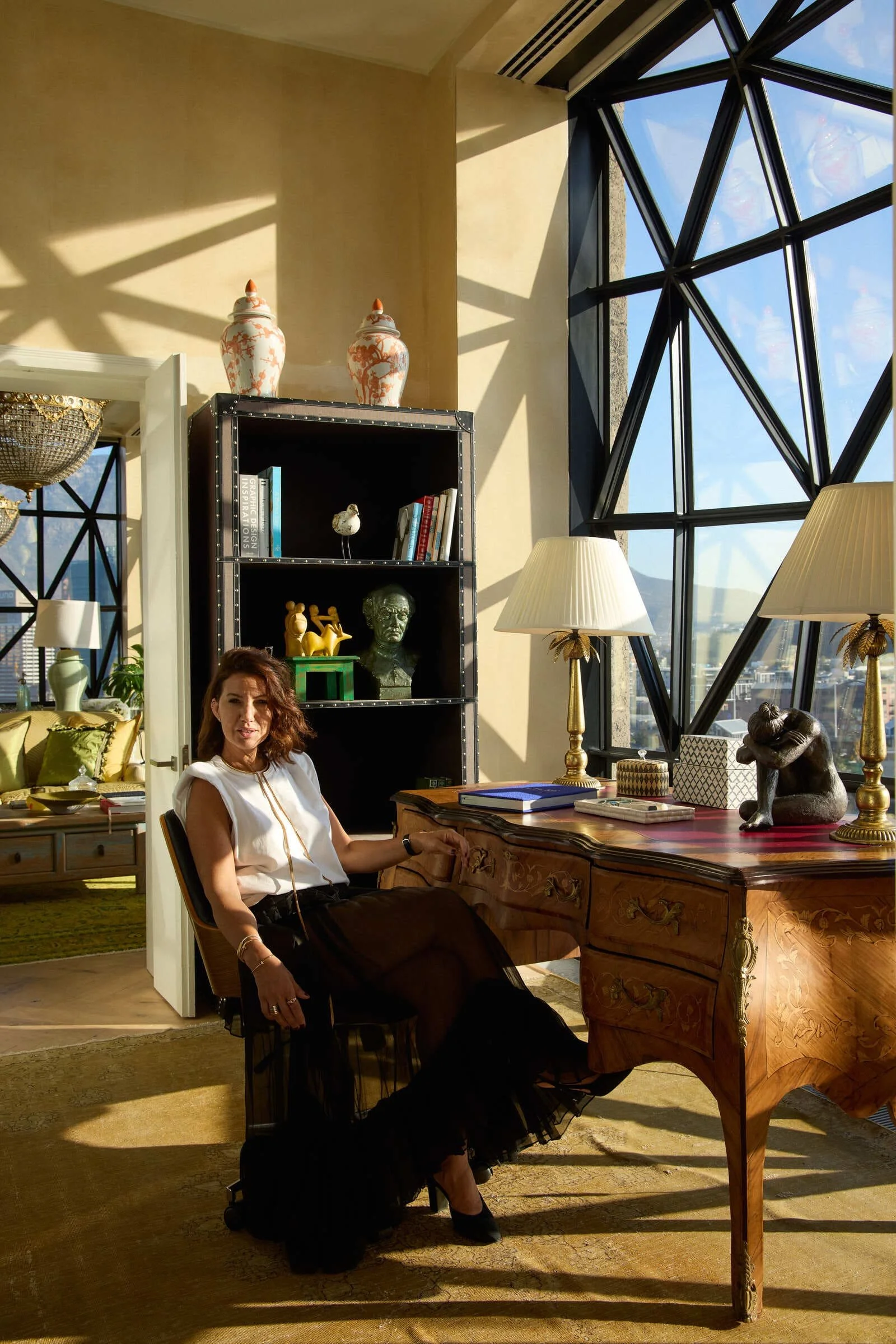
For architecture, The Maybourne Riviera, perched dramatically on the cliffs above the Mediterranean near Monaco, is breathtaking. And The Silo in Cape Town is another one; its architecture and art collection are spectacular.
They are completely different places, but what I love about all three is that the architecture and art are not merely decoration; they are part of the experience.
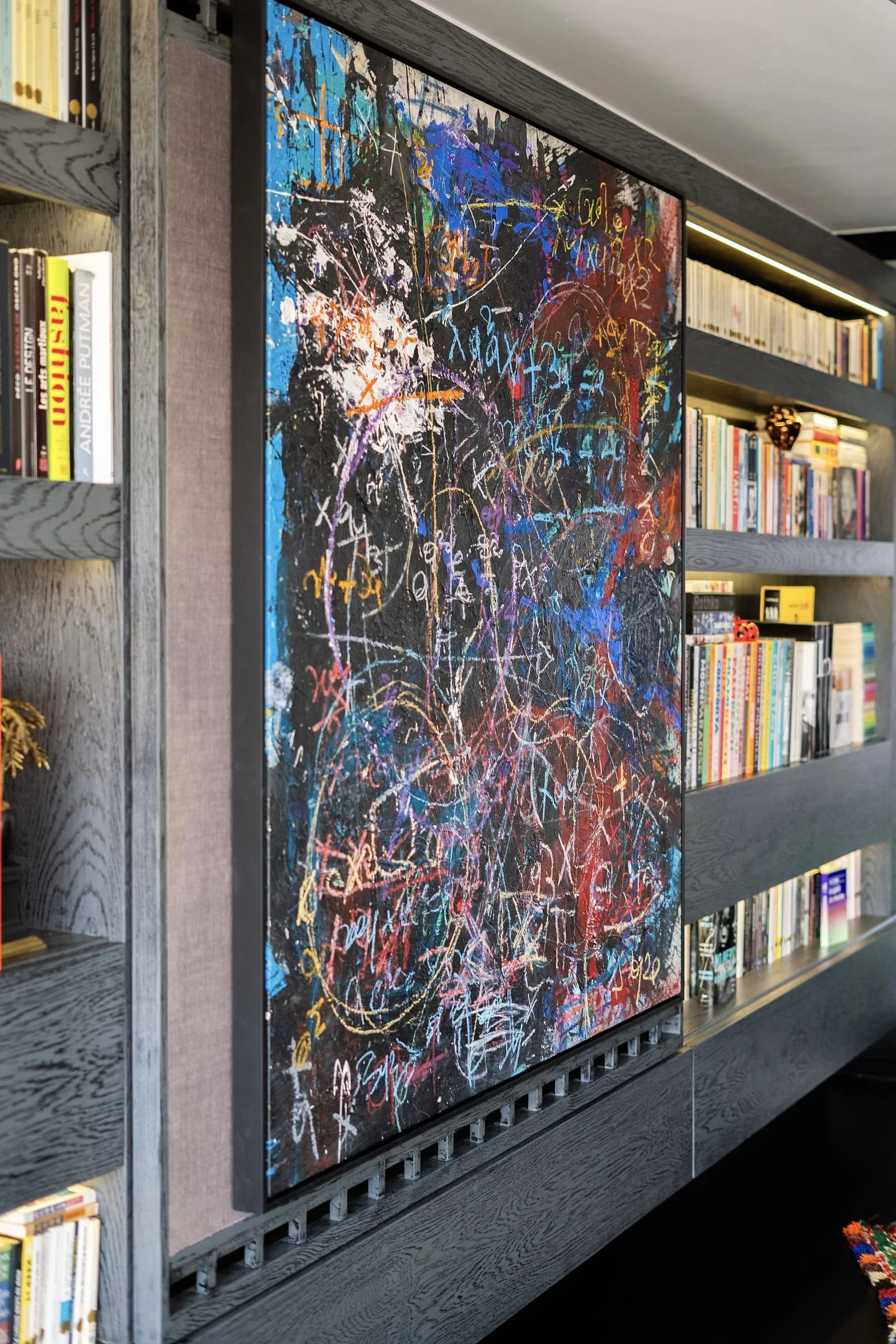
Oil and acrylic on canvas by Taher Jaoui
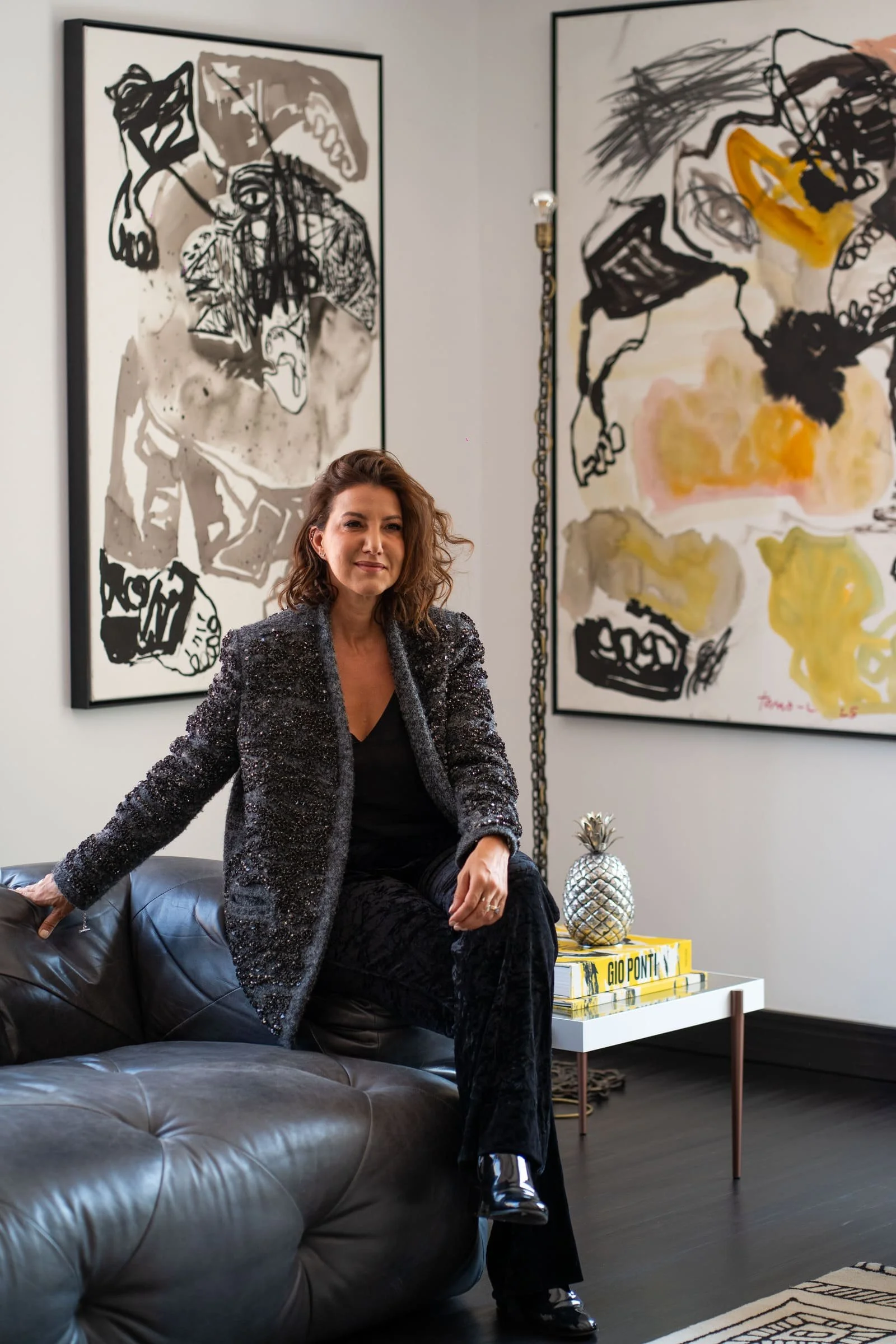
Oil and acrylic on canvas by Toma L
DESIGNEeRS
Which is the one artist you have been obsessed with lately?
Amal Rakibi
Casper Faassen. I find his work incredibly captivating. His photographs have this tension between what you see and what remains hidden, something almost dreamlike and cinematic. He is definitely the artist I keep coming back to at the moment.
DESIGNEeRS
If you could host a dinner with anyone, living or dead, who would be around the table? What artwork would be hanging on the walls, and what would you serve?
Amal Rakibi
I would want the most unlikely dinner party possible: Charlie Chaplin, Karl Lagerfeld, Salvador Dalí, Freddie Mercury, Simone Veil and Kim Kardashian. That will be fascinating.
The room would be very dramatic: Francis Bacon on the walls, very low lighting, and an incredibly sophisticated table with beautiful china, silver and candles. And then, I would serve couscous, one of the simplest and most comforting dishes, placed in the middle of the table for everyone to share.
I love the idea of all those contrasts in one room: sophistication and simplicity, darkness and humour, high culture and pop culture. I can only imagine the conversation.
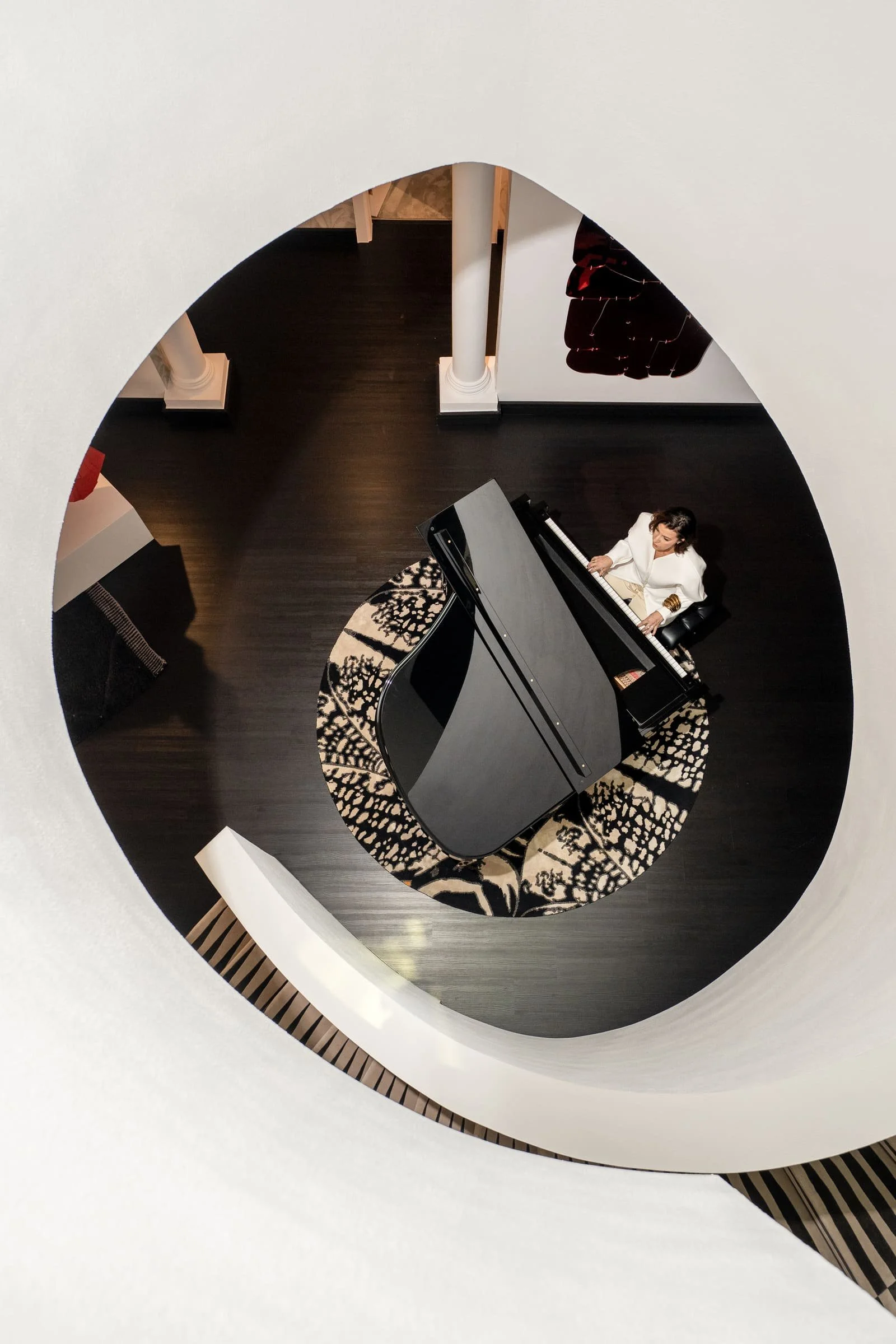
Amal Rakibi with a rug by Alexander McQueen
Photography credits: Žiga Mihelčič